
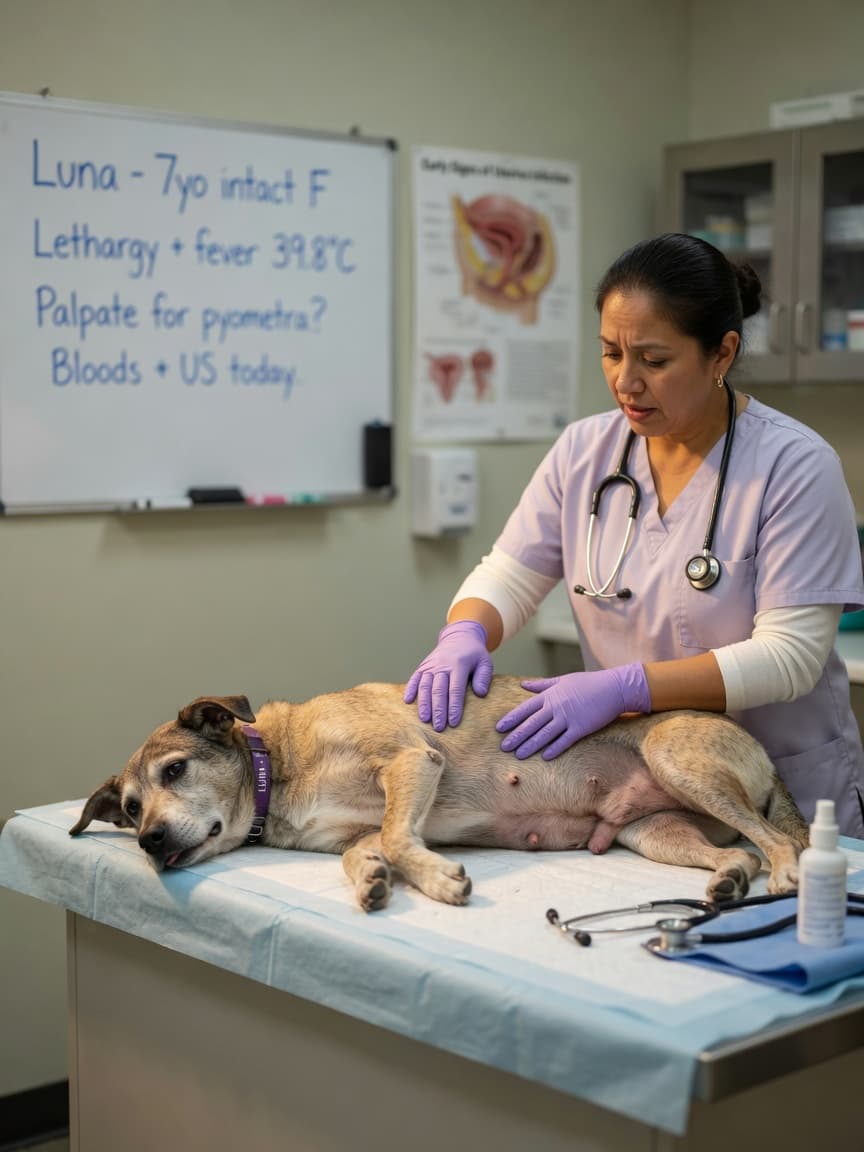
Pyometra is one of the most serious reproductive conditions affecting female dogs, yet many pet owners have never heard of it until their beloved companion falls ill. This potentially life-threatening infection of the uterus demands immediate veterinary attention and can develop rapidly, leaving little time for hesitation. Understanding what pyometra is, how to recognise the warning signs, and when to seek help could literally save your dog's life.
Understanding Pyometra: What It Is
Pyometra is a bacterial infection of the uterus that causes it to fill with pus. The condition occurs almost exclusively in intact female dogs (those who haven't been spayed) and typically develops within weeks of a heat cycle. The uterine lining, already thickened and primed from hormonal changes during oestrus, becomes susceptible to bacterial invasion.
There are two forms of the condition:
- Open-cervix pyometra: The cervix remains open, allowing pus to drain into the vagina and out of the body
- Closed-cervix pyometra: The cervix seals shut, trapping pus inside the uterus—this is far more dangerous as toxins accumulate rapidly
What Causes Pyometra?
Pyometra develops when hormonal changes and bacterial contamination combine to create an infection. After each heat cycle, the uterine lining thickens in preparation for pregnancy. If pregnancy doesn't occur, this lining persists, creating an ideal environment for bacteria to multiply. The bacterium E. coli is the most common culprit, though other bacteria can also be responsible.
Risk factors include:
- Age—older intact females are at higher risk
- Repeated heat cycles without breeding
- Abnormal uterine tissue
- Weakened immune system
- Hormonal treatments, particularly progestins
Recognising the Symptoms

Early detection is crucial, so watch for these warning signs:
- Excessive thirst and increased urination
- Lethargy and loss of appetite
- Fever and general malaise
- Vaginal discharge (often purulent or foul-smelling)
- Abdominal distension or pain
- Vomiting or diarrhoea
- Rapid deterioration in closed-cervix cases
With open-cervix pyometra, symptoms may develop gradually. Closed-cervix cases progress frighteningly fast, sometimes within 24-48 hours, as toxins build up and sepsis develops.
Diagnosis and Veterinary Treatment
Your vet will perform a physical examination and typically order blood work and ultrasound imaging to confirm diagnosis. Ultrasound clearly shows fluid accumulation in the uterus, whilst blood tests reveal elevated white blood cell counts and other signs of infection.
The gold standard treatment is emergency ovariohysterectomy (spaying), which removes the infected uterus and ovaries. This is curative and prevents recurrence. Pre-operative stabilisation with intravenous fluids and antibiotics is essential, particularly in septic cases.
Medical management with antibiotics alone is rarely recommended as it carries significant risks of recurrence and incomplete recovery, though your vet may discuss this in specific circumstances.
Prevention Is Key
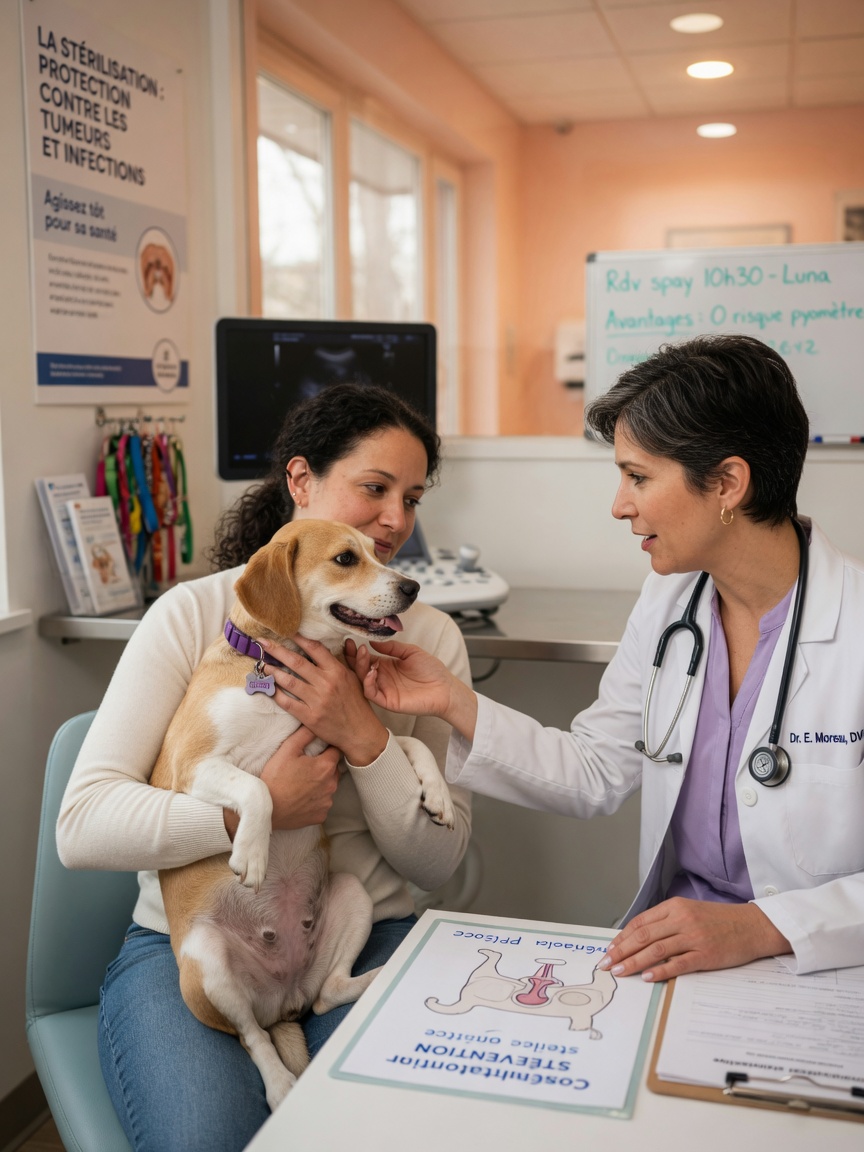
The most effective prevention is spaying your female dog before her first heat cycle, or at least before pyometra develops. Spaying eliminates the hormonal changes that trigger the condition and offers additional health benefits, including reduced risk of mammary cancer.
If you're keeping your dog intact for breeding purposes, maintain close veterinary monitoring, ensure proper hygiene during mating, and consider prophylactic spaying after your breeding goals are complete.
Key Takeaways
Pyometra is a medical emergency that demands swift action. If your intact female dog shows signs of illness shortly after a heat cycle—particularly excessive thirst, lethargy, or vaginal discharge—contact your vet immediately. Don't delay, as closed-cervix cases can turn septic within hours. Spaying remains the most reliable prevention strategy and offers numerous health advantages beyond protecting against pyometra. When caught early and treated surgically, most dogs make excellent recoveries with proper post-operative care.