
The Invisible Threat in Your Fish Tank
Around 90% of fish deaths in home aquariums are linked to poor water quality — yet the water often looks perfectly clear. The nitrogen cycle is the single most important biological process in any fish tank, and understanding it is the difference between thriving fish and a tank full of stress, disease, and loss.
What Is the Nitrogen Cycle?
The nitrogen cycle describes how toxic waste compounds are broken down by beneficial bacteria into progressively less harmful substances. In a healthy, established tank, this process runs continuously and invisibly. In a new or disrupted tank, it can collapse — with lethal consequences.
Fish produce waste through their gills, urine, and faeces. Uneaten food and decaying plant matter add to this load. Left unchecked, these organic materials decompose into ammonia, the first and most dangerous compound in the cycle.
Ammonia: The First Danger
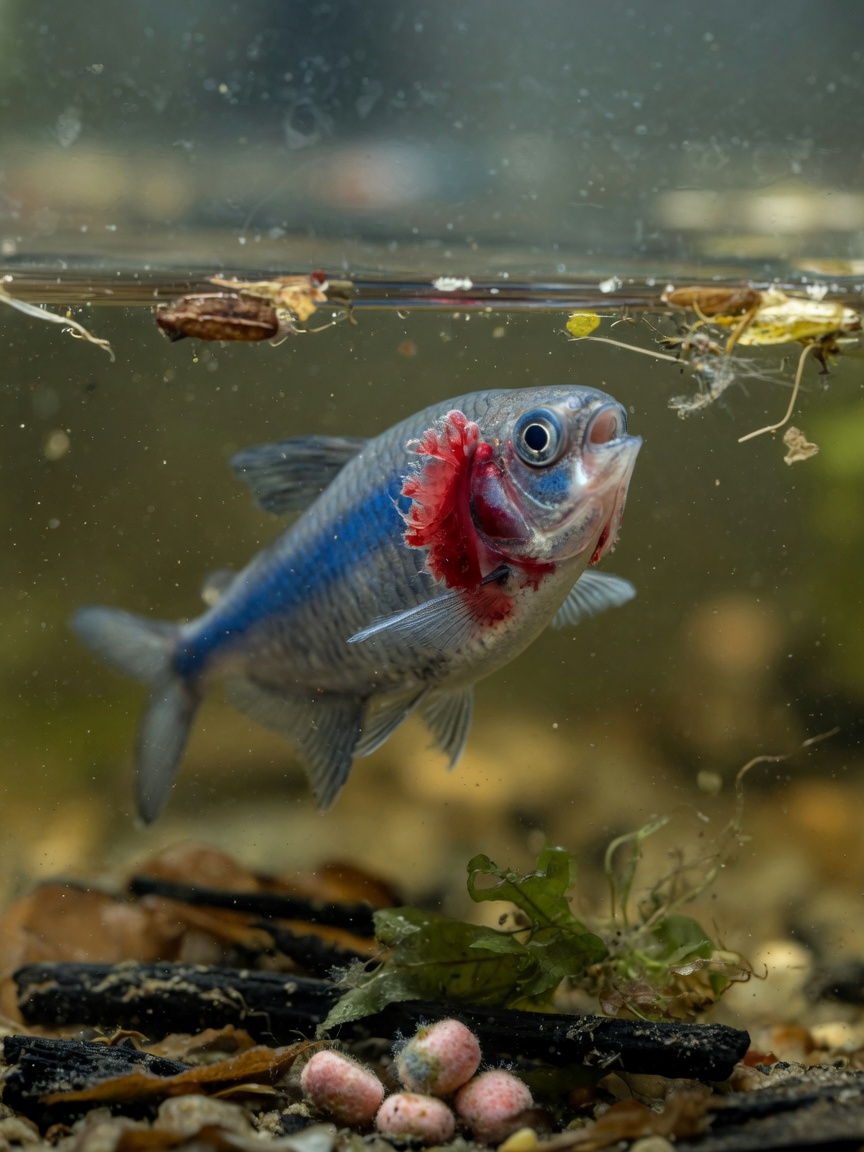
Ammonia (NH3) is acutely toxic to fish even at very low concentrations. At levels above 0.02 mg/L, it begins to damage gill tissue, impairing a fish's ability to absorb oxygen. Prolonged exposure causes haemorrhaging, neurological damage, and death.
Signs of ammonia poisoning include gasping at the surface, red or inflamed gills, lethargy, and loss of appetite. Many fishkeepers mistake these signs for disease when the real culprit is water chemistry.
Ammonia toxicity is also influenced by pH and temperature. At higher pH levels, a greater proportion exists as free ammonia (NH3), which is far more harmful than the ionised form (NH4+). This means a high-pH tank with moderate ammonia readings can still be dangerous.
Nitrite: The Second Stage
Beneficial bacteria from the genus Nitrosomonas colonise the tank and convert ammonia into nitrite (NO2-). This is progress — but nitrite is still highly toxic. It interferes with haemoglobin in fish blood, preventing red blood cells from carrying oxygen effectively. The condition is sometimes called brown blood disease.
Affected fish may appear to suffocate even in well-oxygenated water. Gills may turn brown. The fish gasps, sits near the surface, and becomes unresponsive.
Safe nitrite levels in a healthy aquarium should read zero. Any detectable nitrite in an established tank signals a problem — either the biological filter is overwhelmed, has been damaged, or the tank has not fully cycled.
Nitrate: The End Product
A second group of bacteria, primarily Nitrobacter and Nitrospira, convert nitrite into nitrate (NO3-). Nitrate is significantly less toxic than its predecessors, but it is not harmless.
Acceptable Nitrate Levels
For most community freshwater tanks, nitrate should be kept below 40 mg/L. For sensitive species such as discus, axolotls, or dwarf cichlids, aim for under 20 mg/L. Marine and reef tanks require even stricter control, typically below 5 mg/L for corals.
How to Control Nitrate
- Regular partial water changes — typically 20–30% weekly — dilute nitrate build-up effectively.
- Live plants consume nitrate as a nutrient, helping to keep levels in check naturally.
- Avoid overfeeding, as uneaten food rapidly increases the organic load.
- Ensure the tank is not overstocked relative to your filtration capacity.
Cycling a New Tank
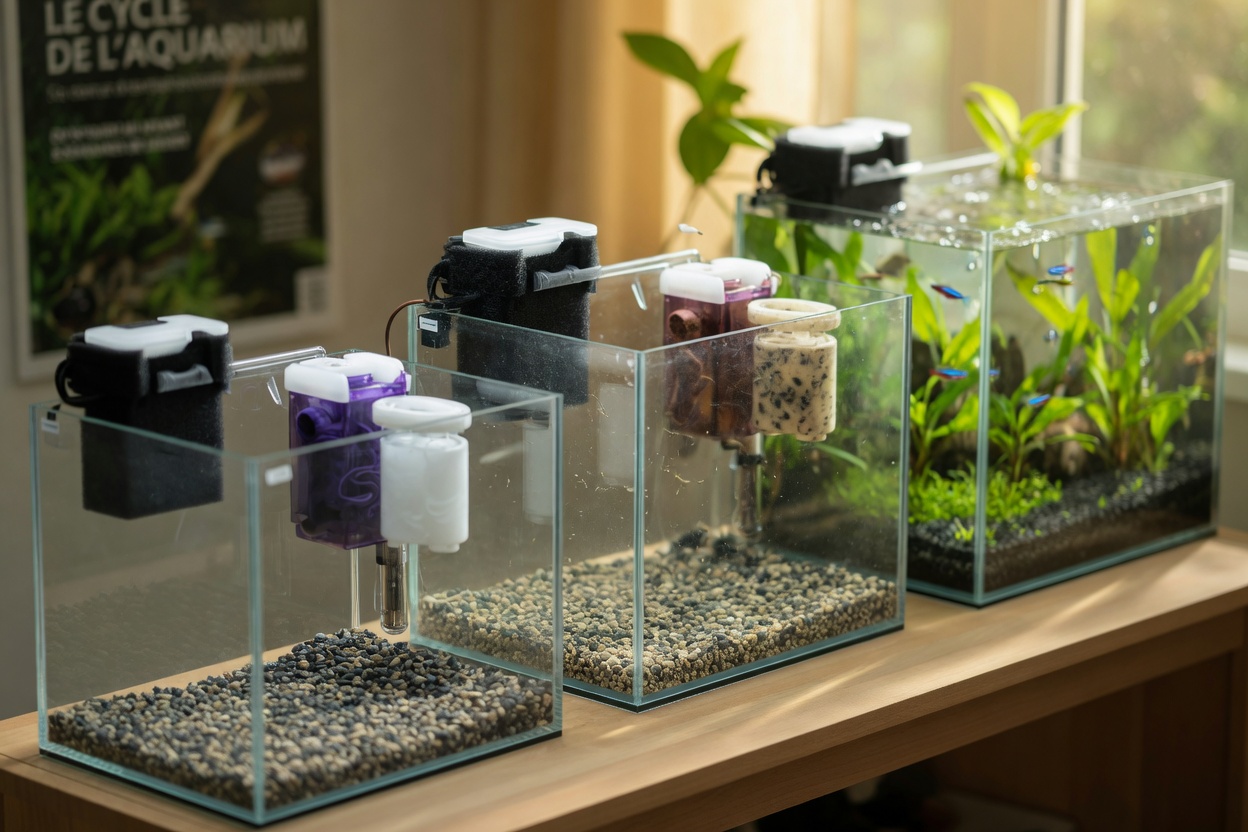
A new aquarium has no established bacterial colonies. Fish introduced too early will be exposed to ammonia and nitrite spikes that can prove fatal. The process of establishing these bacterial populations is called cycling and typically takes four to eight weeks.
Fishless Cycling
The most humane method involves adding an ammonia source — such as pure ammonia solution or a pinch of fish food — without any fish present. Bacteria establish themselves on filter media, substrate, and tank surfaces. You monitor ammonia and nitrite daily until both reliably read zero and nitrate is detectable. Only then is the tank safe for fish.
Speeding Up the Cycle
- Add seeded filter media or substrate from a healthy, established tank.
- Use commercially available bacterial starter cultures.
- Maintain water temperature between 24–28°C to encourage bacterial activity.
- Avoid using chlorinated tap water directly — dechlorinate before use, as chlorine kills beneficial bacteria.
Testing and Monitoring Water Quality
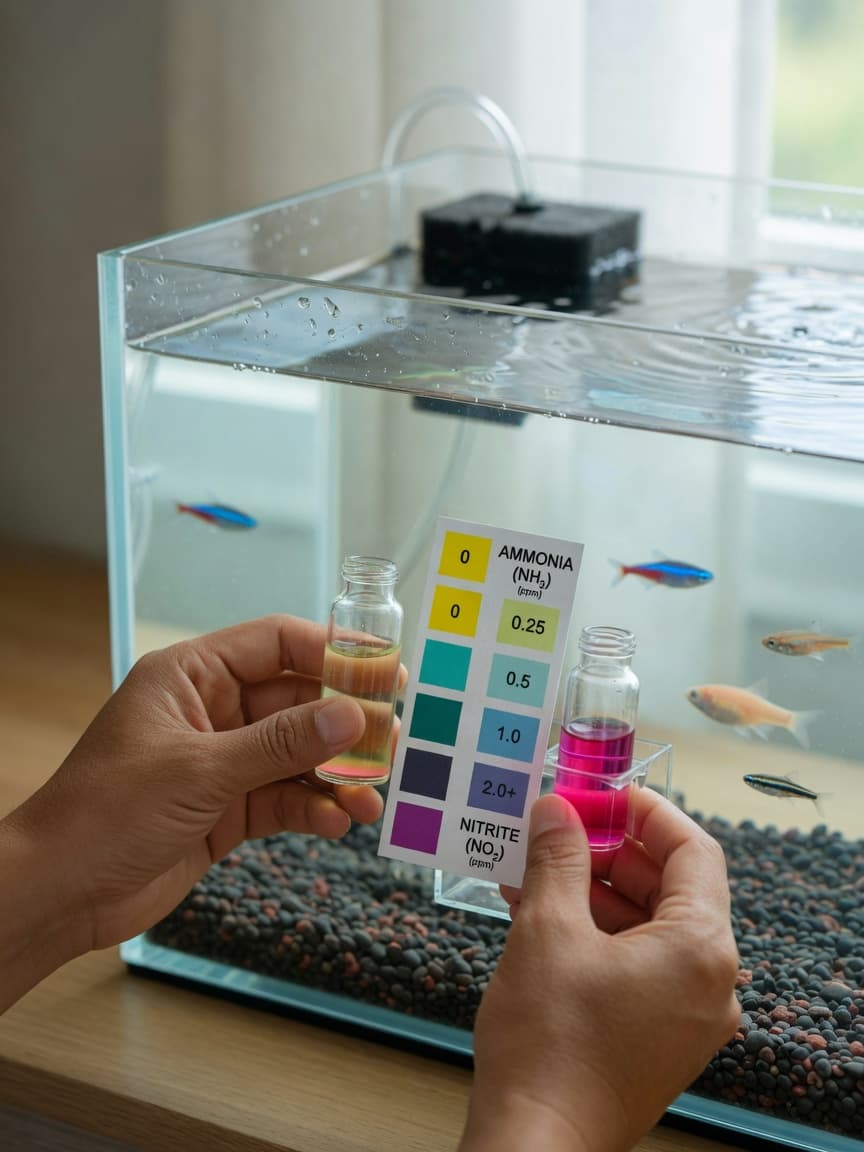
A liquid test kit that measures ammonia, nitrite, nitrate, and pH is an essential tool for any fishkeeper. Test strips are cheaper but significantly less accurate. Test weekly in established tanks and daily during cycling or after any disruption such as medication use, filter cleaning, or the addition of new fish.
Keep a log of your readings over time. Trends matter as much as individual results — a gradual rise in nitrate tells you that your water change schedule needs adjusting, even if the number is not yet alarming.
Key Actions for Healthy Water
- Always cycle a new tank fully before adding fish.
- Test water parameters weekly and after any tank disruption.
- Perform regular partial water changes to control nitrate.
- Never clean all filter media at once — rinse gently in old tank water to preserve bacteria.
- Dechlorinate tap water before every water change.
- Do not overstock or overfeed.
- If fish show distress signs, test water first before assuming disease.
If water parameters remain unstable despite your best efforts, or if fish continue to show signs of illness, consult an aquatic veterinarian. Many fish health problems are solvable once the underlying water chemistry is corrected.