
Koi Keeping in Europe: What You Need to Know First
Koi (Cyprinus rubrofuscus) are among the most rewarding pond fish a keeper can work with, but they are also among the most demanding. Large, long-lived, and capable of growing to 70 centimetres or more in a well-managed pond, koi require serious investment in infrastructure, water quality management, and veterinary awareness. European keepers face particular challenges: cold winters, legal obligations around notifiable fish diseases, and a regulatory environment that differs in important ways between EU member states and the post-Brexit United Kingdom.
Pond Size and Depth
There is no such thing as too large a koi pond. The widely cited minimum for a koi pond is 10,000 litres, and this should be treated as a genuine minimum rather than a target. Koi are large, active fish that produce significant biological waste, and undersized ponds lead to chronic water quality problems no matter how good the filtration is.
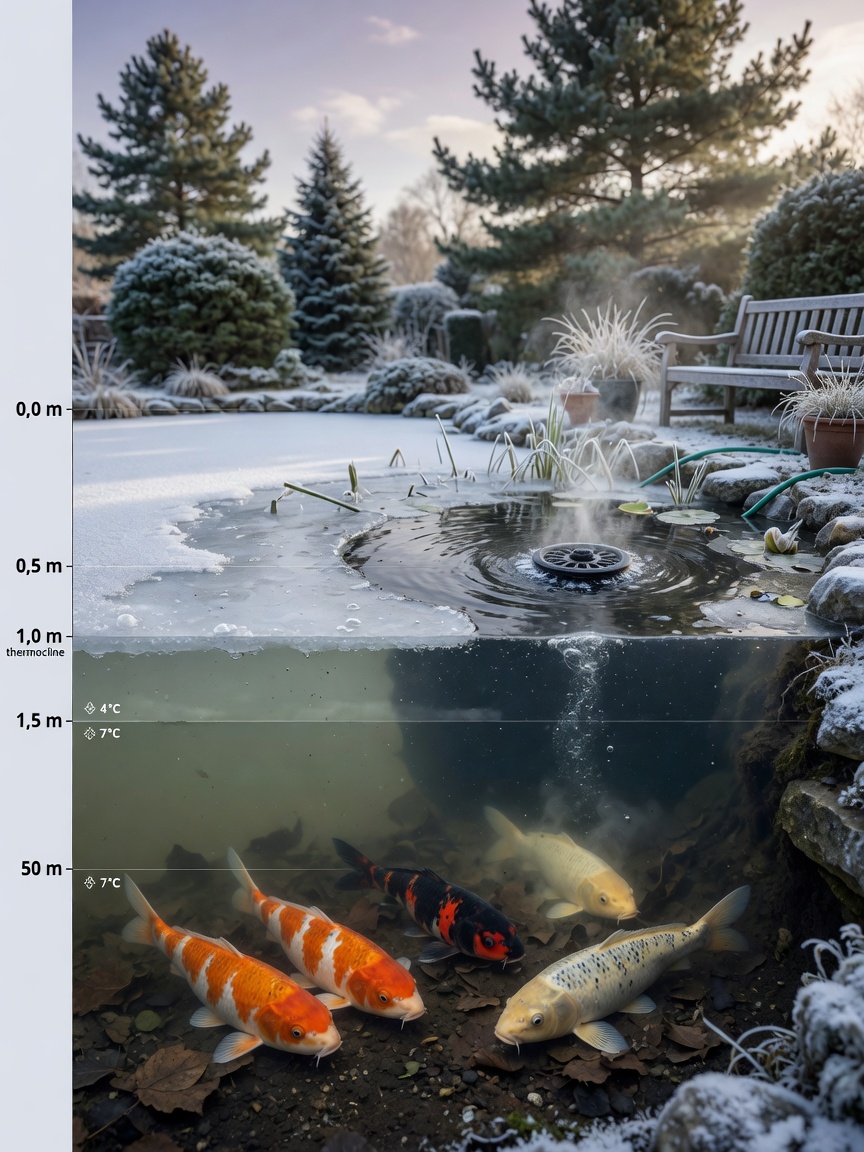
Depth matters as much as volume, particularly in the UK and northern Europe. Koi enter a semi-dormant state in cold water and will overwinter successfully at the bottom of a pond that is at least 1.2 metres deep — the water below the thermocline stays above freezing even when the surface ices over. A depth of 1.5 metres is more comfortable, and ponds shallower than 1.2 metres risk fish losses during hard winters. Never allow your pond to freeze over completely, as trapped gases from decomposition can reach toxic concentrations; a pond heater or aerator kept running near the surface will maintain an ice-free area for gas exchange.
Filtration: Mechanical and Biological
Koi produce far more waste per kilogram of body weight than most other pond fish, and their filtration requirements are correspondingly high. A koi pond requires a purpose-built filtration system with two stages working in sequence.
Mechanical filtration removes solid waste — uneaten food, faeces, and suspended particles — before it can break down into ammonia. Drum filters, vortex chambers, and settlement tanks are all effective mechanical stages. Without good mechanical filtration, the biological stage becomes overwhelmed.
Biological filtration uses colonies of beneficial bacteria to convert ammonia and nitrite into the less harmful nitrate, mirroring the nitrogen cycle described for aquariums. Biological filter media — plastic shapes with high surface area, ceramic rings, or purpose-made koi filter brushes — provide the substrate for these bacteria. The biological filter must never be cleaned with tap water, and only partial cleaning should be carried out at any one time to avoid crashing the cycle.
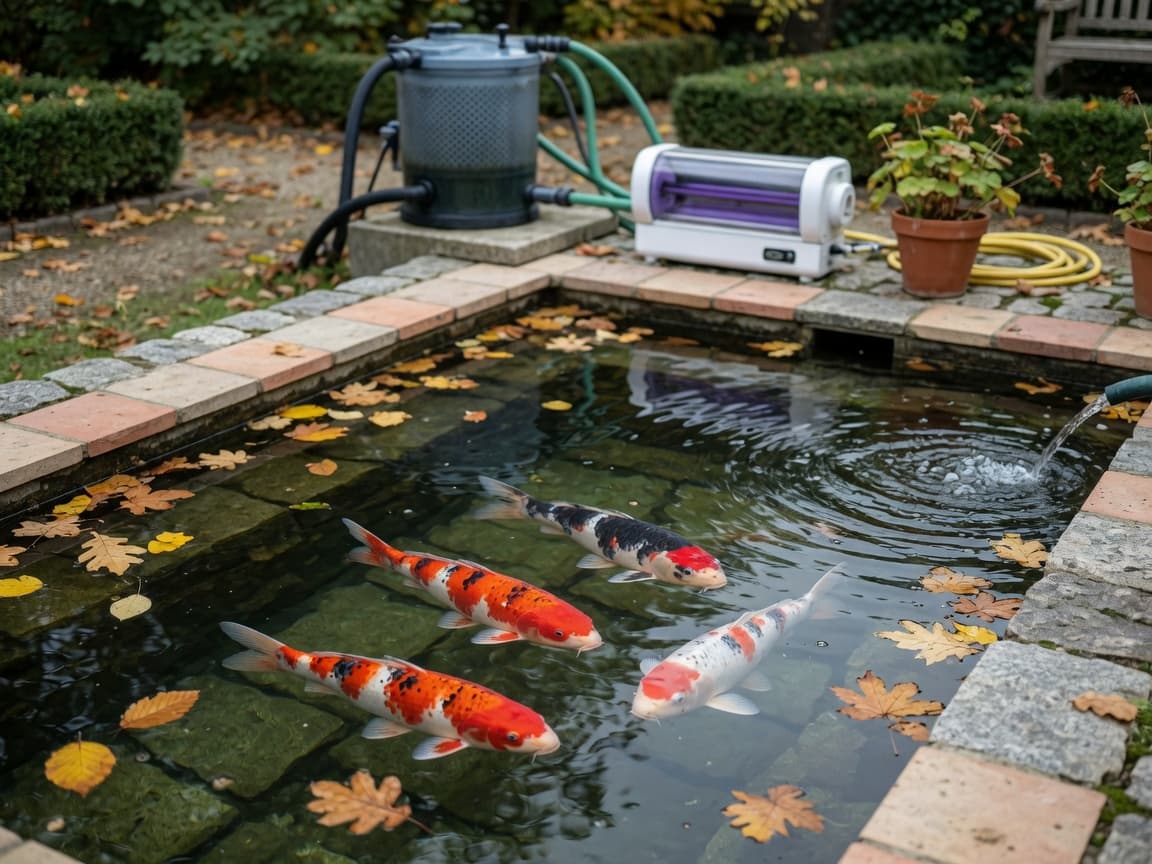
UV sterilisers are a standard component of koi pond systems. They do not filter waste, but they do kill free-floating algae (which causes green water), harmful bacteria, and some parasites by exposing them to ultraviolet light as the water passes through the unit. Replace the UV bulb annually, as output degrades significantly before the bulb visibly fails.
Water Quality Parameters
Maintaining correct water chemistry is the foundation of koi health. Test your pond water weekly, especially in spring and autumn when temperatures fluctuate and biological activity changes rapidly.
- pH: 7.0 to 8.0, stable. Sudden pH swings are as dangerous as incorrect values.
- Ammonia: 0 ppm at all times.
- Nitrite: 0 ppm at all times.
- Nitrate: below 20 ppm. Achieved through regular partial water changes.
- Carbonate hardness (kH): ideally 100 to 150 ppm. kH acts as a buffer against pH crashes and must be maintained, particularly in soft-water areas of the UK and northern Europe.
- Dissolved oxygen: koi require well-oxygenated water. Aeration via venturis, waterfalls, or air stones is essential, particularly in summer when oxygen saturation in warm water falls.
Feeding Koi Through the Seasons
Koi are ectotherms — their metabolic rate is governed by water temperature — and their feeding schedule must reflect this. Feeding the wrong food at the wrong temperature is a direct cause of fish deaths.
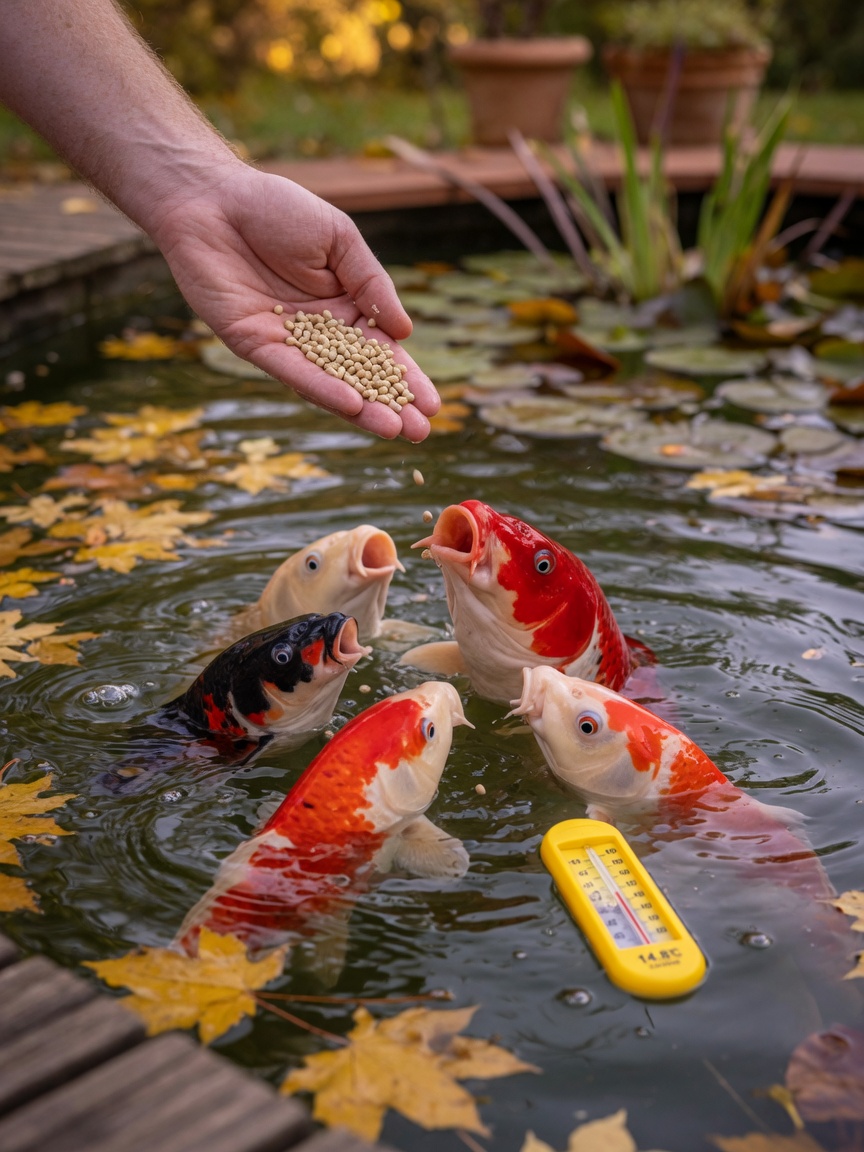
In summer, when water temperatures are above 15 degrees Celsius, koi can be fed a high-protein, high-energy food two to three times daily. Protein-rich pellets support growth and immune function. Remove any uneaten food after five minutes.
As temperatures drop in autumn below 15 degrees Celsius, switch to a wheat germ-based food. Wheat germ is easier to digest at lower metabolic rates and reduces the risk of undigested food rotting in the gut. Quality wheat germ pellets are available from specialist koi retailers and European pet suppliers such as Zooplus, which ships throughout the EU and UK.
When water temperatures fall below 10 degrees Celsius, stop feeding entirely. Koi's digestive systems slow to a point where they cannot process food effectively, and uneaten or undigested material rapidly degrades water quality with potentially fatal consequences. Resume feeding only when temperatures rise consistently above 10 degrees Celsius in spring, starting with small amounts of wheat germ food before gradually reintroducing higher-protein options.
Koi Herpesvirus: A Notifiable Disease
Koi Herpesvirus (KHV) is one of the most serious diseases facing koi keepers in Europe and the UK, and it carries legal obligations that every keeper must understand.
KHV is a highly contagious viral disease that causes mass mortalities in koi populations, with death rates that can reach 80 to 100 percent in affected ponds. There is no licensed treatment. Affected fish show sunken eyes, gill necrosis (the gills turn pale, necrotic, and may have a cheesy appearance), lethargy, and loss of coordination. Importantly, KHV is most active in a specific temperature range of approximately 18 to 26 degrees Celsius — fish can appear to recover at temperatures outside this range, then relapse when temperatures return to the danger zone.
In England and Wales, KHV is a notifiable disease under the Aquatic Animal Health (England and Wales) Regulations 2009. The equivalent legislation applies in Scotland and Northern Ireland. In EU member states, KHV is listed under EU Regulation 2016/429 (the Animal Health Law) as a Category C disease, meaning it is subject to national surveillance and control measures. If you suspect KHV in your pond, you are legally required to report it to the relevant authority — in the UK, this is the Fish Health Inspectorate via the Animal and Plant Health Agency (APHA). Failure to report is a criminal offence. Do not move fish, water, or equipment from the pond until the situation has been assessed by the authorities.
Common Koi Health Problems
Ulcer Disease
Bacterial ulcers on koi skin, caused primarily by Aeromonas bacteria, are among the most common health problems keepers encounter. Ulcers typically start as small red spots and can progress to large, open wounds if untreated. Treatment involves topical wound treatment under veterinary supervision and, in severe cases, injectable antibiotics. Poor water quality and physical injury (from netting or rough handling) are the main predisposing factors.
Parasites
White spot (Ich), skin flukes (Gyrodactylus), gill flukes (Dactylogyrus), and anchor worm (Lernaea) are all common external parasites of koi. Diagnosis using a skin scrape microscopy is important before treatment, as different parasites require different treatments. Many parasite problems are linked to stressful conditions or the introduction of new, unquarantined fish.
Quarantine Protocol for New Fish
Never introduce new koi directly into your main pond. Quarantine all new arrivals in a separate tank or small pond for a minimum of four weeks, ideally six. Observe for signs of disease, treat prophylactically for parasites if appropriate, and have a vet perform a health check if you are making significant purchases. This single practice prevents the majority of disease introductions into established koi collections.