

UTI in Dogs: Symptoms, Causes & Treatment
How UTIs Develop in Dogs
A urinary tract infection occurs when bacteria — most commonly Escherichia coli, followed by Staphylococcus, Proteus, and Klebsiella species — colonize the normally sterile urinary tract. In healthy dogs, the urinary system has robust defenses: urine flow mechanically flushes microbes out, the bladder lining produces antimicrobial compounds, and the immune system stands ready to neutralize invaders. A UTI takes hold when these defenses are compromised.
Common predisposing factors include anatomical abnormalities, bladder stones that create an irregular surface for bacteria to cling to, hormonal changes (especially in spayed females who lose estrogen's protective effect on urethral tissues), immunosuppressive diseases such as Cushing's syndrome or diabetes mellitus, and urinary catheters used during hospitalization. Dogs that hold their urine for extended periods also have a higher risk, as urine stasis gives bacteria time to establish themselves.
Recognizing the Symptoms
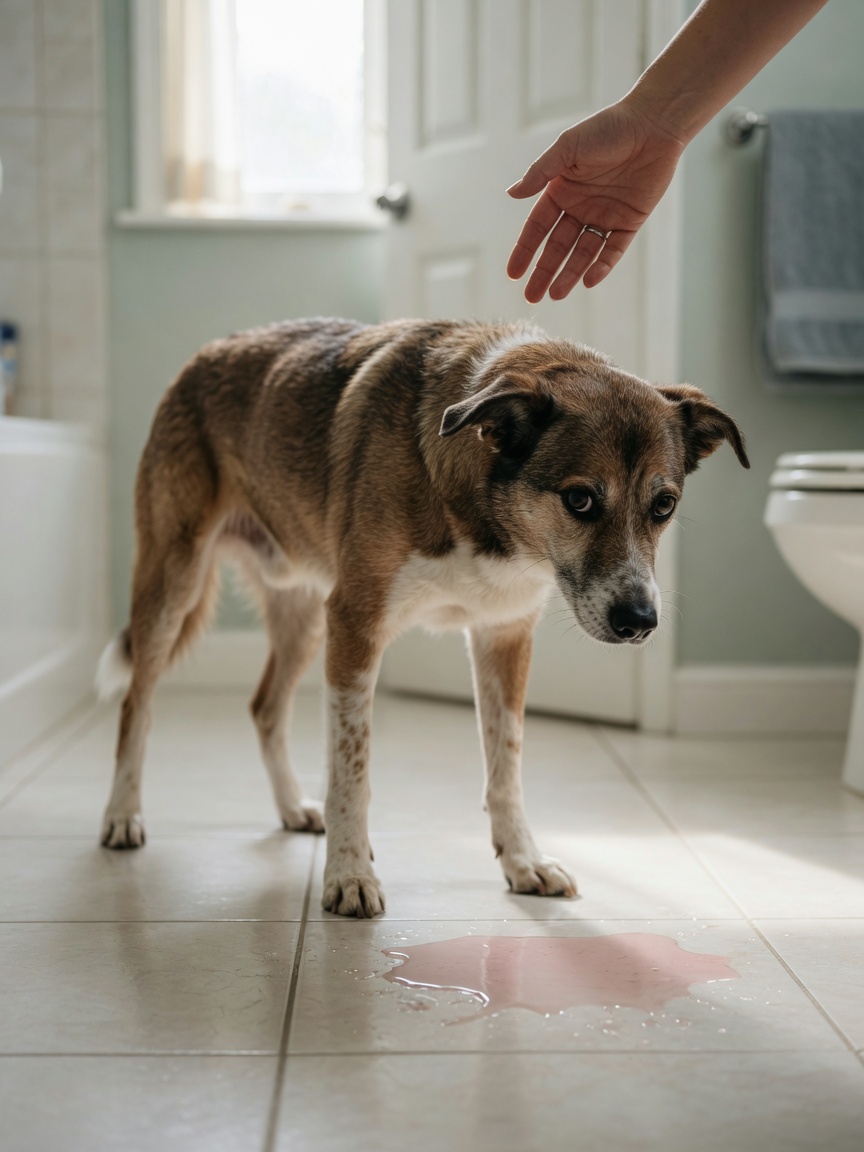
The classic signs of a lower urinary tract infection — involving the bladder (cystitis) and urethra — are hard to miss once you know what to look for:
- Frequent urination: Your dog asks to go outside far more often than usual, often producing only small amounts each time.
- Straining to urinate: Obvious effort, squatting for extended periods, or crying during urination.
- Blood in the urine (hematuria): Pink, red, or brown-tinged urine — may appear as spots on light surfaces.
- Accidents indoors: A previously house-trained dog begins urinating inside, often appearing confused or distressed about it.
- Licking at the urinary opening: An attempt to relieve discomfort.
- Strong or unusual odor to the urine.
Upper urinary tract involvement (kidney infection) produces additional systemic signs: fever, lethargy, loss of appetite, vomiting, and pain when the lower back or kidney area is touched. This is a veterinary emergency.
Male vs. Female Dogs: Key Differences
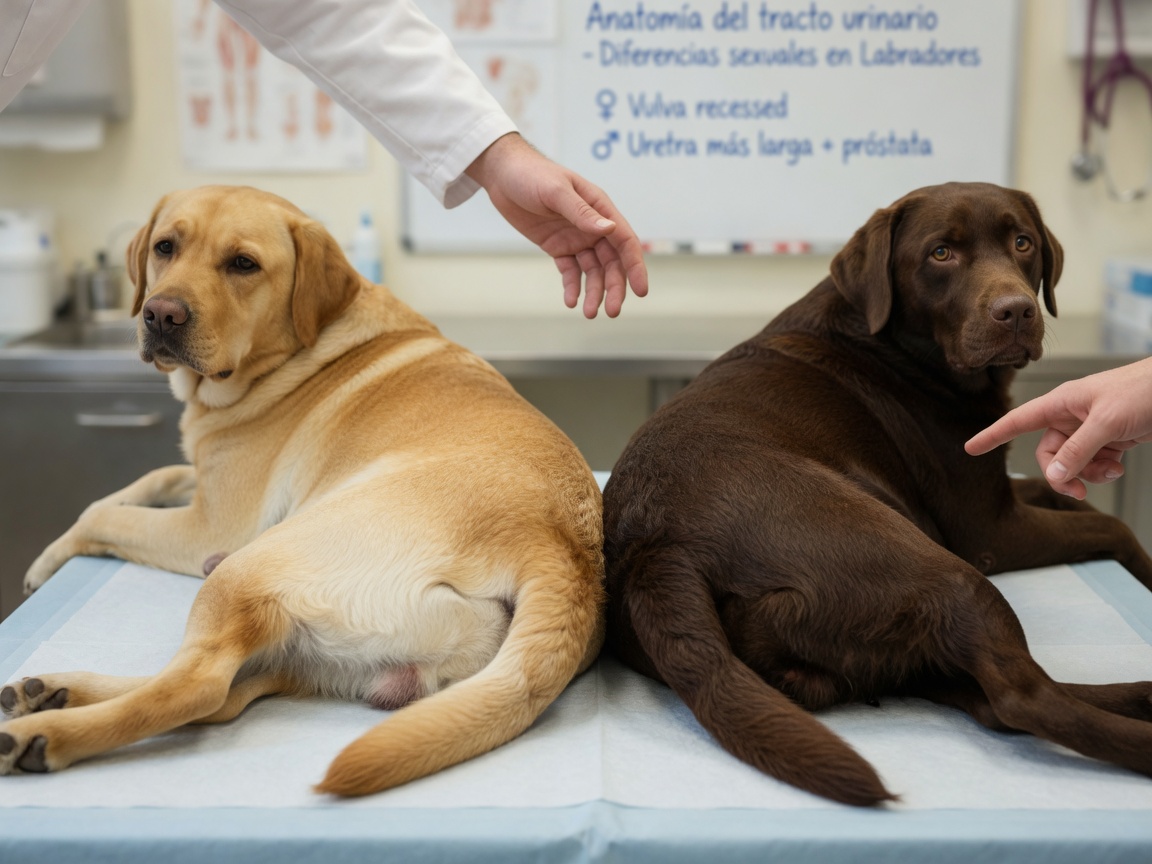
Female dogs develop UTIs far more frequently than males. Their urethra is shorter and wider, providing a much easier pathway for bacteria ascending from the environment. Spayed females, who lack estrogen's trophic effect on the urethral and vaginal mucosa, face particularly elevated risk as they age. Recessed vulvas — a conformation issue in some breeds — can trap moisture and bacteria, creating a reservoir for ascending infection.
In male dogs, the longer, narrower urethra acts as a more effective barrier. However, when male dogs do develop UTIs, there is a higher likelihood of an underlying structural cause — most notably an enlarged prostate (benign prostatic hyperplasia) or prostatitis. Bladder or urethral stones are also common in males, particularly in breeds like Dalmatians, English Bulldogs, and miniature Schnauzers. A UTI in an intact male dog should always prompt investigation of prostate health.
Diagnosis: Why Urinalysis Matters
Accurate diagnosis requires more than observing symptoms, as several other conditions — including bladder stones, tumors, and vaginitis — can mimic a UTI. Veterinary guidelines from the International Society for Companion Animal Infectious Diseases (ISCAID) recommend urine culture and sensitivity testing as the gold standard for diagnosis. This involves collecting a sterile urine sample, ideally via cystocentesis (a needle passed through the abdominal wall directly into the bladder, which sounds alarming but is quick and well-tolerated), and sending it to a laboratory to identify the exact bacteria and determine which antibiotics will kill it.
A basic urinalysis — checking pH, specific gravity, protein, blood, and examining cells under a microscope — can be done in-clinic and provides immediate information. However, treating based on urinalysis alone, without culture, risks using the wrong antibiotic and contributing to antimicrobial resistance. For a dog experiencing their first uncomplicated UTI, some vets may treat empirically; for recurrent infections, culture is essential.
Antibiotic Treatment
Once the causative bacteria and its antibiotic sensitivities are known, treatment is typically straightforward. For uncomplicated lower UTIs, a 7–14 day course of an appropriate antibiotic (amoxicillin-clavulanate and trimethoprim-sulfamethoxazole are commonly used first-line options) usually resolves the infection completely. It is critical to complete the entire course, even if your dog seems better within a few days — stopping early can allow resistant bacteria to survive and repopulate.
A follow-up urine culture 5–7 days after completing the antibiotic confirms eradication. This step is especially important for recurrent or complicated infections.
Complicated UTIs: Stones, Anatomy, and Chronic Cases
A UTI is classified as "complicated" when there is an underlying structural or functional abnormality that prevents normal resolution. Bladder stones are one of the most common complications — the stones harbor bacteria within their crystal structure, making it impossible to clear the infection without also addressing the stones. Depending on the stone type (struvite, calcium oxalate, urate, or cystine), management may include a dissolution diet, urinary acidifiers, or surgical removal. Anatomical issues like ectopic ureters, urethral strictures, or persistent vaginal inflammation also fall into this category and require specialist evaluation.
Dogs with recurrent UTIs (three or more per year) warrant thorough investigation with imaging (ultrasound, X-rays) to rule out these complicating factors.
Prevention Through Hydration and Diet
Keeping urine dilute is one of the most effective preventive strategies. Dilute urine is less hospitable to bacterial growth and more effective at physically flushing the bladder. Encourage water intake by offering fresh water in multiple locations, using a pet water fountain, and incorporating wet food or water-rich foods into the diet.
Urinary support diets — formulated to maintain an optimal urine pH and reduce mineral concentration — can be beneficial for dogs prone to stone formation or recurrent infections. Maintaining a healthy body weight reduces pressure on the bladder and improves overall immune function. For female dogs with recessed vulvas, periodic cleaning of the skin folds can reduce bacterial load.
Urinary Support Nutrition
For dogs prone to urinary issues, a specially formulated urinary support diet can make a meaningful difference in long-term bladder health. Zooplus carries a wide selection of veterinary-grade urinary support foods from leading brands, as well as wet food options to help keep your dog well-hydrated. Browse their urinary health range to find an option appropriate for your dog's needs — and always introduce dietary changes under veterinary guidance.
Key Takeaways
- UTIs develop when bacteria colonize the bladder or urethra; female dogs are significantly more susceptible than males.
- Key signs include frequent urination, straining, blood in the urine, accidents indoors, and unusual odor.
- Urine culture — not just urinalysis — is the gold standard for diagnosis and selecting the right antibiotic.
- Complicated UTIs associated with bladder stones or anatomical abnormalities require targeted management beyond antibiotics alone.
- High water intake and appropriate diet are the cornerstone of UTI prevention.
References
- Weese JS, et al. "International Society for Companion Animal Infectious Diseases (ISCAID) guidelines for the diagnosis and management of bacterial urinary tract infections in dogs and cats." Vet J. 2019;247:8-25. PMID: 30926082
- Smee N, et al. "UTIs in small animals: part 1." J Am Anim Hosp Assoc. 2013;49(1):1-8. PMID: 23325462