
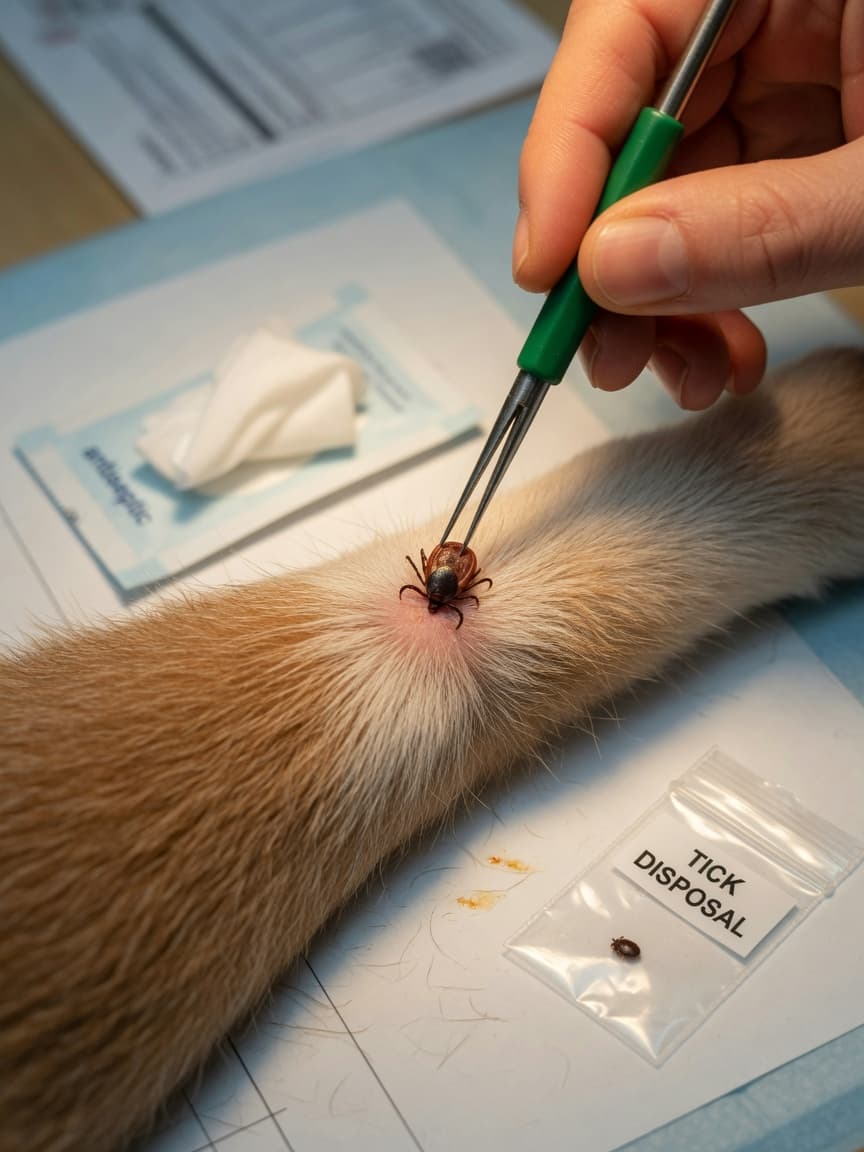
Ticks in Europe: A Growing Concern for Pet Owners
Ticks are blood-feeding external parasites that pose a significant health risk to dogs, cats, and their owners across Europe. Unlike fleas, they are not merely irritating — they can transmit a range of serious pathogens through a single bite. As European climates shift, tick populations are expanding in range and activity season, making prevention and prompt removal more important than ever.
This guide covers the tick species most commonly encountered in Europe, the diseases they carry, and — crucially — the correct technique for safe removal. It also outlines when you should seek veterinary advice following a tick bite, and the most effective preventive products available.
Tick Species Across Europe
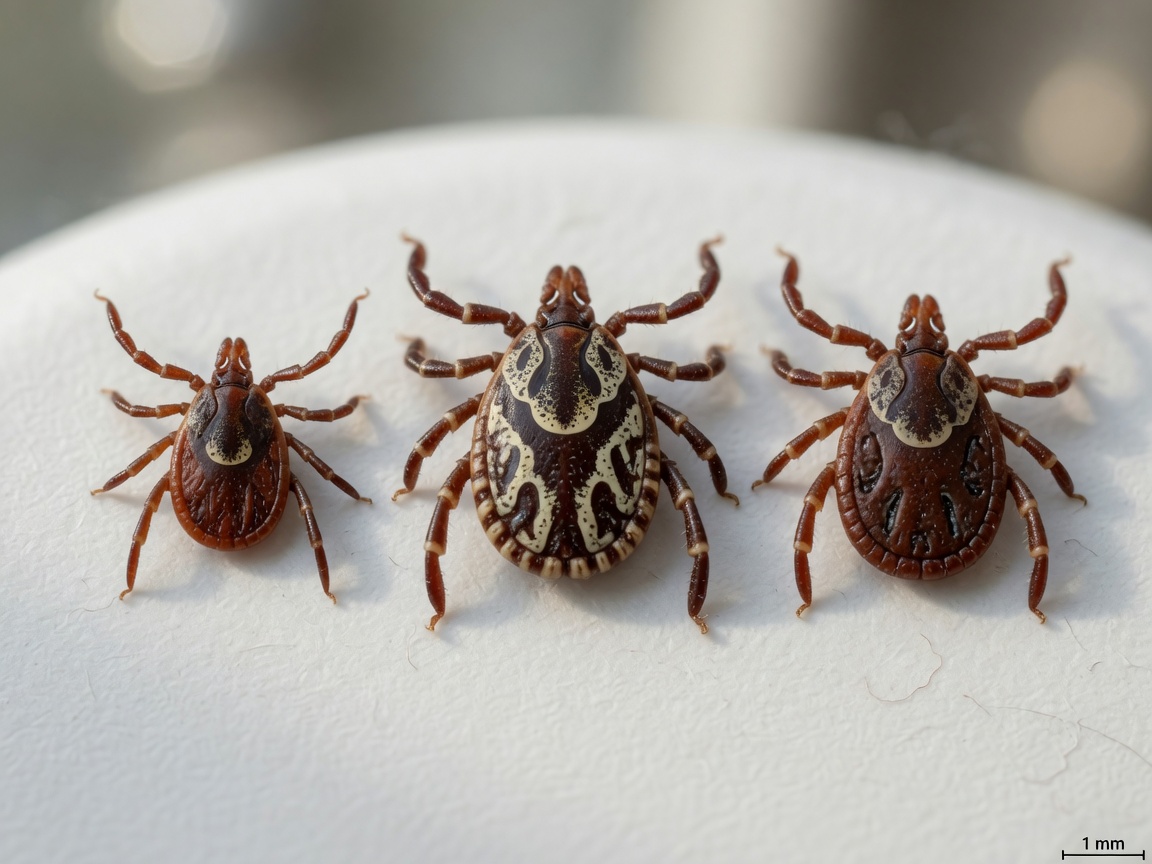
Not all ticks are the same, and the species present varies considerably by region.
Ixodes ricinus — The Castor Bean Tick
Ixodes ricinus is the most widely distributed tick species in Europe, found across the British Isles, Scandinavia, Western and Central Europe, and increasingly into southern regions. It thrives in woodland, grassland, and scrubland, and is active whenever temperatures exceed 4°C — meaning it poses a year-round risk in mild climates such as the UK's Atlantic coast or parts of the Iberian Peninsula. This species is the primary vector of Lyme disease in Europe.
Dermacentor Species — Meadow and Ornate Ticks
Dermacentor reticulatus and Dermacentor marginatus are particularly prevalent in southern and central Europe, including France, Spain, Poland, and the Balkans. These species are the main vectors of canine Babesiosis in Europe and are also associated with tick paralysis in dogs. Dermacentor ticks tend to be larger than Ixodes and have characteristic ornate markings on their backs.
Rhipicephalus sanguineus — The Brown Dog Tick
More common in Mediterranean regions, Rhipicephalus sanguineus can complete its entire life cycle indoors and is therefore capable of establishing persistent infestations in kennels and homes. It is a vector of several pathogens including Ehrlichia canis.
Diseases Transmitted by Ticks in Europe
Lyme Disease (Borreliosis)
Caused by the bacterium Borrelia burgdorferi, Lyme disease is the most prevalent tick-borne illness in Europe, transmitted primarily by Ixodes ricinus. In dogs, signs include lethargy, lameness (often shifting between limbs), fever, and in chronic cases, kidney disease. Transmission typically requires a tick to be attached for at least 24 to 48 hours, underlining the importance of daily tick checks and prompt removal.
Babesiosis
Babesiosis, caused by Babesia canis and related species, is a potentially fatal disease of red blood cells in dogs. Historically associated with southern and central Europe, its range has been expanding northwards in recent decades, with cases now reported in the Netherlands, Belgium, and parts of Germany. Signs include pale gums, lethargy, dark urine, and collapse. This is a veterinary emergency requiring immediate treatment.
Other Tick-Borne Pathogens
Anaplasmosis (Anaplasma phagocytophilum) and Ehrlichiosis are also transmitted by ticks across Europe and cause flu-like illness in dogs. Cats are generally more resistant to tick-borne disease but can be affected by certain pathogens.
How to Remove a Tick Safely: The ESCCAP Method
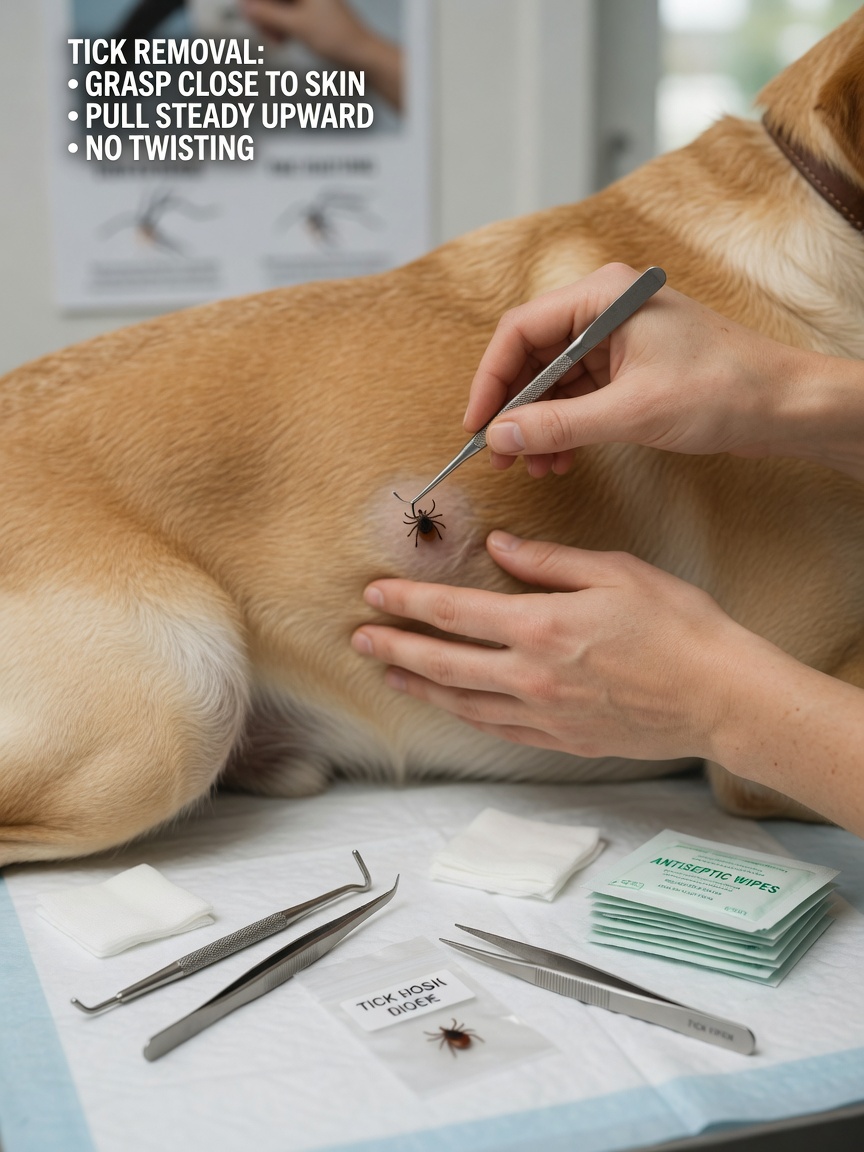
Correct removal technique is critical. Incorrect methods can cause the tick to regurgitate its gut contents into the bite wound, increasing the risk of pathogen transmission.
- Use a fine-tipped tick removal tool (a notched tick hook, available from vets and pet retailers) or fine-tipped tweezers. Avoid broad-tipped or blunt tweezers which may crush the tick's body.
- Grasp the tick as close to the skin surface as possible — aim for the head, not the body.
- Apply steady, gentle upward pressure with a slight twisting or rotating motion. Do not jerk or yank.
- Pull slowly and steadily until the tick releases. This may take 10 to 20 seconds of sustained pressure.
- Never squeeze, crush, or puncture the tick's body during removal.
- Do not apply petroleum jelly, nail polish, alcohol, or a lit match to the tick. These methods cause the tick to regurgitate and dramatically increase disease risk.
- After removal, disinfect the bite site with an antiseptic wipe or dilute iodine solution.
- Wash your hands thoroughly and dispose of the tick by placing it in a sealed bag or submerging it in alcohol. Do not crush it with your fingers.
ESCCAP guideline GL3 advises pet owners to check their animals for ticks after every outdoor excursion, particularly through long grass, woodland, or moorland.
After Removal: When to See Your Vet
Monitor the bite site and your pet's general health for at least four weeks following tick removal. Contact your vet promptly if you notice any of the following:
- Persistent redness, swelling, or discharge at the bite site.
- Lethargy or reduced appetite lasting more than 24 hours.
- Lameness or reluctance to move.
- Fever (a dog's normal temperature is 38.3–39.2°C).
- Pale or yellowish gums — this is a sign of possible Babesiosis and requires urgent attention.
- Any neurological signs including wobbling, weakness, or seizures.
If the tick's mouthparts remain embedded in the skin after removal, do not dig at the site. Cleanse the area and allow it to heal naturally — embedded mouthparts rarely cause serious problems and will typically be expelled by the body. However, if the area becomes infected, seek veterinary advice.
Preventive Products: Your First Line of Defence
The safest approach to tick-borne disease is preventing attachment in the first place. Several EU-licensed products offer reliable tick control as recommended under ESCCAP GL3.
- Bravecto (fluralaner) — an oral chew or spot-on providing up to 12 weeks of protection against ticks and fleas. Its extended duration is particularly convenient for owners of dogs that spend significant time outdoors.
- NexGard Spectra (afoxolaner/milbemycin oxime) — a monthly oral chew for dogs that combines tick and flea control with protection against intestinal worms and heartworm.
- Seresto collar — releases imidacloprid and flumethrin continuously from the collar material, providing up to eight months of tick and flea repellency. Studies show it repels ticks before they attach, reducing the window for pathogen transmission.
Consult your vet to choose the most appropriate product based on your pet's health status, the local tick species present, and your travel plans — particularly if you holiday in Mediterranean or eastern European countries where Babesiosis risk is higher.
Seasonal Risk and Year-Round Vigilance
Tick activity peaks in spring (March to May) and again in autumn (August to November) in much of northern Europe. However, in mild, maritime climates and increasingly across central Europe due to climate change, ticks remain active throughout the year. Year-round preventive treatment, combined with daily tick checks after outdoor activity, is the approach endorsed by ESCCAP for most European regions.
Products for tick prevention are widely available through your vet and through online pet retailers such as Zooplus. Always ensure that any product purchased is licensed for use in your country and appropriate for your pet's species, weight, and age.