
Dog Chemotherapy: What to Expect, Side Effects & Quality of Life
Important: A cancer diagnosis in your dog is frightening, and decisions about chemotherapy are among the hardest any owner faces. This article provides factual information to help you ask better questions — it is not a substitute for oncology advice tailored to your dog's specific cancer type, stage, and overall health. Always work with a board-certified veterinary oncologist when chemotherapy is being considered.
Is Canine Chemotherapy the Same as Human Chemotherapy?
The drugs used in dogs — cyclophosphamide, vincristine, doxorubicin, lomustine, carboplatin — are the same classes used in human oncology. The critical difference is the dosing philosophy. Veterinary oncologists deliberately use lower doses than human oncologists, prioritising quality of life over maximal tumour kill. The goal is not to cure at any cost; it is to extend life while keeping your dog feeling well enough to enjoy it. As a result, the side effects that make human chemotherapy so gruelling are significantly less common and less severe in dogs.
Approximately 75–80% of dogs receiving chemotherapy experience no side effects at all or only mild, temporary ones. Severe, hospitalisation-requiring reactions occur in only 5–10% of cases, according to data from the American Veterinary Medical Association (AVMA).
Which Cancers Are Treated with Chemotherapy in Dogs?
Chemotherapy is most effective for blood-based and lymphatic cancers, and less effective as a sole treatment for solid tumours:
- Lymphoma: The most common indication. The CHOP protocol (cyclophosphamide, doxorubicin, vincristine, prednisolone) achieves remission in 80–90% of dogs, with median survival times of 12–14 months in B-cell lymphoma.
- Leukaemia: Chronic lymphocytic leukaemia (CLL) is often slow-growing and managed with oral chlorambucil; acute forms are more aggressive.
- Mast cell tumours: Adjuvant chemotherapy with lomustine or vinblastine is used after surgery for high-grade MCTs or when margins are incomplete.
- Osteosarcoma: Carboplatin or doxorubicin after amputation doubles median survival from 4–5 months (surgery alone) to 10–12 months.
- Haemangiosarcoma: Doxorubicin-based protocols extend survival after splenectomy, though prognosis remains guarded (median 4–6 months with treatment).
- Transitional cell carcinoma (bladder cancer): Combinations of mitoxantrone and piroxicam, or newer protocols, achieve partial responses in about 35% of dogs.
What Are the Real Side Effects of Chemo in Dogs?
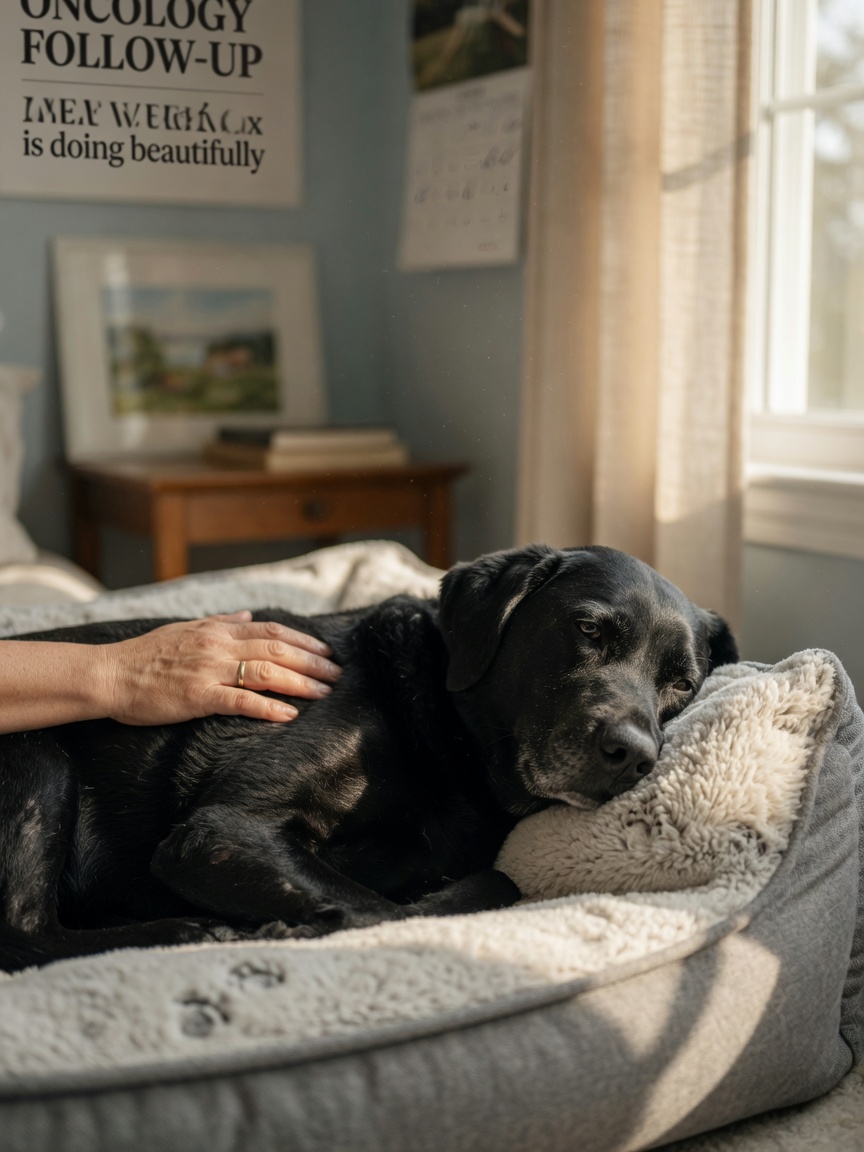
Because veterinary protocols use lower doses, side effects are typically milder and shorter-lived than in humans:
- Gastrointestinal upset (most common): Mild vomiting, reduced appetite, or soft stools for 3–5 days after each treatment in roughly 20–30% of dogs. Anti-nausea medication (maropitant, ondansetron) is routinely prescribed to manage this.
- Bone marrow suppression: Some drugs temporarily lower white blood cell counts, increasing infection risk. A neutrophil count check 7 days post-treatment is standard. If counts drop too low, treatment is delayed or dose-reduced.
- Hair loss: Dogs generally do not lose their coats the way humans do. Breeds with continuously growing hair (Poodles, Bichons, Old English Sheepdogs) may experience thinning; most short-coated breeds see no change.
- Fatigue: A day or two of lethargy after each session is common and usually resolves quickly.
- Doxorubicin cardiotoxicity: Cumulative doses of doxorubicin can damage heart muscle, particularly in breeds predisposed to dilated cardiomyopathy. Cardiac monitoring is built into protocols using this drug.
A 2020 study published in Veterinary and Comparative Oncology found that owner-assessed quality of life scores remained stable or improved in 73% of dogs receiving CHOP chemotherapy for lymphoma throughout the treatment period. PubMed PMID 32441431.
How Is Chemotherapy Administered?
Chemotherapy is given in several ways depending on the drug:
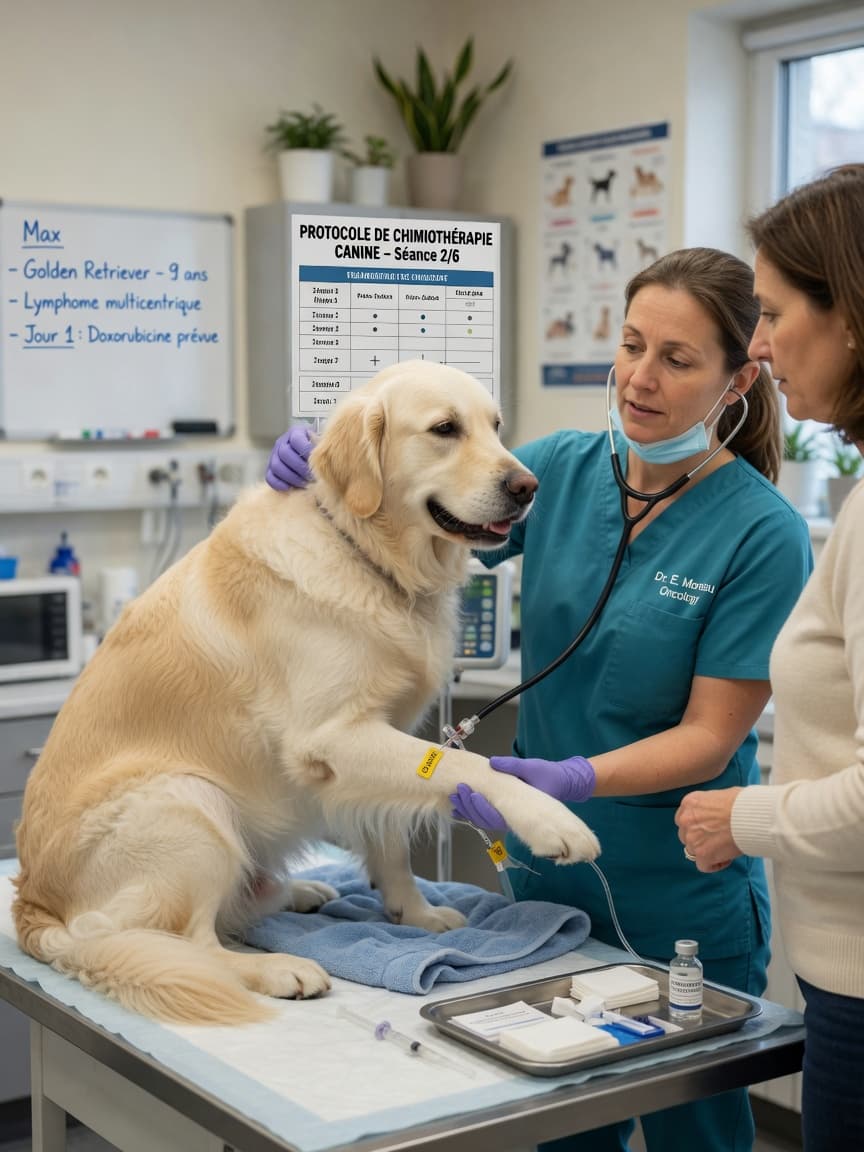
- Intravenous infusion: Most cytotoxic drugs (vincristine, doxorubicin, carboplatin) are given through an intravenous catheter, usually over 15 minutes to 2 hours. Your dog stays at the clinic for monitoring and goes home the same day.
- Oral tablets: Cyclophosphamide, chlorambucil, and lomustine are given as pills at home. These require careful handling — wear gloves, store securely, and wash hands thoroughly.
- Metronomic chemotherapy: Very low-dose daily oral chemotherapy (cyclophosphamide plus an NSAID) suppresses tumour blood vessel growth rather than directly killing cancer cells, with minimal side effects. Often used as a maintenance or palliative strategy.
How Much Does Dog Chemotherapy Cost?
Cost is a significant factor and deserves an honest discussion:
- CHOP protocol for lymphoma: £3,000–£6,000 over 19–25 weeks in the UK; $4,000–$8,000 in the US
- Single-agent carboplatin (osteosarcoma): £1,500–£3,000 for four to six treatments
- Metronomic oral protocols: £50–£150 per month — by far the most affordable option
- Initial oncology consultation: £150–£300, usually not covered as a new-illness referral under standard pet insurance
Many pet insurance policies cover chemotherapy up to the annual limit, provided the cancer was not a pre-existing condition. The Guardian published a detailed guide on pet insurance cancer cover in 2024 that is worth reading before an emergency arises.
Quality of Life: The Question That Matters Most
The most important question is not "can we treat this?" but "will treatment give my dog a good life for longer?" Veterinary oncologists use validated quality-of-life tools — including the VCOG-CTCAE grading scale — to monitor how dogs cope during treatment. Most owners report that their dogs seem unaware they are receiving chemotherapy, continuing to eat, play, and engage normally between sessions. Choosing not to treat is also a valid decision; palliative care focused on pain management and quality time can be equally compassionate.
Nutritional support during chemotherapy is increasingly recognised as important. Cancer and chemotherapy both increase nutritional demands. HolistaPet's range of wellness supplements includes hemp-based options that some owners use alongside conventional treatment to support appetite and comfort — always with veterinary approval. Zooplus also stocks veterinary oncology-appropriate diets such as high-protein, low-carbohydrate formulas that may complement cancer treatment.
Key Takeaways
- Veterinary chemotherapy uses lower doses than human protocols, prioritising quality of life.
- 75–80% of dogs experience no or only mild side effects; severe reactions occur in just 5–10%.
- Lymphoma has the best response rates — 80–90% achieve remission with CHOP protocol.
- Dogs generally do not lose their coats; short-coated breeds see virtually no change.
- Full CHOP protocol costs £3,000–£6,000 in the UK; oral metronomic protocols cost from £50/month.
- Quality of life remains stable or improves in nearly three-quarters of dogs on treatment.
References
- Tzannes S, et al. "Owners' perception of their cats' and dogs' quality of life during, and after, cancer treatment with CHOP-based chemotherapy." Veterinary and Comparative Oncology. 2020;18(4):702–714. PubMed PMID 32441431
- Vail DM, Thamm DH, Liptak JM (eds). Withrow and MacEwen's Small Animal Clinical Oncology. 6th ed. Elsevier; 2019. Core reference for canine oncology protocols. Indexed summary: PubMed PMID 31653564