
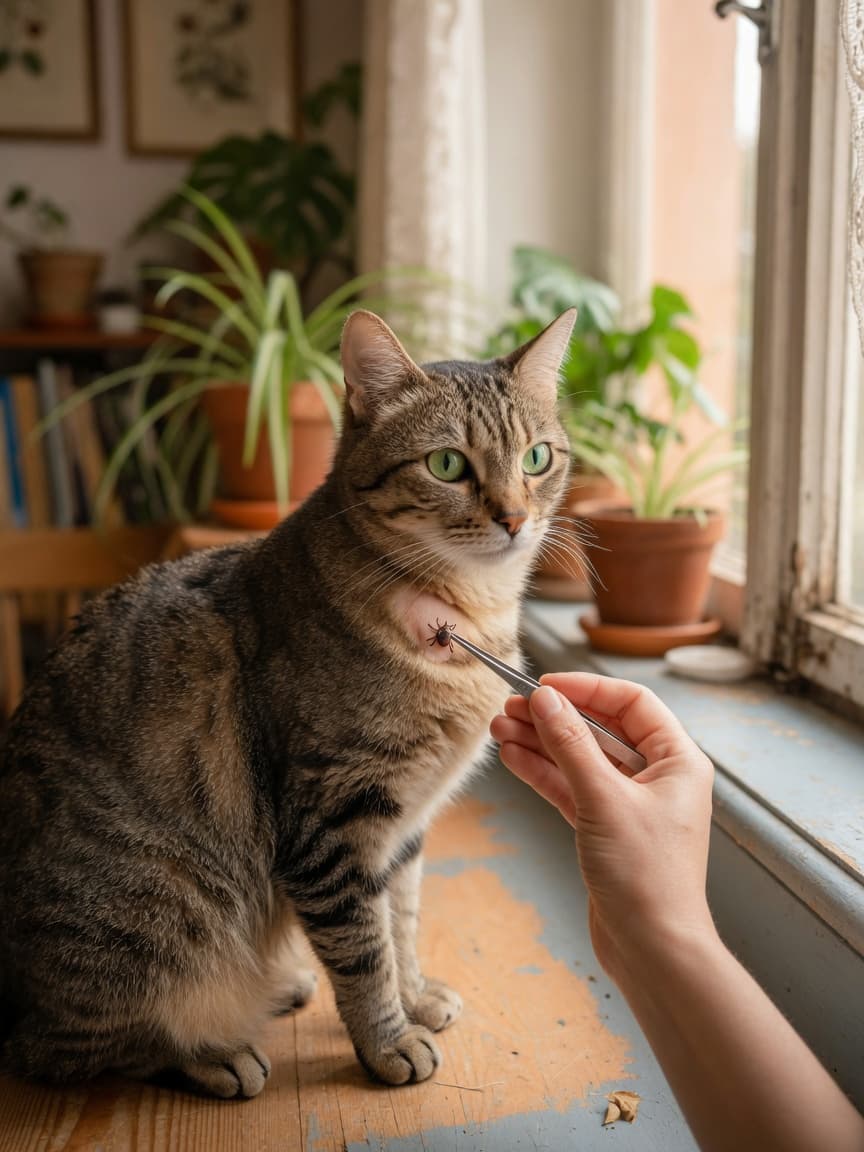
How to Remove a Tick From a Dog or Cat: The Correct Method
Ticks are not just unpleasant — they transmit serious diseases including Lyme disease and babesiosis. Removing them correctly and quickly reduces transmission risk.
What You Need
- Fine-tipped tick removal tool (tick twister or tick hook) — available at pharmacies and vet practices
- Gloves if available
- Antiseptic
The Correct Removal Method
- Part the fur to clearly see the tick
- Place the tick removal tool as close to the skin as possible, around the tick's mouthparts
- Twist steadily in one direction (not pull straight out)
- The tick will release and come out whole
- Clean the bite site with antiseptic
- Dispose of the tick (do not crush with fingers — flush down the toilet or put in a sealed bag)
What NOT to Do
- Do not use petroleum jelly, nail polish, or heat — these cause the tick to regurgitate into the bite, increasing disease risk
- Do not pull straight up — mouthparts may break off and remain in the skin
- Do not crush the tick with your fingers
Disease Transmission Risk
The tick must usually be attached for 24–48 hours to transmit Lyme disease. Check pets daily in tick season and remove promptly. Use prescription tick prevention year-round in areas with high tick populations.
After Removal
Monitor the bite site for redness, swelling, or a spreading rash over the following weeks. Watch for signs of illness (lethargy, fever, joint pain) in the weeks after a tick bite and consult your vet if concerned.
Key takeaways
- Use a proper tick removal tool (tick twister or hook) and twist steadily rather than pulling, which prevents mouthparts breaking off in the skin
- The tick must typically be attached for 24–48 hours to transmit Lyme disease, so daily checks and prompt removal during tick season are crucial
- Never use petroleum jelly, nail polish, or heat, as these cause the tick to regurgitate infected material into the bite wound
- After removal, monitor the bite site for redness, swelling, or spreading rash, and watch your pet for signs of illness like lethargy or fever
Frequently asked questions
What's the safest way to remove a tick from my dog or cat?
Use a fine-tipped tick removal tool, place it as close to the skin as possible around the tick's mouthparts, and twist steadily in one direction until the tick releases whole. This method prevents mouthparts from breaking off and reduces disease transmission risk compared to pulling or using home remedies.
How long can a tick be attached before it spreads Lyme disease?
Ticks typically need to be attached for 24–48 hours before transmitting Lyme disease. This means checking your pet daily during tick season and removing ticks promptly can significantly reduce your pet's infection risk.
Can I use petroleum jelly or nail polish to remove a tick?
No — petroleum jelly, nail polish, and heat are not recommended because they cause the tick to regurgitate infected material directly into the bite wound, actually increasing disease transmission risk. A proper tick removal tool is the safest option.
What should I do after removing a tick from my pet?
Clean the bite site with antiseptic and dispose of the tick safely by flushing it down the toilet or sealing it in a bag. Over the following weeks, monitor the bite for redness, swelling, or spreading rash, and watch your pet for signs of illness like lethargy, fever, or joint pain.