ForPetsHealthcare
Dogs

Why You Should Microchip Your Cat

By Julia WrenfieldUpdated August 4, 20264 min read
Evidence-based · Sources checked
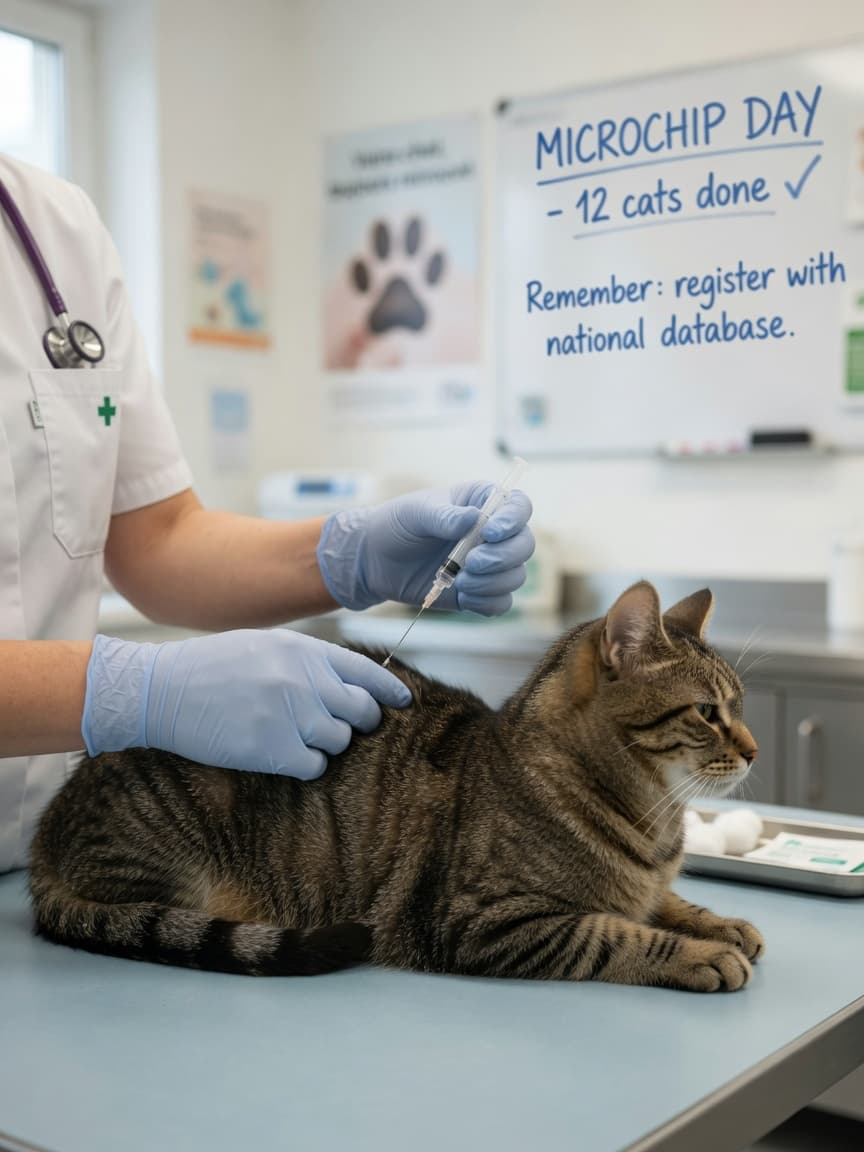
{"en": "Veterinarian scanning microchip on tabby cat with handheld microchip reader during pet identification procedure", "es": "Veterinario escaneando microchip en gato atigrado con lector port\u00e1til durante procedimiento de identificaci\u00f3n de mascotas", "fr": "V\u00e9t\u00e9rinaire scannant une puce \u00e9lectronique sur un chat tigr\u00e9 avec un lecteur portatif lors d'une identification animale", "de": "Tierarzt scannt Microchip bei Katze mit tragbarem Mikrochip-Leseger\u00e4t w\u00e4hrend Haustier-Identifizierungsverfahren", "nl": "Dierenarts scant microchip in gestreepte kat met handheld microchip-reader tijdens dieridentificatieprocedure", "pt": "Veterin\u00e1rio digitalizando microchip em gato malhado com leitor port\u00e1til durante procedimento de identifica\u00e7\u00e3o de animais", "it": "Veterinario che scansiona microchip su gatto tigrato con lettore portatile durante procedura di identificazione animale"}

Every year, thousands of beloved cats go missing across Europe, and many never find their way home. Whilst pet ID tags are helpful, they can fall off or become illegible over time. Microchipping offers a permanent, fail-safe solution that dramatically increases your chances of being reunited with your feline friend if they ever wander off. This simple procedure has already reunited countless cats with their owners, and it's one of the most important decisions you can make for your cat's safety and wellbeing.

What Is a Microchip and How Does It Work?
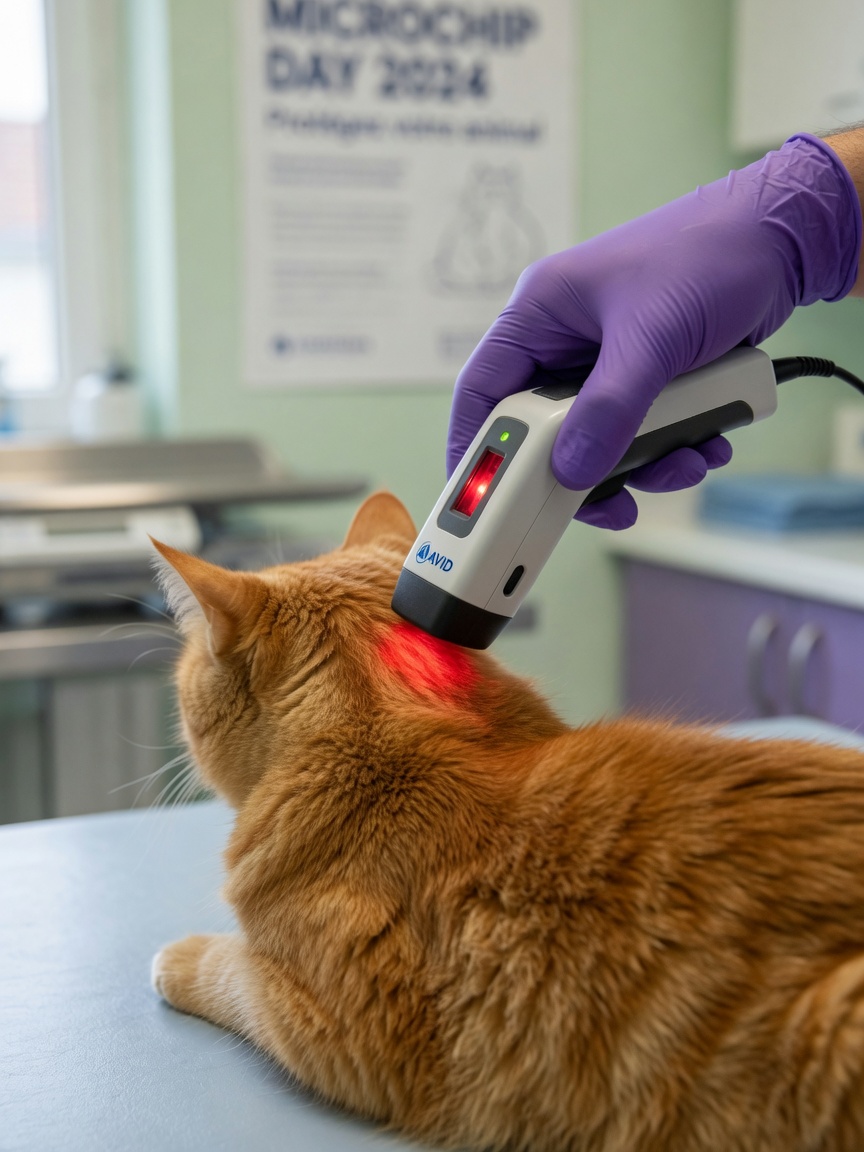
Veterinary microchip scanner reading an implanted microchip on a ginger cat's back

A microchip is a tiny electronic device, about the size of a grain of rice, that contains a unique identification number specific to your cat. The chip itself contains no battery and doesn't actively transmit signals. Instead, when a scanner passes over it, the microchip responds by transmitting your cat's identification number wirelessly to the scanner device.

The procedure is straightforward and minimally invasive. Your veterinary surgeon will inject the microchip beneath your cat's skin, typically between the shoulder blades, using a needle similar to those used for routine vaccinations. Most cats tolerate this procedure extremely well, and anaesthesia is not required. Once implanted, the microchip is designed to last your cat's entire lifetime.

The Critical Importance of Registration

Having your cat microchipped is only half the battle. The microchip itself is useless without proper registration. You must register your cat's microchip number with a pet registry database and keep your contact information current.

  • Register your microchip immediately after the procedure
  • Update your address and phone number whenever you move house
  • Provide alternative contact details of a trusted friend or family member
  • Regularly verify your registration details are correct in the database

Many cats are not reunited with their owners simply because their microchip details were never registered or the information was outdated.

Safety and Medical Benefits

Beyond identification, microchipping offers additional peace of mind. Veterinary surgeons across Europe can scan any cat brought into their clinic, instantly accessing vital information. This proves invaluable if your cat has medical conditions, allergies, or is on specific medications.

The microchip procedure carries minimal risk. Complications are extremely rare and include minor inflammation at the injection site, which typically resolves within days. The microchip itself is biocompatible and encased in materials designed to integrate safely with your cat's body tissue.

Meeting Insurance and Travel Requirements

Many pet insurance policies now require microchipping for full coverage. Additionally, if you're planning to travel abroad with your cat, a microchip is often a mandatory requirement alongside vaccination documentation. It's an investment that opens doors and demonstrates responsible pet ownership to insurers and authorities alike.

What to Expect During the Procedure

The microchipping procedure takes just moments:

  1. Your vet will locate the correct injection site (usually between the shoulder blades)
  2. The area may be cleaned with an alcohol swab
  3. The microchip is injected beneath the skin
  4. Your vet will scan the chip to confirm it's working correctly
  5. You'll receive documentation with the chip number and registration details

Key Takeaways: Making the Right Choice for Your Cat

Microchipping your cat is one of the most responsible decisions you can make as a pet owner. It's affordable—typically costing between £15 and £30—painless for your cat, and offers lifelong protection. Combined with proper registration and keeping your details updated, a microchip is your cat's best chance of returning home safely if they ever go missing. Make this simple investment today and enjoy greater peace of mind knowing your beloved feline has permanent identification that cannot be lost or damaged.

#why you should microchip your cat#cat health#feline nutrition#forpetshealthcare

Sources & further reading

This article is based on peer-reviewed veterinary research and reputable animal-health sources. Explore the underlying science in our Research Library.

Related articles

The 19 Best Animal Shelters in the Netherlands (2026)

the Netherlands's animal shelters, rescue associations and refuges save thousands of dogs, cats and other animals every year, almost always on tiny budgets and volunteer power. To build the most objective ranking possible, we analysed public Google reviews across more than 56 registered animal-prote…

Read more →

The 25 Best Animal Shelters in Italy (2026)

Italy's animal shelters, rescue associations and refuges save thousands of dogs, cats and other animals every year, almost always on tiny budgets and volunteer power. To build the most objective ranking possible, we analysed public Google reviews across more than 121 registered animal-protection org…

Read more →

The 48 Best Animal Shelters in Germany (2026)

Germany's animal shelters, rescue associations and refuges save thousands of dogs, cats and other animals every year, almost always on tiny budgets and volunteer power. To build the most objective ranking possible, we analysed public Google reviews across more than 152 registered animal-protection o…

Read more →

The 32 Best Animal Shelters in France (2026)

France's animal shelters, rescue associations and refuges save thousands of dogs, cats and other animals every year, almost always on tiny budgets and volunteer power. To build the most objective ranking possible, we analysed public Google reviews across more than 89 registered animal-protection org…

Read more →

The 8 Best Animal Shelters in Portugal (2026)

Portugal's animal shelters, rescue associations and municipal centros de recolha save thousands of dogs, cats and other animals every year, almost always on tiny budgets and volunteer power. To build the most objective ranking possible, we analysed public Google reviews across more than 86 registere…

Read more →

Sphynx Cat Skin care and hygiene: Causes, Signs & Care

Sphynx cats have little to no coat, which means the skin itself takes on jobs that fur normally does — insulation, oil dispersal, and barrier protection — leaving it prone to greasiness, blocked pores, fungal infections, and sunburn. The single most important thing to know is that a Sphynx's skin ne…

Read more →
Disclaimer:This article is for informational purposes only and does not constitute veterinary advice. Always consult a qualified veterinarian for your pet's health concerns.

Free newsletter

Pet health tips, straight to your inbox

Weekly science-backed advice for dog & cat owners. No spam, unsubscribe anytime.