
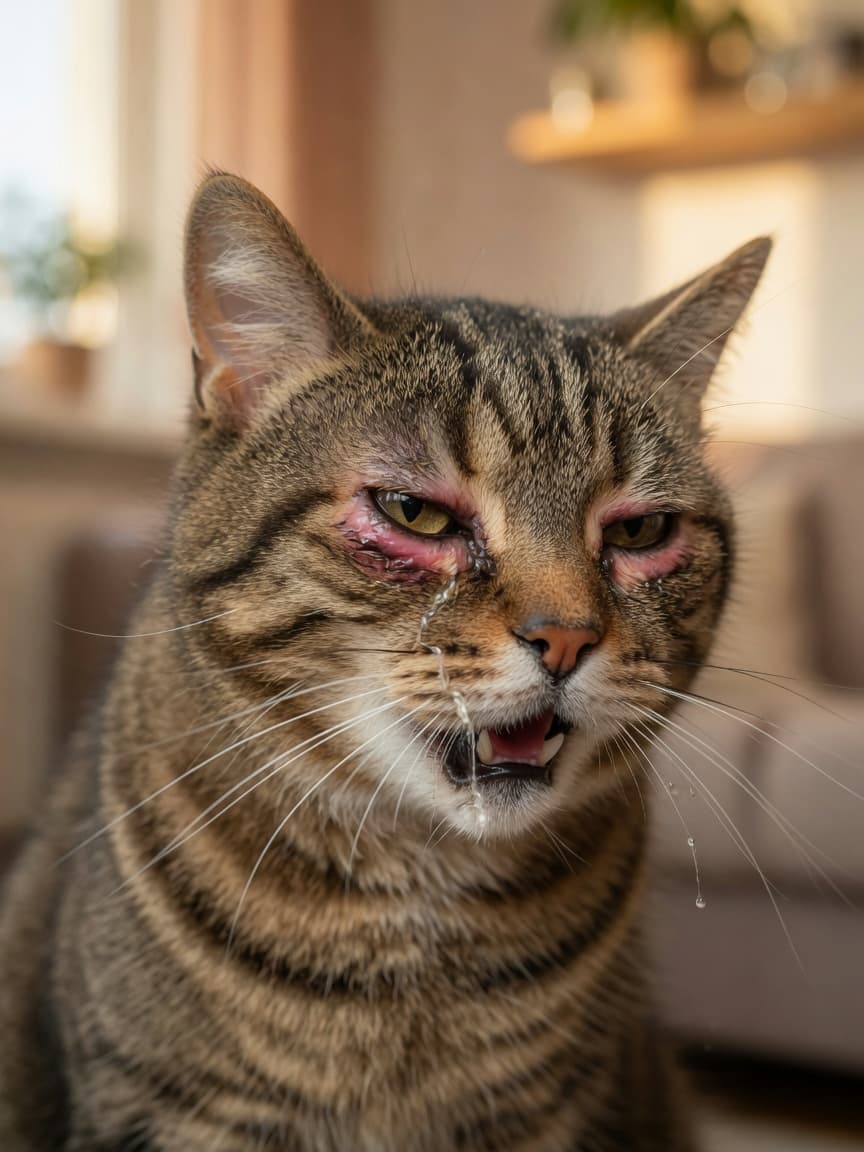
When a Cat Never Quite Gets Over a Cold
Some cats sneeze occasionally and recover fully. Others seem to carry a permanent sniffle — recurring bouts of nasal discharge, watery eyes, and the odd corneal ulcer that comes and goes with stress or illness. In the majority of these cases, feline herpesvirus type 1 (FHV-1) is the underlying cause. It is one of the most prevalent viral infections in the domestic cat population and one of the most frequently misunderstood.
What Feline Herpesvirus Does
FHV-1 is an alphaherpesvirus with a particular affinity for the epithelial cells lining the nasal passages, conjunctiva, and cornea. Primary infection causes the classical signs of feline upper respiratory disease: sneezing, ocular and nasal discharge, conjunctivitis, and in severe cases, ulceration of the cornea or even the skin around the face.
Once infection resolves clinically, the virus does not clear from the body. It establishes lifelong latency within the trigeminal ganglia — the nerve clusters that supply the face. This latent reservoir is the defining characteristic of all herpesviruses and the reason FHV-1 continues to cause problems long after the initial episode.
How Infection Spreads
FHV-1 is transmitted through direct contact with secretions from infected cats — nasal discharge, saliva, and ocular discharge. Aerosol spread over short distances also occurs when infected cats sneeze. The virus can survive briefly on surfaces and hands, making indirect transmission possible in environments where hygiene practices are poor.
Populations at Highest Risk
- Kittens, particularly those in rescue or shelter environments
- Cats in multi-cat households or catteries
- Immunocompromised cats (FIV or FeLV positive, or receiving immunosuppressive medication)
- Cats under physical or psychological stress
- Unvaccinated cats of any age
It is estimated that up to 80 per cent of cats exposed to FHV-1 become persistently infected, and around 45 per cent of latently infected cats will shed virus and experience recurrent signs at some point in their lives.
Recognising Recurrent Episodes
The clinical picture of FHV-1 recurrence can be subtle and is frequently attributed to bacterial sinusitis or allergies without investigation.
Respiratory Signs
- Sneezing — often episodic rather than constant
- Unilateral or bilateral nasal discharge, initially clear then mucopurulent as secondary bacteria colonise
- Nasal congestion causing open-mouth breathing in severe cases
- Loss of smell leading to reduced appetite
Ocular Signs
- Conjunctivitis — redness, chemosis, and discharge
- Corneal ulceration, which may appear as a dull spot on the eye or cause squinting and tearing
- Symblepharon — adhesions between the conjunctiva and cornea or eyelids, usually a consequence of severe neonatal infection
- Chronic herpetic keratitis in some adult cats
Corneal involvement in particular warrants prompt veterinary assessment. Superficial ulcers can progress to deeper stromal disease if untreated, and secondary bacterial infection accelerates this process.
Diagnosis and the Role of Testing
In many cats, the clinical history is sufficiently characteristic that a working diagnosis of FHV-1 recurrence can be made without laboratory testing. PCR testing of conjunctival or nasal swabs can confirm active viral shedding and helps distinguish FHV-1 from calicivirus, another common feline respiratory pathogen with different clinical features and management implications.
A negative PCR does not rule out FHV-1 as the cause of chronic signs — latently infected cats may not shed detectable virus between episodes. The full clinical picture, including the pattern of recurrence and response to treatment, informs the diagnosis as much as any single test.
Management: Reducing Frequency and Severity of Flares
There is no treatment that eliminates the latent virus, but recurrence can be managed effectively in most cats.
Antiviral Treatment
Famciclovir is the oral antiviral most commonly used in cats with moderate to severe recurrent disease. It requires metabolic conversion in the cat to its active form and is generally well tolerated. Topical antiviral eye drops are used for corneal and conjunctival disease. Treatment should be prescribed and overseen by a vet, as dosing differs meaningfully from human protocols.
L-Lysine: A Reassessment
L-lysine supplementation was widely recommended for years based on the premise that it competed with arginine and suppressed viral replication. More recent systematic reviews have found insufficient evidence that it reduces the frequency or severity of FHV-1 recurrences in cats, and some data suggest high doses may actually worsen outcomes. Current feline medicine guidelines do not recommend it as a routine intervention.
Stress Reduction
Since stress is a well-documented trigger for viral reactivation, environmental modifications that reduce anxiety have a genuine role in management. Stable routines, appropriate hiding spaces, pheromone diffusers, and avoiding unnecessary changes to the cat's social environment all contribute. Owners often notice that episodes cluster around house moves, new pets, or periods of owner absence.
Vaccination
FHV-1 vaccination does not prevent infection but significantly reduces the severity of primary disease and lessens viral shedding. It is a core vaccine in the UK and Europe and should be kept up to date in all cats, including those already known to be infected.
Practical Summary
- Recurrent sneezing and eye problems in a cat with a history of respiratory illness strongly suggest FHV-1 — discuss testing and management with your vet
- Any corneal cloudiness or squinting is an urgent reason to seek veterinary assessment the same day
- Maintain vaccinations even in infected cats — they reduce severity of recurrence
- Minimise identifiable stress triggers to reduce the frequency of flares
- Do not assume secondary bacterial signs mean the primary problem is bacterial — treat the underlying herpesvirus
- L-lysine supplementation is no longer recommended without specific veterinary advice