
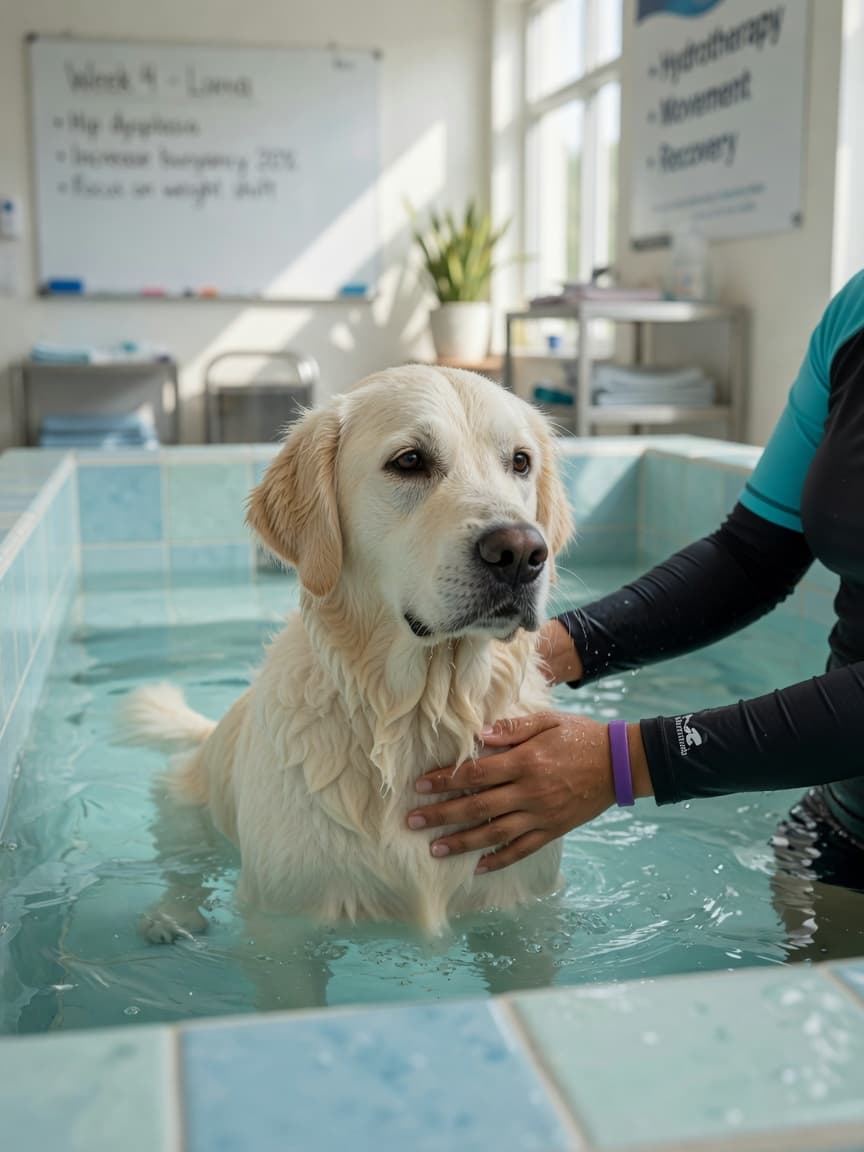
Why Some Dogs Move Better in Water Than on Land
Water provides roughly 12 times the resistance of air and reduces effective body weight by up to 90% when a dog is fully submerged. For a dog recovering from a cruciate ligament repair or struggling with arthritic hips, that combination means the ability to exercise muscles that would be too painful to work on solid ground. Canine hydrotherapy has become one of the most evidence-supported rehabilitation tools in veterinary practice, and demand for it in the UK has grown substantially over the past decade.
Conditions That Respond Well to Hydrotherapy
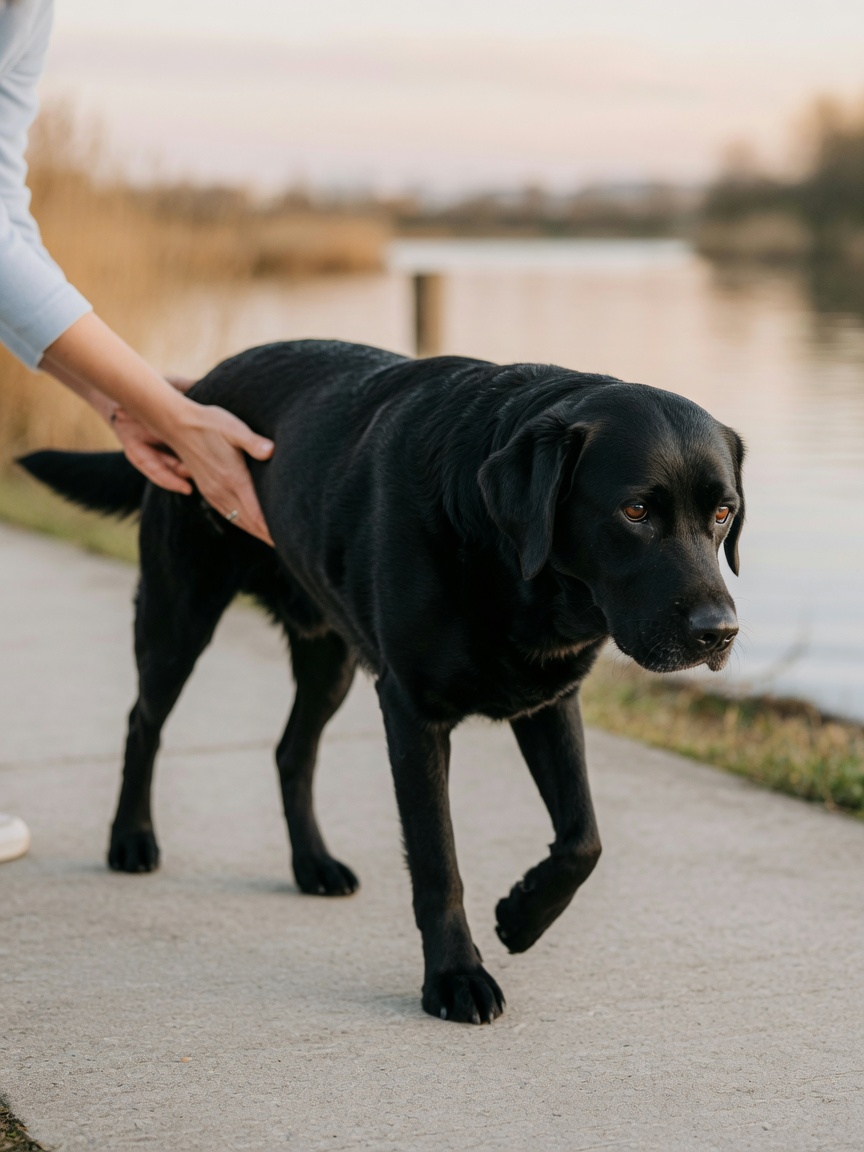
Not every dog needs hydrotherapy, but for certain conditions it provides benefits that land-based exercise simply cannot replicate.
Orthopaedic Conditions
- Cranial cruciate ligament rupture — before and after surgical repair
- Hip dysplasia — maintaining muscle mass and joint range of motion
- Elbow dysplasia and osteochondrosis
- Fracture recovery following fixation
- Osteoarthritis in any joint — particularly beneficial in overweight dogs where land exercise is limited by pain
Neurological Conditions
- Degenerative myelopathy — slowing progression and maintaining limb function
- Intervertebral disc disease recovery — rebuilding hindlimb strength post-surgery
- Wobbler syndrome — improving proprioception and coordination
Other Applications
- Weight management in obese dogs where joint pain limits conventional exercise
- Cardiovascular conditioning in elderly dogs
- Pre-surgical conditioning to improve post-operative outcomes
- Sports dog recovery between competition seasons
Two Types of Hydrotherapy: Pool Versus Underwater Treadmill
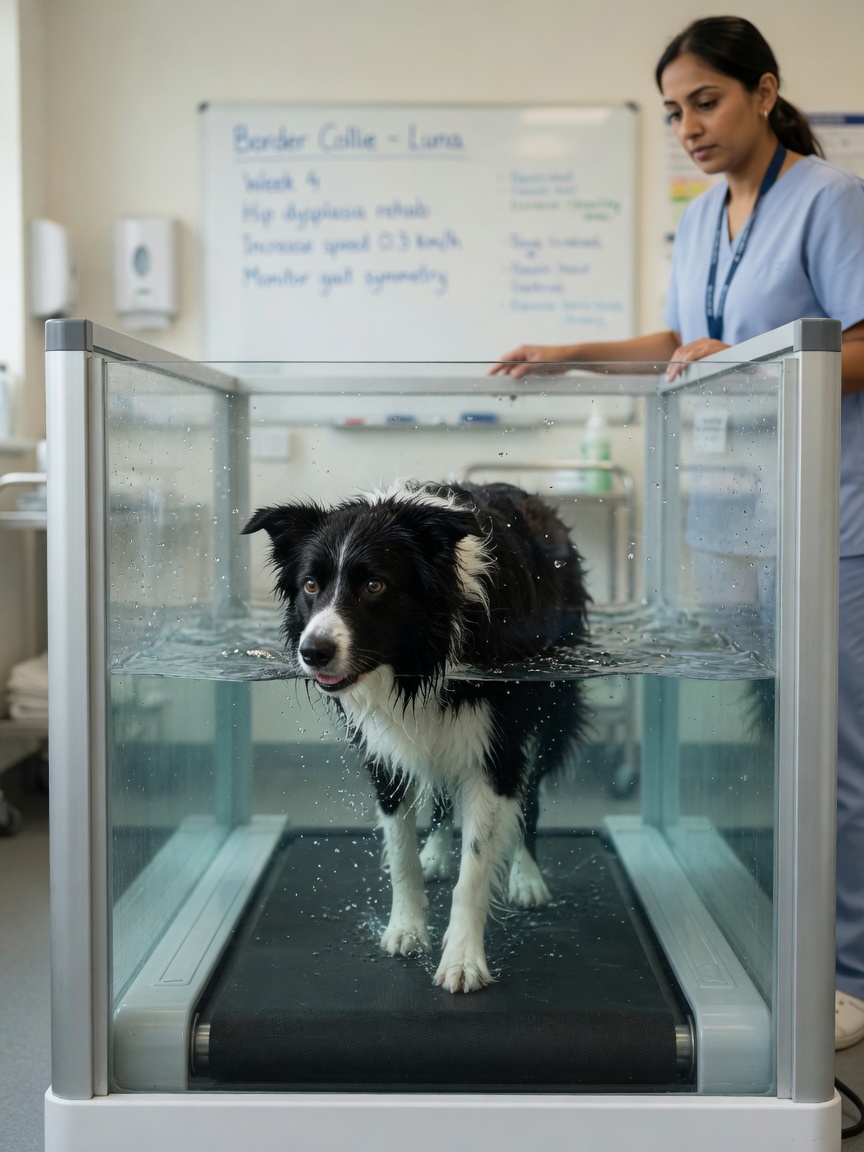
Most canine hydrotherapy centres offer either a swim pool, an underwater treadmill, or both. The choice depends on the dog's condition and goals.
Hydrotherapy Pool
The dog swims, supported by a therapist in the water or guided by floatation devices. Swimming works the whole body and is particularly useful for conditions where weight-bearing must be minimised entirely. It also provides excellent cardiovascular exercise. Dogs with spinal cord injuries or significant limb weakness may need full buoyancy support.
Underwater Treadmill
The dog walks on a treadmill inside an enclosed unit that fills with water to a prescribed level. Water height determines how much body weight the dog bears — higher water means less weight through the legs. This is often preferred for dogs rebuilding gait patterns after orthopaedic surgery, as normal walking mechanics are preserved while load is reduced. It is also less aerobically demanding, making it suitable for elderly or cardiac-compromised dogs.
What a Typical Session Looks Like
A reputable hydrotherapy centre will require a veterinary referral before treatment begins. The therapist reviews the dog's clinical history, surgical reports if applicable, and current medications. Dogs with open wounds, skin infections, incontinence, or uncontrolled epilepsy are generally not suitable candidates.
The session itself usually lasts 20 to 45 minutes, though time in the water may be only 10 to 20 minutes initially, building as fitness improves. The dog is fitted with a buoyancy aid if needed, introduced to the water gradually, and monitored closely throughout. Water temperature is maintained between 28 and 32 degrees Celsius — warm enough to relax muscles and encourage movement without causing overheating.
After the session, the dog is thoroughly dried and assessed for any signs of fatigue or discomfort. A good therapist will communicate findings back to the referring vet and adjust the programme accordingly.
How Many Sessions Are Needed?
This varies considerably by condition and individual response. Post-surgical dogs might attend twice weekly for six to eight weeks during the acute recovery phase. Dogs with chronic arthritis may attend weekly long-term as maintenance. Early sessions are typically shorter and more conservative; intensity increases as the dog's strength and confidence build.
Progress should be assessed at regular intervals. If there is no measurable improvement after a reasonable trial period, the programme should be reassessed. Hydrotherapy is not a passive treatment — you should expect to see tangible changes in movement quality, muscle mass, and comfort levels over time.
Finding a Reputable Centre
In the UK, look for centres registered with the Canine Hydrotherapy Association (CHA) or the National Association of Registered Canine Hydrotherapists (NARCH). Both organisations require therapists to hold recognised qualifications and adhere to hygiene and safety standards.
Always ensure your vet is involved in the decision to start hydrotherapy and that the therapist communicates progress back to your veterinary practice. Hydrotherapy is most effective when integrated into a broader rehabilitation plan, not pursued in isolation. Discuss it with your vet if your dog has any of the conditions listed above — it may be one of the most practical tools available to improve their quality of life.