
The Habits You Build in Week One Last for Years
A dog that pulls on the lead is one of the most common complaints among dog owners — and almost always, it is a problem that started in puppyhood when pulling was accidentally rewarded. The good news is that teaching a puppy to walk on a loose lead is far easier than retraining an adult dog that has spent years learning that pulling gets it where it wants to go. Starting correctly from week one is one of the highest-value investments you can make in your puppy's training.
Before the First Walk: Indoor Lead Introduction
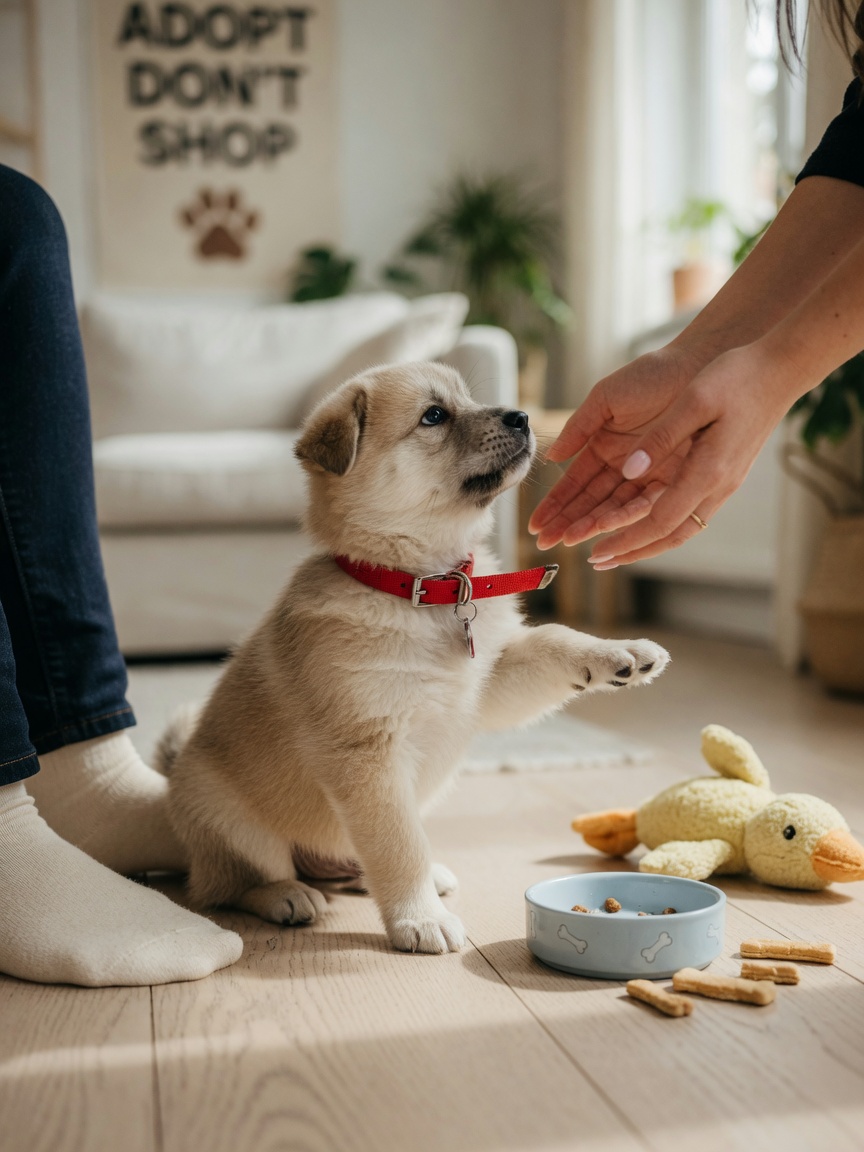
Before a puppy goes outside for its first walk, it needs to be comfortable wearing a collar or harness and having a lead attached. This is not something to skip.
Introducing the Collar
Put the collar on for brief periods indoors, initially while the puppy is distracted with food or play. Most puppies show mild discomfort — scratching, freezing briefly, or shaking — which passes within a few minutes. Pair the collar going on with something positive every time. Within two to three days, most puppies are indifferent to it.
Introducing the Lead
Clip the lead on and let the puppy drag it around under your supervision for short periods before you ever hold the other end. This removes the novel sensation of lead pressure from the first attempts at walking together, making the experience considerably calmer.
The Core Principle of Loose-Lead Walking
Loose-lead walking is built on one simple rule: the puppy only moves forward when the lead is slack. The moment tension appears in the lead, forward movement stops. This is not a punishment — it is simply a clear, consistent rule that the puppy learns quickly when applied without exception.
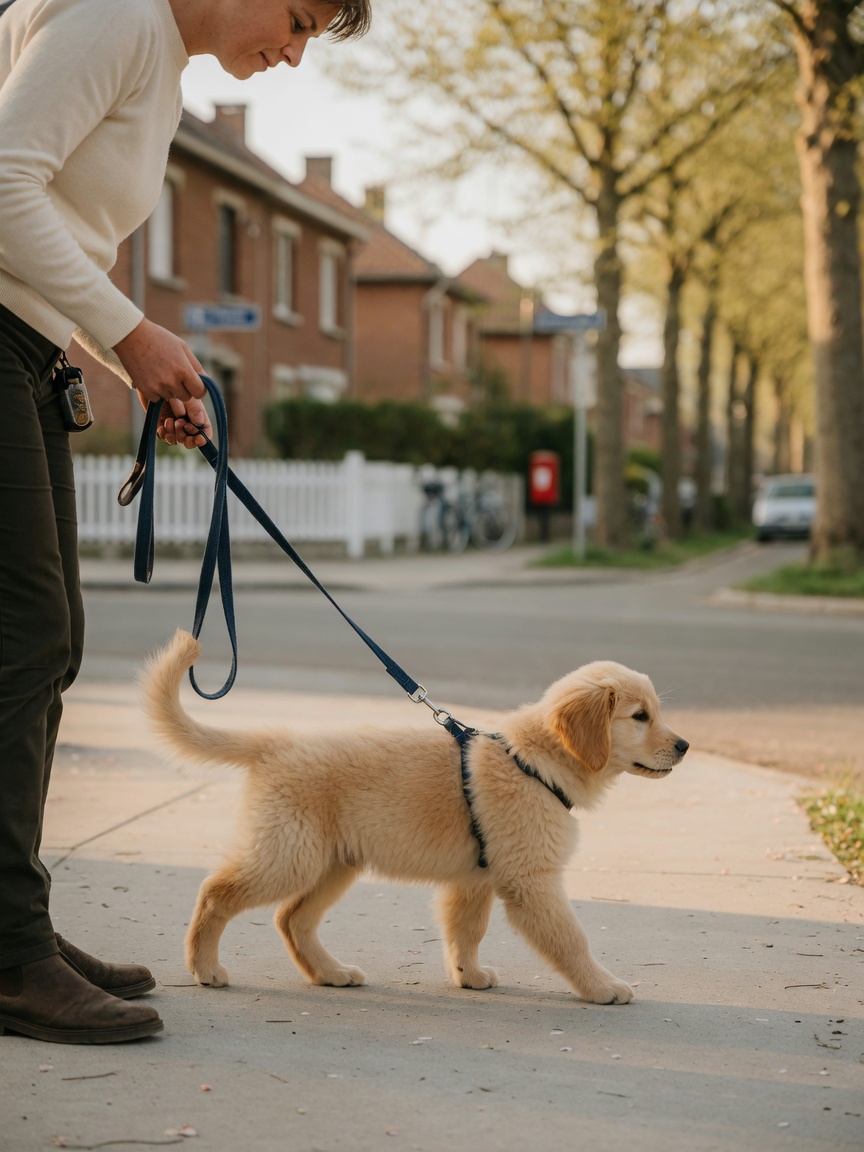
The mechanics: hold the lead in one hand with enough length that there is a natural drape when the puppy is beside you. The moment the lead tightens, stop walking. Wait for the puppy to release the tension — by turning back toward you, sitting, or simply stepping back — then immediately move forward again and reward with calm praise or a treat. The reward for slack lead is progress, which is ultimately what the puppy wants.
Building the Behaviour in Stages
Stage One: Garden or Indoor Corridor
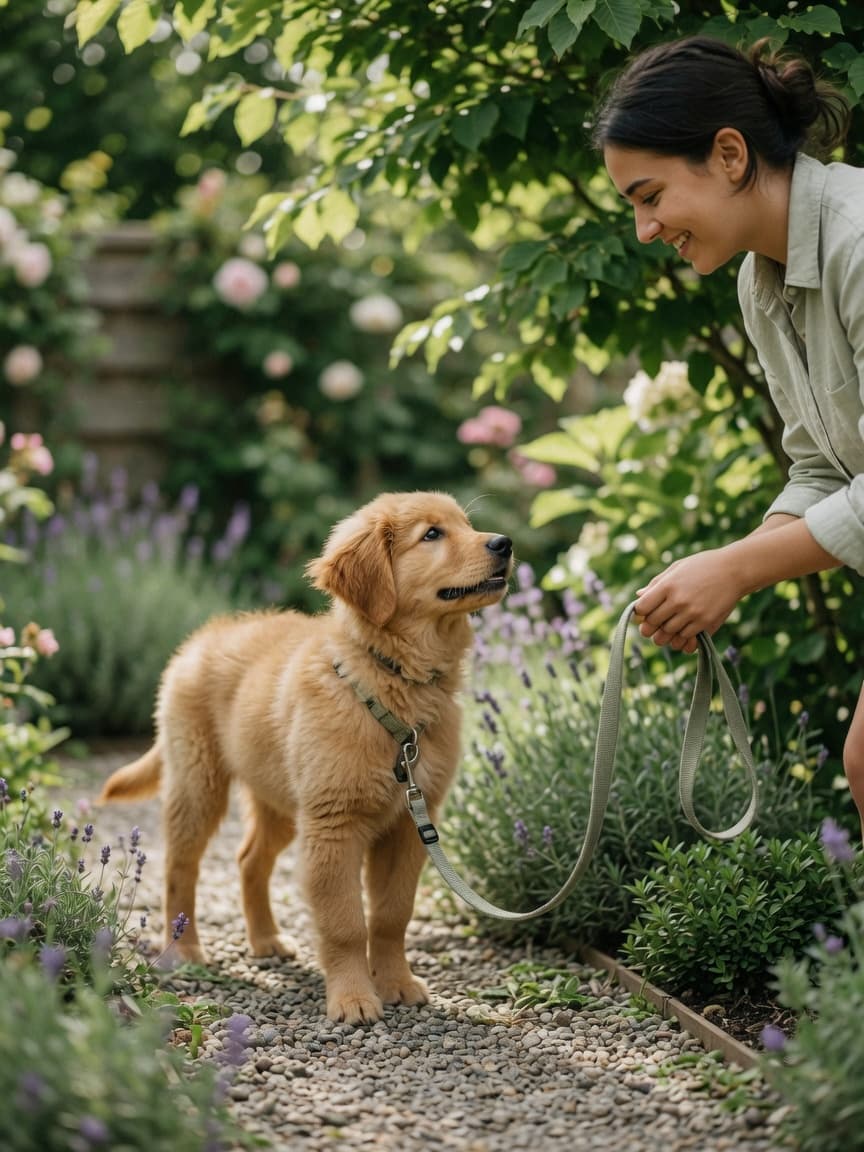
Begin in the lowest-distraction environment available. A garden or a long indoor corridor works well. Walk with the puppy, stopping immediately every time tension occurs, rewarding every moment of slack. Keep sessions to three to five minutes — puppies tire mentally much faster than physically, and short sessions are far more productive than long ones.
Stage Two: Quiet Street
Once the puppy is walking well in the garden, move to a quiet pavement with minimal distractions. The new environment will cause regression — this is normal and not a sign that the training has not worked. The puppy simply needs to learn that the same rule applies everywhere. Maintain the same consistent response and progress will return quickly.
Stage Three: Gradually Increasing Distraction
Build up exposure to busier environments incrementally. Expecting a ten-week-old puppy to walk politely past other dogs, cyclists, and children simultaneously is unrealistic. Layer in distractions as the puppy demonstrates reliability at each previous level.
What Not to Do
- Do not jerk or snap the lead to correct pulling. This teaches the puppy to expect discomfort on the lead and can create lead-reactive behaviour.
- Do not keep walking while the puppy pulls. Every step forward on a tight lead teaches the puppy that pulling works.
- Do not use retractable leads during training. They teach the dog that tension in the lead is the normal state of affairs and make loose-lead behaviour almost impossible to establish.
- Do not attempt long walks before the behaviour is established in low-distraction environments.
The Role of Engagement
A puppy that is focused on you pulls less. Periodically calling the puppy's name and rewarding eye contact during walks builds the habit of checking in with you rather than charging ahead. This engagement — sometimes called attention heeling in more formal training — is not about keeping the puppy glued to your left leg for the entire walk, but about establishing you as worth paying attention to in a world full of interesting things.
Harness Versus Collar
For most puppies, a well-fitted harness with a front-clip or dual-clip attachment distributes pressure more evenly and reduces the risk of neck strain from pulling. This is particularly relevant for puppies of breeds prone to tracheal issues. Discuss the best option for your specific breed with your vet, especially if you have a small or brachycephalic breed.
Progress Checklist
- Puppy is comfortable wearing collar and lead indoors before outdoor walks begin.
- Loose lead is established in the garden or a low-distraction space first.
- Forward movement stops the instant the lead tightens — every time, without exception.
- Sessions are kept short — three to five minutes — and end on a good moment.
- Distractions are introduced gradually, not all at once.
- Retractable leads are avoided during the training period.
If pulling remains significant despite consistent work after several weeks, a session with a qualified trainer can identify whether the technique or timing needs adjustment before the habit becomes entrenched.