
Camping with Dogs: Safety Checklist for Outdoor Adventures
There are few better companions for a camping trip than a dog. They are enthusiastic hikers, excellent tent companions, and reliably impressed by everything the outdoors has to offer. But the wild presents genuine risks for animals that a domestic environment never does — from wildlife encounters and toxic plants to heat exhaustion and waterborne parasites. A prepared owner makes the difference between a memorable adventure and an emergency vet visit.
Before You Leave Home
Vet Check and Vaccinations
Book a health check before any extended outdoor trip, particularly if your dog is older or has an underlying condition. Ensure vaccinations are current, with particular attention to leptospirosis — a bacterial infection spread through contaminated water that is a genuine risk for dogs who swim in rivers and lakes. Kennel cough vaccination is worth considering if you are staying at a campsite where your dog will have contact with other animals.
Parasite Prevention
Ticks are the primary parasitic concern for dogs in rural and woodland environments across the UK and Europe. Ensure your dog is on an effective tick prevention treatment before departure — consult your vet about options appropriate to your destination, as some regions carry tick-borne diseases such as Lyme disease or, in parts of southern Europe, ehrlichiosis. Fleas and lungworm are additional considerations in certain habitats.
Microchip and ID
Check that your dog's microchip registration is up to date with a working phone number. Add a temporary tag with your mobile number and your campsite location if possible. Dogs can bolt during thunderstorms, in response to wildlife, or simply during the excitement of an unfamiliar environment — a current ID gives them the best chance of being returned quickly.
Essential Kit to Pack
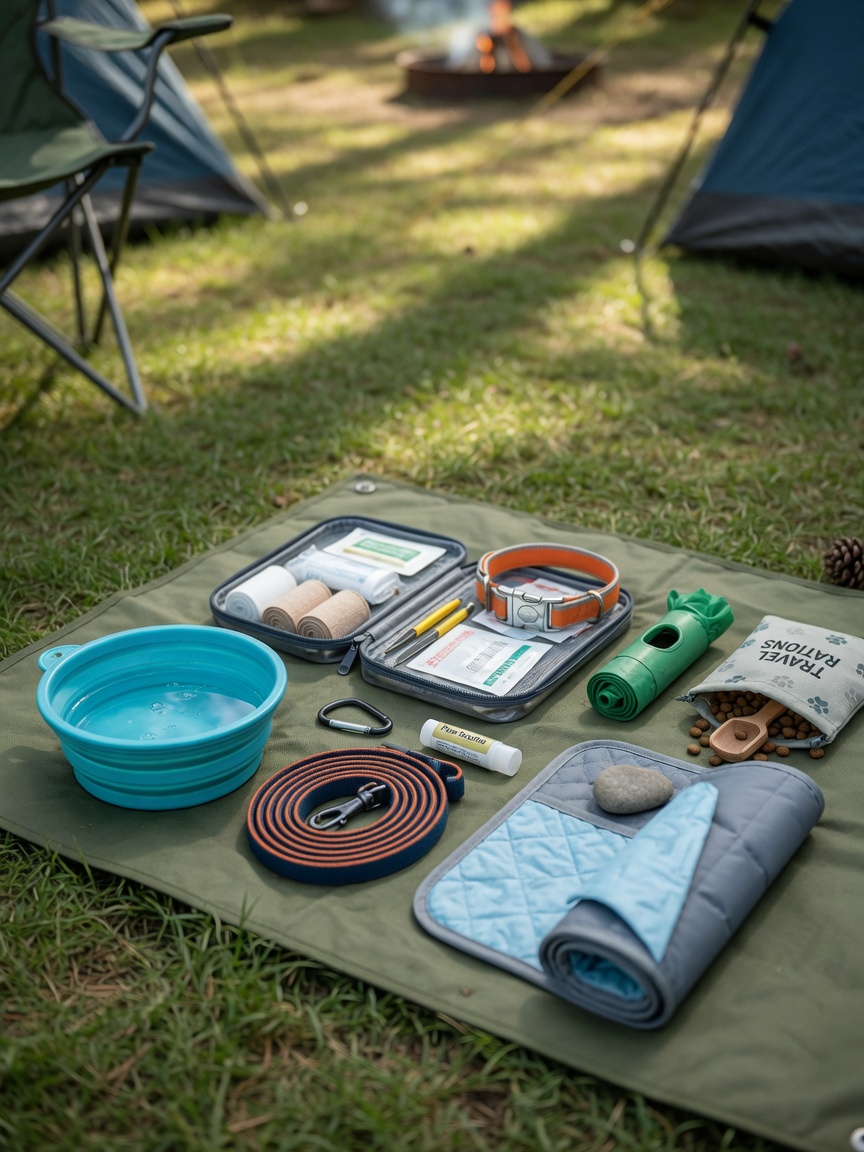
A dedicated bag for your dog's camping kit keeps you organised and ensures nothing vital is forgotten:
- A portable first aid kit including wound wash, bandages, tweezers for tick removal, and any prescription medications
- Sufficient food for the entire trip plus an emergency day's supply
- A collapsible water bowl and enough clean water for at least the first day until you identify reliable sources
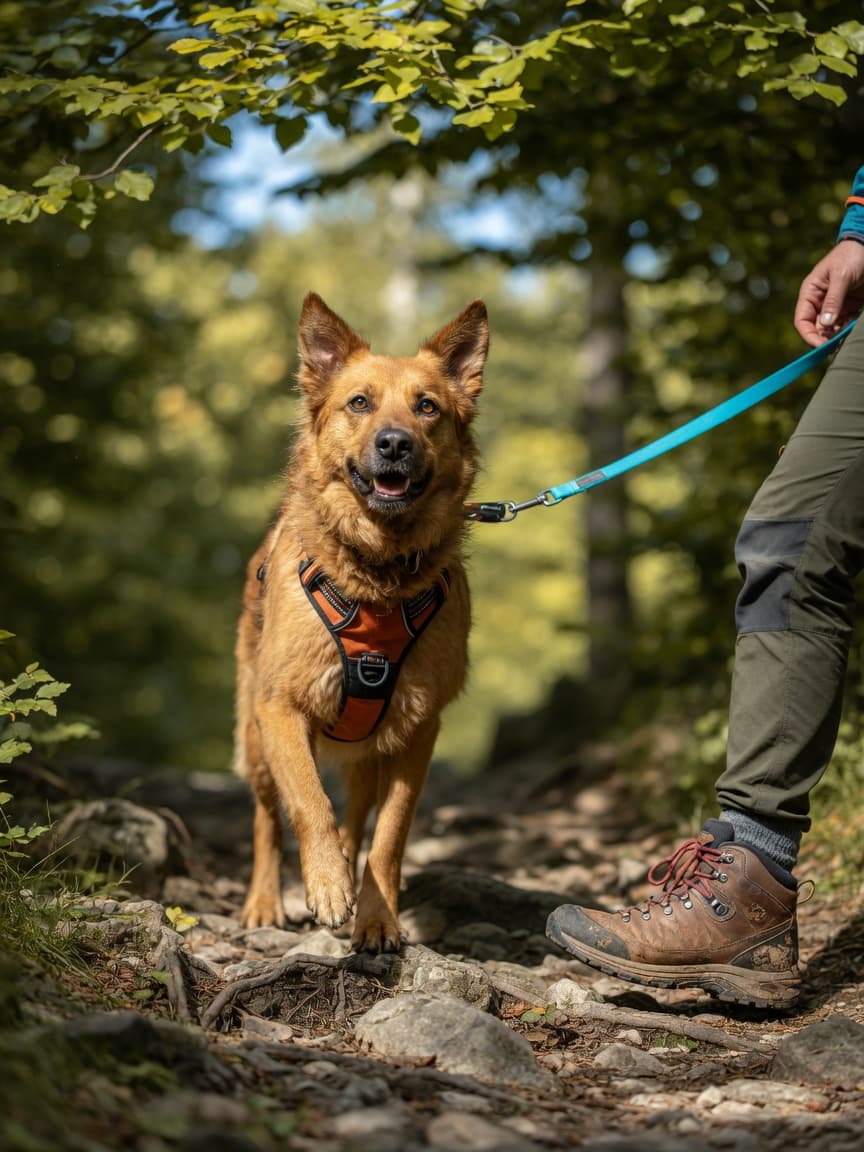
- A well-fitting harness with a long lead — useful for campsite tethering and night security
- Waste bags in greater quantity than you think you need
- A cooling mat or damp towel for hot weather rest stops
- A reflective or LED collar attachment for visibility at dawn and dusk
On the Trail: Physical Safety
Paw Care
Rocky, gravelly, or very hot terrain can damage paw pads, particularly in dogs not accustomed to rough ground. Inspect paws at the end of each day for cuts, embedded debris, or signs of abrasion. Paw balm provides some protection on particularly challenging surfaces, and dog boots — if your dog has been acclimated to wearing them — offer more substantial shielding on sharp terrain.
Heat and Hydration
Dogs cool primarily through panting and through the limited sweat glands in their paw pads, making them far less efficient at heat dissipation than humans. On warm days, rest during the hottest hours between midday and three in the afternoon, offer water at least every 30 minutes of active exercise, and watch for signs of overheating: excessive panting, drooling, stumbling, or collapse. Brachycephalic breeds — bulldogs, pugs, French bulldogs — are at significantly elevated risk and should be exercised very conservatively in warm weather.
Wildlife and Toxic Plants
Train a reliable recall before any off-lead countryside walking. Encounters with livestock, deer, or wildlife can end in serious injury, and a dog who will not return on command is a genuine liability in remote areas. Familiarise yourself with toxic plants common to your destination: adder's tongue fern, foxglove, wild garlic bulbs, and ragwort are among those that grow widely in the UK countryside and can cause serious harm if ingested.
Water Safety
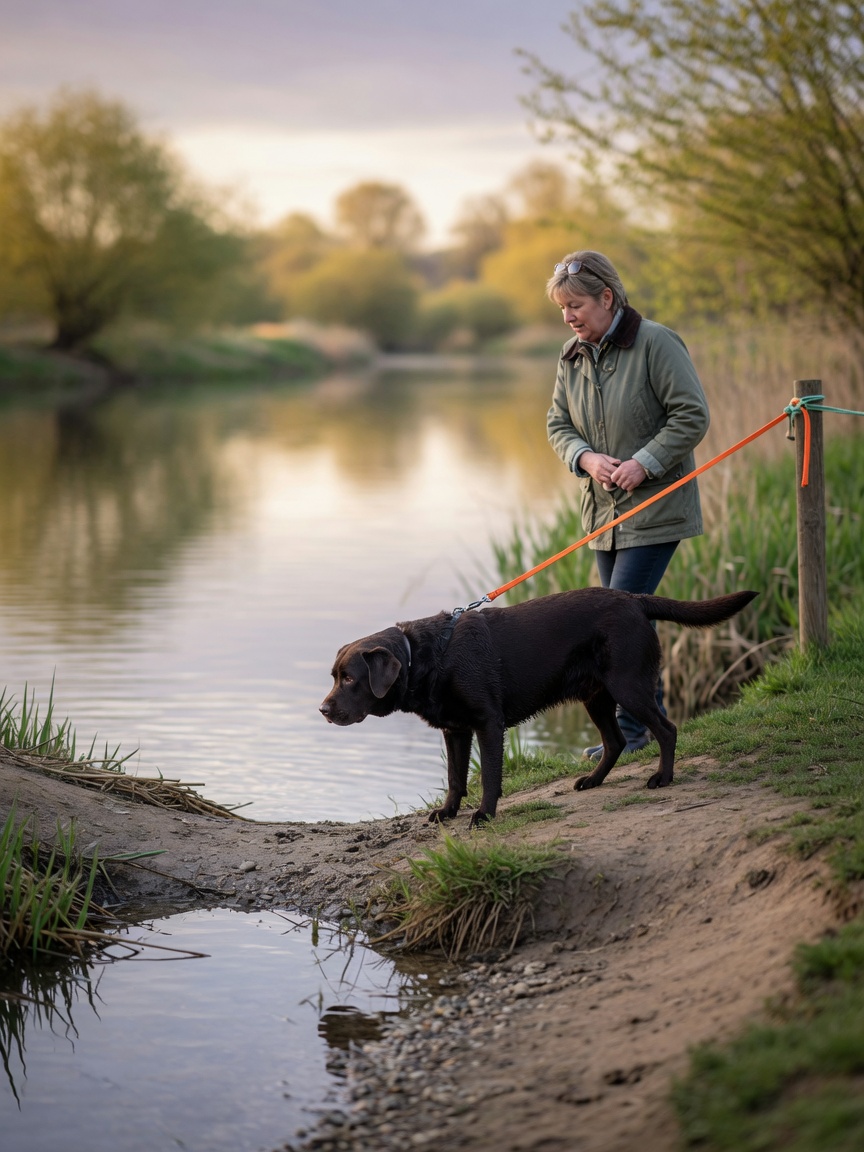
Rivers and lakes present several hazards. Blue-green algae, which can bloom in warm weather in still and slow-moving freshwater, is potentially fatal to dogs. Check local water quality alerts before allowing your dog to drink from or swim in natural water sources. The Environment Agency in England and Natural Resources Wales publish bloom alerts during summer months.
Fast-moving water, particularly after rainfall, carries the risk of strong currents that can overwhelm even strong swimmers. If your dog swims in rivers, ensure they enter and exit at manageable points and are never allowed near weirs or rapid sections unsupervised.
At the Campsite
Check campsite rules regarding dogs before booking — many sites require leads at all times, and some have restricted areas. Respect these rules not just for compliance but because the scent of campsite food and the novelty of other dogs and humans can make even ordinarily reliable dogs unpredictable.
At night, ensure your dog sleeps inside the tent rather than being left tethered outside. Nighttime temperatures in the countryside fall more sharply than in urban areas, and unsupervised dogs are vulnerable to wildlife encounters, anxiety, and escape attempts. A familiar blanket from home aids sleep in new surroundings.
After the Trip
Conduct a full body check for ticks within a few hours of returning home — they are most effectively removed before they have fully attached. Check ears, between toes, groin, and under the collar. Monitor your dog over the following two weeks for any signs of illness including lethargy, joint pain, or reduced appetite, and report these to your vet with a note of where you have been. Most camping trips with dogs are entirely incident-free, but attentiveness after returning is a sensible final step in responsible outdoor adventure.