
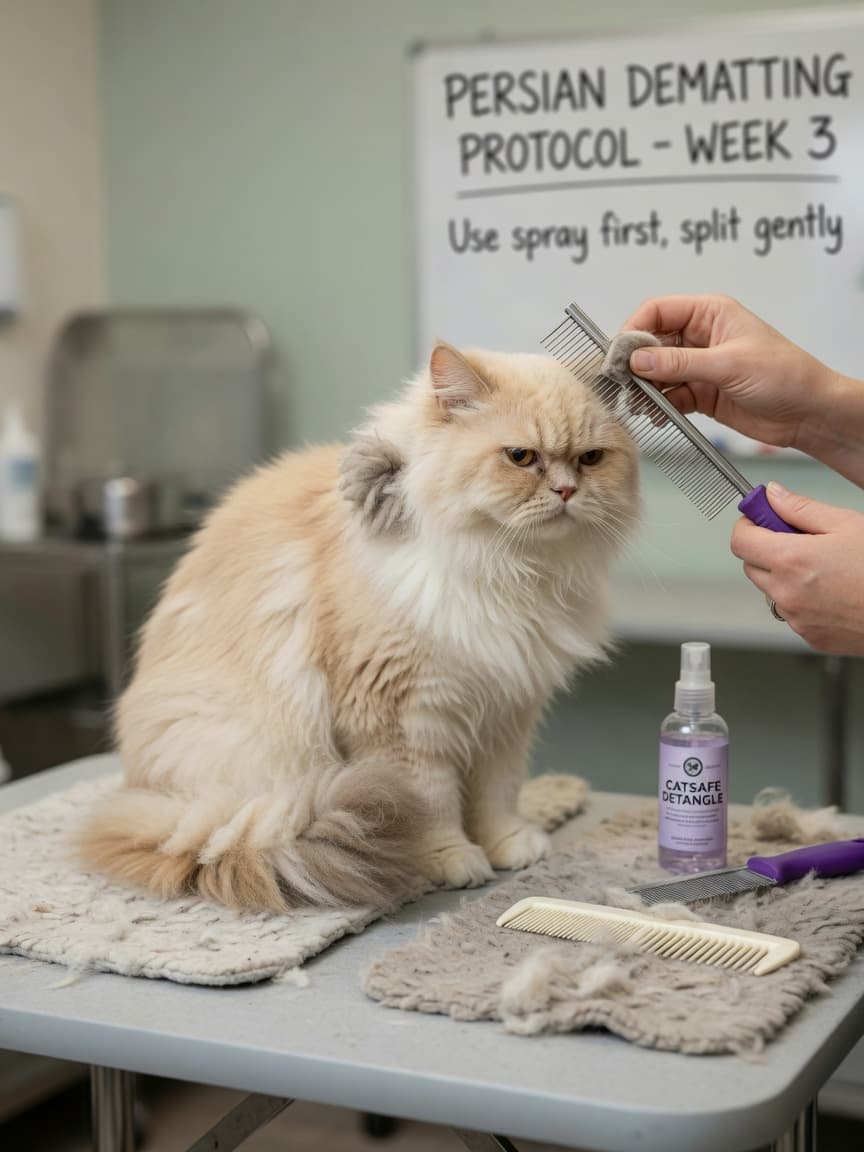
Understanding Why Cat Fur Becomes Matted
A matted coat is one of the more uncomfortable problems a cat can experience, and it happens more often than many owners realise. Mats are dense, tangled clumps of fur that form when loose hairs become intertwined and then compress over time. They can range from small, superficial tangles to thick, hard masses that pull tightly against the skin and cause real pain.
Long-haired breeds — Persians, Himalayans, Birmans, and Norwegian Forest Cats among them — are most susceptible, but short-haired cats are by no means immune. Any cat that is overweight, elderly, or suffering from joint pain may struggle to reach certain areas of their body during grooming, leaving those spots vulnerable to matting. Cats with dental pain may also groom less thoroughly, and any period of illness that reduces a cat's energy levels can quickly lead to a deteriorating coat.
Matting tends to develop in predictable locations: behind the ears, in the armpits, around the collar area, at the base of the tail, and in the groin. These are areas of friction and movement, where fur experiences repeated rubbing against itself or against surfaces. Moisture, dirt, and loose undercoat fibres all accelerate the process.
Why Mats Are More Than a Cosmetic Issue
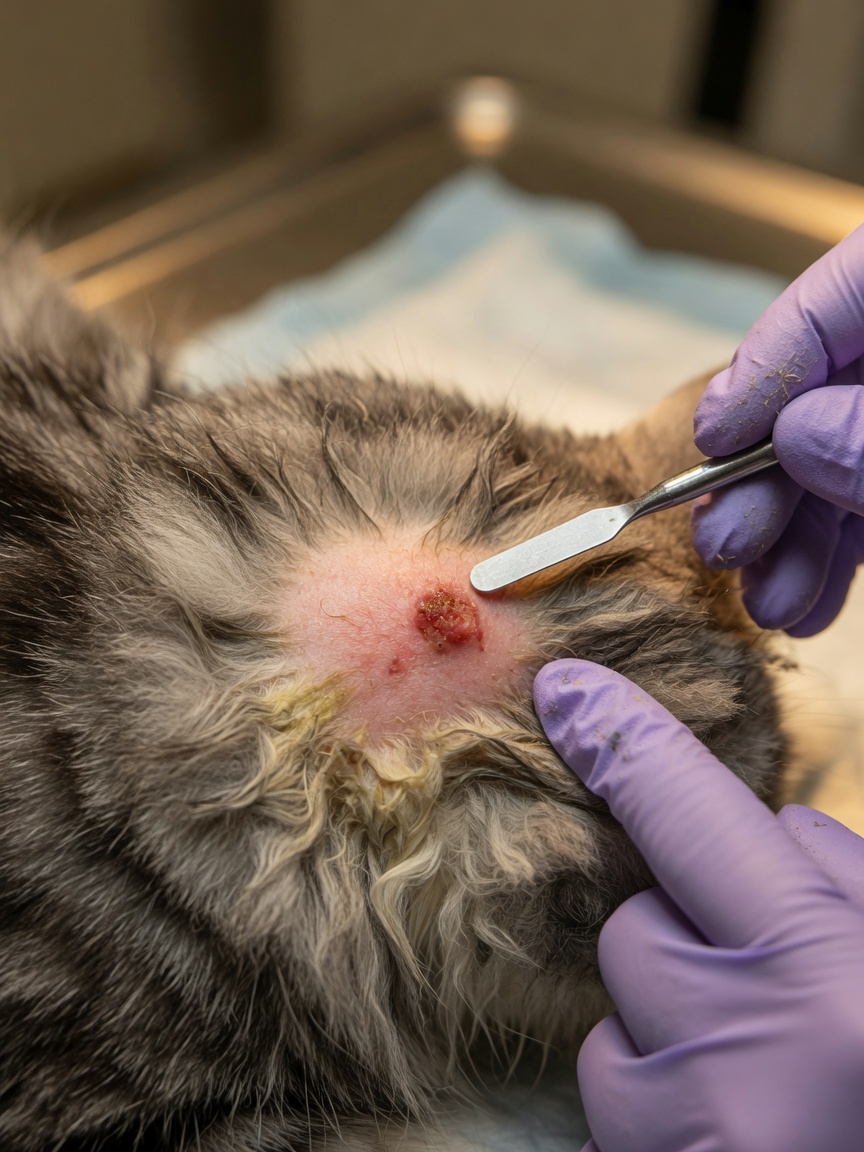
It is tempting to view matted fur as simply untidy, but the health implications can be significant. Mats pull continuously on the skin beneath them, causing irritation, soreness, and sometimes open wounds or sores where the tension is greatest. They trap moisture close to the skin, creating warm, damp conditions that are ideal for bacterial and fungal growth. Parasites, including fleas and their eggs, can also harbour within matted fur, hidden from view and difficult to treat.
In severe cases, mats can restrict circulation to the affected area or even prevent a cat from moving comfortably. A cat in a heavily matted state is a cat in chronic, low-grade discomfort at minimum.
Safe Mat Removal at Home
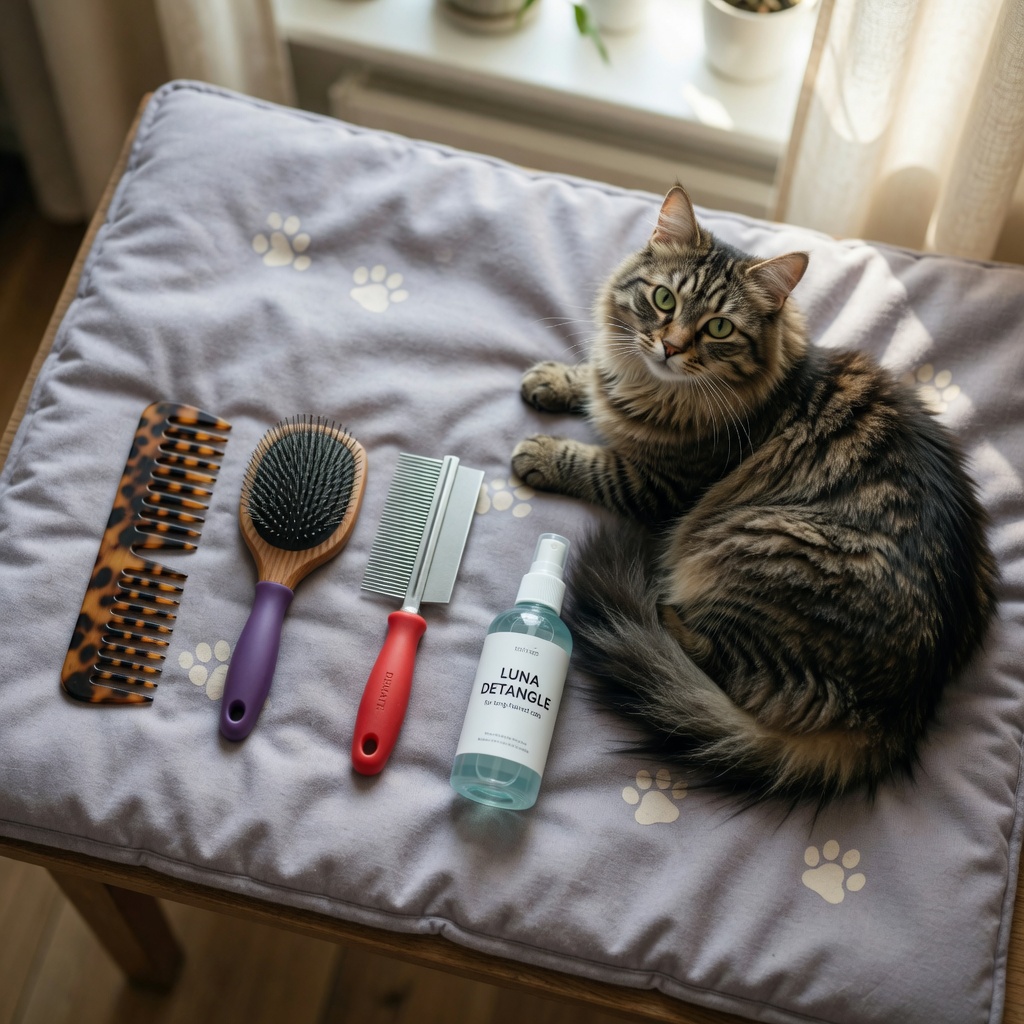
For small, superficial mats caught early, careful home removal is often possible. The key word here is patience. Attempting to rush the process is where most injuries to cats occur.
What You Will Need
- A wide-toothed comb and a slicker brush
- A mat splitter or dematting comb (available from pet shops)
- Detangling spray formulated for cats
- Blunt-tipped scissors if absolutely necessary — and only with great caution
Step-by-Step Approach
Begin by applying a small amount of cat-safe detangling spray to the mat and allowing it to penetrate for a minute or two. This helps soften the fibres and reduces the pulling sensation. Use your fingers to gently work the edges of the mat, separating as much fur as possible from the outer edges inward. Never pull from the centre.
Introduce the dematting comb in short, careful strokes, always working from the tip of the mat towards the skin — not from the skin outward, which pulls painfully. Hold the base of the mat with your other hand to minimise tension on the skin below. Work slowly, taking frequent breaks if your cat becomes distressed.
If the mat does not yield after patient effort, or if your cat is becoming increasingly agitated, stop. Stressed cats can bite and scratch, and there is a real risk of accidentally cutting the skin, which sits closer to the surface than most people expect.
When to Leave It to a Professional
Any mat that is large, hard, close to the skin, or located near a sensitive area — the face, groin, or armpits — should be referred to a professional groomer or a veterinarian. Vets and experienced groomers have the tools and, in serious cases, the ability to use sedation to make the process safe and as stress-free as possible for the cat.
In cases of widespread matting, a full clip-down under sedation may be the most humane option. This removes all the matted fur in one session and allows the coat to grow back fresh. While it can feel dramatic, cats recover well and the relief is often visibly immediate. Do not attempt to clip a heavily matted coat yourself — the risk of cutting the skin, which can literally be caught within the mat, is too high without proper equipment and experience.
Preventing Mats from Forming
Prevention is always easier than treatment. Establishing a regular grooming routine from kittenhood is the most effective strategy. Even cats who initially resist grooming can be desensitised gradually with short, positive sessions.
- Brush long-haired cats daily, short-haired cats two to three times weekly
- Pay particular attention to friction zones such as behind the ears and under the legs
- Keep the fur around the hindquarters trimmed short in long-haired cats, particularly as they age
- Maintain a healthy body weight to ensure your cat can groom all areas of their body
- Address any underlying health issues — joint pain, dental disease, obesity — that reduce grooming ability
If your cat's coat begins to deteriorate rapidly without an obvious cause such as seasonal shedding, it is worth having a veterinary health check. A change in coat condition is often one of the earliest external signs that something is not quite right internally. Catching these changes early and acting on them is one of the most valuable things an attentive owner can do.