

Sugar Glider Diet: What They Eat & Foods to Avoid
1. Exotic Vet Specialist Required: Sugar gliders must be cared for by an exotic mammal veterinarian, not a standard vet. Their metabolic and nutritional diseases are specialized and frequently misdiagnosed by non-exotic practitioners. Locate an exotic vet before acquiring a glider — nutritional emergencies develop quickly.
2. Legal Status: Sugar gliders are illegal to own in California, Alaska, Hawaii, and Pennsylvania, and regulated in several other states. Verify your local laws before acquiring one.
Sugar gliders (Petaurus breviceps) are small, social marsupials native to Australia, Indonesia, and Papua New Guinea. In the wild they are omnivores with a broad diet: tree sap, nectar, pollen, insects, small vertebrates, and whatever else their forest habitat offers by season. This dietary breadth is both their strength and the source of the most serious welfare problem in captive sugar gliders: nutritional disease from an incorrectly formulated diet.
Feeding a sugar glider well is not complicated if you follow a validated diet protocol. But improvised diets — even well-intentioned ones — frequently produce calcium deficiency, obesity, or both. This guide explains the principles behind proper sugar glider nutrition and walks through the two most respected captive diet protocols in detail.
Why Diet Is So Critical: The Calcium-Phosphorus Ratio
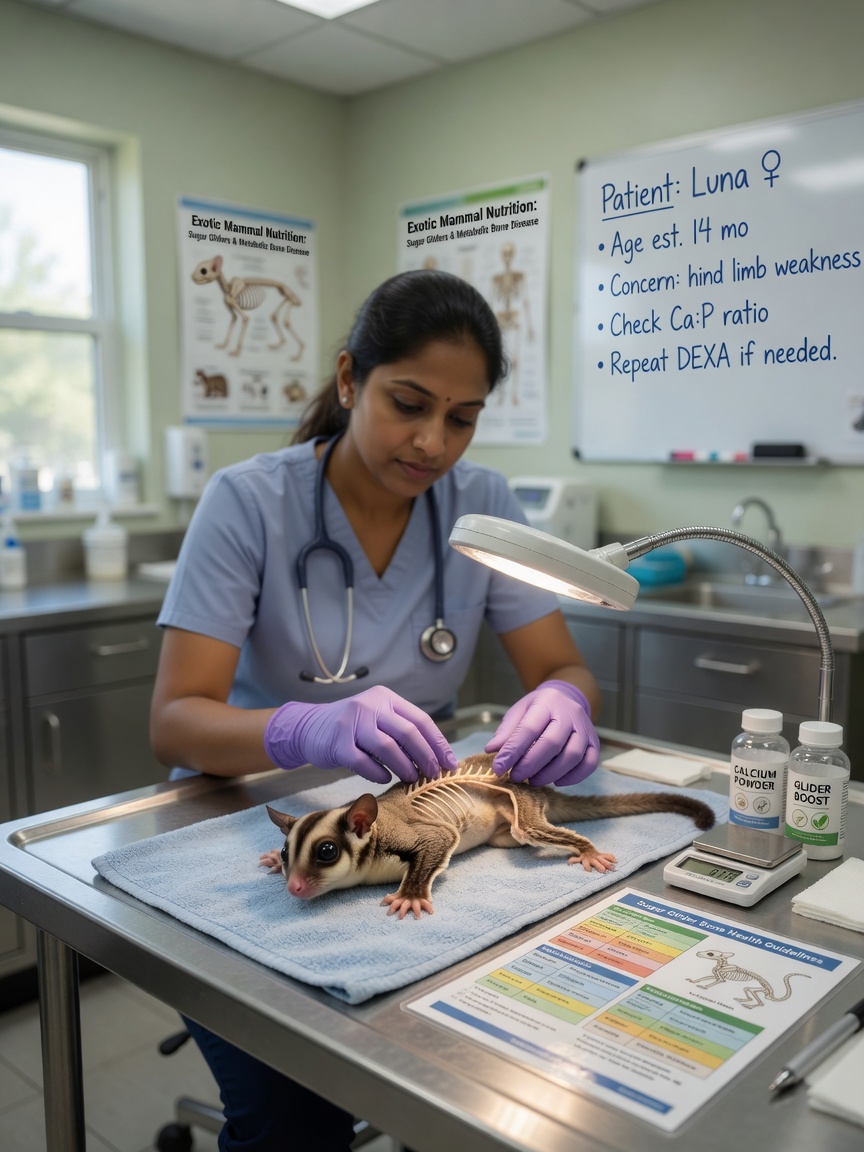
The single most important nutritional concept for sugar glider owners is the calcium-to-phosphorus (Ca:P) ratio. Sugar gliders require a dietary Ca:P ratio of approximately 1.5:1 to 2:1 — meaning calcium must equal or exceed phosphorus in the diet. This is unusually calcium-demanding for a small mammal.
When phosphorus chronically exceeds calcium in the diet, the body compensates by pulling calcium from bones. Over weeks to months, this produces metabolic bone disease (MBD), also called nutritional secondary hyperparathyroidism. In sugar gliders, MBD presents as: hind leg paralysis (often the first visible sign), bone fractures from minimal trauma, jaw pain preventing eating, and eventually death. MBD from dietary imbalance is heartbreakingly common in captive gliders fed improvised or fruit-heavy diets.
The challenge is that most foods sugar gliders find most palatable — fruits, certain protein sources, corn — are high in phosphorus and low in calcium. Building a diet requires deliberate attention to the ratio, not just offering foods that seem healthy.
Validated Diet Protocols: BML and TPG
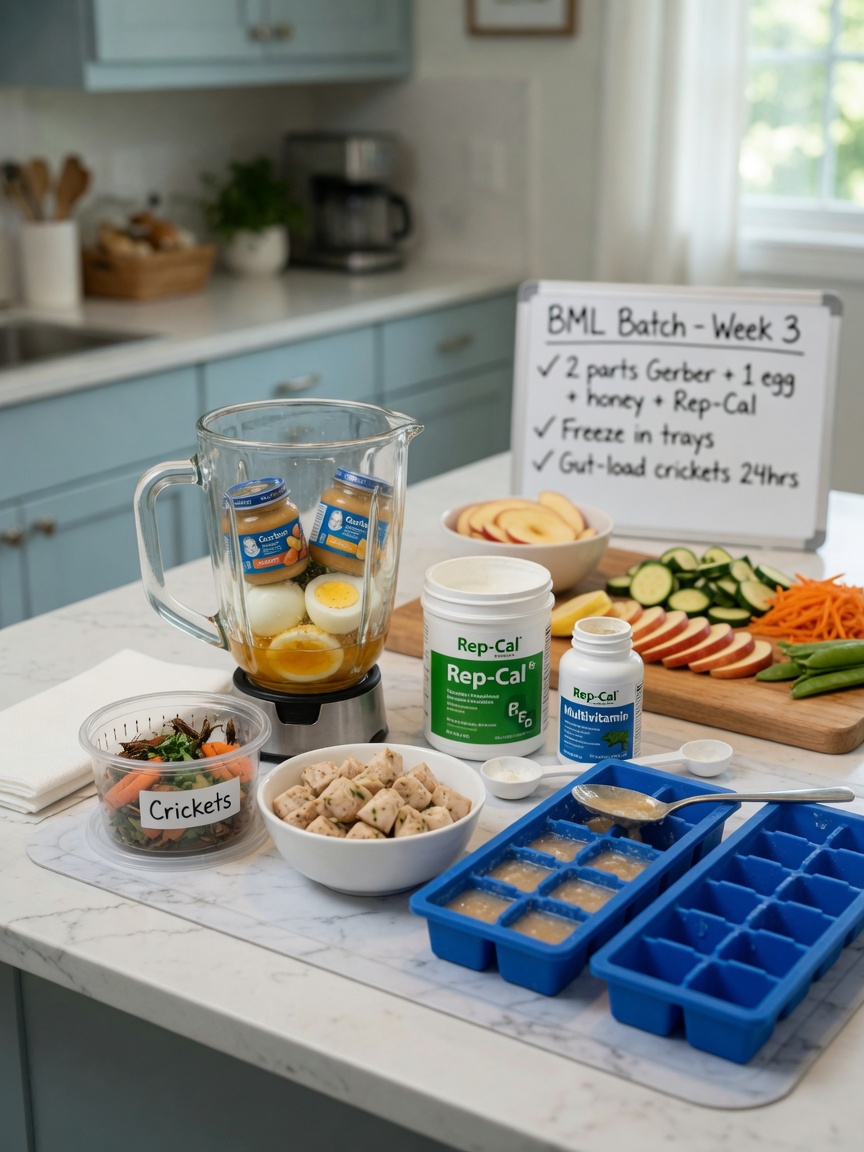
Two community-developed diets have been tested, refined, and validated over many years as the gold standard for captive sugar gliders:
The BML Diet (Bourbon's Modified Leadbeater's)
The BML diet is a blended, frozen preparation made at home. The base includes honey, a hard-boiled egg, Gerber Stage 2 fruit baby food, Rep-Cal Herptivite supplement, Rep-Cal calcium supplement with D3, and apple juice. The batch is blended, frozen in ice cube trays, and thawed nightly. It is served alongside a protein source (insects, cooked chicken, or tofu) and a rotating selection of approved fruits and vegetables.
The BML diet has been widely adopted because it is reproducible, nutritionally predictable, and accepted by most gliders. It requires consistent preparation — shortcuts or ingredient substitutions alter the Ca:P balance and undermine the whole formula.
The TPG Diet (The Pet Glider's Fresh Diet)
The TPG diet uses a daily-prepared fresh approach rather than a frozen batch. It emphasizes whole foods: a protein serving (egg, chicken, or insects), a vegetable serving from an approved list, and a fruit serving. Supplementation is built around Glider-Booster or a comparable supplement. Many owners prefer TPG because it avoids processed ingredients and allows more variety.
Both diets, when followed accurately, produce healthy Ca:P ratios and prevent MBD. The worst outcomes occur when owners modify either diet arbitrarily or construct their own version without understanding the nutritional math behind it.
For fresh protein variety, Zooplus stocks a range of small animal supplements and treats that can complement an established sugar glider diet protocol.
Pellets Are Not Sufficient Alone
Commercial sugar glider pellets exist and are marketed as complete diets. They are not. Pellets alone do not meet the full nutritional, behavioral, and hydration needs of sugar gliders. They may be used as a component of a broader diet, but no pellet-only diet has been validated as nutritionally complete for long-term glider health. Use BML or TPG as your foundation; pellets may supplement but should never replace it.
Protein Sources
Protein should make up approximately 30–40% of a sugar glider's diet. Good protein sources:
- Gut-loaded insects: crickets, mealworms, waxworms (treat only). These mimic the wild diet most closely.
- Cooked, plain chicken or turkey (no seasoning, no salt)
- Hard-boiled or scrambled egg (no oil, no salt)
- Plain tofu
Do not feed wild-caught insects. Pesticide exposure is a serious risk, and wild insects can carry parasites. Source insects from reputable feeder insect suppliers only.
Approved Fruits and Vegetables
Fruits and vegetables add variety and micronutrients but must be selected carefully for Ca:P ratio. Generally safe options include: mango, papaya, blueberries, melon, pear, apple (no seeds), sweet potato, leafy greens (collard greens, kale in moderation), green beans, and carrots.
Foods to Avoid
- High-oxalate foods: Spinach, beets, and Swiss chard bind calcium and make it unavailable, worsening the Ca:P imbalance
- Corn: Extremely poor Ca:P ratio — one of the most common dietary mistakes
- High-fat foods: Avocado, nuts in large quantities — gliders are prone to obesity in captivity
- Chocolate and caffeine: Toxic to sugar gliders
- Onion and garlic: Toxic to many small mammals, including gliders
- Dried fruits with preservatives (sulfites) or added sugar
- Wild-caught insects: Pesticide and parasite risk
- Fruit juice (as a primary liquid): Sugar overload; water should be the primary fluid source
Water
Fresh, clean water must be available at all times. Use a water bottle or a heavy ceramic dish. Change water daily — sugar gliders may dip food into their water, contaminating it quickly. Do not offer fruit juice as a substitute for water, even diluted; the sugar load contributes to obesity and dental issues.
Feeding Schedule
Sugar gliders are crepuscular and nocturnal — they are most active from dusk to dawn. Feed your glider in the early evening, when they are naturally beginning their active period. Offer fresh food nightly and remove uneaten food in the morning to prevent spoilage. Gliders often cache food in their pouches or in corners of the cage; check for spoiling food during morning cleaning.
Key Takeaways
- The calcium-to-phosphorus ratio (1.5:1 to 2:1) is the most critical dietary parameter — imbalance causes metabolic bone disease and hind leg paralysis.
- Follow either the BML or TPG diet protocols exactly — do not improvise or substitute ingredients without understanding the nutritional impact.
- Pellets alone are not a complete diet for sugar gliders.
- Never feed: chocolate, caffeine, onion, garlic, high-oxalate foods, corn, wild-caught insects, or avocado.
- Only an exotic mammal vet can diagnose and treat sugar glider nutritional disease.
- Sugar gliders are illegal in California, Alaska, Hawaii, and Pennsylvania — verify laws in your state before acquiring one.
- Feed in the early evening to align with their natural nocturnal activity cycle.
Scientific References
- Johnson-Delaney CA. "Sugar gliders." Veterinary Clinics of North America: Exotic Animal Practice. 2004;7(3):793–806. PMID: 15301763.
- Pye GW, Carpenter JW. "A guide to medicine and surgery in sugar gliders." Veterinary Medicine. 1999;94(10):891–905. PMID: 10560401.