
Understanding Stress in the Domestic Cat
Cats have a reputation for composure. They appear self-contained, unruffled, occasionally indifferent. This image, while charming, obscures an important truth: cats are highly sensitive animals whose nervous systems respond acutely to environmental change and perceived threat. Chronic stress in cats is both common and underrecognised, and its effects on long-term health are more serious than many owners appreciate.
The domestic cat occupies an unusual evolutionary position. It is a solitary, territorial predator that has been asked to share confined spaces with humans, other cats, dogs, and a continuous stream of novel sensory stimuli. The mismatch between their biological heritage and the conditions of modern domestic life is a significant and ongoing source of stress for many cats.
Common Environmental Triggers
Identifying what stresses a cat requires understanding that cats perceive the world through a very different sensory and social framework than humans do. What registers as minor background noise or a small change in routine to a person can be profoundly destabilising to a cat.
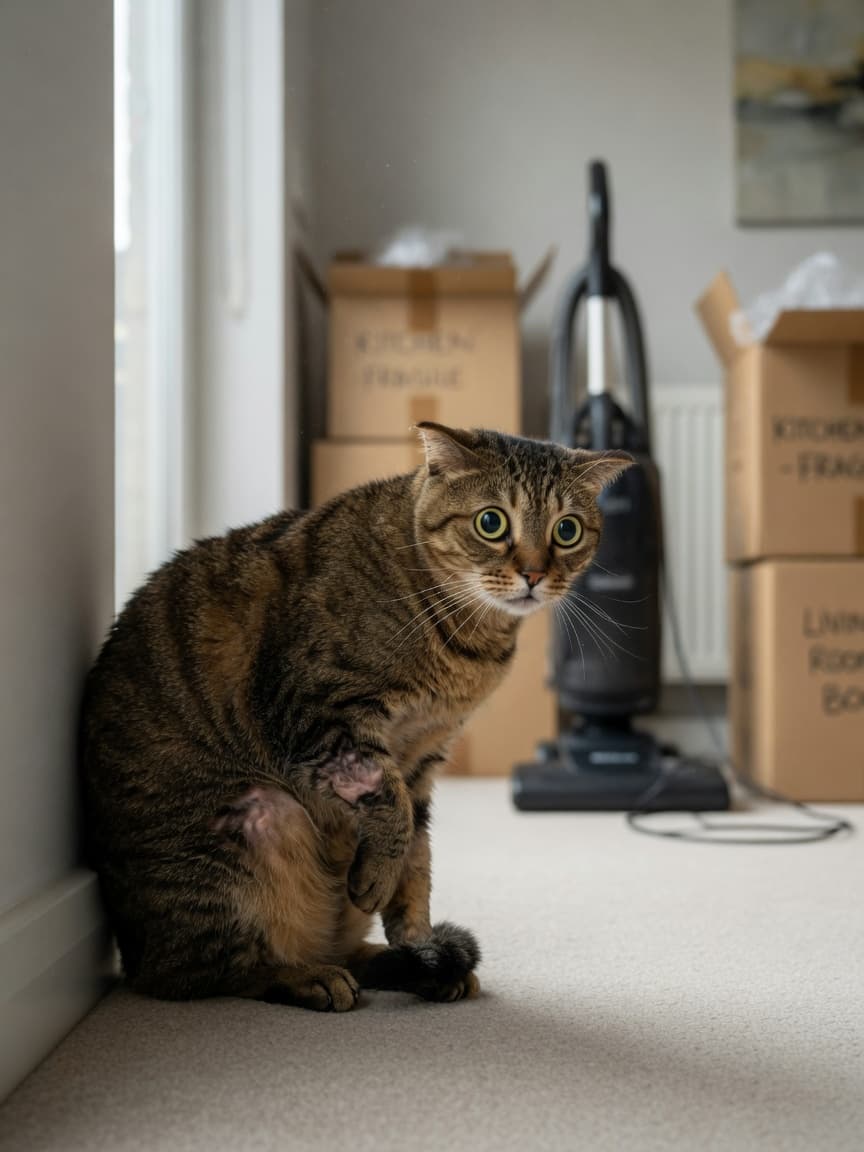
Household changes are among the most significant triggers. Moving home, renovation work, the arrival of a new baby, a new pet, or even rearranging furniture can disrupt a cat's established territory in ways that provoke lasting anxiety. Cats map their environments in fine detail and rely on scent marking, familiar pathways, and predictable resting sites for their sense of security.
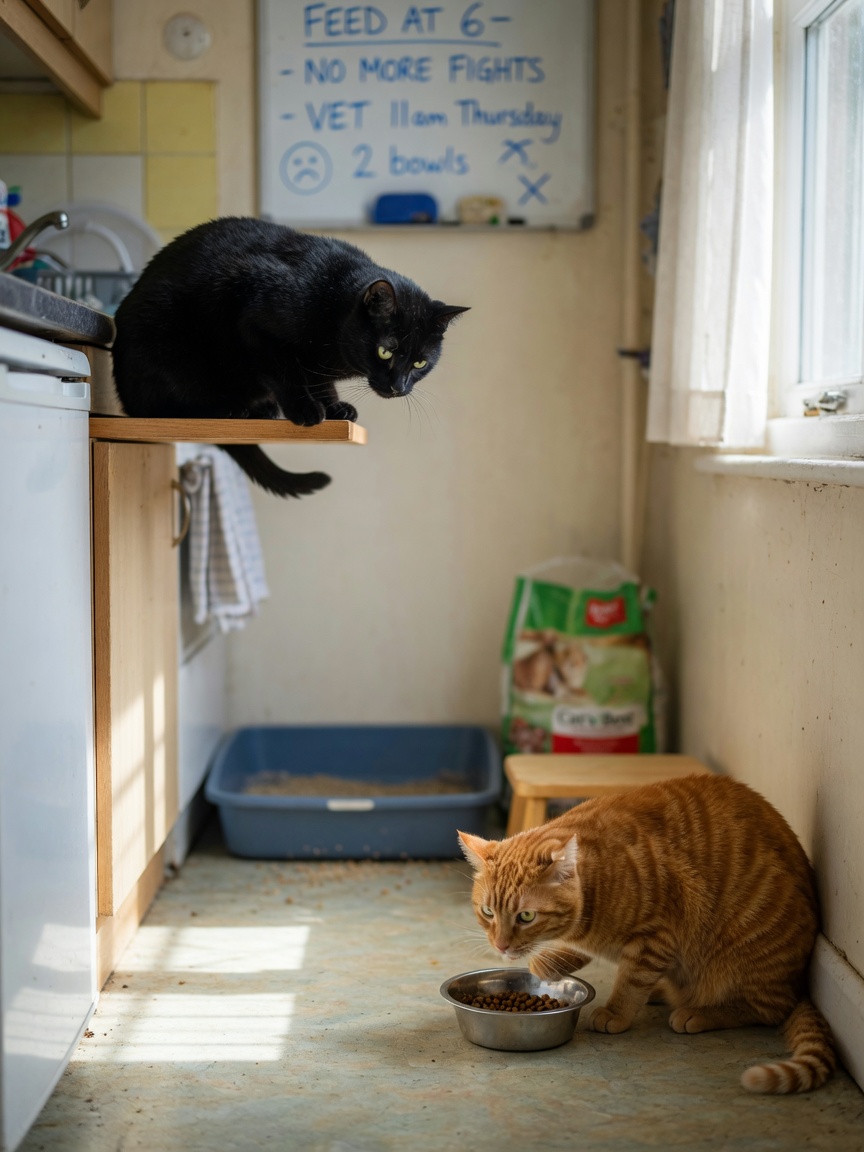
Conflict with other cats is a particularly potent stressor, especially in multi-cat households where resources — food stations, litter trays, elevated resting spots — are insufficient. Cats do not naturally form social groups the way dogs do. Cohabiting cats can maintain civil relations when resources are abundant and personal space is respected, but chronic low-level tension between cats in close quarters is a major driver of stress-related illness.
Other common triggers include:
- Inconsistent routines for feeding, human activity, or sleep patterns
- Loud or unpredictable noise — construction, parties, fireworks
- Inadequate hiding spaces or elevated escape routes
- Forced interaction with visitors or children who do not read feline body language
- Changes in the scent environment, including new cleaning products or plug-in air fresheners
- Insufficient litter tray provision — the recommended ratio is one per cat plus one additional
- Outdoor threats visible through windows, including unfamiliar cats or wildlife
How Cats Show Stress
Cats are not transparent communicators. They rarely show distress in ways humans find easy to read, which is partly why chronic stress in cats is so often missed until secondary health problems emerge.
Behavioural signs of stress include hiding, reduced social interaction, changes in grooming (either excessive or reduced), altered appetite, house soiling outside the litter tray, increased vocalisation, and aggression toward people or other animals. Displacement behaviours — such as grooming during a perceived conflict rather than responding directly — are subtle signals that are easy to overlook.
Over-grooming is one of the more recognisable signs. Cats experiencing chronic stress sometimes groom themselves to the point of hair loss, producing symmetrical patches of thin fur or even skin lesions. This psychogenic alopecia is a direct consequence of the repetitive self-soothing behaviour that stress drives.
The Link Between Chronic Stress and Physical Health
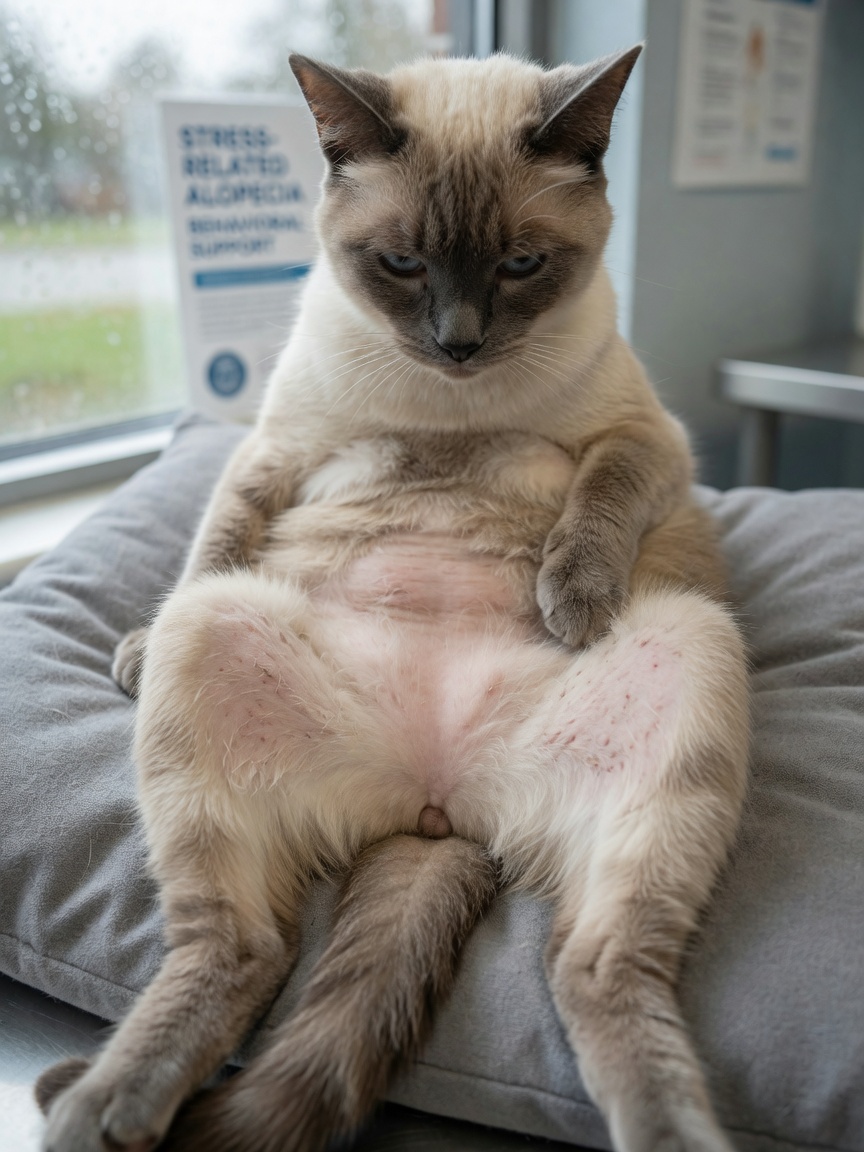
This is where the picture becomes more serious. Stress is not merely a psychological state in cats — it has measurable, significant effects on physical health across multiple body systems.
Feline Idiopathic Cystitis, a condition involving bladder inflammation with no bacterial infection, is strongly associated with stress. The pathophysiology involves the hypothalamic-pituitary-adrenal axis — the body's stress response system — disrupting normal bladder function. Studies have found that cats with recurrent episodes of FIC show markedly better outcomes when environmental stressors are addressed, sometimes without any pharmacological intervention. Research by Dr Tony Buffington at Ohio State University was instrumental in establishing this connection and led to the development of the Multimodal Environmental Modification protocol specifically for stress-related feline illness.
Chronic stress also suppresses immune function. Elevated cortisol over extended periods impairs the immune response, leaving cats more susceptible to upper respiratory infections, particularly in multi-cat environments. It can exacerbate inflammatory conditions and interfere with gut motility, contributing to vomiting and digestive irregularity.
Cardiovascular effects are also documented. Stress-induced hypertension can become chronic, with downstream risks for kidney function, ocular health, and cardiac muscle. This is particularly concerning given that hypertension is already common in older cats.
The Role of Predictability and Control
A key principle in reducing feline stress is the restoration of predictability and perceived control over the environment. Research in animal behaviour consistently shows that the ability to predict and control outcomes significantly reduces stress, even when the outcomes themselves are not ideal. A cat who can predict when it will be fed, where it can retreat undisturbed, and when it will be approached is a substantially less stressed animal than one navigating constant uncertainty.
Providing adequate vertical space is often underestimated. Cats feel safer at height, as elevation reduces vulnerability to surprise approach. Cat trees, shelving, and accessible high surfaces give cats options for escape and observation that directly lower the arousal threshold.
Environmental Enrichment as Stress Prevention
Enrichment is not a luxury — it is a welfare requirement. A cat whose environment provides sensory engagement, hunting opportunities, safe resting places, and appropriate social interaction is a cat whose stress load is actively managed.
Practical enrichment strategies include food puzzles that require the cat to work for its meals, window perches that allow safe observation of the outdoors, regular interactive play sessions, and the use of synthetic feline facial pheromone products, which have reasonable evidence behind them for reducing anxiety in specific contexts.
The key insight is that environmental stress in cats is largely preventable. Understanding what cats need — territory, predictability, control, appropriate stimulation, and the freedom to withdraw — and engineering a home that provides these things is the single most effective intervention available. No medication or supplement replaces a well-designed environment.