
The Disease That Can End a Breeding Programme — Silently
Brucella canis does not announce itself with dramatic signs. A bitch may abort late in pregnancy or produce a litter of weak, short-lived pups. A stud dog may gradually become infertile. In the background, a bacterial infection spreads between dogs — and potentially to the humans caring for them — with minimal obvious illness. For breeders, rescue organisations, and anyone running a multi-dog household, canine brucellosis is one of the most important diseases to understand, screen for, and prevent.
What Is Canine Brucellosis?
Canine brucellosis is caused by Brucella canis, a small gram-negative bacterium. Unlike other Brucella species that primarily affect livestock, B. canis is adapted to dogs. It is transmitted most efficiently during mating, but also through contact with aborted foetal material, vaginal discharge, and to a lesser extent urine, faeces, and saliva.
The bacteria infect the reproductive organs primarily, though they can also spread to the lymph nodes, spleen, eyes, spinal discs, and kidneys. The infection becomes chronic and persistent — dogs do not clear it on their own, and treatment is difficult.
Brucellosis in dogs is a notifiable disease in the UK following a regulatory reclassification in recent years, driven by a rising number of imported cases. Vets are required to report confirmed cases, and control measures may follow.
How It Spreads
Sexual Transmission
Mating is the highest-risk transmission route. An infected stud dog carries high concentrations of bacteria in his semen and prostatic fluid. An infected bitch sheds bacteria heavily in vaginal discharge, particularly around whelping and abortion. A single unprotected mating between an infected and uninfected dog carries significant transmission risk.
Contact With Reproductive Material
Birthing environments become heavily contaminated when an infected bitch whelps or aborts. Placental material, foetal fluids, and neonatal bodies contain enormous quantities of bacteria. Other dogs in the environment, and the humans assisting with whelping, face direct exposure. The bacteria can survive in the environment for several weeks under cool, moist conditions.
Indirect and Kennel Spread
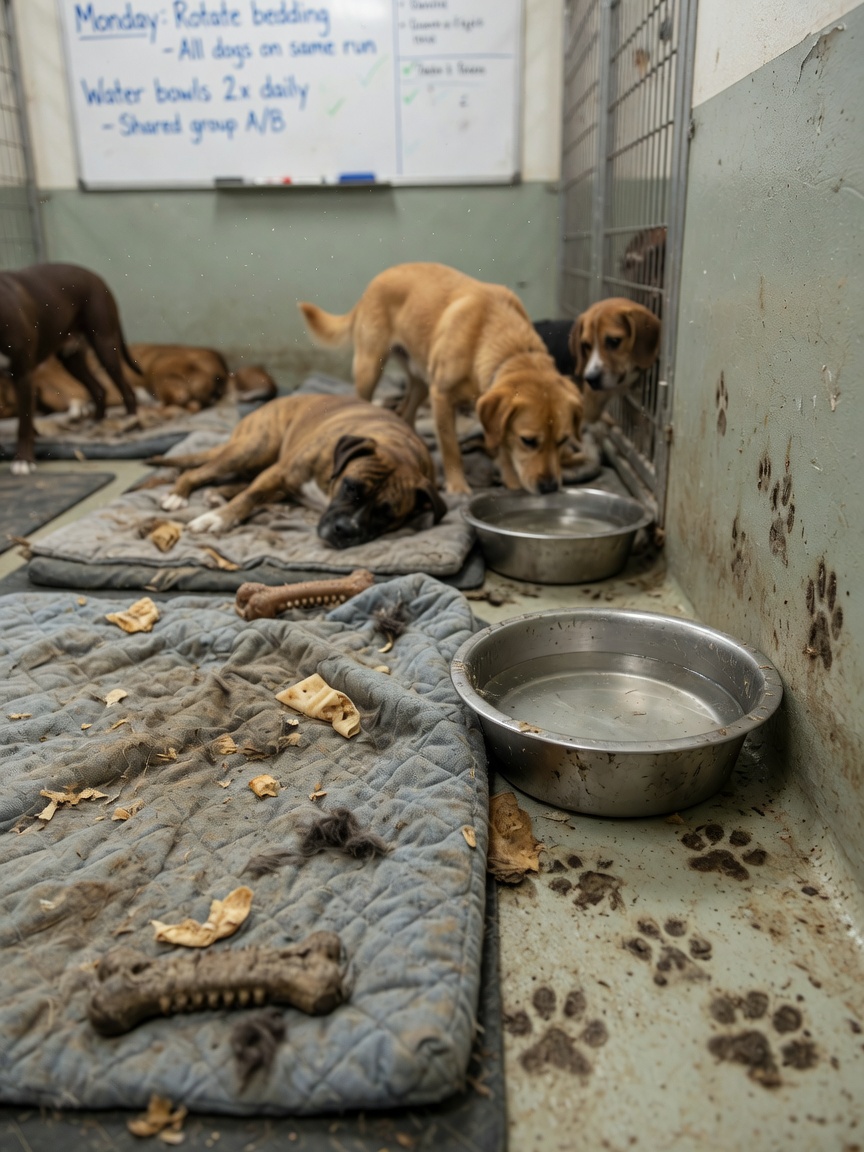
In kennels and multi-dog settings, bacteria spread through shared bedding, surfaces, and contact between dogs. Urine shedding, while a lower-risk route, contributes to environmental contamination over time. Dogs engaging in normal social behaviour — sniffing, licking — can be exposed.
Clinical Signs in Dogs
The most recognisable signs are reproductive. Bitches typically abort in the second half of pregnancy, around 45 to 55 days of gestation, producing dead or dying pups. They may also fail to conceive despite apparently normal mating. Male dogs show testicular swelling in early infection, followed over time by testicular atrophy, scrotal skin changes, and infertility. Decreased libido has been reported.
Beyond the reproductive signs, many infected dogs appear well. Some develop discospondylitis — infection of the spinal discs — presenting as back pain, reluctance to move, or progressive weakness. Eye inflammation (uveitis) occurs in a minority of cases. The absence of obvious illness in many infected dogs is precisely what makes brucellosis so dangerous in breeding populations.
The Zoonotic Risk
Brucella canis can infect humans, though transmission is less efficient than from livestock Brucella species. People at highest risk are those with close contact with infected dogs: breeders assisting with whelping, veterinary staff, and laboratory personnel handling samples.
Human infection typically causes a flu-like illness with fever, fatigue, sweating, and muscle pain. In immunocompromised individuals, it can cause more serious disease. Diagnosis in humans is often delayed because the infection is not commonly considered. Anyone who has had contact with a dog confirmed positive for Brucella canis should discuss this with their GP.
Testing, Treatment and Control
Screening
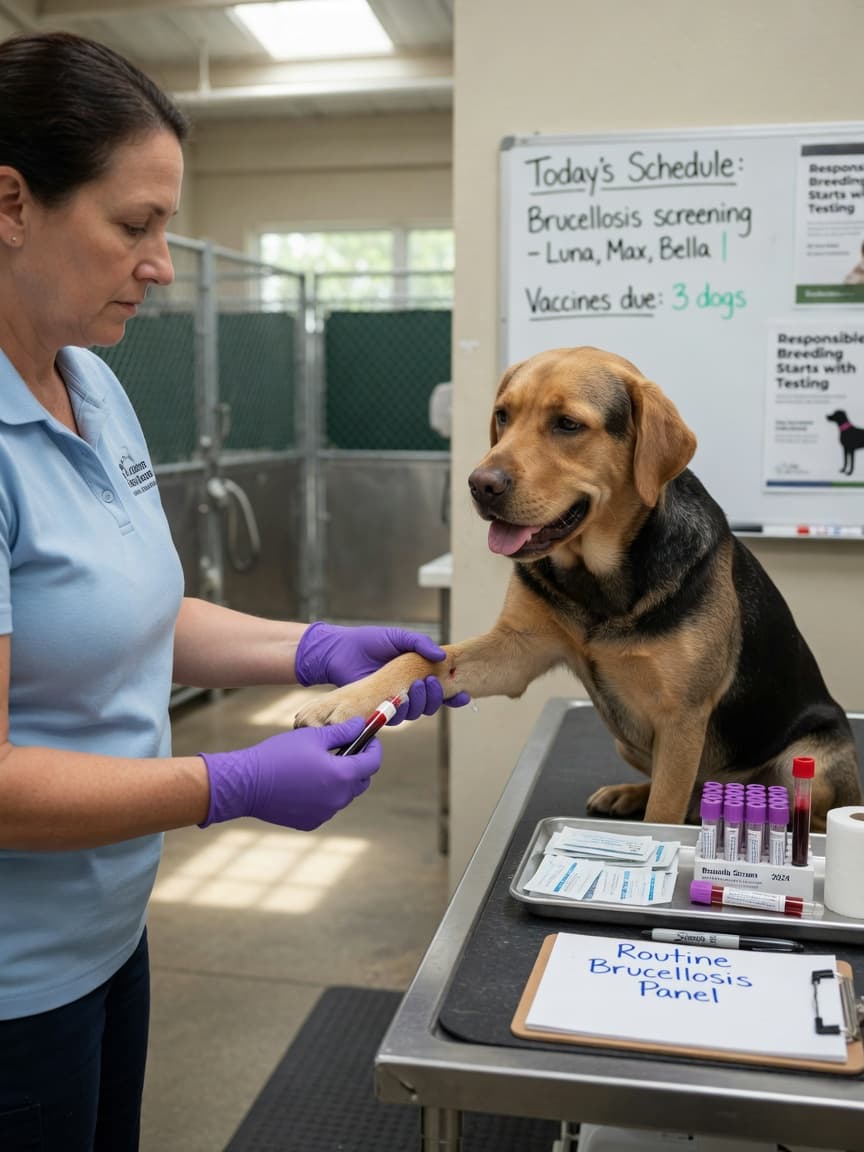
Pre-breeding testing of both the stud dog and bitch is strongly recommended and in many responsible breeding circles considered mandatory. Testing should occur no more than four weeks before mating. Dogs imported from countries with higher disease prevalence — particularly Eastern Europe and certain parts of Asia and Latin America — should be tested on arrival and again after a period of quarantine, as the incubation period and early test sensitivity mean a single negative test may not be sufficient.
Available tests include serological screening (blood tests detecting antibodies) and PCR testing of blood or other samples. No test is perfect — false negatives occur, particularly early in infection — so results must always be interpreted alongside clinical history.
Treatment Challenges
Treatment of canine brucellosis is possible using prolonged courses of antibiotics, typically a combination of doxycycline with either streptomycin or a fluoroquinolone. However, the bacteria are intracellular — they hide inside cells where antibiotics struggle to reach — and relapse after treatment is common. Dogs that have been treated may remain serologically positive and their infection status difficult to confirm. Neutering is typically recommended alongside antibiotic treatment, as it removes the primary reservoir of bacteria.
In outbreak situations within kennels, the possibility of euthanasia for confirmed positive animals may be raised for disease control purposes. This is a difficult decision and should involve guidance from a veterinary specialist and the relevant regulatory authorities.
What Breeders and Multi-Dog Households Must Do
- Test all dogs before breeding, every time — do not rely on previous negative results or the other dog owner's word alone.
- Require evidence of recent negative testing before accepting a stud dog or bitch from an external source.
- Treat imported dogs as higher risk and apply a testing protocol that accounts for the incubation period.
- In the event of unexplained late abortion, weak litters, or breeding failure, discuss Brucella canis testing with your vet promptly.
- If a dog tests positive, follow veterinary and regulatory guidance carefully — this is a notifiable disease with public health implications.
- Anyone assisting with whelping in a high-risk setting should use appropriate protective equipment and discuss their exposure risk with a medical professional if a dog in their care tests positive.