
The Spitz Group: Beautiful, Ancient, and Genetically Distinct
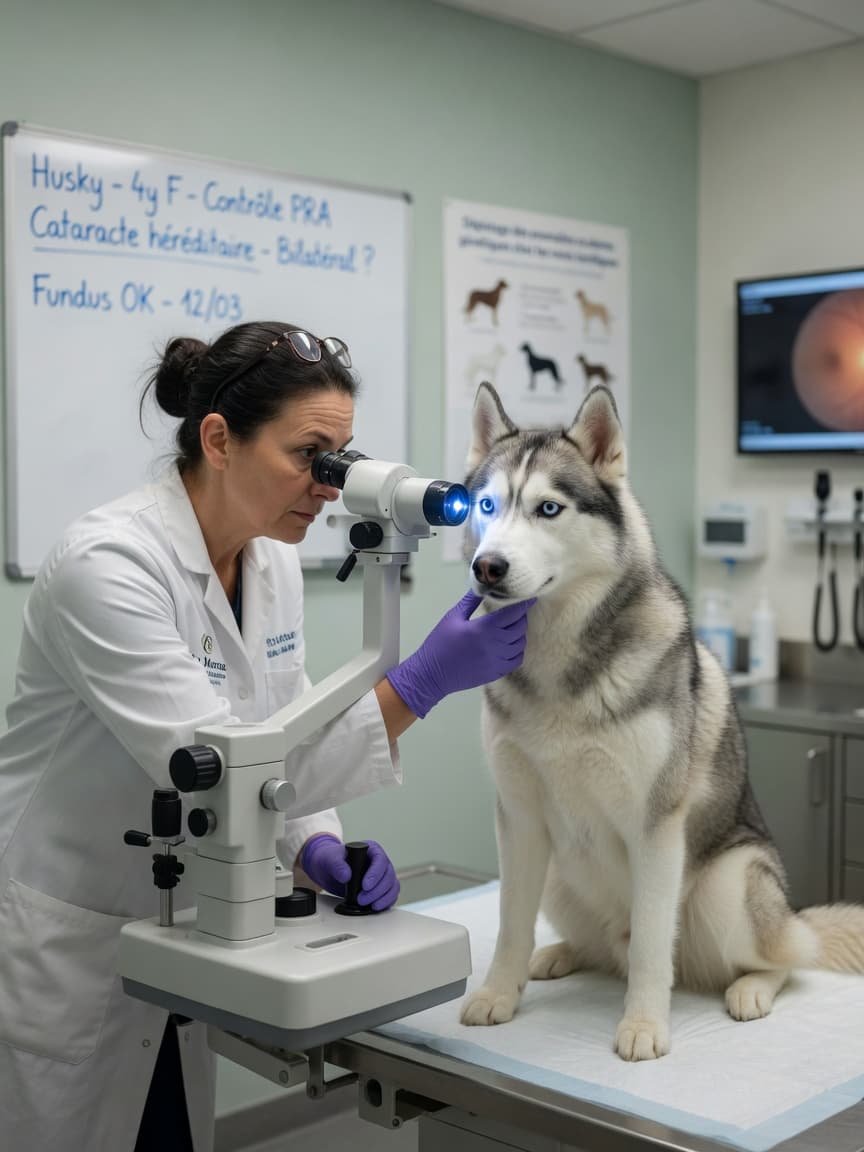
Around one in three Siberian Huskies will develop some form of eye disease in their lifetime. That figure alone tells you something important about owning a Spitz breed: these dogs are not just visually striking — they carry a concentrated set of genetic tendencies that any responsible owner needs to understand. From the Akita to the Alaskan Malamute, the Samoyed to the Finnish Spitz, this group shares far more than a curled tail and a wolflike face.
What Unites the Spitz Group Biologically
Spitz breeds descend from ancient northern working dogs, and their gene pool has been shaped by geographic isolation, selective breeding for specific tasks, and — in more recent centuries — closed stud books. That combination produces dogs of extraordinary capability, but also concentrates inherited health risks in ways that differ from more genetically diverse populations.
As a group, Spitz breeds tend to be robust and long-lived compared to many large breeds. However, certain organ systems and structural features recur as vulnerabilities across the group. Knowing them allows owners to act early rather than reactively.
Eye Conditions: The Group's Most Consistent Vulnerability
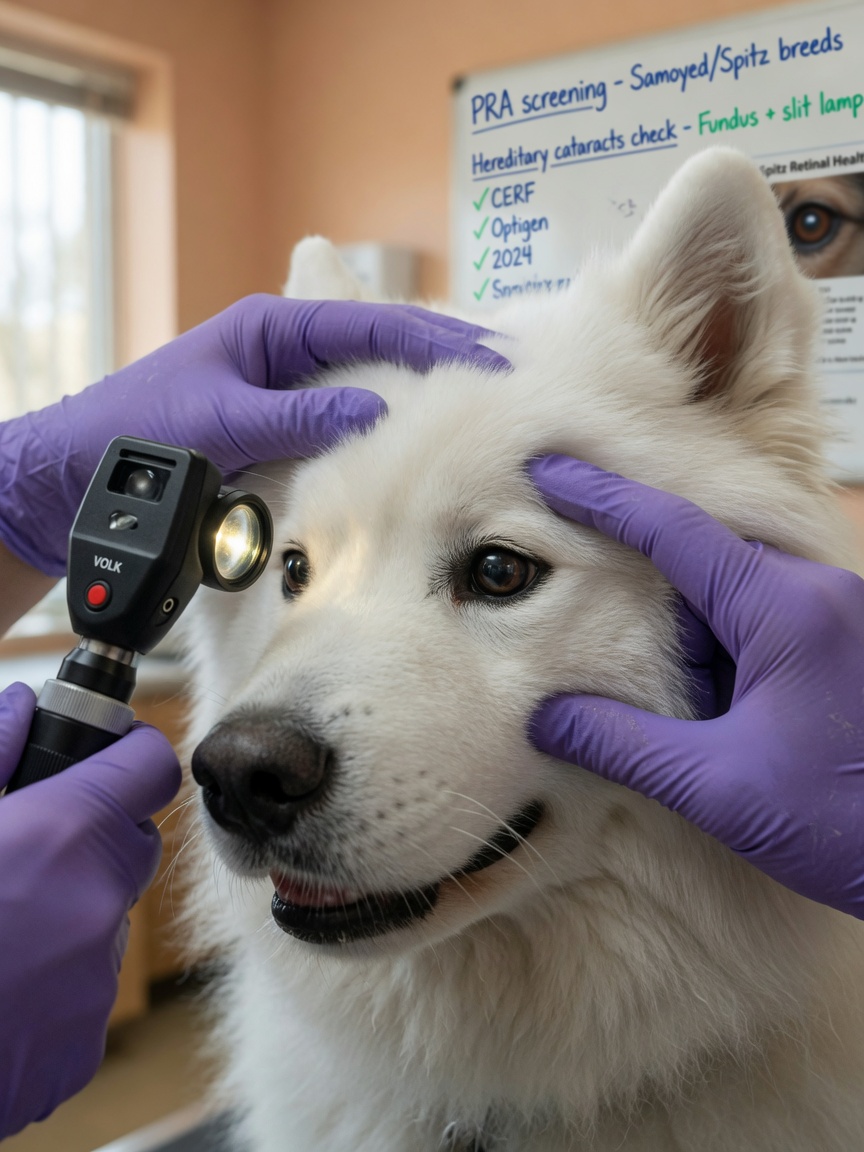
Ocular disease is the single most prevalent inherited concern across Spitz breeds, and several conditions appear repeatedly regardless of which breed you own.
Progressive Retinal Atrophy
Progressive retinal atrophy (PRA) causes the gradual degeneration of photoreceptor cells in the retina, eventually leading to blindness. It is documented in Siberian Huskies, Samoyeds, and several Nordic breeds. The condition is painless, so dogs often compensate well in familiar environments — owners frequently notice the problem only in low light. DNA testing now identifies carriers before breeding, making this a preventable tragedy in well-managed lines.
Hereditary Cataracts and Glaucoma
Hereditary cataracts, distinct from age-related cloudiness, appear in the Siberian Husky with notable frequency. Glaucoma — elevated intraocular pressure that damages the optic nerve — is a concern in several Spitz types and requires urgent veterinary attention, as vision loss can occur within hours of acute onset. Annual eye screening through a veterinary ophthalmologist is strongly recommended for all Spitz breeds.
Autoimmune and Skin Disorders
The Spitz group shows an above-average prevalence of immune dysregulation. This manifests in several ways that owners should recognise early.
Zinc-responsive dermatosis is particularly associated with Siberian Huskies and Malamutes. Despite adequate dietary zinc, some individuals cannot absorb the mineral efficiently, resulting in crusty, scaly skin lesions — especially around the face and footpads. Supplementation under veterinary guidance is effective once properly diagnosed.
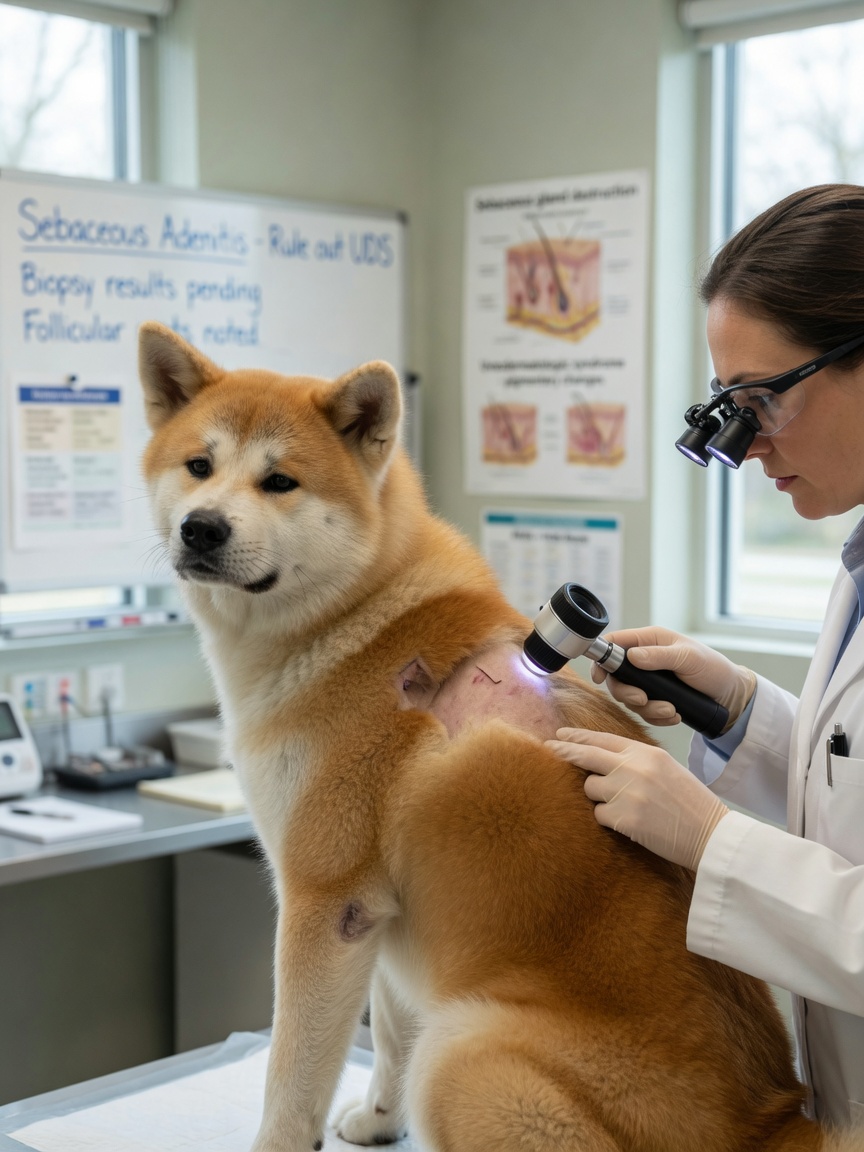
Sebaceous adenitis, an inflammatory disease of the hair follicles' sebaceous glands, causes scaling, hair loss, and a distinctive musty smell. It is well documented in the Akita and Samoyed. Early biopsy is the only reliable diagnostic route, and lifelong management is required.
Uveodermatological syndrome, also called Vogt-Koyanagi-Harada-like disease, is an immune-mediated condition attacking pigmented cells in both the eyes and skin simultaneously. It presents with depigmentation of the nose, lips, and eyelids alongside uveitis. Akitas are disproportionately represented in case reports.
Cardiac and Renal Concerns
Hereditary nephritis — a progressive kidney disease — has been identified in Samoyeds, where it follows an X-linked inheritance pattern in males and affects females more variably. Affected dogs typically show protein in the urine before overt signs appear, making routine urinalysis valuable from an early age.
Subaortic stenosis, a narrowing of the outflow tract below the aortic valve, occurs in several Spitz breeds and ranges from a minor murmur to a life-limiting cardiac defect. A veterinary cardiologist should assess any Spitz puppy in which a murmur is detected, and reputable breeders will provide cardiac clearances for breeding stock.
Hip Dysplasia and Musculoskeletal Health
Hip dysplasia is less dramatically concentrated in Spitz breeds than in many large working breeds, but it remains present, particularly in the Alaskan Malamute and Akita. Cruciate ligament disease and patellar concerns appear in smaller Spitz types. Because Spitz dogs are highly stoic — a trait that served them well as working animals in harsh conditions — lameness is often masked until significant deterioration has occurred. Regular gait assessment and veterinary orthopaedic checks are worthwhile in active dogs.
Metabolic Quirks Worth Knowing
Several Spitz breeds show unusual sensitivity to anaesthesia and certain medications, believed to be linked to the MDR1 gene mutation. While this mutation is most famous in herding breeds, some Spitz lineages show related metabolic processing differences. Always ensure your veterinarian is aware of your dog's breed before any sedation or surgical procedure.
Hypothyroidism — underactive thyroid function — presents across many Spitz breeds and can masquerade as weight gain, lethargy, coat changes, or behavioural dullness. It is manageable with daily medication once correctly diagnosed via blood panel.
Practical Steps for Spitz Breed Owners
- Choose breeders who test for PRA, hereditary cataracts, cardiac conditions, and hip scores relevant to your specific breed — ask to see certificates, not just assurances.
- Schedule annual eye examinations with a veterinary ophthalmologist from puppyhood onward.
- Request a urinalysis as part of routine annual health checks, particularly in Samoyeds.
- Monitor coat and skin condition monthly; changes in texture, scaling, or odour warrant a vet visit rather than a grooming appointment alone.
- Inform your vet of any reports of anaesthetic sensitivity in your breed line before procedures.
- Consult your veterinarian before adjusting diet or supplementing with zinc — correct dosing matters.
The Spitz group rewards attentive ownership. These are not fragile dogs, but they are specific ones. Understanding their inherited landscape means you can catch problems early, support reputable breeding, and give your dog the longest, healthiest life the genetics allow.