ForPetsHealthcare
Dogs

How to Manage Your Cat's Claws

By Julia WrenfieldUpdated August 4, 20264 min read
Evidence-based · Sources checked
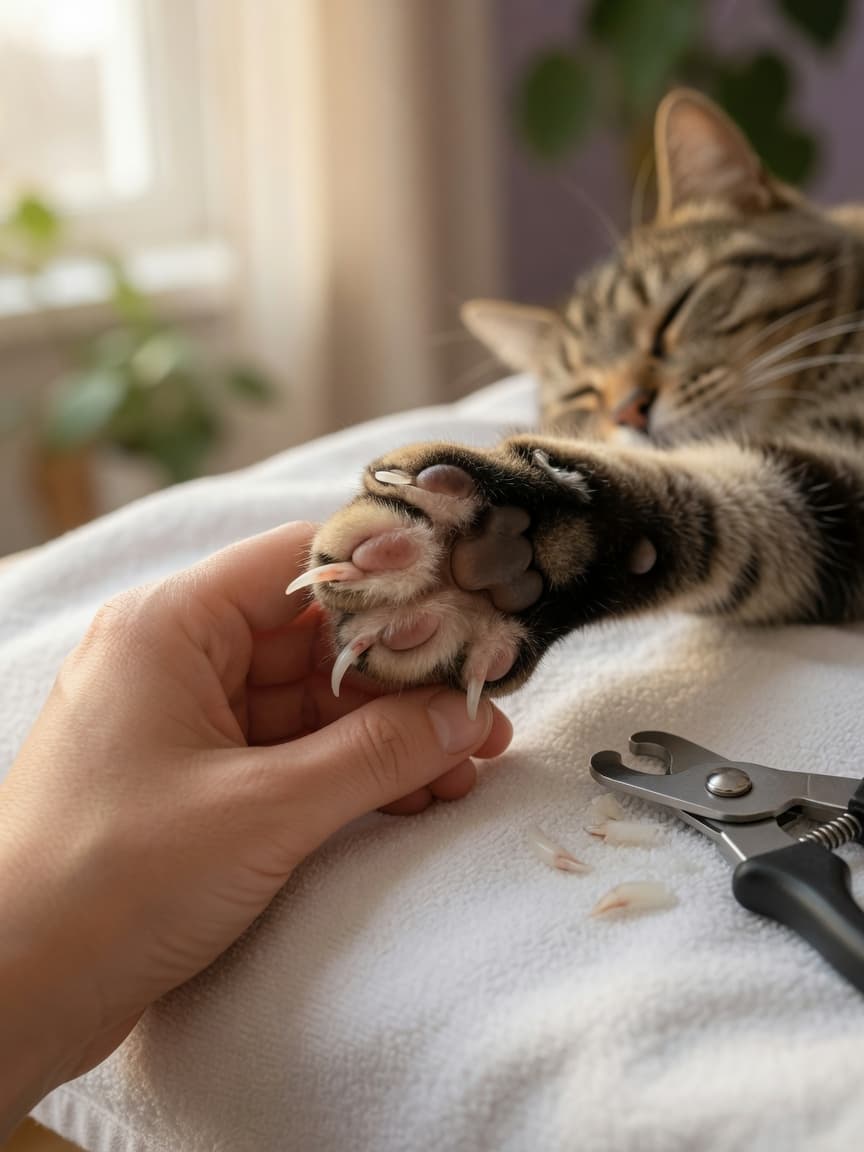
{"en": "Cat's extended claws close-up showing nail care and grooming for managing feline scratching behavior", "es": "Primer plano de las garras extendidas de un gato mostrando cuidado de u\u00f1as y aseo felino", "fr": "Gros plan des griffes \u00e9tendues d'un chat montrant les soins des ongles et le toilettage f\u00e9lin", "de": "Nahaufnahme der ausgefahrenen Krallen einer Katze mit Nagelpflege und Katzenpflege", "nl": "Close-up van uitgestrekte kattenklauwen met nagelzorg en verzorging van felijngedrag", "pt": "Close-up das garras estendidas do gato mostrando cuidados com unhas e higiene felina", "it": "Primo piano delle unghie estese del gatto che mostra la cura delle zampe e la toelettatura felina"}

Your cat's claws are marvellous tools for climbing, hunting, and self-defence, but when left unmanaged, they can cause considerable damage to your furniture, carpets, and unfortunately, your skin too. Understanding how to properly care for your feline friend's claws is one of the most important aspects of cat ownership. Whether you prefer to trim them yourself or visit a professional, having a solid management strategy will keep your cat comfortable, your home intact, and your relationship with your pet harmonious.

Why Claw Management Matters

Cats naturally shed their outer claw sheaths as new growth emerges beneath. Without proper management, these sheaths can become uncomfortable, and your cat may compensate by scratching excessively. Additionally, overgrown claws can curve into the paw pad, causing pain and potential infection. Regular claw maintenance isn't just about protecting your furniture—it's genuinely important for your cat's health and wellbeing.

Understanding Your Cat's Scratching Behaviour

Before tackling claw management, it's worth understanding why cats scratch. They do this to:

  • Remove loose claw sheaths naturally
  • Mark territory using scent glands in their paws
  • Stretch their muscles and maintain flexibility
  • Express emotions and reduce stress

Providing appropriate scratching outlets is therefore essential. Invest in quality scratching posts, pads, and boards made from sisal rope, cardboard, or wood. Place these strategically around your home, particularly near sleeping areas and by windows where your cat likes to spend time.

Trimming Your Cat's Claws at Home

A grey cat sitting on owner's lap with nail clippers, styptic powder, and treats on a nearby table during a home grooming session

Regular trimming—ideally every two to three weeks—is the most effective way to manage claw length. Here's how to do it safely:

  1. Gather your supplies: Invest in a proper cat nail clipper (scissor-type or guillotine-style both work well), styptic powder to stop bleeding if needed, and treats for positive reinforcement.
  2. Choose the right time: Trim claws when your cat is calm and relaxed, perhaps after a meal or play session.
  3. Familiarise your cat: Handle their paws gently and frequently outside of trimming sessions so they become accustomed to touch.
  4. Get the technique right: Gently press the paw pad to extend the claw. Look for the pink quick (the blood vessel inside) and trim only the translucent white portion below it. Never cut into the pink area, as this causes pain and bleeding.
  5. Take your time: Do one or two claws per session if your cat is nervous. Building positive associations is more important than completing all claws in one sitting.

Professional Grooming Services

If you're uncomfortable trimming claws yourself, or if your cat is particularly resistant, professional groomers and veterinary nurses can handle this task safely. Many veterinary practices offer claw-trimming appointments at reasonable cost. This is a good option if your cat has particularly thick claws or behavioural challenges around handling.

When to Seek Veterinary Advice

Contact your vet if you notice:

  • Claws that are overgrown or curled into the paw pad
  • Limping or reluctance to put weight on a paw
  • Swelling, redness, or discharge around the claw area
  • Excessive scratching despite regular trimming
  • Claws that are brittle or splitting

Key Takeaways

Effective claw management combines three elements: providing appropriate scratching outlets, regular trimming every two to three weeks, and knowing when to seek professional help. Start handling your cat's paws early and consistently to build tolerance. Keep your trimming supplies accessible and practise the correct technique to avoid the sensitive quick. With patience and consistency, you'll find a routine that keeps your cat's claws healthy and your home protected.

#how to manage your cats claws#cat health#feline nutrition#forpetshealthcare

Sources & further reading

This article is based on peer-reviewed veterinary research and reputable animal-health sources. Explore the underlying science in our Research Library.

Related articles

The 19 Best Animal Shelters in the Netherlands (2026)

the Netherlands's animal shelters, rescue associations and refuges save thousands of dogs, cats and other animals every year, almost always on tiny budgets and volunteer power. To build the most objective ranking possible, we analysed public Google reviews across more than 56 registered animal-prote…

Read more →

The 25 Best Animal Shelters in Italy (2026)

Italy's animal shelters, rescue associations and refuges save thousands of dogs, cats and other animals every year, almost always on tiny budgets and volunteer power. To build the most objective ranking possible, we analysed public Google reviews across more than 121 registered animal-protection org…

Read more →

The 48 Best Animal Shelters in Germany (2026)

Germany's animal shelters, rescue associations and refuges save thousands of dogs, cats and other animals every year, almost always on tiny budgets and volunteer power. To build the most objective ranking possible, we analysed public Google reviews across more than 152 registered animal-protection o…

Read more →

The 32 Best Animal Shelters in France (2026)

France's animal shelters, rescue associations and refuges save thousands of dogs, cats and other animals every year, almost always on tiny budgets and volunteer power. To build the most objective ranking possible, we analysed public Google reviews across more than 89 registered animal-protection org…

Read more →

The 8 Best Animal Shelters in Portugal (2026)

Portugal's animal shelters, rescue associations and municipal centros de recolha save thousands of dogs, cats and other animals every year, almost always on tiny budgets and volunteer power. To build the most objective ranking possible, we analysed public Google reviews across more than 86 registere…

Read more →

Sphynx Cat Skin care and hygiene: Causes, Signs & Care

Sphynx cats have little to no coat, which means the skin itself takes on jobs that fur normally does — insulation, oil dispersal, and barrier protection — leaving it prone to greasiness, blocked pores, fungal infections, and sunburn. The single most important thing to know is that a Sphynx's skin ne…

Read more →
Disclaimer:This article is for informational purposes only and does not constitute veterinary advice. Always consult a qualified veterinarian for your pet's health concerns.

Free newsletter

Pet health tips, straight to your inbox

Weekly science-backed advice for dog & cat owners. No spam, unsubscribe anytime.