

The First Hours Matter More Than You Think
Around one in three dogs experience a minor complication following routine spay surgery — not because something went wrong in theatre, but because owners underestimated the recovery window. Knowing what is normal at each stage helps you respond confidently rather than panic unnecessarily, and spot genuine warning signs before they escalate.
Days 1 to 2: Coming Home from the Clinic
Your dog will return home groggy, possibly unsteady on her feet, and likely uninterested in food. This is entirely expected. Anaesthesia residue, combined with the stress of the procedure, suppresses appetite and coordination for the first 12 to 24 hours.
What is normal
- Whimpering or vocalising intermittently
- Shivering or feeling cold to the touch
- Reluctance to move from one spot
- Swallowing or licking lips (mild nausea)
- Slightly swollen incision site
Your priorities at this stage
- Keep her in a quiet, warm space away from children and other pets
- Offer small amounts of water; reintroduce food gradually in the evening if she shows interest
- Fit the Elizabethan collar (e-collar) immediately and keep it on
- Do not allow jumping onto furniture or climbing stairs
Days 3 to 5: Energy Returns Before Healing Does
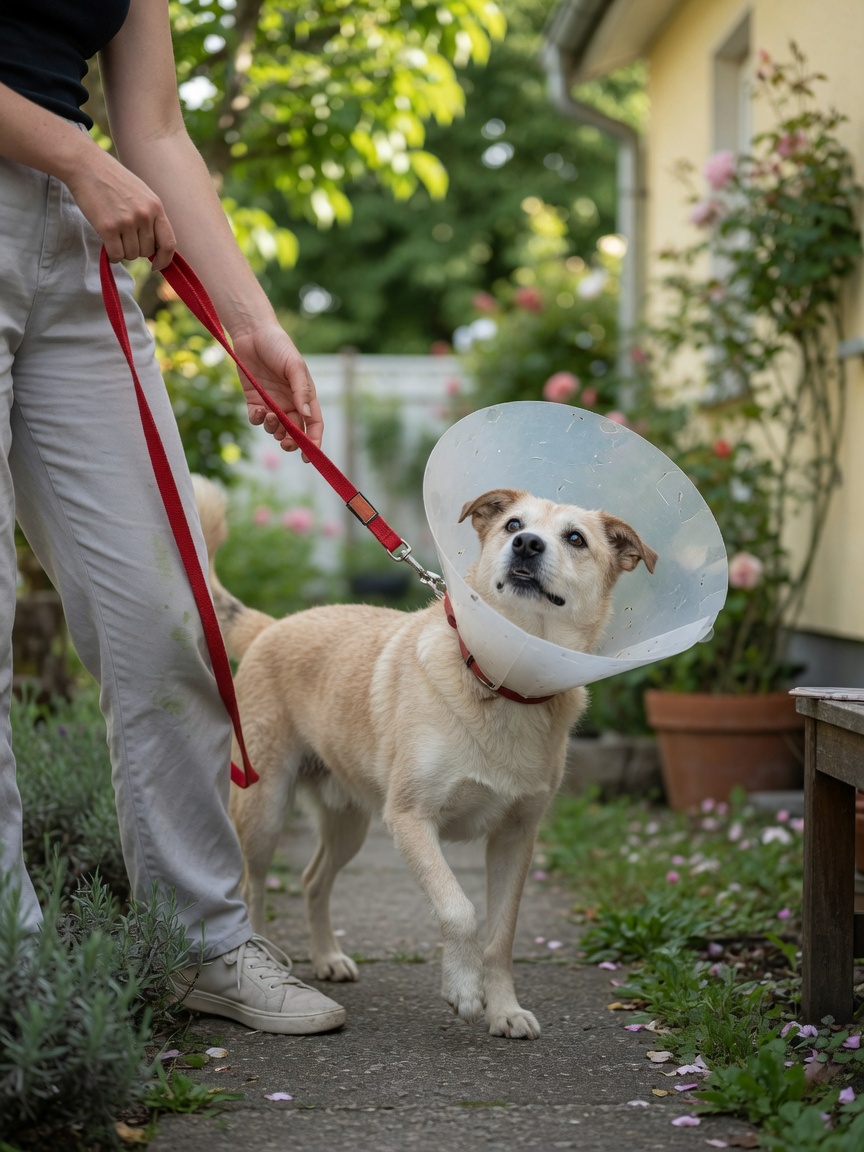
This is the phase that catches many owners off guard. By day three, most dogs feel significantly better and will push to resume normal activity. The internal sutures are nowhere near healed at this point, however. The abdominal wall has been opened and closed, and full tissue integrity takes ten to fourteen days to establish. Allowing your dog to run, jump, or roughhouse now risks suture dehiscence — a painful and costly complication.
Leash walks to toilet are permitted, kept short and calm. No off-lead exercise, no stairs if avoidable, no interaction with boisterous housemates.
Watching the incision
Some bruising and mild swelling around the wound is expected and resolves on its own. A small amount of clear or pinkish discharge in the first 48 hours is also within normal range. What you are watching for instead: heat, increasing redness spreading outward from the wound, thick or coloured discharge, or any gap in the skin edges.
Days 6 to 10: Steady Progress
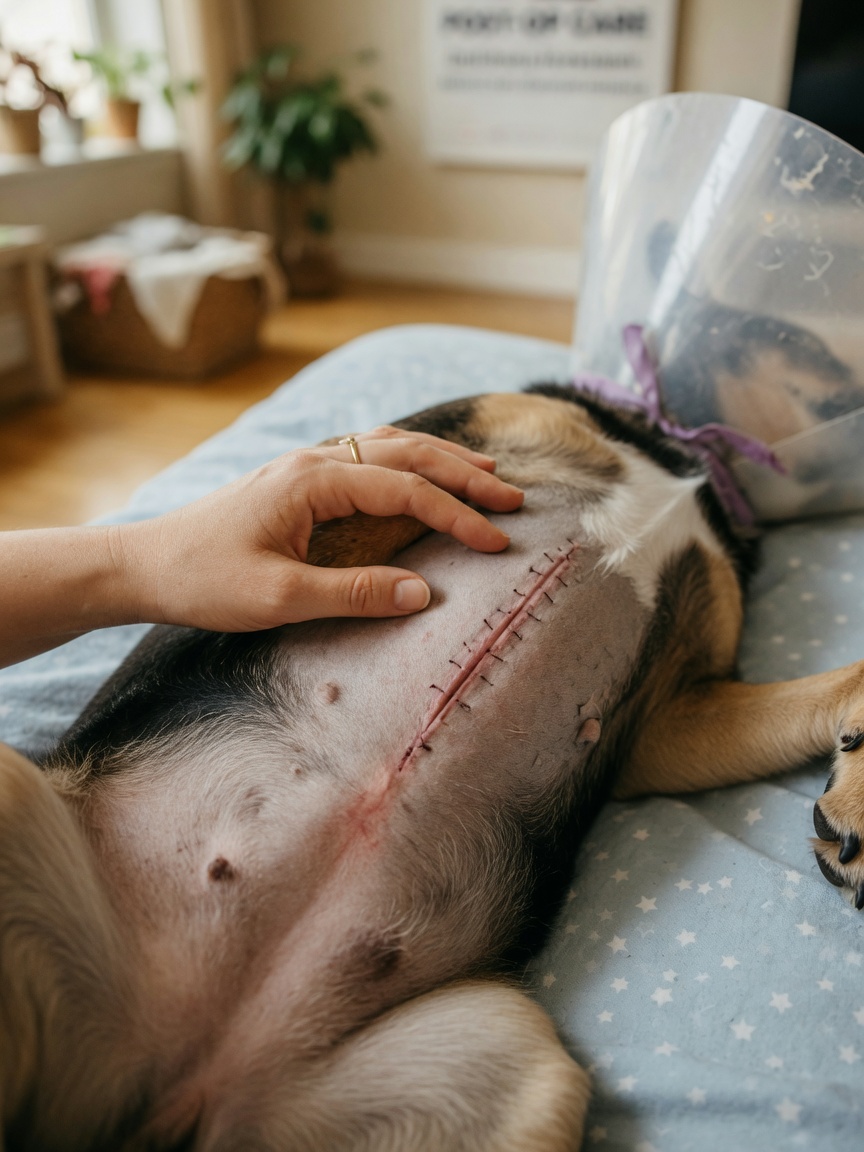
The wound should be visibly knitting together. Itchiness is common as tissue regenerates, which is why the e-collar remains essential even as your dog protests wearing it. Many dogs at this stage appear fully recovered, which reinforces owner temptation to allow free activity. Resist it.
Your vet may have prescribed a short course of anti-inflammatory medication. Complete the full course even if your dog seems comfortable, and never supplement with over-the-counter human pain relief — paracetamol and ibuprofen are toxic to dogs.
Monitoring for complications
- A firm swelling under the incision (seroma) is common and usually resolves without intervention — but always have your vet confirm this
- Persistent lethargy beyond day five, loss of appetite returning, or a temperature above 39.5°C warrants a call to your clinic
- Any vomiting or straining to urinate should be assessed promptly
Days 11 to 14: The Final Stretch
Most external sutures or staples are removed between days ten and fourteen, depending on your vet's protocol. Absorbable internal sutures dissolve on their own. Once the vet confirms the wound has closed cleanly, you can gradually reintroduce normal activity over the following week rather than switching abruptly from restricted to unrestricted.
Some dogs show mild behavioural changes after spaying — reduced roaming instinct, for instance — while others show no difference at all. Hormonal fluctuation in the weeks immediately following surgery can occasionally cause temporary mood shifts; these settle as her system re-establishes equilibrium.
Spay Recovery: A Practical Day-by-Day Summary
- Day 1: Rest, warmth, small meals, e-collar fitted, no activity
- Days 2 to 3: Monitor for nausea and incision swelling; short toilet walks only
- Days 3 to 5: Energy returns — maintain strict rest regardless
- Days 5 to 7: Continue restricted walks; check wound daily for infection signs
- Days 7 to 10: Healing visible; e-collar stays on; complete medication course
- Days 10 to 14: Suture removal appointment; gradual return to activity on vet's advice
Spay recovery is a fortnight of vigilance, not a weekend inconvenience. The investment in proper rest now prevents complications that could mean a return to surgery. When in doubt at any point during recovery, contact your vet — no question is too small when it concerns a healing animal in your care.