
The Siamese: Vocal, Intelligent and Medically Distinct
Siamese cats are among the most recognisable and communicative breeds in the world. They are also one of the most medically interesting. Decades of selective breeding from a relatively narrow genetic base have concentrated certain health vulnerabilities alongside the breed's distinctive colouring and personality. Knowing what to look for — and why — puts owners in a much stronger position.
Progressive Retinal Atrophy in Siamese Cats
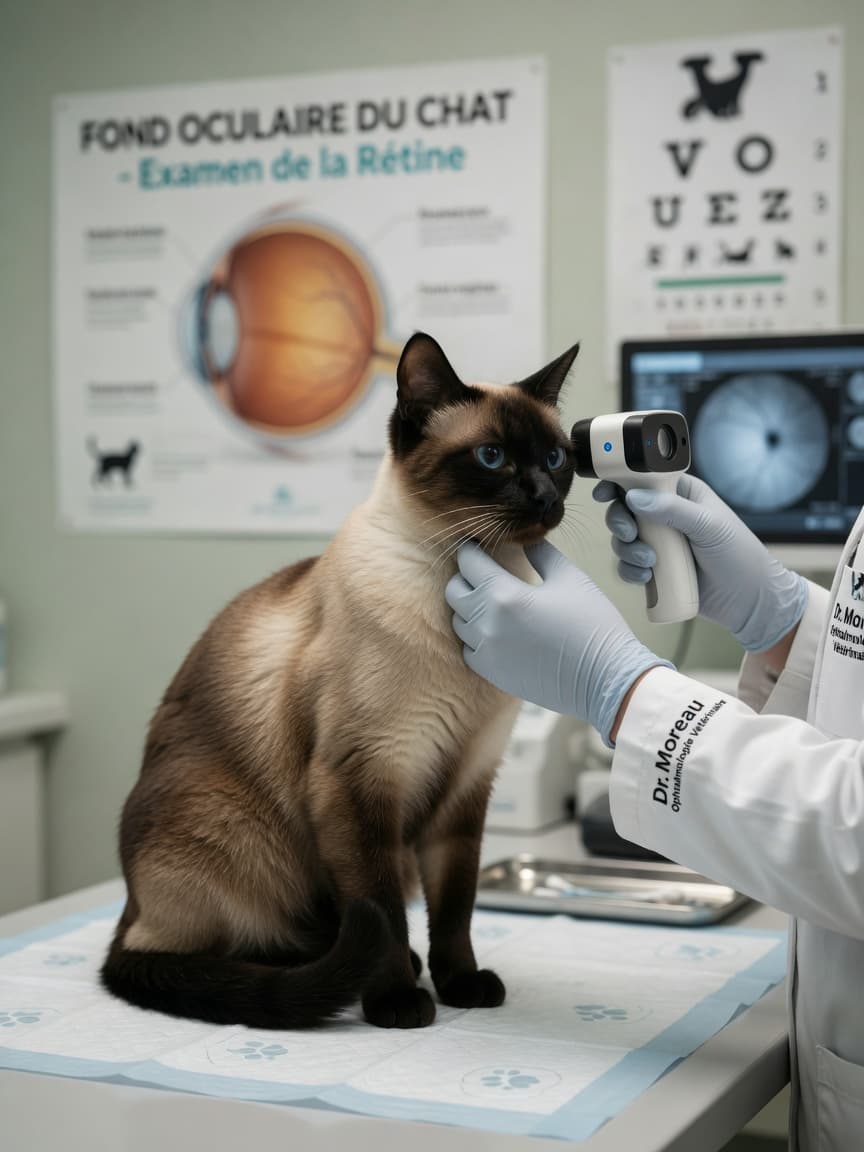
Progressive retinal atrophy, or PRA, refers to a group of inherited conditions in which the photoreceptor cells of the retina degenerate progressively over time. Siamese cats carry a form called rdAc-PRA, caused by a mutation in the CEP290 gene. Unlike some other PRA variants, rdAc-PRA typically presents later in life, with meaningful vision loss often not apparent until four to seven years of age.
Early Signs of Vision Loss
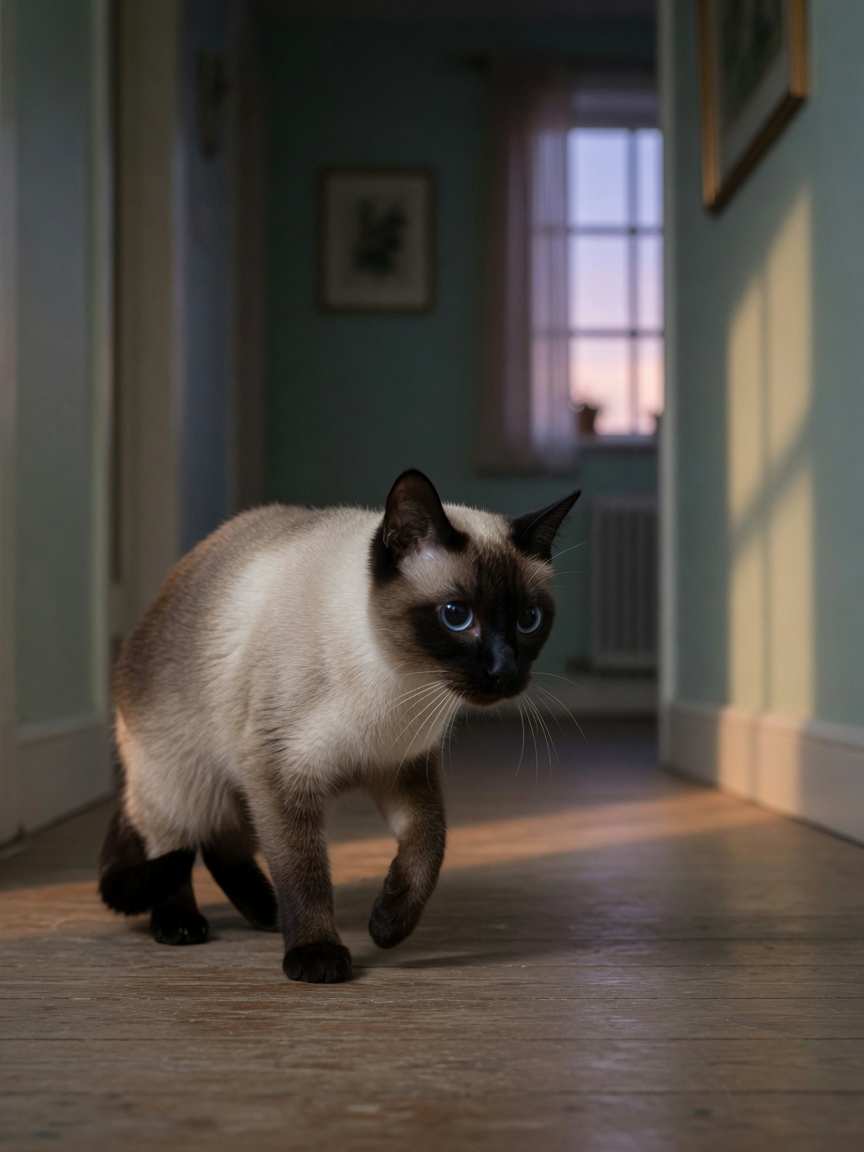
- Reluctance to move in low-light environments or at night
- Pupils that appear dilated even in normal lighting
- Increased clumsiness or hesitation when jumping
- Apparent anxiety in unfamiliar spaces
- Reduced tracking of moving objects
Because PRA is painless, cats adapt to gradual vision loss with remarkable dexterity. Many owners do not notice the problem until it is significantly advanced. A veterinary ophthalmologist can detect retinal changes before they become functionally apparent.
Genetic Testing and Implications
DNA testing for the rdAc-PRA mutation is available and is a reasonable step for breeding cats. There is no treatment that halts or reverses the degeneration. Management is supportive — keeping furniture consistent, avoiding abrupt environmental changes, and ensuring the cat can navigate its home safely as vision diminishes.
Feline Asthma: A Siamese Predisposition
Feline asthma — also called feline allergic bronchitis — involves inflammation and constriction of the airways in response to inhaled allergens or irritants. Siamese cats appear to be predisposed to this condition, though the precise genetic basis is not fully understood. Estimates suggest that Siamese are overrepresented in asthma diagnoses relative to their population prevalence.
Recognising an Asthma Episode
- Crouching low with neck extended and elbows out — a characteristic posture during coughing fits
- Wheezing or a high-pitched sound during exhalation
- Rapid, effortful breathing at rest
- Repeated coughing that may be mistaken for hairball attempts
- Open-mouth breathing, which is abnormal in cats and always warrants immediate attention
Environmental Management
Identified asthma triggers in cats include cigarette smoke, aerosol sprays, scented candles, dusty cat litter, and certain cleaning products. Siamese owners should audit the home environment thoughtfully. Low-dust, unscented litters make a practical difference. Veterinary management typically involves bronchodilators and corticosteroids, often delivered via a specialised feline inhaler device.
Temperament-Linked Health Considerations
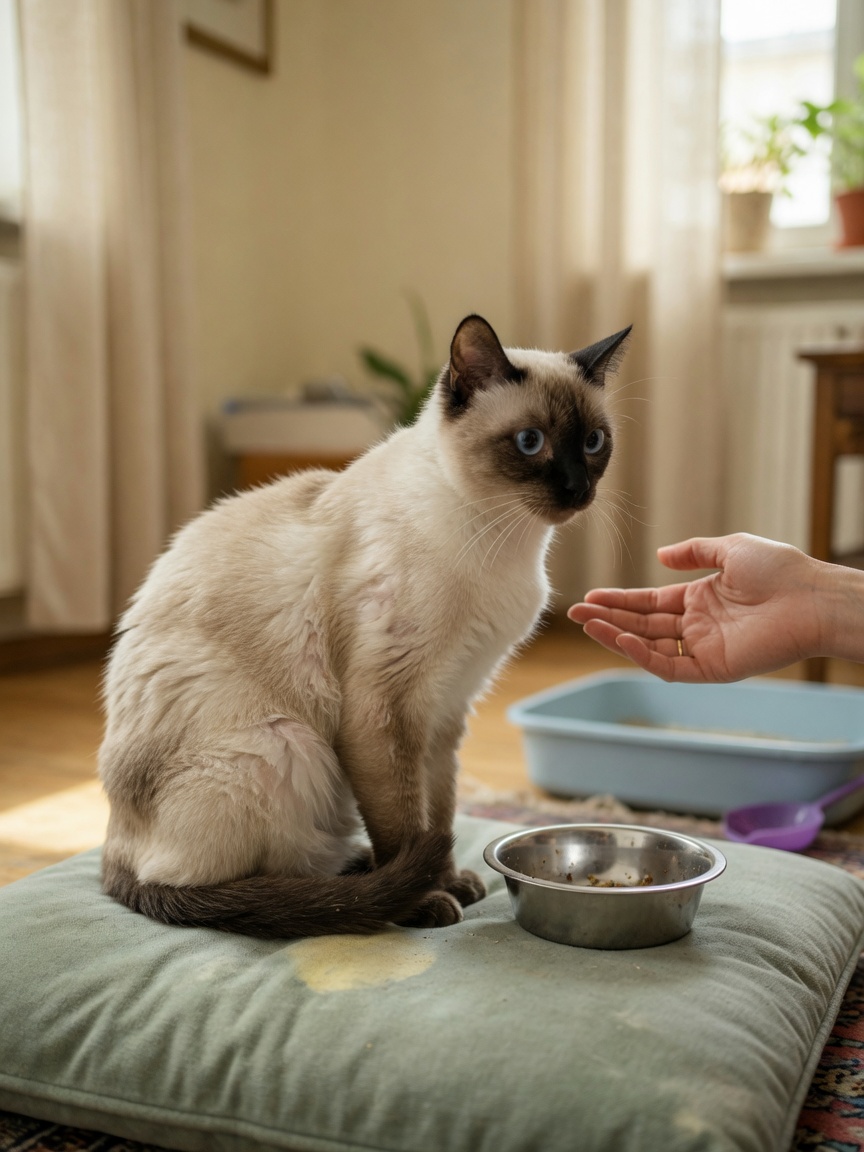
Siamese cats are unusually emotionally sensitive. They form strong attachments to their people, thrive on interaction, and can become genuinely distressed when left alone for extended periods. This is not anthropomorphism — it has measurable health implications.
Stress-Related Conditions
Chronic psychological stress in cats is a significant driver of feline idiopathic cystitis — a painful bladder condition with no identifiable physical cause. Siamese, given their temperamental intensity, may be particularly susceptible. Other stress-related presentations include over-grooming to the point of hair loss, compulsive behaviours, and appetite changes.
Providing environmental enrichment, maintaining predictable routines, and ensuring the cat has a consistent social companion — whether human or feline — is not merely nice to have for this breed; it is part of responsible healthcare.
Dental Disease
Siamese cats also show a higher prevalence of feline tooth resorption and periodontal disease relative to some other breeds. Annual dental checks and, where necessary, professional cleaning under anaesthetic are worth prioritising.
Practical Health Management for Siamese Owners
- Arrange genetic testing for rdAc-PRA if breeding, and monitor vision proactively from middle age
- Eliminate known asthma triggers from the home environment and have an action plan for acute episodes
- Learn to count your cat's resting respiratory rate — over 30 breaths per minute is a concern
- Invest meaningfully in environmental enrichment: puzzle feeders, vertical spaces, social interaction
- Schedule annual dental examinations and address periodontal disease early
- Consult your vet if your Siamese shows behavioural changes — they are often the first indicator of underlying physical or psychological distress
Siamese cats live long, vocal, emotionally rich lives when their specific needs are understood and met. The investment in breed-specific knowledge pays dividends across many years of companionship.