
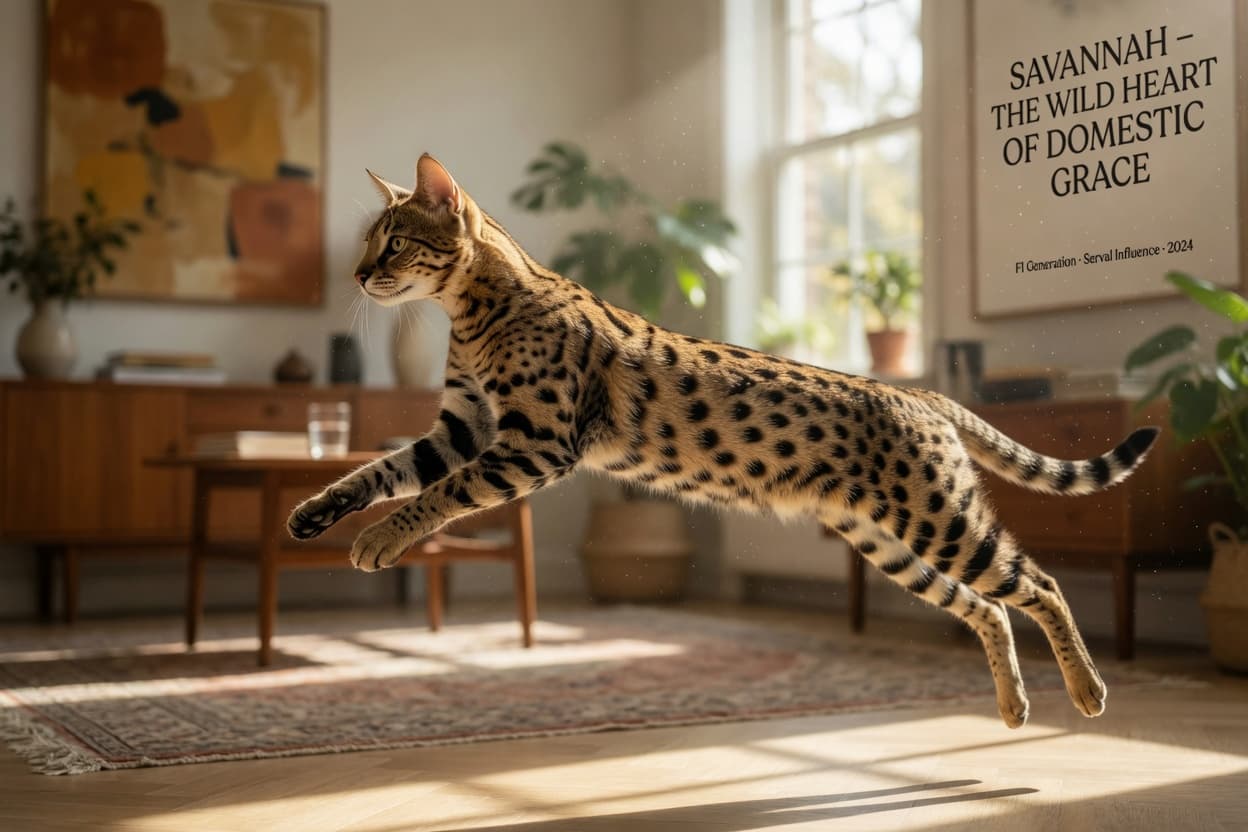
The Savannah cat is a striking, high-energy hybrid breed prized by experienced owners who want an interactive, dog-like companion rather than a lap cat. Bred from servals crossed with domestic cats, Savannahs are known for their tall, lean build, bold personality, and strong need for mental and physical stimulation. The headline health consideration for this breed is that early-generation Savannahs can inherit a mix of traits from their wild ancestry, so responsible sourcing and proactive veterinary care matter more than with many purely domestic breeds.
Breed Overview
- Size: Medium to large; males typically 7–15kg, with a notably long-legged, athletic frame
- Lifespan: Commonly reported to live 12–20 years with good care
- Coat: Short, dense, and low-shedding, usually spotted in a wild-looking pattern
- Origin: Developed in the United States in the 1980s–1990s from crosses between the African serval and domestic cat breeds such as the Bengal, Egyptian Mau, and Oriental Shorthair
Temperament & Family Fit
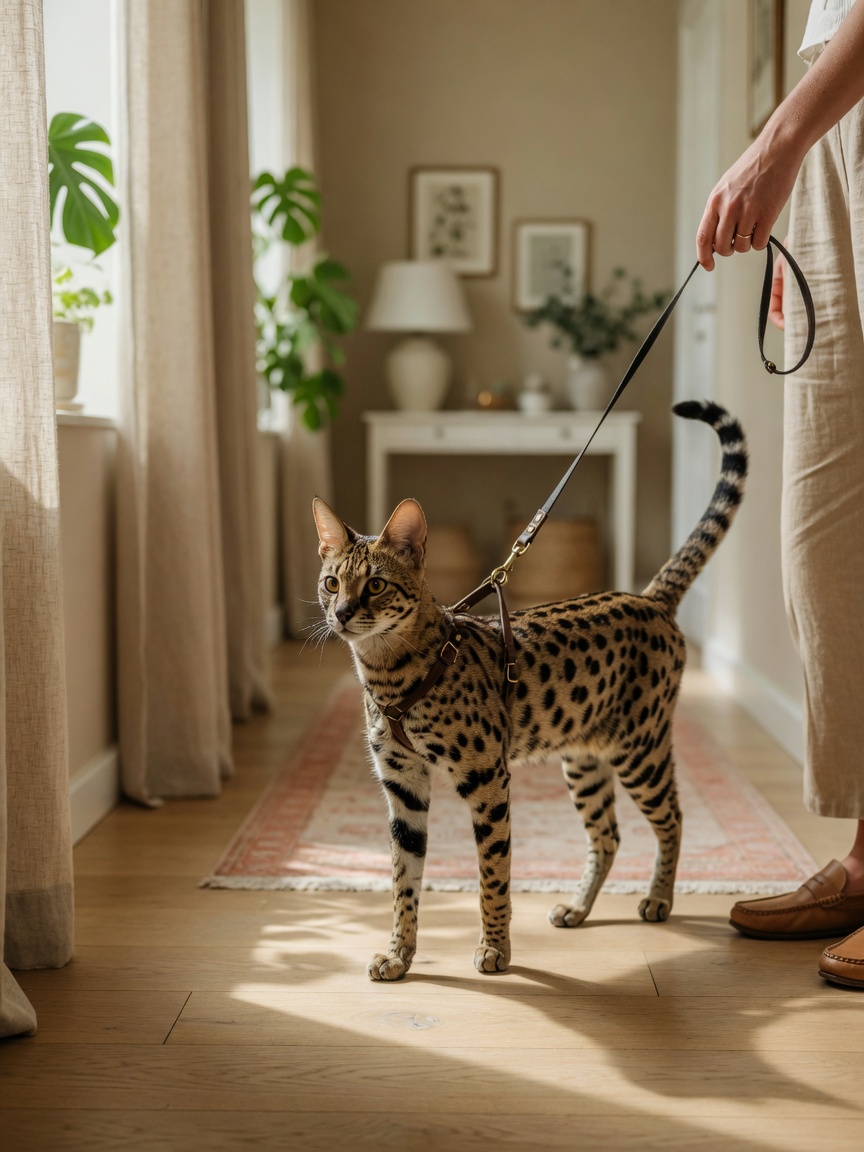
Savannahs are intelligent, curious, and famously energetic. Many display dog-like behaviours, including following owners from room to room, learning to walk on a harness, playing fetch, and even opening doors or cupboards. This is not a breed that thrives on being left alone for long periods or confined to a quiet, low-stimulation home.
Early-generation Savannahs (F1, F2 — those closest to the serval in their pedigree) tend to be more independent, more vocal, and can retain stronger wild instincts, including a tendency to spray, climb to great heights, and show wariness around strangers. Later-generation Savannahs (F4 and beyond) are generally considered more settled and affectionate, closer in temperament to a typical domestic cat, though still notably active.
This breed can suit confident, experienced cat owners, including families with older children, provided the household can offer plenty of vertical space, enrichment, and supervised interaction. Savannahs often do best with a consistent routine and an owner who enjoys training and engaging with their cat rather than a purely hands-off companion. They are not typically recommended for households seeking a calm, low-maintenance lap cat.
Health Issues in Savannah Cats
Savannahs are generally a robust and vigorous breed, but as a relatively new hybrid with a mixed genetic background, several health considerations are worth understanding before bringing one home.
Hypertrophic Cardiomyopathy (HCM)
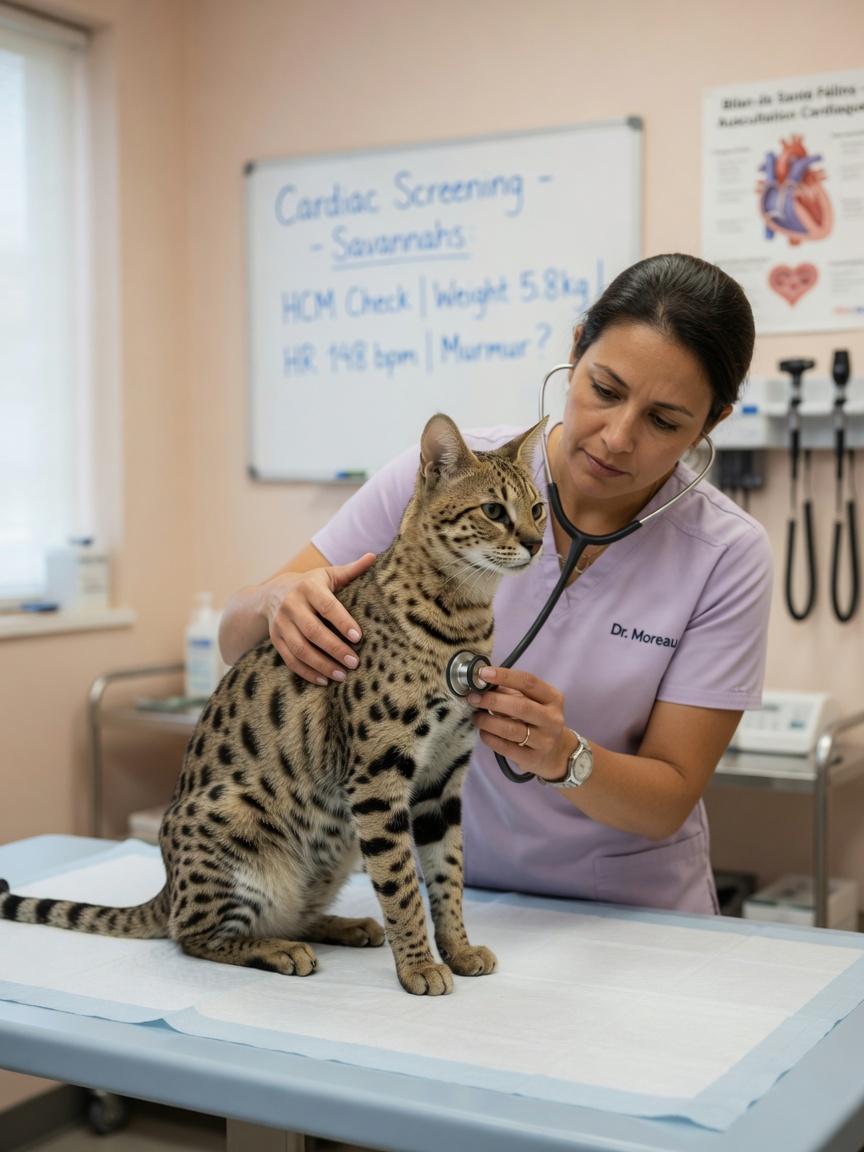
HCM is a thickening of the heart muscle and is the most commonly reported heart condition across cats generally, including in Savannahs and their parent breeds. It can develop silently for a long time before symptoms appear. Early signs, when they do occur, may include laboured or rapid breathing, reduced activity, a poor appetite, or sudden collapse; in severe cases it can present as acute hind-limb weakness caused by a blood clot. Owners can support early detection through regular veterinary check-ups that include heart auscultation, and by discussing cardiac screening with a vet or breeder, particularly since HCM in some cat breeds has a hereditary component. Any new lethargy, open-mouth breathing, or reluctance to play should prompt a same-day veterinary review.
Hip Dysplasia
Though more widely recognised in dogs, hip dysplasia — an abnormal formation of the hip joint — has been documented in larger, more athletic cat breeds, and the Savannah's long-legged build has led to occasional reports in the breed. Early signs include a bunny-hopping gait, reluctance to jump onto furniture, stiffness after rest, or muscle loss around the hindquarters. Keeping a Savannah at a lean, healthy weight reduces strain on the joints, and owners noticing persistent stiffness should seek a veterinary orthopaedic assessment. Some of the general joint-support principles used in other companion animals, such as those discussed in this guide to arthritis in dogs management, share similar underlying goals of weight control, joint-friendly environments, and early veterinary involvement, though treatment plans should always be tailored specifically to cats.
Progressive Retinal Atrophy (PRA)
PRA is an inherited eye condition causing gradual degeneration of the retina, eventually leading to vision loss. It has been reported in several domestic breeds that contribute to the Savannah's genetic background. Early signs include reluctance to move in dim light, bumping into furniture at dusk, or dilated pupils that don't constrict normally. There is no cure, but the condition is not painful, and affected cats often adapt well to vision loss in a stable home environment. Reputable breeders may screen breeding cats for retinal health, and owners noticing night-time clumsiness should have their cat's eyes examined.
Digestive Sensitivity
Some Savannah owners report a degree of digestive sensitivity, particularly in earlier-generation cats or during transitions between foods. Signs can include intermittent soft stools, vomiting after meals, or a fussy appetite. A consistent feeding routine, gradual food transitions, and monitoring stool quality are sensible first steps. Some owners explore the evidence around probiotics for dogs evidence as a starting point for understanding how gut-supporting supplements are researched, though any probiotic or dietary change for a cat should be discussed with a vet first, since feline digestive physiology differs from that of dogs.
Inherited Conditions from Parent Breeds
Because Savannahs share ancestry with breeds such as the Bengal and Egyptian Mau, they can potentially inherit conditions documented in those lines, including certain kidney and blood-related disorders. This underlines the importance of sourcing kittens from breeders who health-test their breeding cats and can provide clear information about the ancestry and health history of both parents.
Nutrition & Feeding
Savannahs are active, muscular cats with a metabolism suited to a diet rich in high-quality animal protein. Many owners choose a diet with a strong meat-based protein source and moderate fat to support their lean muscle mass and high activity levels. As with any cat, fresh water should always be available, and feeding should be split into two or more measured meals rather than free-fed, to help maintain a healthy body condition throughout life.
Because Savannahs are prone to being food-motivated and highly active, portion control matters to prevent excess weight gain, which can worsen joint strain and cardiac workload. Kittens have particularly high energy and nutrient demands during their rapid growth phase; understanding the stages of development, such as those outlined in general terms in this puppy growth stages guide, can help illustrate why growing animals need carefully balanced nutrition, though a kitten-specific feeding plan from a vet is the most reliable approach for a young Savannah. As cats age, calorie needs and joint support requirements shift again, and some of the general principles behind formulations such as those discussed in guidance on best dog food for senior dogs reflect a broader pattern seen across species: ageing animals often benefit from adjusted protein, fat, and joint-supporting nutrient levels, tailored specifically for cats by a vet or veterinary nutritionist.
Feeding Practicalities
Some owners of Savannahs choose a raw or part-raw diet to mimic a more ancestral feeding style, given the breed's wild heritage. If considering this route, it's important to work with a vet to ensure the diet is nutritionally complete and handled safely to avoid bacterial contamination risks. Whatever diet is chosen, regular weight checks and body condition scoring help catch gradual weight changes early.
Grooming & Care
The Savannah's short, dense coat is relatively low-maintenance. A weekly brush is usually sufficient to remove loose hair and keep the coat glossy, with more frequent brushing during seasonal shedding periods. Routine care should also include regular nail trims, dental checks, and ear cleaning as needed.
Some Savannahs, like many cats with sensitive skin or those prone to environmental allergies, may develop skin irritation or excessive scratching. While allergy patterns are typically discussed in the context of dogs, as in this dog skin allergies guide, the general principle of identifying and removing triggers — whether dietary, flea-related, or environmental — applies across companion animals, and any persistent itching, redness, or hair loss in a Savannah warrants a veterinary skin examination rather than home guesswork.
Because Savannahs are prone to counter-surfing and climbing, households should consider cat-proofing high shelves and securing breakable items, both for the cat's safety and to reduce accidental injury.
Exercise & Training Needs
This is one of the most active domestic cat breeds available, and daily physical and mental stimulation is essential for wellbeing. Savannahs typically enjoy interactive play sessions with wand toys, puzzle feeders, and climbing structures such as tall cat trees or wall-mounted shelving. Many can be leash-trained and enjoy supervised outdoor exploration in secure environments such as a harness walk or a fully enclosed "catio."
Training is often more successful with Savannahs than with many other cat breeds, as they are highly trainable and motivated by food and play. Clicker training, trick training, and teaching a reliable recall can help channel their intelligence productively and reduce boredom-related behaviours such as excessive vocalisation or destructive climbing. A lack of adequate stimulation is one of the most common reasons Savannahs develop behavioural issues in the home, so owners should be realistic about the daily time commitment required before choosing this breed.
FAQs
Are Savannah cats legal to own?
Rules vary significantly by country, state, and even local authority, particularly regarding early-generation Savannahs due to their closer serval ancestry. Prospective owners should check current local regulations directly with their national or regional authorities before acquiring a Savannah, as legislation can change and differs widely between regions.
Do Savannah cats get along with dogs and other cats?
Many Savannahs can live well with other pets, particularly if raised together from a young age or introduced gradually and patiently. Their high prey drive means introductions to small pets such as rodents or birds should be approached with particular caution.
How much space does a Savannah cat need?
Savannahs benefit from a spacious home with vertical territory, such as cat trees or shelving, and ideally access to a secure outdoor area or enclosed catio. They are not typically well suited to very small flats without enrichment, given their athletic nature and climbing instincts.
Why are Savannah cats more expensive than typical domestic cats?
Their price generally reflects the complexity of breeding hybrid generations, the rarity of early-generation cats, and the careful health screening reputable breeders perform on parent cats. Costs can vary considerably depending on generation, with earlier generations (closer to the serval) commonly priced higher than later, more domesticated generations.
This guide is intended for general informational purposes only and does not replace individualised veterinary advice. Always consult a qualified veterinarian regarding the specific health needs, diet, and care of your own cat.