

The Saint Bernard is a giant, gentle-natured dog best suited to owners with plenty of space, patience for slobber and shedding, and a realistic budget for veterinary care. Bred originally for mountain rescue work, this breed is famed for its calm, affectionate temperament and its devotion to family life, including children. The headline health concern for anyone considering a Saint Bernard is its shortened lifespan relative to smaller breeds, driven largely by joint disease, heart conditions, and the general health burdens that come with rapid, large-frame growth.
Breed Overview
- Size: Giant breed; males often 65–90 kg, females somewhat lighter; height typically 70–90 cm at the shoulder
- Lifespan: Commonly reported as 8–10 years, shorter than many smaller breeds
- Coat: Short-haired or long-haired varieties, both dense and weather-resistant, with seasonal shedding
- Origin: Swiss and Italian Alps, developed by monks at the Great St Bernard Hospice for mountain rescue and companionship work
Temperament & Family Fit

Saint Bernards are known for their steady, tolerant, and affectionate nature. They tend to be patient with children, forming close bonds with the whole family rather than fixating on a single person. This is not a breed that thrives on high-octane activity; instead, they are content to potter alongside their owners, offer quiet companionship, and doze for long stretches indoors.
Despite their size, most Saint Bernards are not naturally aggressive or highly territorial, though their sheer bulk means early socialisation and manners training are essential so they understand their own strength around smaller children, elderly relatives, and other pets. They can be prone to separation-related distress given their people-oriented nature, and some owners report anxious behaviours when left alone for long periods. Building confidence with gradual alone-time training, and recognising early signs of stress, can help; resources on dog anxiety may be useful for owners noticing pacing, vocalising, or destructive behaviour when the dog is left unattended.
Prospective owners should also factor in the practicalities of giant-breed ownership: significant drooling, heavy shedding during coat blow, and the space and furniture wear that comes with a dog this large. Those who can accommodate these realities generally find Saint Bernards to be wonderfully loyal, low-drama family companions.
Health Issues in Saint Bernards
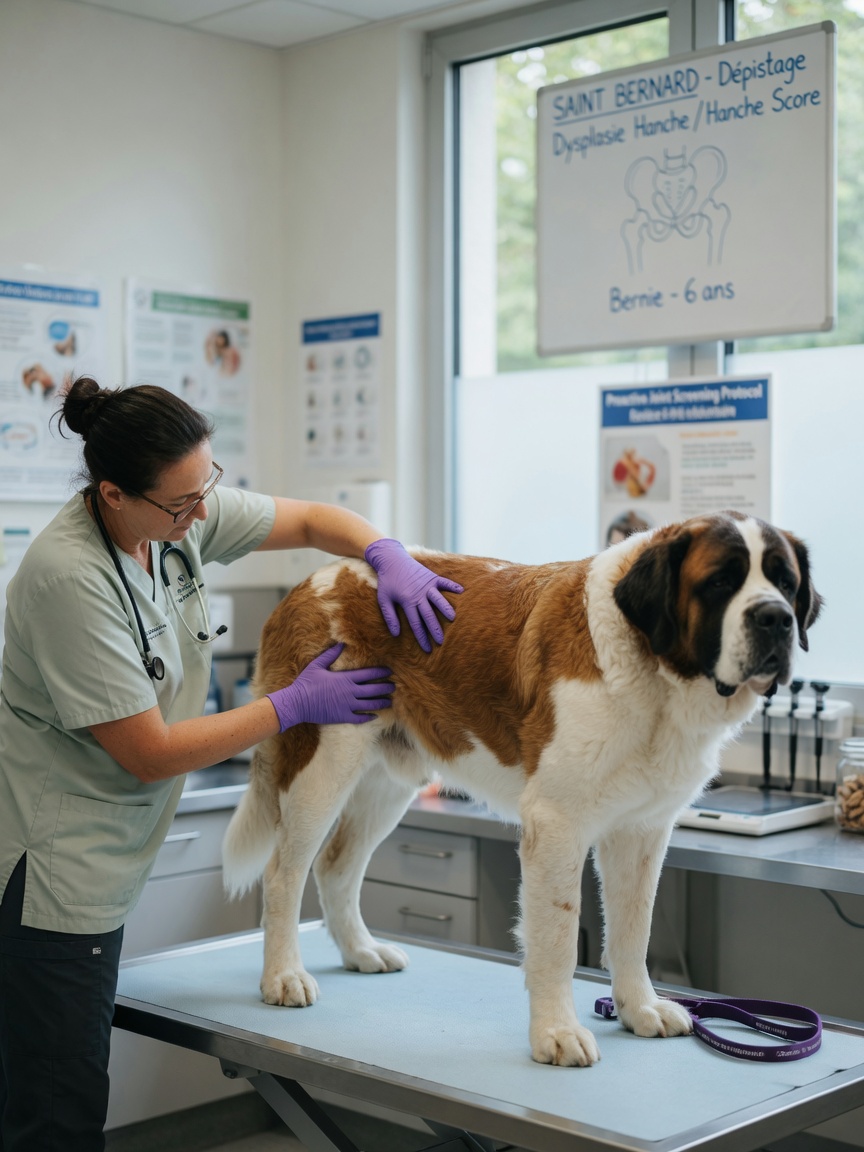
As with most giant breeds, Saint Bernards carry a number of well-documented predispositions. Being aware of these allows owners to watch for early signs and work proactively with their vet.
Hip and Elbow Dysplasia
Hip and elbow dysplasia are developmental conditions where the joints do not form or fit together correctly, leading to abnormal wear, laxity, and eventually osteoarthritis. Saint Bernards, due to their rapid growth and heavy frame, are commonly affected by both. Early signs can include a bunny-hopping gait, reluctance to climb stairs or jump into a car, stiffness after rest, or lameness that improves with gentle movement. Screening schemes such as hip and elbow scoring are widely used by responsible breeders, and owners should ask to see health results before buying a puppy. Maintaining a lean body condition throughout life, avoiding excessive high-impact exercise during growth, and controlled feeding to slow growth rate can all help protect developing joints. As dogs age, joint support strategies become increasingly relevant; the article on arthritis in dogs management covers practical approaches to keeping affected dogs comfortable.
Gastric Dilatation-Volvulus (Bloat)
Bloat is a life-threatening emergency in which the stomach fills with gas and can twist on itself, cutting off blood supply. Deep-chested giant breeds like the Saint Bernard are considered particularly susceptible. Signs include a visibly distended abdomen, unproductive retching, restlessness, drooling, and rapid breathing. This condition can progress within a very short time and requires immediate emergency veterinary attention; it cannot be managed at home. Some owners of at-risk breeds discuss preventive gastropexy (surgically securing the stomach) with their vet, particularly if performed at the same time as another abdominal surgery such as neutering. Feeding smaller, more frequent meals rather than one large meal, avoiding strenuous exercise immediately before or after eating, and using slow-feed bowls may help reduce risk, though bloat can occur even with precautions in place.
Dilated Cardiomyopathy and Other Cardiac Concerns
Dilated cardiomyopathy (DCM) is a heart condition in which the heart muscle weakens and the chambers enlarge, reducing the heart's pumping efficiency. It is among the cardiac conditions reported in giant breeds, including the Saint Bernard. Early signs can be subtle and may include reduced exercise tolerance, coughing, laboured breathing, or fainting episodes; unfortunately, dogs can also be asymptomatic until the disease is advanced. Regular veterinary check-ups that include listening for heart murmurs or arrhythmias are valuable, and any unexplained lethargy, exercise intolerance, or breathing changes should prompt a prompt vet visit. Cardiac ultrasound (echocardiography) can help diagnose and monitor the condition if it is suspected.
Osteosarcoma (Bone Cancer)
Osteosarcoma is an aggressive bone cancer that is more frequently reported in giant and large breeds than in smaller dogs. It typically affects the long bones of the limbs and can present as unexplained lameness, localised swelling, or pain that does not resolve with rest. Because early signs can mimic a soft-tissue injury or arthritis, any persistent lameness in a giant-breed dog, especially an older individual, warrants veterinary investigation, which may include X-rays. While outcomes vary depending on how early the disease is caught, prompt veterinary assessment gives the best chance of appropriate management.
Entropion and Ectropion (Eyelid Abnormalities)
Saint Bernards, with their loose facial skin, can be prone to eyelid conformation issues: entropion (where the eyelid rolls inward, causing the lashes to rub the eye surface) and ectropion (where the eyelid rolls outward, exposing the inner lid and increasing susceptibility to debris and infection). Signs include excessive tearing, squinting, redness, or visible irritation. Left untreated, entropion in particular can cause corneal damage. Surgical correction is often effective when the condition is significant, and owners should mention any persistent eye discharge or squinting to their vet rather than assuming it is a minor irritation.
Intervertebral Disc Disease (IVDD)
Though more classically associated with chondrodystrophic breeds, IVDD, where spinal discs bulge or rupture and press on the spinal cord, is also reported in giant breeds carrying substantial body weight on their spine. Signs range from mild back pain and reluctance to move, to more serious weakness, wobbliness, or paralysis in the hind limbs. Any sudden change in mobility, yelping when touched along the back, or dragging of the feet should be treated as urgent and assessed by a vet promptly, as early intervention can influence outcome.
Ectropion-Related Skin Fold Issues and Skin Allergies
The loose skin and facial folds of the Saint Bernard can trap moisture and debris, predisposing some individuals to skin fold dermatitis, while others may develop more generalised skin allergies or sensitivities. Symptoms include redness, odour, itchiness, or recurrent ear infections in dogs with heavy ear leather. Routine cleaning of facial folds and ears, along with prompt attention to any persistent itching or redness, helps manage this. Owners noticing recurrent skin issues may find the dog skin allergies guide a useful starting point before discussing diagnostic options with their vet.
Nutrition & Feeding
Giant-breed puppies grow extremely quickly, and how they are fed during this period has a meaningful influence on skeletal development. Diets formulated specifically for large or giant-breed puppies are designed to support slower, more controlled growth and appropriate calcium-to-phosphorus ratios, reducing strain on developing joints. Overfeeding or supplementing calcium unnecessarily can contribute to orthopaedic problems, so sticking to a reputable large-breed puppy formula and following feeding guidelines rather than free-feeding is generally advised. For owners wanting a deeper understanding of what to expect physically during this stage, the puppy growth stages guide offers useful context.
As adults, Saint Bernards do best on a diet that maintains a lean body condition, since excess weight places additional strain on joints already predisposed to dysplasia and arthritis. Because of the bloat risk discussed above, feeding two or three smaller meals daily rather than one large meal is a commonly recommended practical step. Treats such as plain cooked chicken can be a useful, easily digestible option in moderation; the article on can dogs eat chicken covers this in more detail. As dogs enter their senior years, adjusting calorie intake and considering joint-support nutrition becomes increasingly relevant, and the guide to best dog food for senior dogs can help owners navigate these changes.
Some owners also explore probiotic supplementation for digestive support, particularly in a breed where gastrointestinal sensitivity and bloat risk are relevant concerns; the evidence around this is evolving, and the piece on probiotics for dogs evidence gives a balanced look at what is currently understood.
Grooming & Care
Both coat types shed noticeably, with a heavier seasonal blow-out typically occurring once or twice a year. Regular brushing, several times a week and daily during heavy shedding periods, helps manage loose hair and keeps the coat in reasonable condition. Long-coated Saint Bernards need particular attention to prevent matting, especially behind the ears, around the collar area, and on the legs.
Facial folds and lip skin should be checked and wiped regularly to prevent moisture and debris build-up, which can otherwise lead to skin fold dermatitis or unpleasant odour. Ears should be checked weekly for signs of redness, wax build-up, or odour, as the heavy ear leather can create a warm, moist environment prone to infection.
Dental care is an easily overlooked area in giant breeds but remains important; regular tooth brushing and appropriate dental chews support oral health throughout life, and the dog dental care guide provides practical, breed-general advice that applies well to Saint Bernards. Nails should be trimmed regularly, as overgrown nails can alter gait and place additional stress on already vulnerable joints.
Exercise & Training Needs
Saint Bernards are moderate rather than high-energy dogs, and their exercise needs should be tailored carefully to their life stage. Puppies and young dogs, in particular, should avoid excessive or high-impact exercise, such as jumping, long runs on hard surfaces, or repetitive stair use, while their joints and growth plates are still developing. Controlled, gentle exercise such as short lead walks is generally preferable during this period, with duration and intensity gradually increased as the dog matures.
Adult Saint Bernards benefit from regular, moderate daily walks and some off-lead time in a secure area, but they are not well suited to intense or prolonged exertion, especially in warm weather, where their thick coat and large body mass make them prone to overheating. Exercise should ideally be scheduled during cooler parts of the day, with fresh water always available.
Training-wise, Saint Bernards are generally biddable and eager to please, though their size makes early obedience training, particularly loose-lead walking and reliable recall, especially important for manageability. Positive reinforcement methods tend to work well with this breed's sensitive, people-focused temperament. Given their tendency towards separation-related anxiety, gradual desensitisation to being alone from puppyhood can pay dividends later in life.
FAQs
Are Saint Bernards good with children?
Generally, yes. Saint Bernards are known for being patient and gentle with children, and many families choose the breed specifically for this trait. That said, their large size means interactions with very young children should always be supervised, as even affectionate nudges or leaning can accidentally knock a small child over.
How much do Saint Bernards drool and shed?
Saint Bernards are prolific droolers, particularly after eating or drinking, and this is simply part of owning the breed. Shedding is also considerable, with heavier seasonal coat blow-outs requiring more frequent brushing. Owners should be prepared for both as a routine part of daily life with this breed.
Why do Saint Bernards have a shorter lifespan than smaller dogs?
Giant breeds generally have shorter lifespans than smaller dogs, and the Saint Bernard is no exception, commonly living around 8 to 10 years. This is thought to relate to the physiological demands of rapid growth and large body size, alongside the breed's predisposition to conditions such as joint disease, certain cancers, and cardiac issues discussed above.
Do Saint Bernards need a lot of space?
While Saint Bernards are not high-energy dogs, their sheer size means they do best with reasonable indoor and outdoor space to move around comfortably. A securely fenced garden is helpful, though this breed's moderate exercise needs mean they can adapt to various living situations provided they receive regular walks and are not confined to cramped quarters for long periods.
This guide is intended for general informational purposes only and does not replace individualised veterinary advice. Always consult a qualified vet regarding any health concerns, diagnosis, or treatment decisions for your dog.