
That Strange Honking Sound Coming From Your Dog
You are relaxing at home when your dog suddenly freezes, extends their neck, and begins producing a loud, repetitive snorting or honking noise that sounds somewhere between a goose and a broken vacuum cleaner. Within thirty seconds it stops, and your dog trots off as though nothing happened. If this sounds familiar, your dog has almost certainly experienced a reverse sneeze — and whilst alarming to witness, it is one of the most common and benign respiratory events in dogs.
Understanding what triggers these episodes, which breeds are most susceptible, and when the behaviour crosses a line from quirky reflex to genuine concern can save you unnecessary panic and help you identify the rare cases that do require veterinary attention.
What Actually Happens During a Reverse Sneeze
A normal sneeze expels air forcefully outward through the nose. A reverse sneeze — known clinically as paroxysmal inspiratory respiration — does the opposite. The dog rapidly and repeatedly draws air inward through the nose, producing that distinctive snorting sound. During the episode the dog typically stands still, extends their head and neck forward, and may appear briefly distressed.
The mechanism involves a spasm of the soft palate and nasopharyngeal muscles. This spasm is triggered by irritation in the area where the nasal passage meets the throat. The body responds by attempting to clear the irritation through these rapid inward breaths.
How Long Do Episodes Last
Most episodes last between ten and thirty seconds, though they can occasionally stretch to a minute. They can occur once in isolation or several times in succession. After the episode resolves, the dog returns to completely normal breathing and behaviour. This rapid return to normality is one of the key features that distinguishes reverse sneezing from more serious respiratory problems.
Common Triggers and Causes
Almost anything that irritates the nasopharyngeal region can provoke a reverse sneeze. Identifying your dog's specific triggers can help you reduce frequency.
- Allergens including pollen, dust, mould spores and household cleaning products
- Pulling on a collar or lead, which puts sudden pressure on the throat
- Eating or drinking too quickly
- Strong scents such as perfume, air freshener or candles
- Excitement or vigorous play
- Post-nasal drip from a mild upper respiratory infection
- Foreign bodies lodged in the nasal passage, such as grass seeds
- Nasal mites, though this is less common
Which Dogs Are Most Prone

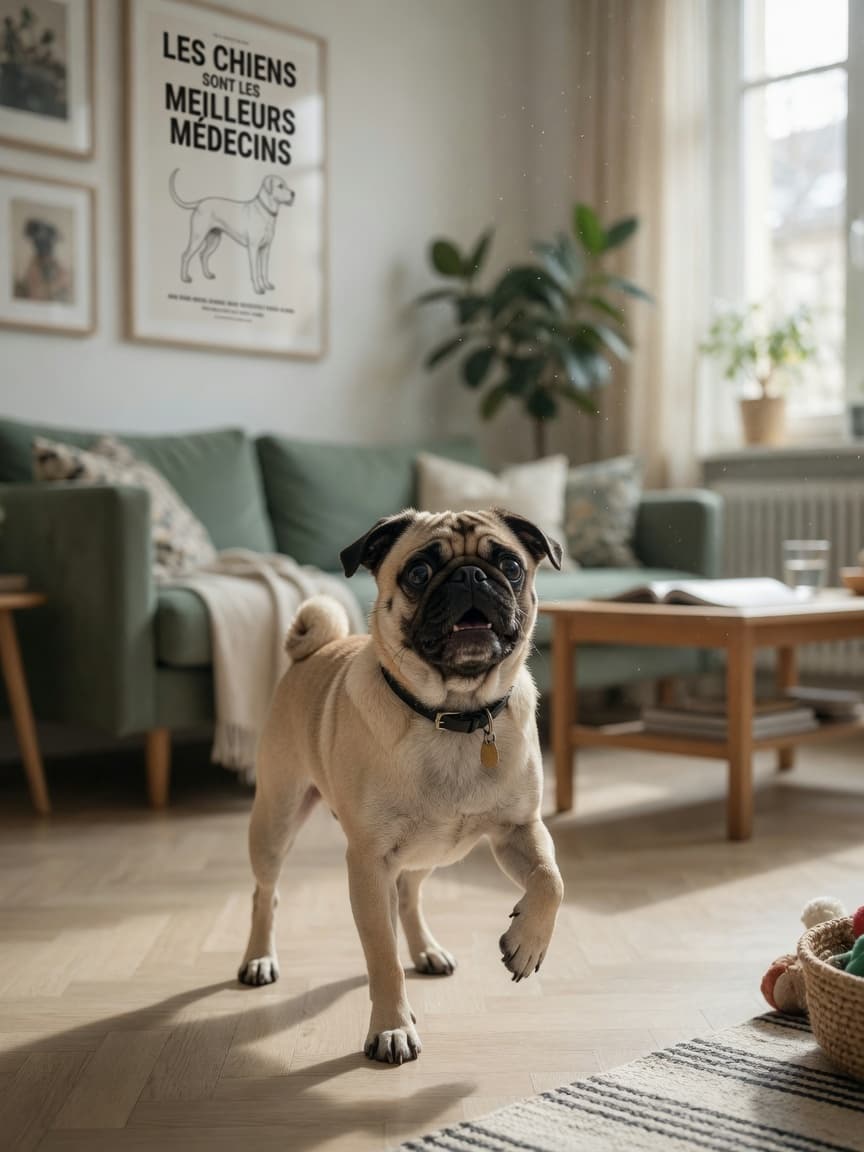
Any dog can reverse sneeze, but brachycephalic breeds — those with flattened facial anatomy — experience it far more frequently. French Bulldogs, Pugs, Cavalier King Charles Spaniels, Shih Tzus and Boxers are particularly susceptible because their compressed nasal passages and elongated soft palates leave less room for normal airflow, making the tissue more prone to irritation and spasm.
Small breeds generally are overrepresented compared to large breeds, and dogs with known allergies or chronic rhinitis may have more frequent episodes throughout their lives.
What to Do During an Episode
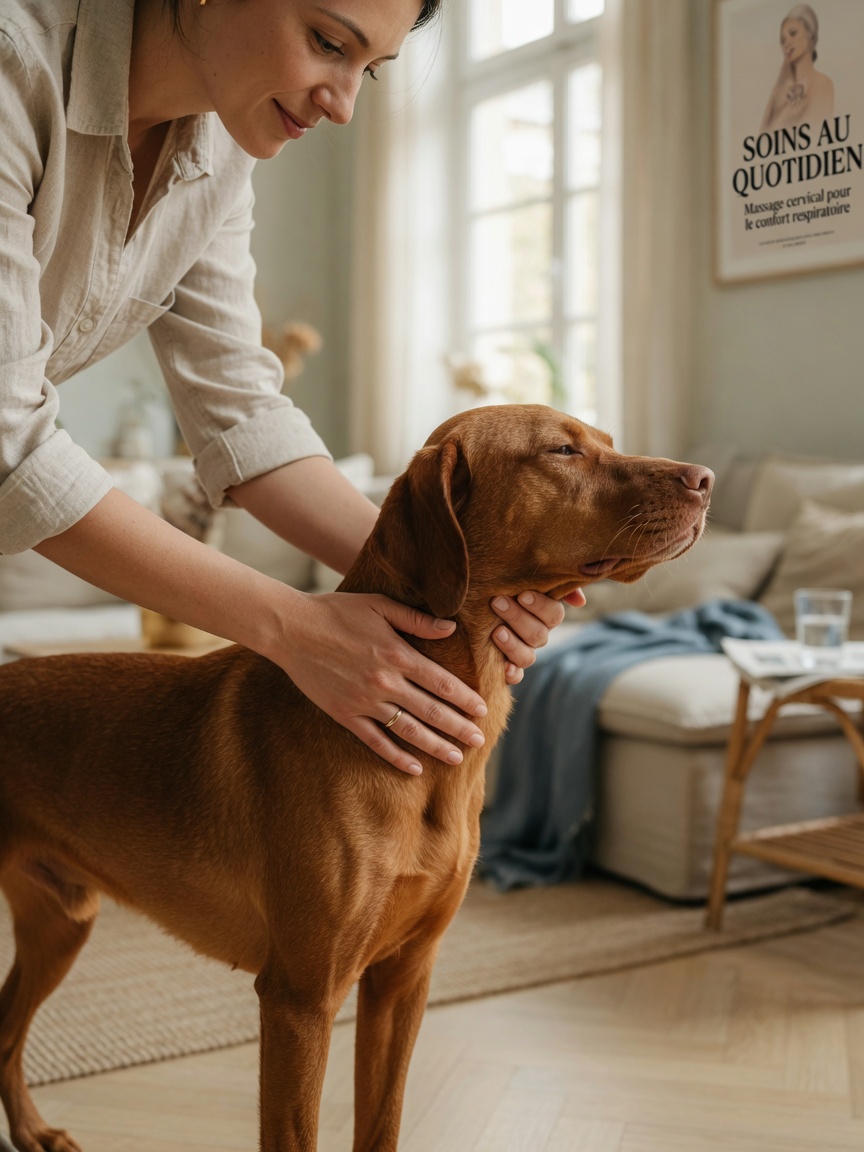
The instinct to panic is understandable, but calm intervention is more useful. Most episodes resolve on their own without any assistance.
Techniques That May Help
- Gently cover the nostrils with your fingers for one to two seconds to encourage the dog to swallow, which often interrupts the spasm
- Lightly massage the throat in a downward motion
- Offer a small amount of water once the episode passes
- Speak calmly and avoid rushing toward the dog in a way that increases excitement
Do not attempt to hold the dog's mouth open or restrain them forcefully. The episode is self-limiting and additional stress can make it feel worse for the animal.
When Reverse Sneezing Is Not So Simple
The vast majority of reverse sneezing is entirely harmless. However, there are presentations that warrant a prompt call to your vet rather than a wait-and-see approach.
Signs That Require Veterinary Assessment
- Episodes that occur multiple times daily or are increasing in frequency over weeks
- Nasal discharge, particularly if coloured, bloody or present on only one nostril
- Visible swelling around the nose or face
- Pawing at the nose between episodes
- Episodes that do not resolve within two minutes
- Any sign of genuine breathing difficulty, cyanosis (bluish gums), or collapse
- Sudden onset in an older dog with no prior history
Persistent or worsening episodes in any dog, but especially in middle-aged or older animals, can occasionally signal nasal polyps, a foreign body, a fungal nasal infection such as aspergillosis, or — rarely — a nasal tumour. These conditions require investigation with rhinoscopy, imaging or nasal cytology, and none of them should be managed with home observation alone.
Practical Steps for Owners
- Record a short video of the episode on your phone — this is genuinely helpful for your vet to confirm the diagnosis rather than guessing from a description
- Note the date, time, duration and any obvious trigger each time an episode occurs
- Switch from a collar to a harness if episodes seem linked to lead pressure on the neck
- Review household products for strong scents and consider swapping to unscented alternatives
- If seasonal allergies are suspected, discuss management options with your vet
- Brachycephalic dogs with very frequent episodes may benefit from assessment of their upper airway anatomy, as surgical correction of structural abnormalities can substantially improve quality of life
Reverse sneezing is one of those phenomena that looks far worse than it is. Once you have seen it a few times and confirmed there is no underlying cause driving frequent episodes, most owners settle into treating it as a minor quirk of their dog's biology. The key is knowing your dog's baseline and acting promptly when that baseline changes.