
What Are Ear Mites?
Ear mites are tiny parasitic arachnids belonging to the species Otodectes cynotis. They live in and around the ear canal, feeding on skin debris, wax, and tissue fluids. Although they are most frequently associated with cats, dogs can and do become infested — particularly those that share a home or environment with infected cats. Otodectes mites are highly contagious between animals through direct contact, and infestations can spread rapidly through multi-pet households. In dogs, ear mites are less common than bacterial or yeast ear infections, but when present they cause significant discomfort and require prompt treatment.
How Do Dogs Get Ear Mites?
The most common route of transmission is direct contact with an infected animal, most often a cat. Dogs that live alongside cats, visit catteries, or spend time in environments where cats roam are at elevated risk. Outdoor dogs may encounter infected wildlife — foxes are known carriers of Otodectes cynotis. Puppies acquired from environments where infested animals are present are also at risk. The mites complete their entire life cycle on the host animal, passing through egg, larva, protonymph, deutonymph, and adult stages over approximately three weeks, all within or around the ear canal.
Signs and Symptoms of Ear Mites in Dogs
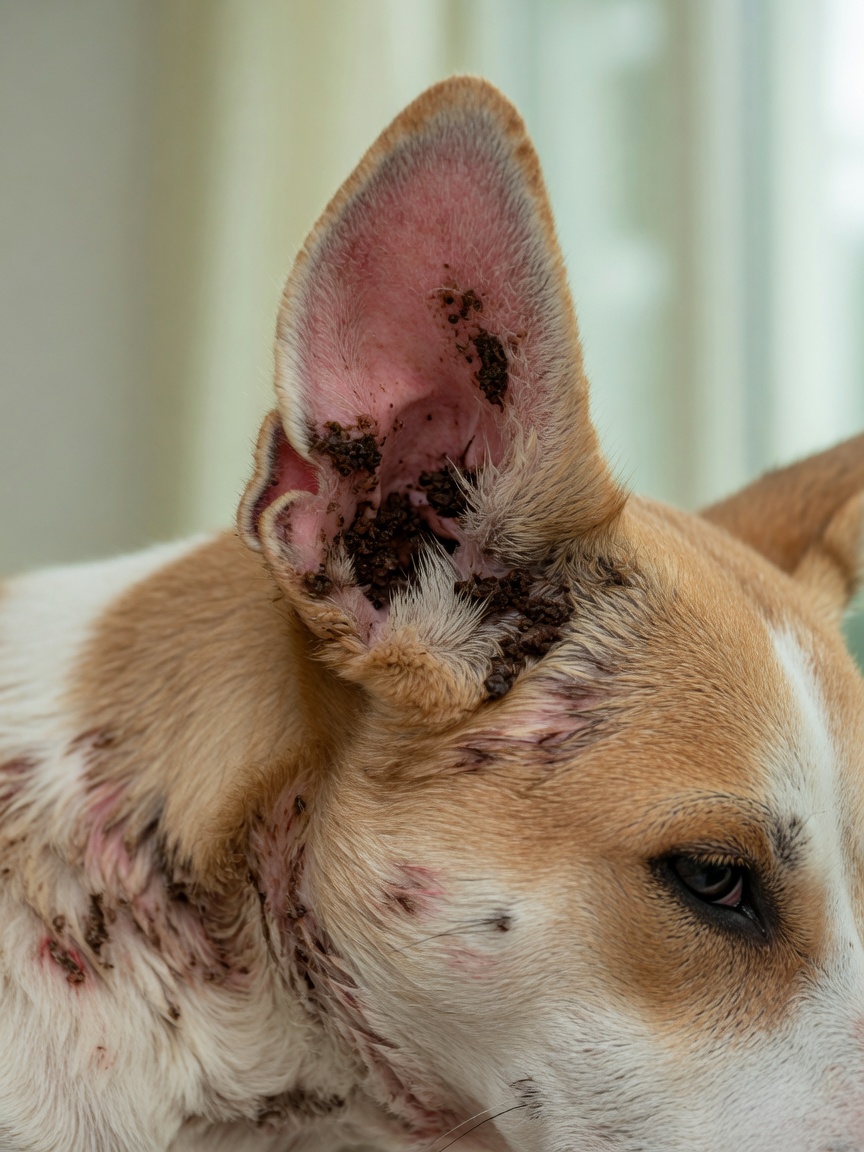
The clinical signs of an ear mite infestation are quite distinctive, though they can overlap with other ear conditions:
- Intense scratching at the ears — often the most prominent sign, and may be vigorous enough to cause skin trauma around the ear
- Frequent head shaking, sometimes so forceful that an aural haematoma (blood blister on the ear flap) develops
- Dark brown to black discharge in the ear canal, commonly described as resembling ground coffee or dark crumbly material
- An unpleasant odour from the ears
- Redness and inflammation of the outer ear canal
- In severe or chronic cases, skin excoriations and crusting around and behind the ear from repeated scratching
The characteristic dark, dry, crumbly discharge is one of the key distinguishing features of ear mite infestation. This material consists of dried blood, wax, and mite debris.
How Ear Mites Are Diagnosed
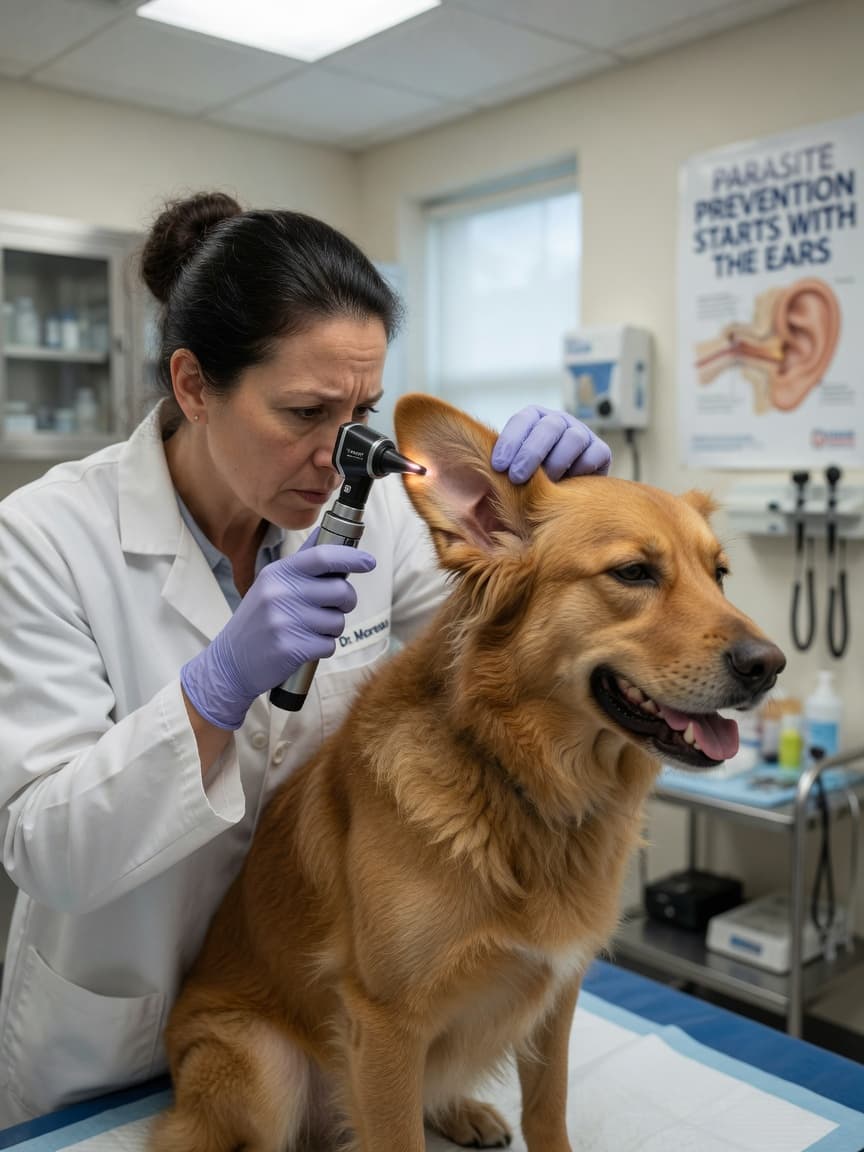
A definitive diagnosis is made by a veterinarian using otoscopy — examination of the ear canal with an otoscope. With sufficient magnification, the mites may be visible as tiny white moving dots against the dark background of the discharge. Many vets will also take a swab sample of the discharge and examine it under a microscope. Under magnification, Otodectes mites are clearly identifiable by their characteristic crab-like appearance with four pairs of legs. This microscopic confirmation is important because it distinguishes ear mites from other causes of dark ear discharge, particularly yeast infections caused by Malassezia.
Distinguishing Ear Mites from Ear Infection
This distinction is clinically important because the treatments differ significantly. Ear mite infestation characteristically produces a dark, dry, crumbly discharge — sometimes described as coffee grounds. In contrast, bacterial or yeast ear infections typically produce a wet, moist, or purulent discharge that may be yellow, brown, or greenish in colour, and often has a distinctive foul smell. Infected ears may also show more pronounced swelling of the canal tissues.
However, a secondary bacterial or yeast infection can develop on top of an ear mite infestation, complicating the picture. This is why laboratory confirmation matters — treating with antibiotics alone when mites are present will not resolve the problem, while treating with antiparasitic medication alone will not clear a concurrent bacterial infection.
Treatment of Ear Mites in Dogs
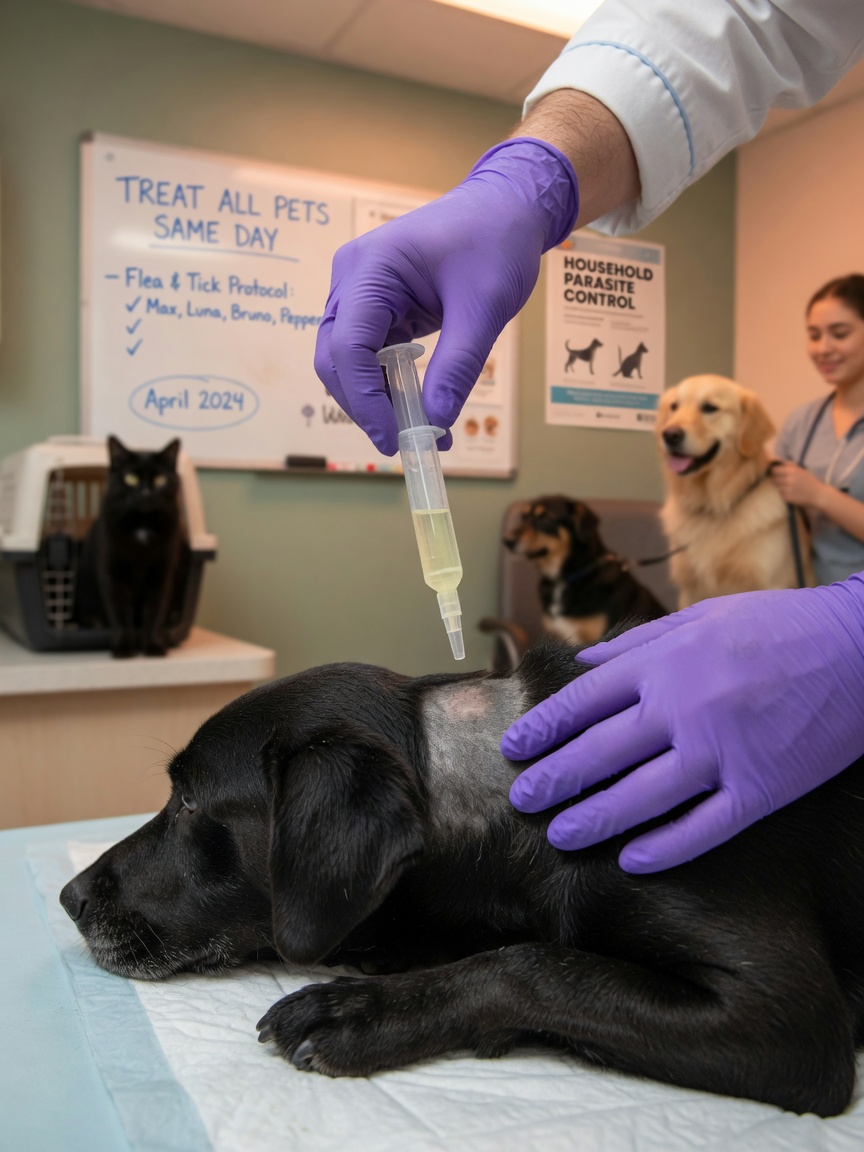
Modern treatment of ear mites in dogs has been greatly simplified by the isoxazoline class of antiparasitic drugs and the availability of effective spot-on preparations.
Systemic Antiparasitic Treatments
Spot-on products containing selamectin or moxidectin are highly effective against Otodectes cynotis and are among the most commonly used treatments in the UK and EU. These products are applied to the skin at the back of the neck and work systemically to kill mites at various life stages. Many of these preparations also provide protection against fleas, roundworms, and other parasites simultaneously. Oral isoxazoline products, such as those containing fluralaner or afoxolaner, are also effective and increasingly used in practice.
Topical Ear Treatments
Some ear preparations that are applied directly into the ear canal also have activity against Otodectes mites. Your vet may prescribe a combination product that addresses mites, bacteria, and yeast if a secondary infection is present. The ear canal should be gently cleaned of discharge prior to treatment to ensure the medication reaches the affected tissues.
Treating All Pets in the Household
This is a critical point that is often overlooked. Because ear mites spread easily between animals, every cat and dog in the household must be treated simultaneously, even if they are showing no signs. Treating only the symptomatic dog while an infected cat continues to harbour mites will result in rapid reinfestation. ESCCAP (European Scientific Counsel Companion Animal Parasites) guidelines emphasise that all in-contact animals should receive appropriate antiparasitic treatment as part of any ear mite management programme.
Environmental Decontamination
Unlike some other parasites, Otodectes mites do not survive for extended periods off the host, so intensive environmental treatment is generally not required. However, washing bedding and vacuuming areas where pets sleep and rest is a sensible precautionary measure during treatment.
Prevention
Preventing ear mites is primarily achieved through maintaining your pets on a regular antiparasitic programme. Spot-on products that cover Otodectes are available on veterinary prescription and provide reliable ongoing protection. Regular ear checks — particularly for dogs that spend time outdoors or in contact with cats — allow early detection before an infestation becomes established. Avoiding contact between your dog and unknown animals, particularly stray or unvaccinated cats, also reduces risk.
When to See a Vet
If your dog is scratching at its ears, shaking its head repeatedly, or you notice unusual discharge in the ear canal, a veterinary examination is the right first step. Self-treating without a diagnosis risks missing a concurrent infection or misidentifying the cause entirely. With appropriate treatment prescribed by your vet and applied to all animals in the household, ear mite infestations in dogs are highly treatable and fully resolvable.