

If You Suspect Your Pet Has Been Poisoned, Act Now
Do not wait for symptoms to develop. Call your vet immediately, or contact the Animal Poison Line on 01202 509000 (a charge applies, but their team can give you critical advice while you travel to the clinic). If you can, bring the packaging of the suspected substance, a sample of the plant, or a photograph. Note the time you think your pet was exposed, and estimate how much they may have consumed. This information can save vital minutes at the clinic.
One of the most important rules of pet poisoning: do not attempt to induce vomiting unless your vet specifically tells you to. In some cases, bringing up certain substances causes more harm than leaving them in the stomach.
Common Poisons for Dogs
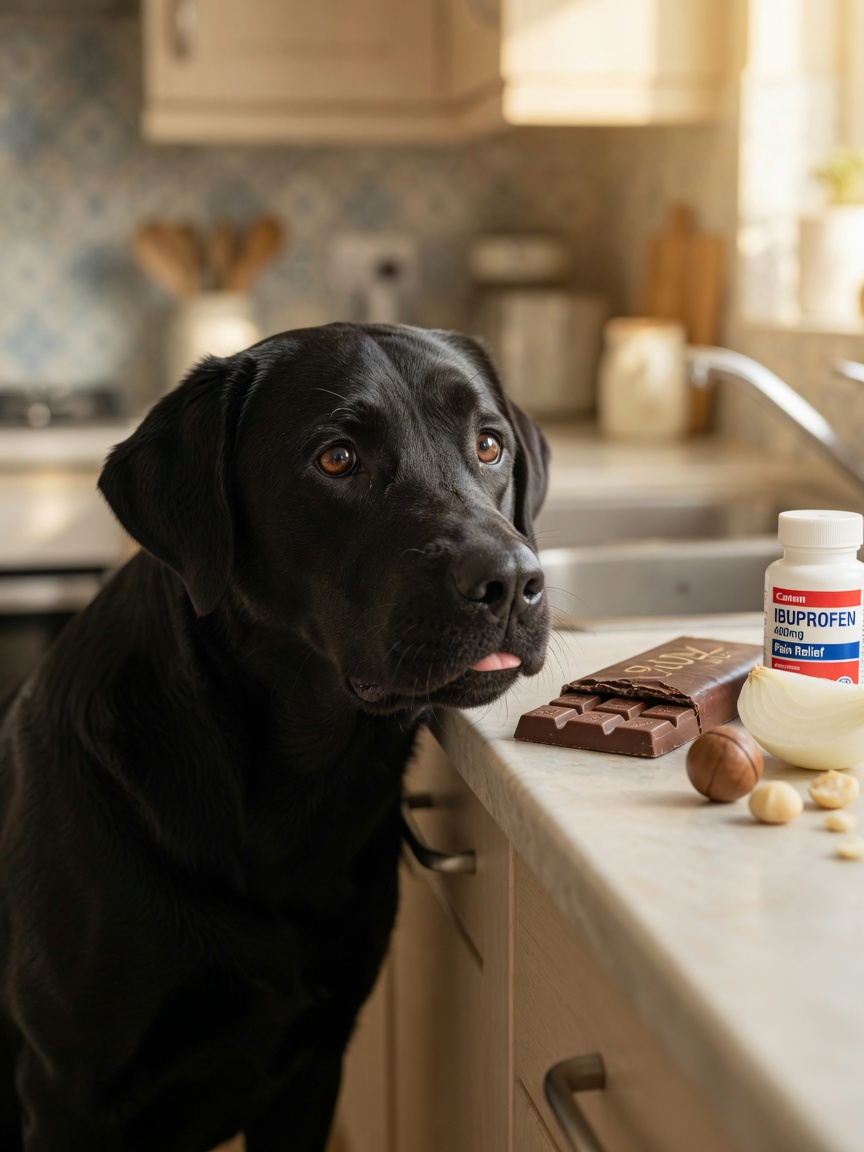
Dogs are curious, opportunistic eaters, and many household foods and products that are harmless to people can be seriously dangerous to them.
Chocolate
Chocolate contains theobromine, a compound dogs metabolise far more slowly than humans. Dark chocolate and cocoa powder contain the highest concentrations. Signs of toxicity include vomiting, diarrhoea, restlessness, muscle tremors, rapid breathing, and seizures. Even small amounts of dark chocolate can cause serious illness in a small dog.
Xylitol
This artificial sweetener is found in sugar-free chewing gum, some peanut butters, certain baked goods, and a range of low-sugar products. In dogs, xylitol triggers a rapid and severe drop in blood sugar (hypoglycaemia) and can cause acute liver failure. Signs appear quickly and include vomiting, weakness, collapse, and seizures. Always check the ingredients label before giving your dog any human food product.
Grapes and Raisins
The exact toxic mechanism in grapes and raisins is not yet fully understood, but even small amounts can cause acute kidney failure in dogs. Some dogs appear to tolerate them with no obvious effect while others develop severe illness after tiny quantities. Because there is no safe established dose, grapes, raisins, sultanas, and currants should be treated as highly toxic and any ingestion should prompt an immediate call to your vet.
Onions, Garlic, and Leeks
All members of the allium family — including onions, garlic, leeks, chives, and shallots — are toxic to dogs. They cause oxidative damage to red blood cells, leading to a condition called Heinz body anaemia. Cooked forms are just as dangerous as raw. Symptoms may not appear for several days and include lethargy, pale gums, reduced appetite, and breathlessness.
Ibuprofen and Paracetamol
Human pain relief medications are among the most common causes of accidental pet poisoning. Ibuprofen causes gastrointestinal ulceration and kidney failure in dogs. Paracetamol causes liver damage and methaemoglobinaemia. Neither should ever be given to a dog, even at a reduced dose.
Macadamia Nuts
Macadamia nuts cause a characteristic syndrome in dogs involving weakness, particularly in the hind legs, tremors, fever, and vomiting. While fatalities are rare, the signs can be alarming and veterinary assessment is recommended.
Rat Poison and Rodenticides
Rodenticides come in several types. Anticoagulant rodenticides (such as brodifacoum) prevent blood clotting and can cause life-threatening internal bleeding, which may not be apparent for several days after ingestion. Treatment involves Vitamin K therapy over several weeks. Bromethalin, a neurological rodenticide, causes brain swelling and cannot be treated with antidote — supportive care is required. Always store rodenticides well out of reach and use pet-safe alternatives where possible.
Blue-Green Algae
Cyanobacteria, commonly known as blue-green algae, are increasingly prevalent in lakes, ponds, and slow-moving water across Europe during warm summer months. Ingestion or even skin contact can be rapidly fatal. Dogs that swim in or drink affected water can die within hours. There is no antidote. If you see thick, paint-like green or blue-green scum on water, keep your dog away. Many local authorities post warnings at known sites.
Common Poisons for Cats

Cats tend to be more selective eaters than dogs, but certain toxins present an extreme danger — in some cases, even a tiny amount is potentially fatal.
Paracetamol — Fatal in Cats
Cats are uniquely vulnerable to paracetamol (acetaminophen) because they lack the liver enzyme pathway (glucuronidation) needed to metabolise it safely. Even a single standard human tablet can be fatal to a cat. Signs include facial and paw swelling, brown or muddy-coloured gums, difficulty breathing, and collapse. This is a genuine life-threatening emergency requiring immediate veterinary intervention.
Lilies — A Critical Danger for Cats
All parts of plants in the true lily family (Lilium species) are highly toxic to cats — the leaves, petals, stems, pollen, and even the water in the vase. Ingestion causes acute kidney failure and can be fatal without rapid treatment. Easter lilies, tiger lilies, and stargazer lilies are among the most dangerous. If your cat has had any contact with a lily, call your vet immediately — do not wait for symptoms. Many cats are poisoned simply by grooming pollen from their fur after brushing against a lily plant.
Permethrin — Found in Dog Spot-On Treatments
Permethrin is a common ingredient in spot-on flea treatments designed for dogs. It is highly toxic to cats and even small amounts of a dog's flea treatment applied to or licked off a cat can cause severe neurological signs including tremors, twitching, seizures, and hyperthermia. Never use dog flea products on cats, and prevent cats from grooming recently treated dogs. Wash the area with washing-up liquid and seek emergency veterinary care if exposure occurs.
Essential Oils
Many essential oils are toxic to cats, including tea tree oil, eucalyptus, lavender, and citrus-based oils. Cats lack the liver enzymes needed to detoxify these compounds. Diffusers in enclosed rooms can expose cats to harmful levels over time. Signs of toxicity include drooling, vomiting, tremors, and unsteadiness.
Signs of Poisoning in Pets
Different toxins cause different signs, but common indicators that a pet may have ingested something harmful include:
- Vomiting or diarrhoea, sometimes with blood
- Lethargy or sudden weakness
- Excessive drooling
- Tremors or muscle twitching
- Seizures or convulsions
- Pale, blue, yellow, or muddy gums
- Dilated or constricted pupils
- Difficulty breathing
- Bleeding from any site without obvious injury
- Collapse or loss of consciousness
What Your Vet May Do
Depending on the substance ingested and the time elapsed, your vet may administer activated charcoal to bind the toxin and reduce absorption from the gut. They may induce vomiting if it is safe and appropriate to do so. Specific antidotes exist for some toxins — such as Vitamin K for anticoagulant rodenticides. For many poisons, treatment is supportive: intravenous fluids, temperature management, seizure control, and monitoring of organ function.
The sooner you reach the vet, the more options are available. Calling ahead while you travel allows the clinic to prepare and can shave critical minutes off the response time when you arrive.