
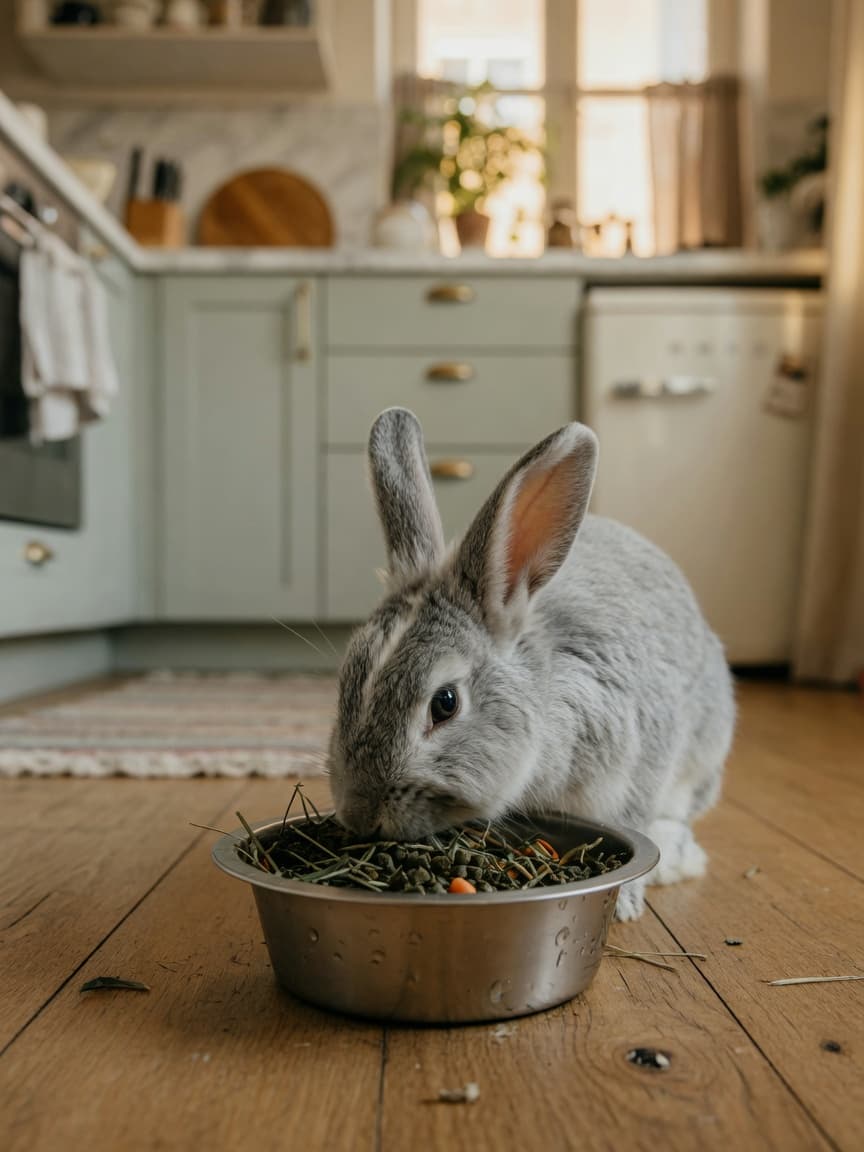
Why Rabbit Diet Gets So Often Wrong
Walk into any pet shop and you will likely find brightly coloured bags of rabbit muesli, treats shaped like carrots, and pellet mixes loaded with dried fruit and seeds. Unfortunately, much of what is marketed for rabbits does not reflect what they actually need — and feeding the wrong diet is one of the leading causes of preventable illness and early death in pet rabbits.
Rabbits are hindgut fermenters with continuously growing teeth and a digestive system that requires near-constant movement. Their diet in the wild consists almost entirely of fibrous grasses and plant material. Replicating this in captivity is both simple and inexpensive once you understand the basic principles.
The 80% Rule: Hay Is Non-Negotiable
Hay should make up approximately 80 per cent of your rabbit's daily diet, by volume, and should be available in unlimited quantities at all times. This is not a guideline — it is a biological necessity for two critical reasons: dental health and gut health.
Dental Wear
A rabbit's teeth grow continuously throughout their life — both the incisors (front teeth) and the molars (cheek teeth). The only thing that keeps these teeth worn to the correct length and shape is the lateral grinding motion involved in chewing long-strand fibrous material. Hay provides this abrasion. Without adequate hay, teeth overgrow and develop abnormal points and spurs that cut into the tongue and cheeks, cause pain, prevent eating, and lead to a cascade of dental disease that is expensive to treat and often impossible to fully resolve. Dental disease is one of the most common and serious health problems in pet rabbits fed inadequate hay.
Gut Motility
Rabbits have a delicate digestive system that requires fibre to keep moving. The caecum — a large fermentation chamber in the rabbit's hindgut — relies on a steady supply of indigestible fibre to function correctly. Without it, gut motility slows, the bacterial population of the caecum becomes disrupted, and gut stasis can develop. Gut stasis — where the digestive system slows or stops — is a life-threatening emergency in rabbits. Adequate hay consumption is the single most effective preventive measure.
Which Hay?
Timothy hay and orchard grass hay are the gold standard choices for adult rabbits. They have an appropriate calcium-to-phosphorus ratio and good fibre content. Meadow hay is also suitable. Alfalfa hay is high in calcium and protein and is appropriate for young rabbits under six months and for does that are pregnant or nursing, but should not be the main hay source for healthy adult rabbits as it can contribute to urinary sludge and calcium-related problems over time. Hay should smell fresh and sweet, not musty or mouldy. Store it in a cool, dry place with good ventilation.
Fresh Leafy Greens: 10 to 15 Per Cent of the Diet
Fresh leafy greens provide moisture, variety, and additional nutrients. They should make up around 10 to 15 per cent of the diet, offered daily. A good daily serving for an average-sized rabbit is approximately one to two packed cups of mixed greens.
Good Choices
- Dark leafy greens such as kale, cavolo nero, and spring greens (in moderation)
- Romaine lettuce and butterhead lettuce
- Fresh herbs including parsley, coriander, basil, dill, and mint
- Watercress
- Rocket
- Bok choy and pak choi
- Broccoli leaves and stems (not large quantities of florets, which can cause gas)
What to Avoid
Iceberg lettuce should be avoided. It has very little nutritional value, is mostly water, and contains lactucarium, a compound that can have a mild sedative effect and cause digestive upset in rabbits. It adds nothing to the diet that a better lettuce variety cannot provide.
Spinach should be offered only in limited quantities. While not toxic, spinach is high in oxalates — naturally occurring compounds that can bind to calcium and, with regular heavy feeding, contribute to urinary sludge or bladder stones in susceptible rabbits. Occasional small amounts are fine, but spinach should not be a daily staple.
Cabbage and Brussels sprouts can cause significant gas in some rabbits, which is uncomfortable and potentially dangerous. If you offer these, do so in small amounts and monitor your rabbit's response. Any signs of bloating, grinding teeth, or refusal to eat should prompt immediate veterinary attention.
Pellets: Maximum 5 Per Cent, High Fibre Only
Pellets should make up no more than five per cent of the diet — roughly one to two tablespoons per kilogram of body weight per day for an adult rabbit. More than this and pellets begin to replace hay in the diet, which undoes all of the dental and gut benefits that hay provides.
Choose a plain, uniform pellet rather than a pellet mix. The pellet should be high in fibre (ideally over 18 per cent crude fibre), relatively low in protein, and low in sugar and starch. Many commercial rabbit pellets are formulated appropriately; check the label.
Why Muesli Mixes Should Be Avoided
Muesli-style rabbit foods — the mixed grain, seed, dried fruit, and pellet blends that remain widely sold — are associated with a well-documented problem called selective feeding. Rabbits, given a choice between the different components of a muesli mix, will preferentially eat the tastiest, most energy-dense pieces (seeds, dried fruit, coloured kibble) and leave behind the less palatable, higher-fibre components. The result is a diet high in sugar and starch and low in fibre — exactly the opposite of what a rabbit needs. Studies have linked muesli feeding with dental disease, obesity, gastrointestinal problems, and selective feeding habits that are difficult to correct. Veterinary guidance in the UK firmly recommends against muesli diets for rabbits.
Treats: Tiny Pieces of Fruit Only
Fruit can be offered as an occasional treat in very small quantities — a piece roughly the size of your thumbnail, a few times per week at most. The natural sugars in fruit are not toxic to rabbits, but excessive sugar disrupts the caecal bacterial balance and contributes to weight gain and dental problems. Good fruit choices include small pieces of apple (without seeds), strawberry, blueberry, or pear.
Avoid all commercial rabbit treats, which are almost universally high in sugar, starch, and artificial ingredients. Drop-style yoghurt treats, honey sticks, and seed bars are particularly poor choices — rabbits do not naturally consume dairy or honey, and these products are associated with digestive upset and obesity.
Cecotropes: Essential Night Droppings
Rabbits produce two types of droppings. The small, round, dry faecal pellets that you find around the hutch are the waste product of digestion. The second type — cecotropes, sometimes called night droppings or caecotrophes — are soft, grape-like clusters produced in the caecum and consumed directly from the anus, typically in the early morning or night hours.
Cecotropes are rich in protein, B vitamins, beneficial bacteria, and volatile fatty acids. Consuming them is an essential part of the rabbit's digestive process — a form of hindgut fermentation reprocessing that allows the rabbit to extract additional nutrition from their food. If you find soft droppings left uneaten around the hutch, this may indicate that your rabbit is too obese to reach its hindquarters, is being fed too rich a diet (reducing the incentive to eat cecotropes), or is experiencing gut dysbiosis. Any change in cecotrope production or consumption warrants a veterinary conversation.
Water
Fresh water must be available at all times. Both a sipper bottle and a heavy ceramic water bowl are suitable. Some rabbits prefer bowls and drink more readily from them, which is worth considering if you have a rabbit that seems to drink very little. Change the water daily and clean the container regularly to prevent bacterial build-up.
Key Points to Remember
- Unlimited hay — Timothy or orchard grass — must be the foundation of every rabbit's diet
- Fresh leafy greens daily, avoiding iceberg lettuce and limiting spinach
- Plain high-fibre pellets in small amounts only — no muesli mixes
- Fruit treats sparingly — a few times per week in thumbnail-sized pieces
- Cecotrope consumption is normal and essential — do not try to prevent it
- Fresh water always available