
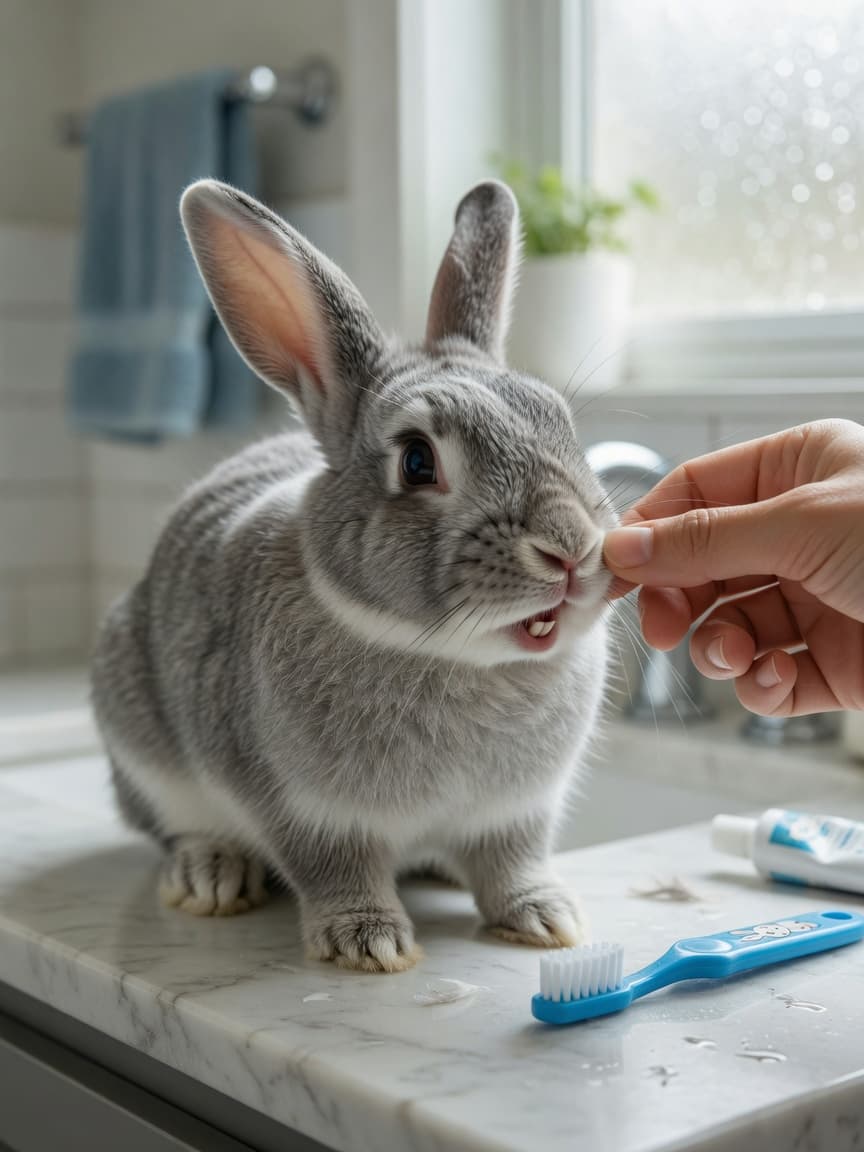
Understanding Rabbit Teeth
Rabbits are not rodents, but they share one important dental characteristic: their teeth never stop growing. This quality is described by veterinarians as elodont, meaning open-rooted. A rabbit's incisors — the visible teeth at the front of the mouth — grow at approximately 2 to 3 millimetres per week. The cheek teeth, or molars and premolars, also grow continuously and are the teeth most commonly affected by serious dental disease.
In a healthy rabbit eating a correct diet, the teeth wear against each other at precisely the same rate they grow. The grinding action of chewing hay for many hours each day keeps the teeth level, smooth, and the correct length. Problems arise when this natural wear mechanism fails.
What Is Malocclusion?
Malocclusion means the teeth do not meet correctly. In rabbits, this typically occurs in one of two ways. Incisor malocclusion is the most visible — the front teeth do not align properly and grow in abnormal directions, sometimes curling or protruding from the mouth. Cheek tooth malocclusion is far more common and far more dangerous because it cannot be seen without specialist examination.
When the cheek teeth fail to wear evenly, they develop sharp points and spurs on their edges. These spurs dig into the soft tissue of the tongue and cheeks with every jaw movement, causing significant pain and ulceration. A rabbit suffering from cheek tooth spurs may continue eating for some time, masking the severity of the problem, until the pain becomes overwhelming.
Causes of Rabbit Dental Disease
- Diet low in hay: the most common and preventable cause. Pellets, soft vegetables, and muesli mixes do not provide sufficient abrasive wear on the tooth surfaces.
- Genetics and breeding: lop-eared rabbits and dwarf breeds are significantly more prone to dental problems due to the shortened skull structure altering the natural alignment of teeth.
- Trauma to the face or jaw that displaces teeth from their correct position.
- Metabolic bone disease secondary to calcium deficiency, which weakens the jaw structure supporting the teeth.
Signs of Dental Disease in Rabbits
Recognising dental disease early is challenging because rabbits instinctively hide pain. However, there are specific signs that should prompt a veterinary visit.
- Drooling or excessive wetness around the mouth and chin
- A persistently wet dewlap — the fold of skin beneath the chin — which can develop secondary fungal infection if dental drooling is ongoing
- Quidding — dropping partially chewed food from the mouth mid-meal
- Reduced appetite or a preference for softer foods whilst avoiding hay
- Gradual weight loss despite appearing to eat
- Facial swelling, particularly along the jaw line, which may indicate tooth root abscess
- Watery eyes caused by blockage of the tear duct that runs close to the upper tooth roots
Why Dental Assessment Requires Sedation
This is a critical point that many rabbit owners do not realise: it is impossible to properly assess a rabbit's cheek teeth without sedation. Rabbits have long, narrow mouths and will not voluntarily open wide enough for a vet to see the back teeth clearly when awake. Even with an otoscope — a narrow instrument used to look into the oral cavity — a full examination of all tooth surfaces requires the rabbit to be anaesthetised.
This means that a vet who tells you your rabbit's teeth look fine from a brief awake examination may simply not have been able to see the problem. If dental disease is suspected based on clinical signs, insist on a full examination under sedation.
Diagnosis: X-rays and the Tooth Roots
Skull radiographs are an essential part of diagnosing rabbit dental disease. The visible crown of a rabbit's tooth represents only a fraction of its total length — a large portion of each tooth lies below the gum line in the jaw bone. Elongated tooth roots, which occur when normal eruption is disrupted, are only visible on X-ray. Root elongation can cause jaw abscesses, facial deformity, and eye problems, and will not be apparent from examination of the crown alone.
Treatment: Dental Burring
The primary treatment for cheek tooth spurs and malocclusion is dental burring under general anaesthesia. Using a specialist dental burr, the vet files down the sharp points and restores the correct tooth table angle. This is a skilled procedure requiring rabbit-specific anaesthetic experience and equipment.
It is vital that owners understand: dental burring is not a cure. Because rabbit teeth grow continuously, spurs will return. Most rabbits with established dental disease require repeat procedures every three to six months for the rest of their lives. The interval between procedures varies depending on the individual rabbit's rate of tooth growth and the severity of the underlying malocclusion.
Tooth abscesses in rabbits are notoriously difficult to treat due to the thick, caseous nature of rabbit pus, which does not drain like that of other species. Treatment may involve surgical removal of the affected tooth and surrounding infected bone, combined with long-term antibiotic therapy.
Prevention Through Diet
Diet is the single most powerful tool for preventing dental disease in rabbits. Eighty to ninety percent of a rabbit's diet should be high-quality hay. The long fibres in hay require extensive lateral grinding jaw movement, which provides natural wear across the full surface of every cheek tooth.
- Provide unlimited hay at all times — timothy, meadow, and orchard grass varieties are ideal
- Avoid muesli mixes entirely: rabbits selectively eat the sugary pieces, leaving behind the healthier components and receiving insufficient dental wear
- Limit pellets to a small quantity — no more than one egg cup per kilogram of body weight per day
- Supplement with safe leafy greens, which encourage chewing, but do not replace hay
Introducing a correct diet from the very beginning of a rabbit's life gives teeth the best chance of wearing correctly. For rabbits already showing dental problems, dietary improvement can slow progression but cannot reverse existing malocclusion.
--- AUTHOR: Julia Wrenfield