
Why Canine Dental Health Matters
By the age of three, an estimated 80 per cent of dogs show signs of periodontal disease — the progressive inflammation and destruction of the tissues supporting the teeth. It begins with plaque, a soft film of bacteria that forms on tooth surfaces within hours of cleaning. If plaque is not removed, it mineralises into tartar (calculus) within days, creating a rough surface that harbours yet more bacteria, drives gum inflammation, and eventually leads to gingivitis, periodontal disease, tooth root infections, and tooth loss.
Beyond the mouth, chronic periodontal disease has been linked to systemic effects, including changes in the kidneys, liver, and heart. Keeping a dog's teeth clean is not a cosmetic concern — it is a genuine health priority.
How Dental Chews Work
Mechanical Abrasion
The most straightforward mechanism by which dental chews reduce plaque is physical abrasion. As a dog chews, the chew material rubs against the tooth surface, scraping away the soft plaque biofilm before it can mineralise. For this to work, the chew needs to have the right texture — firm enough to abrade, but not so hard that it risks fracturing teeth. The chew also needs to be used consistently, because plaque reforms quickly after any cleaning.
Texture matters more than size or flavour. A chew that a dog swallows in one or two bites without meaningful chewing provides no abrasive benefit at all. The ideal chew encourages several minutes of sustained chewing that brings the back teeth — where periodontal disease is most severe and where brushing is hardest to reach — into contact with the chew material.
Enzymatic Action
Some dental chews and toothpastes incorporate enzymes — most commonly glucose oxidase and lactoperoxidase — that generate antimicrobial compounds when activated by saliva. These enzymes are part of a natural antimicrobial system found in saliva, and supplementing them is intended to reduce the bacterial load in the mouth. Enzymatic products can provide some benefit even in the areas the chew does not physically reach, though the evidence for enzyme-only products without mechanical action is less strong than for products that combine both approaches.
The VOHC Seal: The Only Validated Quality Marker
The Veterinary Oral Health Council (VOHC) is an independent body that evaluates dental products for pets according to defined scientific protocols. Products that demonstrate a statistically significant reduction in plaque or tartar accumulation in properly conducted trials are awarded the VOHC seal of acceptance. The seal specifies whether the product is proven to reduce plaque, tartar, or both.
The VOHC seal is the most reliable indicator a buyer has that a dental product actually does what it claims. The dental pet product market contains many products with confident marketing claims and appealing packaging that have never been subjected to independent clinical testing. When choosing a dental chew, the VOHC seal should be your first point of reference.
VOHC-Approved Products
Pedigree Dentastix
Pedigree Dentastix are among the most widely recognised dental chews in the UK, and they hold VOHC approval for tartar reduction. Their X-shaped design and textured surface are engineered to encourage sustained chewing and contact along the tooth surface. They are widely available, relatively affordable, and accepted enthusiastically by most dogs. They should be given once daily, and the appropriate size for your dog's weight should be selected — giving a small-dog variety to a large dog provides proportionally less benefit and vice versa.
Virbac C.E.T. Enzymatic Chews
Virbac C.E.T. products combine mechanical action with enzymatic ingredients, specifically the dual-enzyme system (glucose oxidase and lactoperoxidase). The C.E.T. range is VOHC approved and is produced by a veterinary oral health specialist company with a strong research base. C.E.T. chews are available in different sizes and are often recommended by vets as part of a home dental care programme.
Products to Be Cautious About
Rawhide
Rawhide chews — made from the inner layer of cow or horse hides — are popular but carry meaningful risks that owners should understand. The primary safety concern is intestinal blockage. As a dog chews rawhide, it softens and breaks into pieces that can be swallowed. These pieces do not digest easily and, particularly in large amounts or in dogs who tend to swallow chunks rather than chew them thoroughly, can cause obstruction in the oesophagus or intestines — a potentially life-threatening emergency requiring surgery.
There are also concerns about the manufacturing process. Rawhide is often treated with chemicals including bleach, hydrogen peroxide, and various preservatives during processing. While finished products are tested for safety, the processing raises questions that some owners find difficult to dismiss. If you choose to use rawhide, supervise your dog at all times, select an appropriate size, and remove the chew before it becomes small enough to swallow whole.
Bully Sticks
Bully sticks (dried bull pizzle) are highly palatable and encourage enthusiastic chewing, but they are extremely calorie-dense — a single large bully stick can contain 100 calories or more. For small dogs or dogs on calorie-controlled diets, this is a meaningful addition to the daily energy intake that must be accounted for. Bully sticks also lack the VOHC seal. While chewing them provides some mechanical abrasion, there is no validated clinical evidence that they reduce plaque or tartar to a clinically significant degree.
Very Hard Chews
Antlers, hooves, dried bones, and nylon chews marketed as "indestructible" are hard enough to fracture teeth. Slab fractures of the carnassial teeth — the large premolars used for shearing — are among the most common dental emergencies in dogs and are frequently caused by excessively hard chews. A good rule of thumb is the thumbnail test: if you cannot make a dent in the chew with your thumbnail, it is too hard for your dog's teeth.
Why No Chew Replaces Brushing
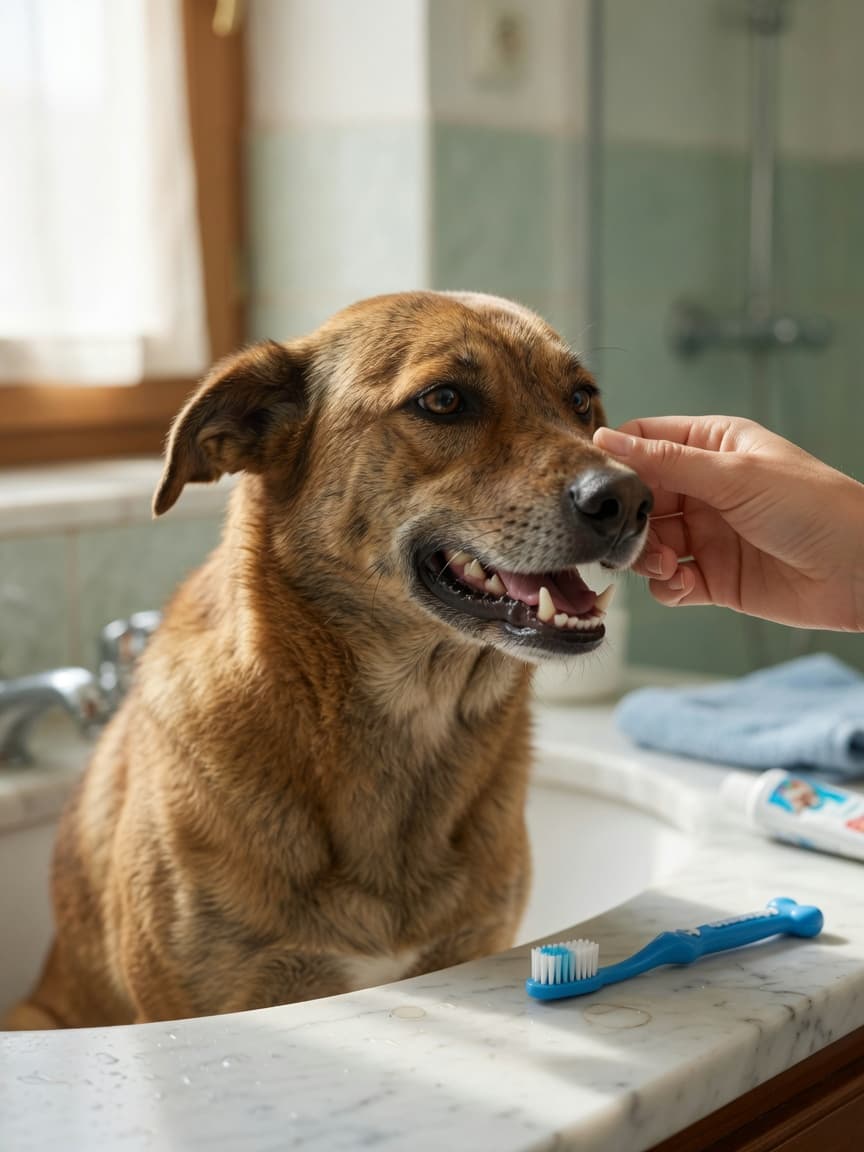
Daily toothbrushing with a pet-specific enzymatic toothpaste remains the gold standard for canine dental care. A soft-bristled brush used correctly can remove plaque from all tooth surfaces, including the gum margin where disease begins. No chew, dental stick, or water additive can match the effectiveness of regular brushing done well.
This is not to say dental chews are useless. For many dogs — particularly those who will not tolerate brushing, or whose owners cannot commit to daily brushing — a VOHC-approved chew provides meaningful benefit over doing nothing at all. The most useful approach is to use dental chews as part of a broader oral health routine that includes brushing where possible, regular veterinary dental checks, and professional cleaning under anaesthesia when indicated.
If your dog has not had a dental check recently, ask your vet to assess the state of their mouth at the next routine appointment. Early-stage periodontal disease is reversible with professional cleaning and good home care; advanced disease is not.