
What Is Pyothorax?
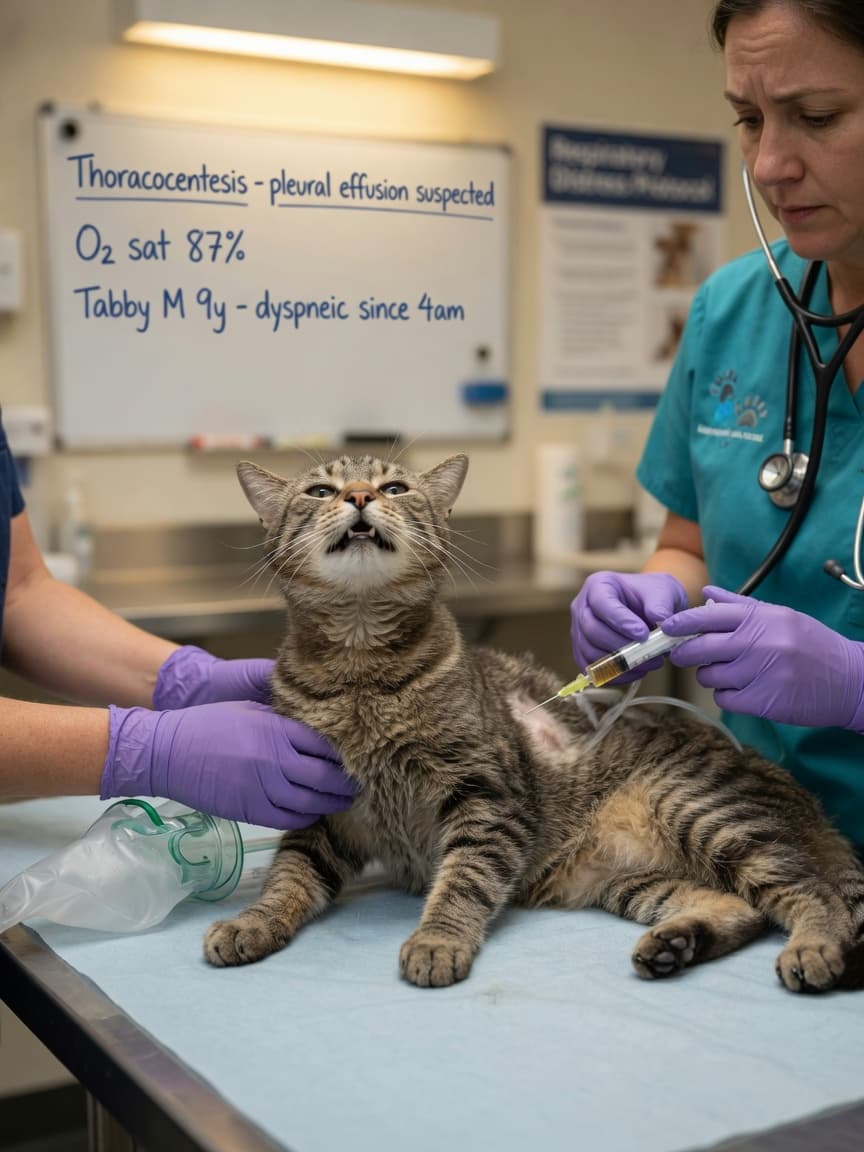
Pyothorax is a severe infection of the pleural space — the cavity that surrounds the lungs inside the chest. In a healthy cat, this space contains only a tiny amount of fluid to allow smooth lung movement during breathing. In pyothorax, it fills with pus: a mixture of bacteria, dead immune cells, inflammatory proteins, and debris. This accumulation compresses the lungs from the outside, preventing them from expanding fully, while the infection itself puts severe strain on the cat's immune system and vital organs.
Pyothorax is one of the most serious respiratory emergencies in cats. Without prompt, aggressive treatment, the condition is frequently fatal. With appropriate care, however, many cats recover well — which is why rapid recognition and intervention are so critical.
How Does a Cat Develop Pyothorax?
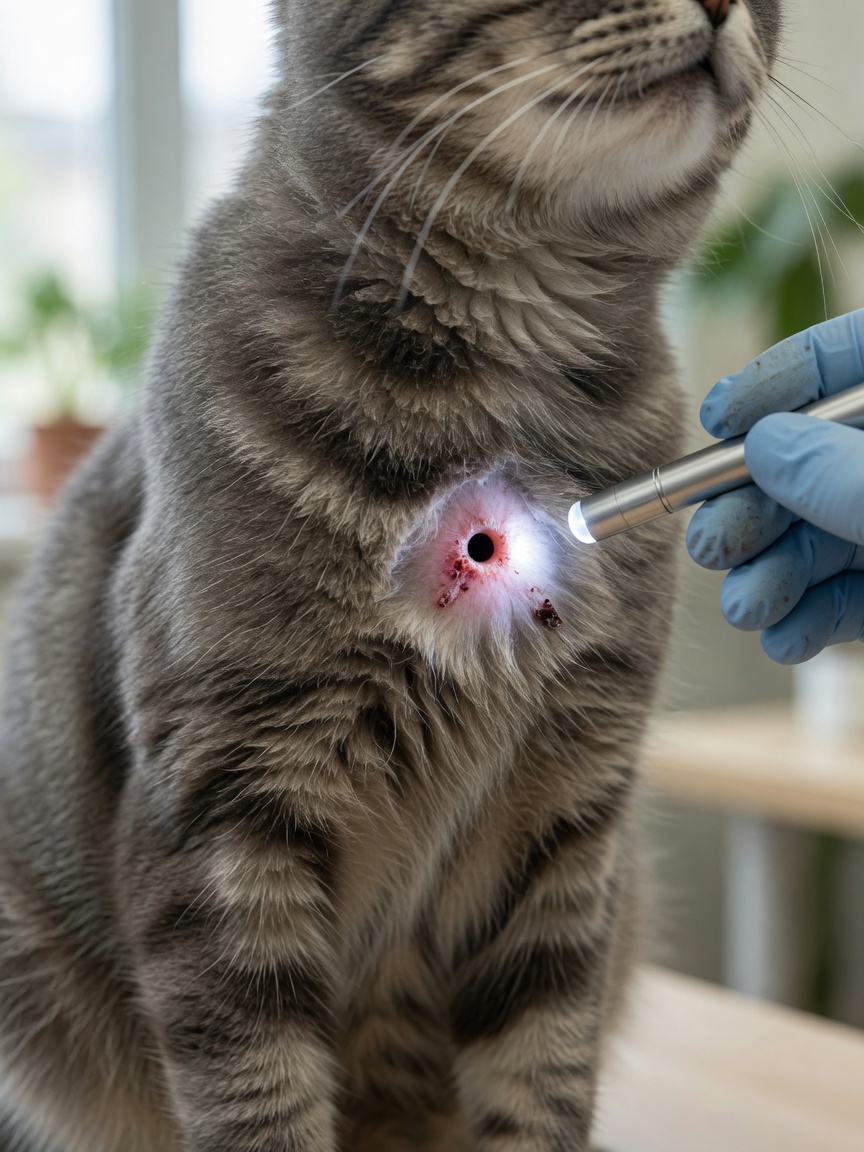
The pleural space becomes infected when bacteria gain access to it. In cats, the most common route is not always straightforward to identify, which is one of the reasons pyothorax can be a diagnostically challenging condition.
Known Causes and Risk Factors
- Bite wounds to the chest — cats that fight with other cats are at significant risk, as puncture wounds from teeth can introduce bacteria directly into the chest cavity
- Extension of a respiratory infection from the lungs into the pleural space
- Foreign body migration — inhaled plant material such as grass awns can travel through lung tissue and carry bacteria into the pleural space
- Oesophageal perforation, which can allow bacteria from the digestive tract to contaminate the chest cavity
- Haematogenous spread — bacteria travelling via the bloodstream from a distant site of infection
In many cats with pyothorax, no obvious source of infection is identified despite thorough investigation. Outdoor cats and cats that engage in territorial fighting are at higher risk than indoor-only cats, which supports the bite wound route as a significant cause even when wounds are not apparent on examination — cat bite punctures are small and can heal over externally while sealing bacteria inside.
The bacteria most commonly involved in feline pyothorax are anaerobic species that do not require oxygen to survive — organisms such as Pasteurella, Fusobacterium, and various Bacteroides species. These bacteria are typically found in the oral cavity, which again supports the bite wound hypothesis in many cases.
Recognising the Signs of Pyothorax
Pyothorax tends to develop over days to weeks, which means the signs can be either acute — if a sudden deterioration occurs — or more insidious, with a gradual decline in the cat's condition.
Common Presenting Signs
- Rapid, shallow breathing — the classic sign of any significant pleural effusion
- Open-mouth breathing or obvious respiratory distress in more severe cases
- Orthopnoeic posture: elbows pushed outward, neck extended, reluctance to lie down
- Fever — often present in pyothorax but may be absent in some cats, particularly those that are immunocompromised or those with chronic disease
- Lethargy, depression, and marked reduction in activity
- Loss of appetite and weight loss
- Dehydration
- Occasionally, a foul or unusual odour to the breath, related to the anaerobic bacteria involved
Cats are masters of concealing illness, and some animals with pyothorax present with surprisingly mild signs relative to the severity of disease found at examination. This is particularly true when the condition has developed slowly. The absence of obvious distress does not mean the condition is less serious — it simply means the cat has been compensating, and compensation has limits.
Diagnosis in Practice
A cat presenting with signs of respiratory distress will receive supportive care and oxygen before extensive examination or testing. Once stabilised, the diagnostic approach to pyothorax involves several steps.
Thoracic radiographs typically reveal the presence of pleural fluid and may show areas of lung consolidation. However, large amounts of fluid can obscure pulmonary detail, limiting what X-rays can reveal. Ultrasound is very useful for confirming fluid and guiding thoracocentesis.
Thoracocentesis — chest drainage — is both diagnostic and therapeutic. The fluid obtained from a cat with pyothorax has a characteristic appearance: it is typically turbid, malodorous, and may be white, yellow, or greenish in colour. This fluid is sent for cytology, which reveals large numbers of inflammatory cells and may show bacteria, and for bacterial culture and sensitivity testing, which identifies the specific organisms involved and guides antibiotic selection.
Blood tests assess the cat's overall condition, including white blood cell count, kidney function, protein levels, and electrolyte status. This baseline is important for monitoring during treatment.
Treatment: What to Expect
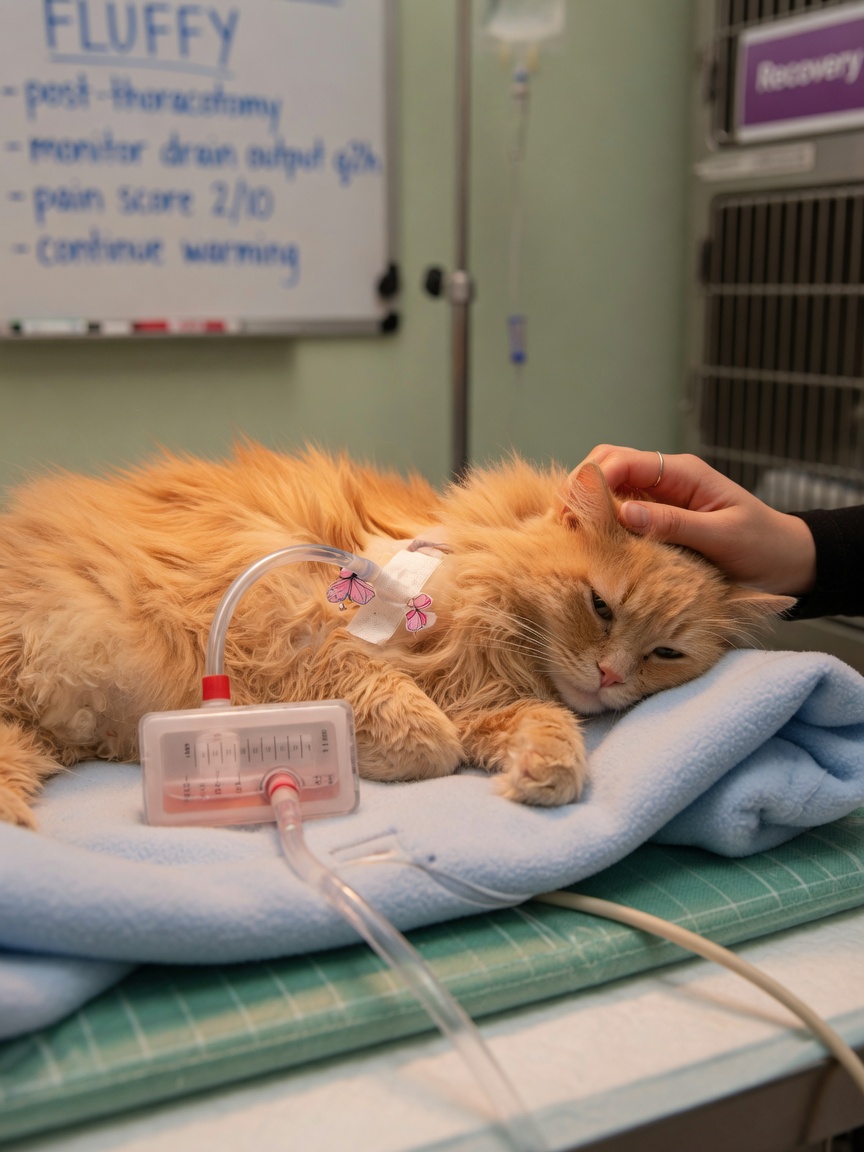
Successful treatment of pyothorax typically requires a combination of chest drainage, antibiotic therapy, and supportive care. The exact approach depends on the severity of the case, the response to initial treatment, and the findings from fluid analysis.
Chest Drainage
Simply performing thoracocentesis once is often insufficient in pyothorax. Many cats require placement of one or two indwelling chest drains — small tubes inserted through the chest wall under anaesthesia or heavy sedation — that allow the pleural space to be drained and flushed repeatedly over several days. Twice-daily lavage with sterile saline helps remove debris and bacteria and allows drainage of ongoing fluid production.
Some cats respond well to this medical approach. Others — particularly those with thick, loculated fluid (where infection has walled itself off into pockets) or those who do not improve after several days of drainage — require surgical exploration, typically via thoracotomy or video-assisted thoracoscopy, to physically clear the chest cavity and remove infected tissue.
Antibiotic Therapy
Antibiotics are a cornerstone of treatment. Because results from bacterial culture take several days to return, initial antibiotic choices are empirical — based on the types of bacteria most likely to be involved. Combinations that cover both anaerobic and aerobic bacteria are typically chosen. Once culture results are available, the antibiotic regimen is adjusted based on the sensitivity profile of the organisms identified.
Antibiotic treatment in pyothorax is typically prolonged — often four to six weeks in total, with the early portion delivered intravenously while the cat is hospitalised and then transitioned to oral medication for the remainder of the course. Stopping antibiotics early is a significant risk factor for relapse.
Supportive Care
Hospitalised cats with pyothorax require fluid therapy to correct dehydration and support organ function, nutritional support — either through syringe feeding or placement of a feeding tube — pain management, and close monitoring of vital signs, temperature, and respiratory status.
Recovery and Outlook
Recovery from pyothorax is a gradual process. Cats that respond well to medical management typically see improvement within the first few days of drainage and antibiotic therapy. Discharge from hospital usually occurs once the cat is breathing comfortably without a chest drain, eating independently, and showing improvement in blood parameters.
At home, continued oral antibiotics, restricted activity, and monitoring for any signs of deterioration are essential. Follow-up appointments with chest X-rays confirm that fluid has not reaccumulated.
Overall survival rates in cats treated aggressively for pyothorax range from around sixty to over eighty per cent in published case series. Cats that do not respond to medical management and require surgery tend to have longer recovery times but can also do very well. The prognosis is significantly worsened when treatment is delayed, when the infection has caused extensive lung or tissue damage, or when an underlying cause such as a foreign body is not identified and removed.
Preventing future episodes in cats that recover — particularly by keeping them indoors to avoid cat fights — is an important part of the long-term conversation between owner and vet.