
Puppy Feeding Guide: Nutrition and Schedules for European Owners
What you feed your puppy in the first months of life has a direct and lasting impact on their skeletal development, immune system, organ function, and long-term health. Getting the basics right is not complicated, but it does require understanding what puppies actually need — which is quite different from what adult dogs require.
Why Puppies Need Different Food to Adult Dogs
Puppy food is not simply adult food in smaller portions. Growing dogs have substantially higher requirements for protein, certain fats, calcium, phosphorus, and specific vitamins than adult dogs. At the same time, the balance of calcium and phosphorus must be carefully controlled — too much calcium, particularly in large-breed puppies, can cause developmental skeletal problems including osteochondrosis and abnormal bone growth. A complete puppy food from a reputable manufacturer will have these ratios calculated correctly; homemade diets without veterinary nutritionist input frequently do not.
Large Breed vs Small Breed Puppy Food

This distinction matters more than many owners realise. Large and giant breed puppies — those whose adult weight will exceed 25 kilograms — need food specifically formulated for large breeds. These foods have lower energy density and carefully controlled calcium levels to slow the rate of growth and reduce the pressure placed on developing joints. Feeding a large-breed puppy on a standard or small-breed puppy food can contribute to conditions like hip dysplasia and elbow dysplasia. Conversely, small-breed puppies need energy-dense food in small kibble sizes suited to their tiny mouths and fast metabolisms.
Understanding EU Pet Food Labelling
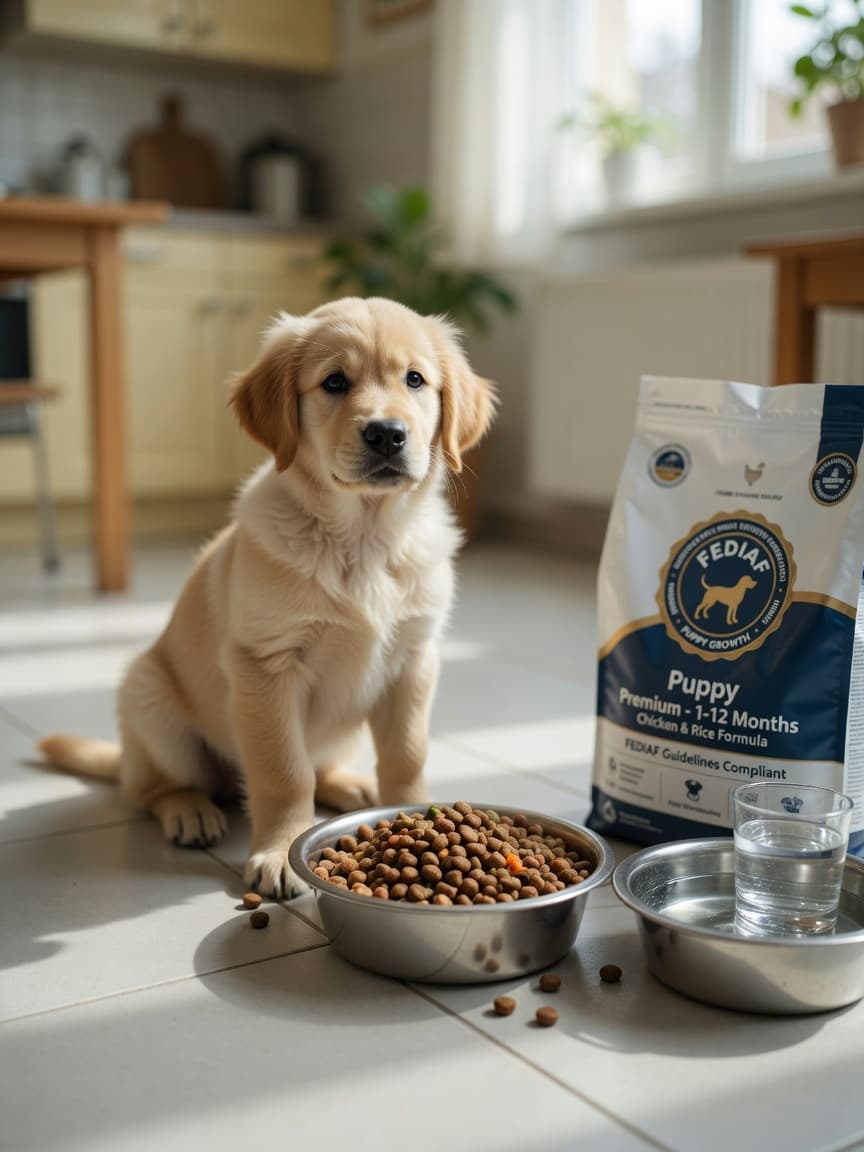
In Europe, pet food labelling is governed by EU regulations, and the European industry follows nutritional guidelines set out by FEDIAF — the European Pet Food Industry Federation. FEDIAF publishes nutritional guidelines for cats and dogs that are updated regularly based on current science. When assessing a puppy food, look for a label that states the food is "complete and balanced" for puppies or for "all life stages." These phrases have legal meaning under EU regulations and indicate the food meets minimum nutritional requirements.
Ingredients are listed by weight before cooking on EU labels, so meat listed first does not always mean the food is predominantly meat — it may simply be that the pre-cooked weight of the meat ingredient was highest. Look at the overall ingredient composition and the declared analytical constituents — protein, fat, fibre, moisture, and ash — to get a more complete picture of nutritional quality.
Feeding Frequency by Age
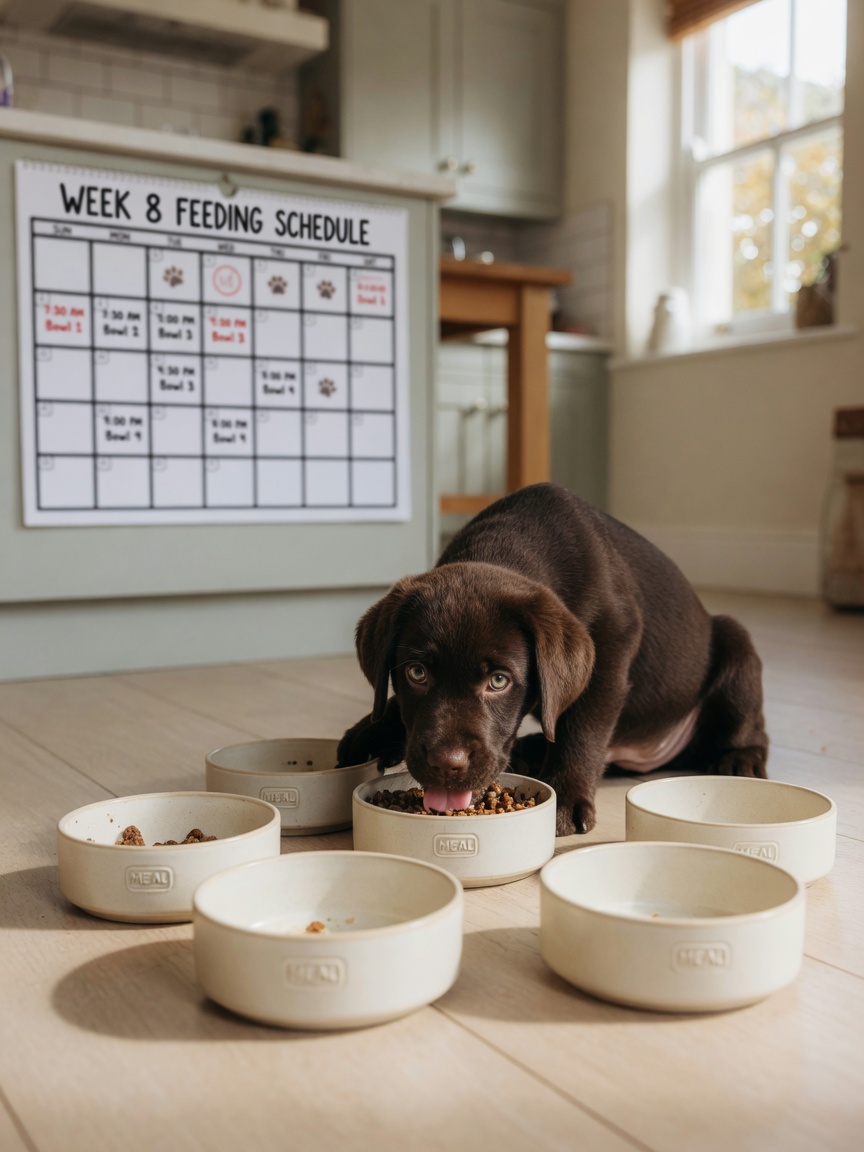
Young puppies have small stomachs and cannot consume enough food in one or two sittings to meet their energy requirements. A general schedule that works well for most puppies is as follows:
- Eight to twelve weeks: four meals per day, spread evenly
- Three to six months: three meals per day
- Six to twelve months: two to three meals per day depending on breed size
- Twelve months and over: transition to adult feeding schedule, typically twice daily
Large and giant breeds may benefit from staying on three meals per day for longer — up to twelve or even eighteen months — as their growth period extends beyond that of smaller breeds. Dividing daily food into multiple smaller meals also reduces the risk of bloat (gastric dilatation-volvulus) in deep-chested breeds, which is a life-threatening condition.
Portion Control and Body Condition
Feeding guides on packaging are a starting point, not a prescription. Puppies vary significantly in their activity levels, metabolism, and growth rates. Learn to assess your puppy's body condition regularly: you should be able to feel the ribs easily without pressing hard, but not see them prominently. There should be a slight waist when viewed from above. Adjust portions up or down based on body condition rather than rigidly following the packet amounts. Your vet can help you assess body condition at each vaccination and health check appointment.
Fresh Water
Fresh water should be available to your puppy at all times. Puppies fed on dry kibble have higher water requirements than those on wet food, and dehydration can affect kidney function and general health. Change the water at least once daily and wash the bowl regularly to prevent bacterial build-up.
EU Pet Food Brands: An Overview
European pet owners have access to an excellent range of high-quality puppy foods. Royal Canin produces breed-specific and size-specific puppy ranges that are widely available and well-researched. Hill's Science Plan and Purina Pro Plan both offer puppy formulations backed by substantial feeding trials. Orijen, though a Canadian brand, is distributed in Europe and is highly regarded for its high meat content. Farmina, an Italian brand, offers grain-free and grain-inclusive puppy ranges using good-quality ingredients and is widely stocked across Europe. Zooplus is the largest online pet food retailer in Europe and stocks the full range of major brands alongside their own Animonda and Catessy lines, making it easy to compare options and buy in bulk.
Raw Feeding: Pros and Cons
Raw feeding has a significant following in Europe, particularly in Scandinavia and the Netherlands. Proponents cite improved coat condition, smaller stools, and better dental health. However, raw feeding for puppies carries real risks: bacterial contamination (particularly Salmonella and Campylobacter) poses a threat both to the puppy and to household members; raw diets are extremely difficult to balance nutritionally without professional guidance; and calcium-phosphorus imbalances in homemade raw diets are common and can cause lasting skeletal damage. If you want to feed raw, work with a veterinary nutritionist and use commercially prepared, complete raw foods that are compliant with EU food safety standards rather than constructing a diet at home.
Foods to Always Avoid
- Chocolate and cocoa products — theobromine is toxic to dogs at any dose
- Grapes, raisins, and currants — can cause acute kidney failure even in small amounts
- Xylitol — found in sugar-free chewing gum, some peanut butters, and baked goods; causes dangerous hypoglycaemia and liver failure
- Onions, garlic, leeks, and chives — damage red blood cells and can cause haemolytic anaemia
- Macadamia nuts — cause neurological symptoms in dogs
- Alcohol and caffeine — toxic to the nervous system and heart
- Cooked bones — splinter and can cause intestinal perforation
Starting your puppy on the right food, at the right frequency, in the right amounts is one of the most impactful things you can do for their long-term health. When in doubt, a conversation with your vet or a registered veterinary nutritionist is always a worthwhile investment.