
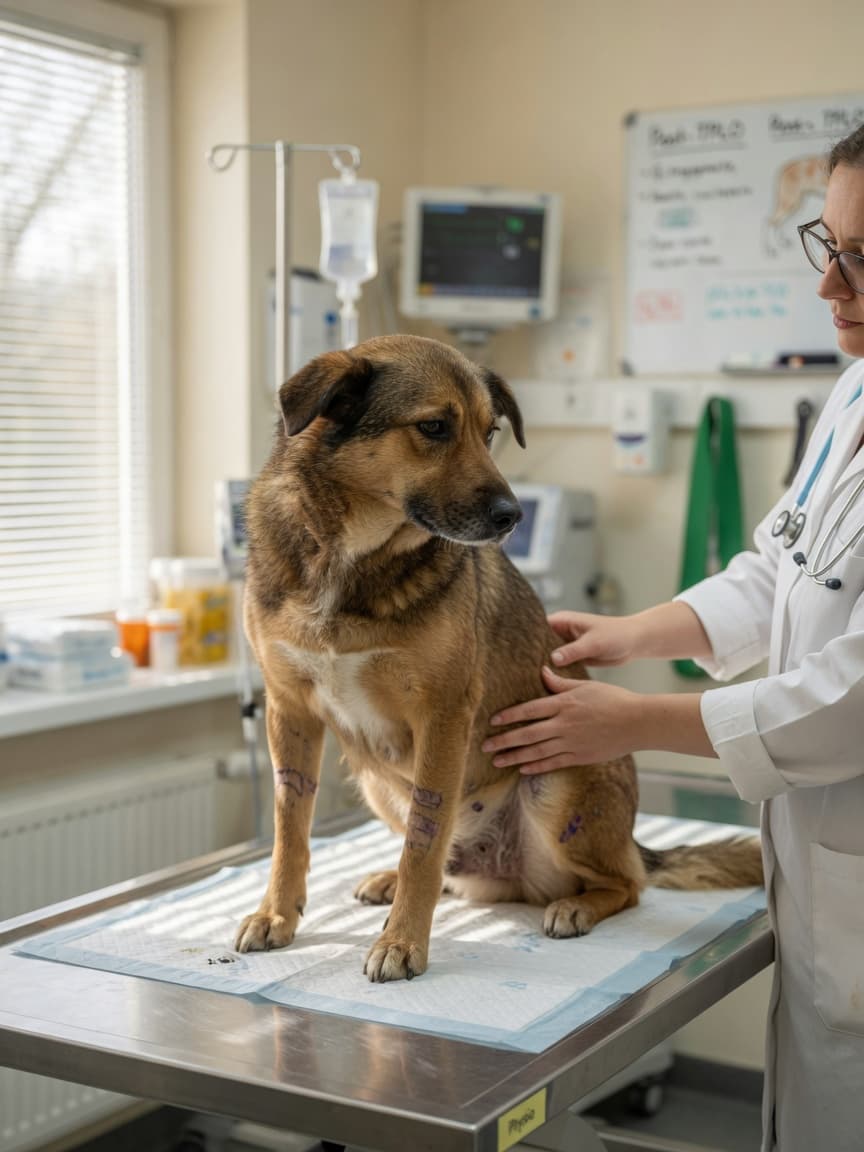
The Operation Is Only Half the Battle
A dog that has just undergone cruciate repair, hip replacement, or fracture fixation faces a recovery process that will shape its long-term outcome as much as the surgery itself. Veterinary physiotherapy — structured, progressive rehabilitation — has been shown to accelerate return to function, reduce muscle loss, and decrease the risk of compensatory injuries in the opposite limb. Yet it remains underutilised, largely because owners are not always told it exists or that it makes a meaningful difference.
Why Physiotherapy Matters After Surgery
Surgery repairs a structural problem. It does not restore muscle mass, joint range of motion, or the neurological pathways that govern normal movement. Without intervention, dogs often develop chronic muscle atrophy, altered gait patterns, and compensatory overloading of other joints that can cause new problems years down the line.
Physiotherapy addresses the full recovery picture: rebuilding strength, restoring proprioception (the body's sense of position in space), reducing pain and swelling, and progressively returning the dog to normal activity. For common procedures such as tibial plateau levelling osteotomy (TPLO) for cruciate disease, structured rehabilitation produces measurably better outcomes than rest alone.
The Recovery Timeline: What to Expect When
Week 1 to 2: Acute Phase
The priority in the first two weeks is managing pain, reducing swelling, and preventing complete disuse of the operated limb. Gentle passive range of motion exercises — the therapist or owner slowly flexing and extending the joint without the dog bearing weight — are typically initiated within 24 to 48 hours of surgery. These maintain joint mobility and stimulate circulation without stressing the surgical repair.
Cold therapy applied for 10 to 15 minutes several times daily reduces post-operative swelling. Short, controlled lead walks on flat, non-slip surfaces begin in this phase — typically five minutes two to three times daily. The goal is not exercise for fitness but gentle loading to signal to the limb that it needs to remain functional.
Week 3 to 6: Early Strengthening
As surgical healing progresses, the programme expands. Exercises introduced in this phase typically include:
- Sit-to-stand repetitions — builds quadriceps strength and encourages symmetric weight-bearing
- Slow leash walking on varied terrain — gentle inclines encourage active engagement of hindlimb muscles
- Balance board or wobble cushion work — improves proprioception and core stability
- Hydrotherapy — often introduced at this stage, allowing muscle work with reduced joint load
Walk duration increases gradually, typically by five minutes per week if progress is good. Running, jumping, and off-lead activity remain strictly prohibited.
Week 6 to 12: Progressive Loading
Bone healing is largely complete by eight to twelve weeks for most orthopaedic procedures. Exercise intensity increases accordingly. Controlled hill walking, cavaletti poles (ground poles the dog steps over to encourage deliberate limb placement), and longer walks are introduced. Swimming transitions from shallow wading to full hydrotherapy pool sessions if appropriate.
A physiotherapist will assess gait quality formally during this phase, checking for persistent lameness, asymmetric muscle development, or compensatory patterns that need targeted work.
Week 12 and Beyond: Return to Full Activity
Off-lead activity and return to play typically begin between 12 and 16 weeks, depending on the procedure and the individual dog's progress. Working dogs, sporting dogs, or those with additional joint problems may require a longer timeline. The physiotherapist and veterinary surgeon should make this assessment together.
Home Exercise: What Owners Can Do
Much of the daily rehabilitation work happens at home, performed by the owner. A good physiotherapist will demonstrate each exercise clearly and provide written instructions. Common home exercises include:
- Passive range of motion — 10 to 15 repetitions per joint, two to three times daily in the early phase
- Weight-shifting exercises — gently rocking the dog side to side while standing to encourage even weight distribution
- Sit-to-stand repetitions on a non-slip surface
- Ice or heat application as directed (ice for acute swelling, heat for muscle stiffness in later phases)
- Controlled lead walking on non-slip, flat surfaces
Consistency matters more than intensity. Five minutes of correct exercise twice daily produces better results than an occasional long session.
Finding a Veterinary Physiotherapist
In the UK, veterinary physiotherapists should hold a degree in physiotherapy plus postgraduate veterinary physiotherapy qualification, or a veterinary degree with specialist physiotherapy training. The Association of Chartered Physiotherapists in Animal Therapy (ACPAT) is the main professional body and maintains a public register.
A referral from your veterinary surgeon is required before a physiotherapist can treat your dog. Always ensure the physiotherapist receives the full surgical report and that findings are communicated back to your vet. If your dog has recently had orthopaedic surgery and physiotherapy has not been discussed, ask about it at your next post-operative check — the evidence for its benefit is clear enough that it should be considered standard rather than optional.