

What Is Mange?
Mange is a skin disease caused by microscopic mites that either burrow into the skin or live within hair follicles. It is one of the more commonly misunderstood conditions in dogs — owners sometimes assume any dog with significant hair loss or itching has mange, whilst in other cases a genuine mite infestation goes undiagnosed because symptoms are attributed to allergies or other skin conditions. Getting the diagnosis right is essential, because the two main types of mange in dogs have different causes, different transmission patterns, and different implications for the dog and the household.
Sarcoptic Mange: The Highly Contagious Form
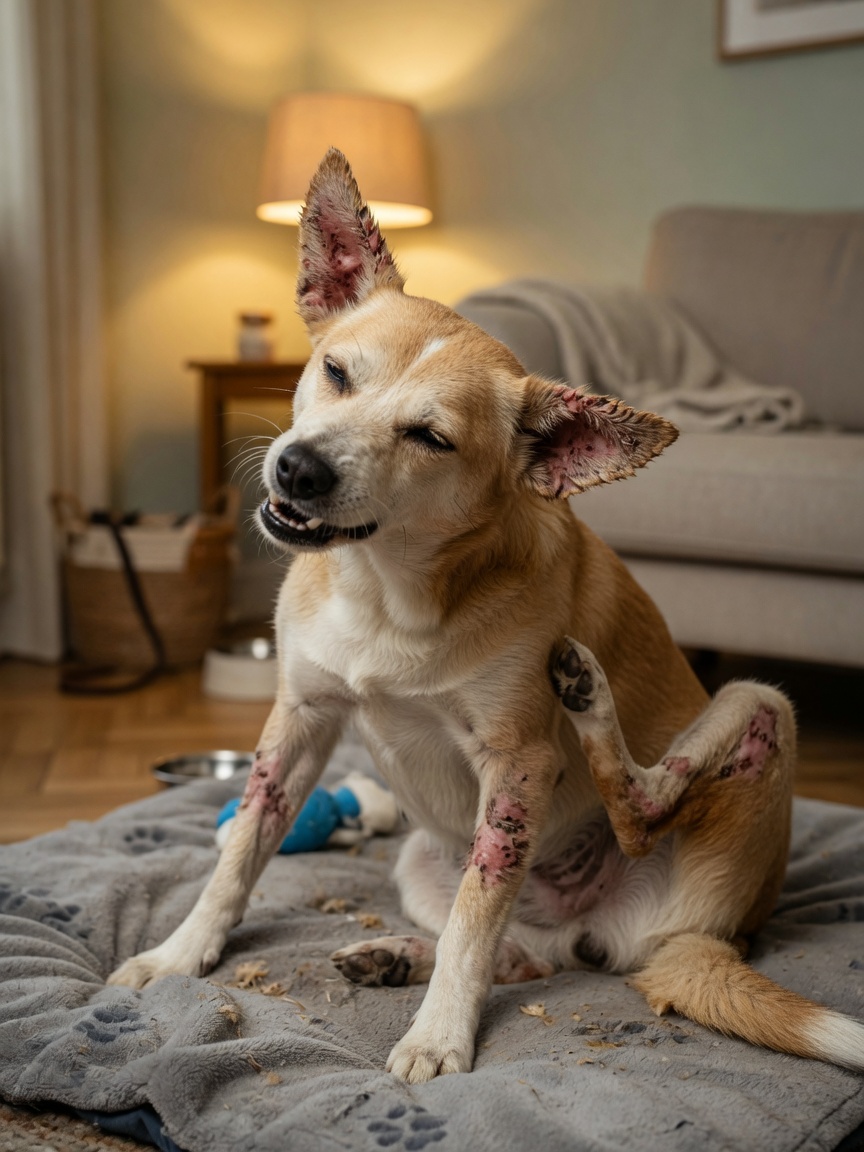
Sarcoptic mange is caused by Sarcoptes scabiei var. canis, a mite that burrows into the superficial layers of the skin to lay its eggs. The presence of the mites and their waste products triggers an intense allergic response, which is responsible for the characteristic extreme itching associated with this condition. Sarcoptic mange is also known as canine scabies.
How Dogs Acquire Sarcoptic Mange
Sarcoptes mites are highly contagious and spread through direct contact with an infected animal. Dogs can pick them up from other dogs, foxes, and occasionally from bedding or environments recently occupied by an infected animal. Wildlife, particularly urban foxes in the UK and Europe, are a significant reservoir. Dogs that roam in areas with high fox populations face elevated risk.
Sarcoptic mites can also temporarily infest humans, causing an itchy rash that typically resolves on its own once the dog is treated, as human skin is not a suitable permanent host for the canine variant of the mite.
Symptoms of Sarcoptic Mange
- Intense, relentless itching — often described as disproportionate to visible skin changes, especially early in the disease
- Hair loss, initially affecting areas with thinner skin: ear margins, elbows, hocks, and the ventral abdomen
- Red, crusty, or scabbed skin
- Skin thickening and yellowing crusts in chronic or severe cases
- A characteristic response: rubbing the margin of the ear between the fingers often triggers a scratching reflex — this is not definitive but is a useful clinical indicator
- Rapid weight loss and general deterioration in severely affected animals
Demodectic Mange: A Different Disease Entirely
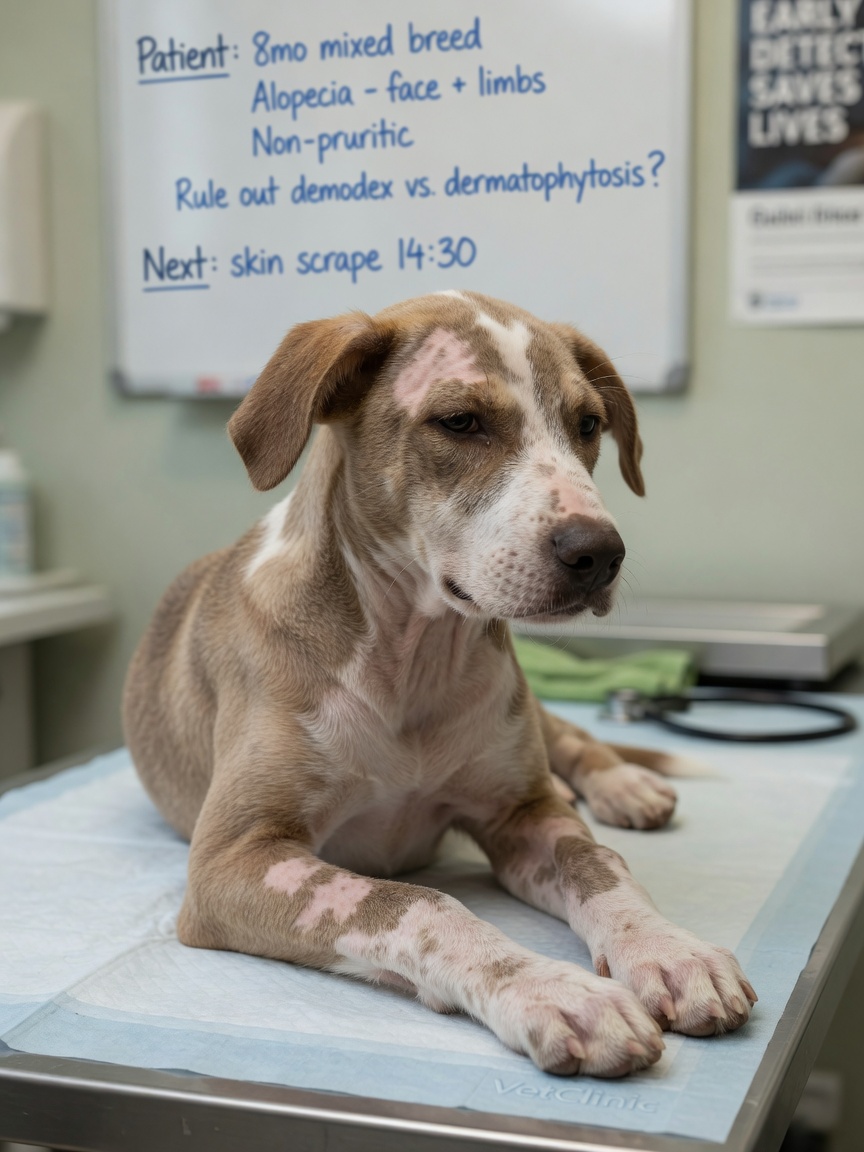
Demodectic mange is caused by Demodex canis, a mite that lives in the hair follicles of all healthy dogs in small numbers. The Demodex mite is part of the normal skin fauna, passed from mother to puppy through close contact in the first days of life. In a dog with a well-functioning immune system, these mites coexist without causing problems. Disease occurs when mite populations proliferate beyond normal limits, which happens when immune regulation breaks down.
Who Gets Demodectic Mange and Why
Young dogs are the most commonly affected, typically between three and eighteen months of age, when the immune system is still maturing. This juvenile form frequently resolves on its own as the dog matures. Generalised demodectic mange in adult dogs is more concerning, as it often points to an underlying immunosuppressive condition — hypothyroidism, Cushing's disease, cancer, or the long-term use of corticosteroids are among the most common triggers.
Certain breeds appear genetically predisposed to developing clinical demodecosis, including Bulldogs, Shar Peis, Staffordshire Bull Terriers, and Dobermans.
Symptoms of Demodectic Mange
- Localised form: patchy hair loss, most often around the face, muzzle, and forelimbs; itching is minimal or absent
- Generalised form: widespread hair loss covering large areas of the body; skin may become red, scaly, and secondary bacterial infections are common
- Pododemodicosis: involvement limited to the paws, causing swelling, redness, and hair loss between the toes — can be extremely difficult to treat
- Unlike sarcoptic mange, demodectic mange is not itchy unless complicated by secondary bacterial infection
- Demodectic mange is not contagious between dogs
How Vets Tell Them Apart
The clinical history and distribution of lesions often provide strong initial clues. Intense itching, lesions at the ear margins and elbows, and known contact with foxes or other dogs with similar signs points toward sarcoptic mange. Patchy, non-itchy hair loss in a young dog with no contact history is more suggestive of demodicosis.
Skin scrapings examined under a microscope can confirm the mite species. However, Sarcoptes mites are notoriously difficult to find — they are present in small numbers and burrow deeply — meaning a negative scraping result does not rule out sarcoptic mange. In practice, many vets treat empirically for scabies when the clinical picture is consistent and response to treatment is used as part of the diagnostic process.
Demodex mites, by contrast, are reliably found on deep skin scrapings, hair plucks, or skin biopsy in affected dogs.
Treatment Approaches
Both forms of mange have become considerably easier to treat since the introduction of isoxazoline medications — fluralaner, sarolaner, afoxolaner, and lotilaner. These products, originally developed for flea and tick control, are highly effective against both Sarcoptes and Demodex mites and have largely replaced older, more cumbersome treatment protocols involving weekly dips or prolonged use of amitraz.
For sarcoptic mange, all in-contact animals must be treated simultaneously, and bedding should be thoroughly washed or discarded. Environmental contamination is generally short-lived, as mites do not survive long away from a host.
For demodectic mange, adult-onset generalised disease warrants investigation of underlying causes. Treating the mites without identifying and addressing an underlying immunosuppressive condition is likely to result in recurrence.
When to Seek Veterinary Help
Any dog with significant hair loss, skin crusting, or unexplained persistent itching deserves a veterinary examination rather than home treatment with over-the-counter products. Accurate diagnosis determines appropriate treatment, and delays in treatment allow both forms of mange to progress and cause greater discomfort and skin damage. Secondary bacterial infections, which commonly develop in damaged skin, may also require antibiotic treatment alongside antiparasitic therapy.