
What Anal Glands Actually Are
Most dog owners have heard of anal glands, often in the context of a dog scooting across the floor or a sudden unpleasant smell. What fewer people understand is what these structures do and why they sometimes cause problems.
Anal glands — more accurately called anal sacs — are two small pouches located just inside the dog's anus, at approximately the four o'clock and eight o'clock positions. They produce a secretion with a distinctive, pungent odour that serves as a form of chemical communication between dogs. When a dog defecates, the pressure of passing a firm stool naturally empties these sacs. The secretion is deposited on the stool, which is why dogs investigate each other's droppings so intently.
Problems arise when this natural emptying process does not happen efficiently — either because stools are too soft to create adequate pressure, because the ducts that drain the sacs are too narrow, or because the glands are producing more secretion than usual.
Signs That the Anal Glands Need Attention
The most well-known sign is scooting — dragging the rear end along the ground in an attempt to relieve discomfort or pressure. However, this behaviour can also indicate worm infestation, skin irritation, or allergies around the perianal area, so do not assume anal glands are always the cause without checking other possibilities.
Other signs that the anal glands may be full or blocked include:
- Excessive licking or biting at the base of the tail or around the anus
- A fishy or unusually strong odour that does not correlate with a recent bowel movement
- Visible swelling or redness on one or both sides of the anus
- Straining during defecation or appearing uncomfortable when sitting
- Leaving small brown stains on surfaces where the dog has been sitting
If you notice any of these signs, the first step is to examine the area gently and consider whether a manual expression might help, or whether the situation warrants a veterinary visit.
The Case Against Routine Expression
There is a widespread practice among some groomers and even some owners of routinely expressing anal glands as part of every grooming session. Current veterinary thinking does not support this as necessary for most dogs. The anal glands have a purpose, and interfering with them when they are functioning normally can irritate the tissues, cause micro-trauma to the ducts, and paradoxically increase the likelihood of future problems.
Expressing the glands only when there is a genuine indication — visible signs of fullness, discomfort, or a history of impaction — is the more sensible and evidence-based approach. Dogs that frequently need manual expression may benefit more from dietary changes or investigation into the underlying cause than from ongoing manual intervention.
External Versus Internal Expression
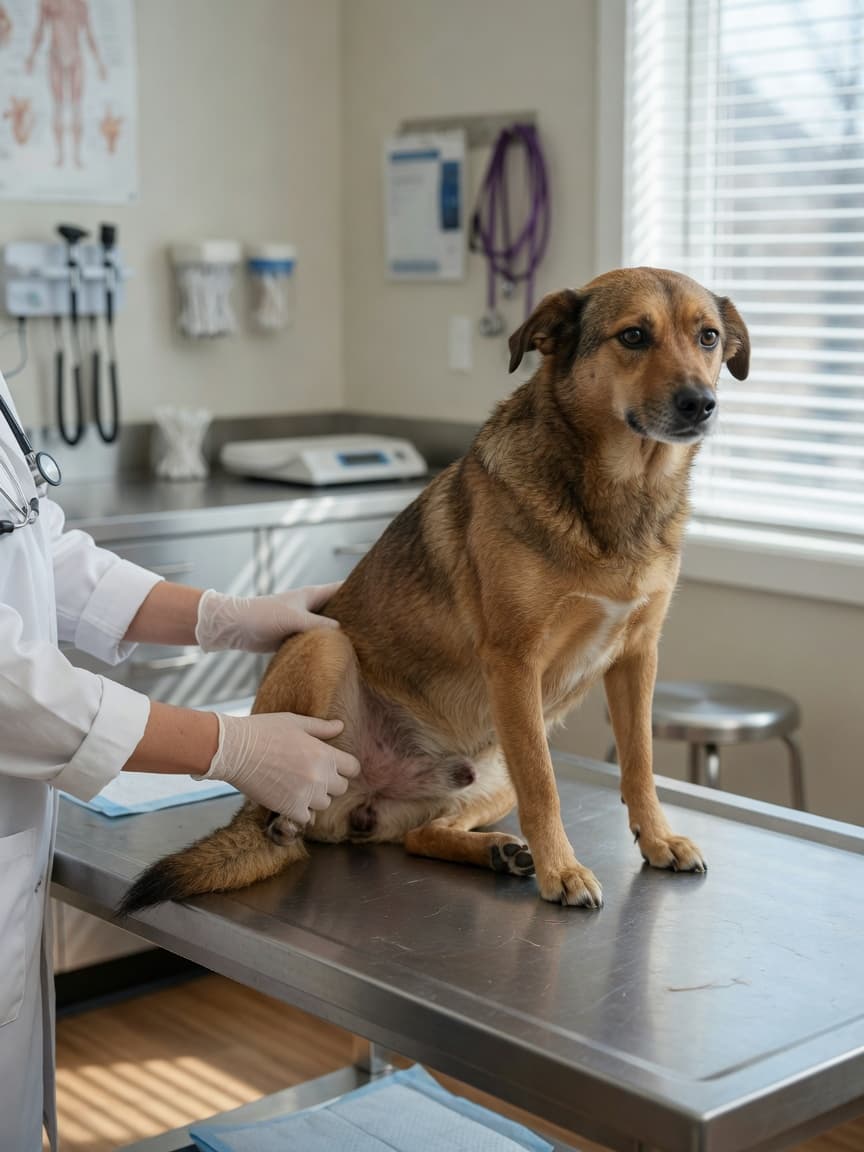
There are two methods of expressing anal glands: external and internal. External expression involves applying gentle pressure to either side of the anus from the outside; internal expression involves inserting a gloved finger into the rectum to directly compress the sac. The internal method is more thorough and effective at emptying the glands completely, but it should only be performed by a vet or trained veterinary nurse.
Some experienced owners do learn to perform external expression at home. If you want to try this, ask your vet or veterinary nurse to show you the correct technique in person first. Done incorrectly, external expression can push material back into the gland rather than out, or damage the delicate tissue around the duct opening.
When You Must See a Vet
There are several situations where veterinary involvement is not optional:
- If you can see or feel a visible lump or swelling near the anus that does not resolve within a day or two
- If your dog appears to be in significant pain when you touch the area or when they sit
- If there is any discharge that appears bloody, yellow, or green — this suggests infection or an abscess
- If the dog has had a ruptured anal gland abscess, which appears as an open wound or raw area beside the anus
- If the same gland has required expression more than once within a few weeks
Anal gland abscesses are particularly important to treat promptly. They develop when the gland becomes impacted and infected, eventually bursting through the skin if left untreated. Treatment typically involves flushing and cleaning the abscess, antibiotic therapy, and sometimes anti-inflammatory medication. Recurring abscesses may require surgical removal of the affected gland.
Dietary Changes That Can Help
Because firm stools are the primary mechanism by which the glands naturally empty themselves, diet plays a significant role in anal gland health. Dogs that produce consistently soft stools — due to a low-fibre diet, food sensitivities, or chronic loose stools — are much more prone to anal gland problems.
Increasing dietary fibre can make a meaningful difference. Adding a small amount of plain pumpkin puree, psyllium husk, or cooked sweet potato to the diet can add bulk to stools and improve the natural expression process. If your dog has food sensitivities or allergies that are contributing to chronic soft stools, working with your vet to identify and eliminate the trigger ingredient is worth the effort.
Weight management also matters. Overweight dogs have a higher incidence of anal gland issues, likely because excess tissue around the area reduces the effectiveness of the natural pressure mechanism during defecation.
A Problem Worth Taking Seriously
Anal gland issues are unglamorous but genuinely uncomfortable for the affected dog. Addressing the underlying cause, whether dietary, anatomical, or related to stool consistency, is more effective in the long term than repeated manual expression. If your dog is showing signs frequently, the conversation with your vet should move beyond the immediate relief and towards understanding why this keeps happening.