

The Dobermann's Hidden Health Burden
Few breeds command as much presence as the Dobermann. Elegant, intelligent, and intensely loyal, they are dogs that inspire admiration. Yet the Dobermann carries a disproportionately heavy inherited disease burden for a breed of its age and development. Three conditions in particular define the major health threats to this breed: dilated cardiomyopathy, cervical spondylomyelopathy, and von Willebrand disease. Every Dobermann owner should understand all three.
Dilated Cardiomyopathy: The Breed's Greatest Threat
Dilated cardiomyopathy, or DCM, is a disease of the heart muscle in which the ventricles enlarge and weaken, reducing the heart's ability to pump blood effectively. In Dobermanns, DCM is believed to affect up to 58 per cent of the breed over a lifetime, making it the single most significant cause of death. It has a clear inherited basis, with specific genetic variants identified that increase risk substantially.
The occult phase
One of the most insidious features of DCM in Dobermanns is the extended occult phase — a period during which the heart is already diseased but the dog shows no outward symptoms. This phase can last months to years. During this time, Holter monitoring (a 24-hour ambulatory ECG) can detect ventricular premature contractions that signal early disease, even before echocardiographic changes appear. Annual Holter monitoring from age three is considered best practice for the breed by most cardiologists.
Symptoms of overt DCM
- Exercise intolerance and rapid fatigue
- Coughing, particularly at night or after lying down
- Laboured or rapid breathing
- Abdominal distension from fluid accumulation
- Sudden collapse or syncope
- Sudden cardiac death, which can occur even in apparently healthy dogs
Treatment in the overt phase involves diuretics, ACE inhibitors, and antiarrhythmic drugs. Pimobendan initiated during the occult phase has been shown in clinical trials to delay onset of congestive heart failure. Any Dobermann showing cardiac symptoms should be seen by a veterinary cardiologist without delay.
Wobbler Syndrome: When the Neck Becomes a Problem

Cervical spondylomyelopathy — commonly called Wobbler syndrome — involves instability or malformation of the vertebrae in the neck, leading to compression of the spinal cord. Dobermanns are one of the two breeds most commonly affected, alongside Great Danes.
The condition typically presents in middle-aged to older Dobermanns, though it can occur in younger dogs. The hallmark sign is a characteristic wobbly gait, most obvious in the hindlimbs, combined with neck stiffness or pain. Some dogs show knuckling of the forefeet or general weakness that is often mistaken for other orthopaedic conditions.
Diagnosis and management
MRI is the gold standard for diagnosing Wobbler syndrome, allowing detailed visualisation of spinal cord compression and disc involvement. CT myelography is an alternative where MRI is unavailable. Management ranges from conservative medical therapy — rest, pain relief, and physiotherapy — in milder cases, to surgical decompression in more severe presentations. Surgery does not reverse existing neurological damage but can halt progression and improve quality of life. Long-term prognosis is variable, and recurrence is possible.
Von Willebrand Disease
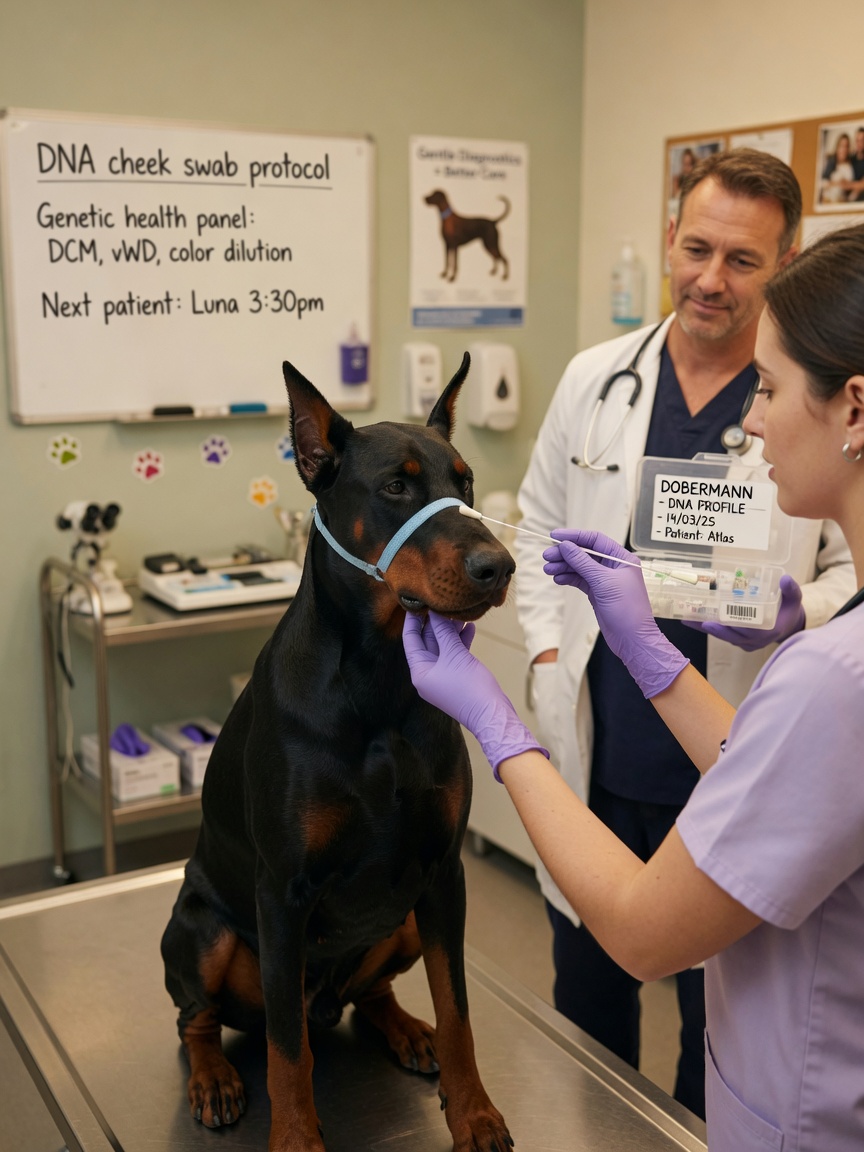
Von Willebrand disease is the most common inherited bleeding disorder in dogs, and Dobermanns are among the breeds most frequently affected. The condition involves a deficiency of von Willebrand factor, a protein essential for normal blood clotting. Most affected Dobermanns carry type I disease — a partial deficiency — which ranges from subclinical to clinically significant.
The disorder may go entirely unnoticed until a dog undergoes surgery, trauma, or dental work, at which point prolonged or excessive bleeding reveals the underlying deficiency. Some dogs present with spontaneous bleeding from the gums, nose, urinary tract, or into the skin.
Testing and precautions
A DNA test is available for von Willebrand disease in Dobermanns and is strongly recommended before any elective procedure. Dogs confirmed as affected should have their surgical team informed in advance, allowing preparation of appropriate treatment measures including desmopressin or blood products if needed. Affected dogs should not be used for breeding, particularly when mated with other carriers.
Additional Health Concerns
Beyond these three primary conditions, Dobermanns are also prone to hypothyroidism, prostatic disease in intact males, and a skin condition called colour dilution alopecia in blue and fawn-coloured individuals. The breed also appears at elevated risk for certain autoimmune conditions. Dental health requires consistent attention, as the breed is prone to periodontal disease.
A Monitoring and Care Framework
Owning a Dobermann means committing to proactive health surveillance throughout the dog's life. The following framework reflects current best practice:
- Begin annual Holter monitoring and echocardiography from age three
- Test for von Willebrand disease before any surgical or dental procedure
- Report any stumbling, dragging of feet, or neck stiffness to your vet promptly
- Maintain a healthy body weight to reduce spinal and cardiac load
- Schedule thyroid function testing if unexplained weight gain, coat changes, or lethargy occur
- Ensure your vet has breed-specific experience or access to specialist referral pathways
The Dobermann is a breed that demands — and deserves — informed ownership. With vigilant monitoring and timely veterinary intervention, many of these conditions can be managed effectively, giving your dog the best possible chance of a full and active life. Always discuss specific health concerns and screening schedules with your vet or a breed-specialist cardiologist.