
The EU Pet Passport: How It Works & Who Needs One
What Is the EU Pet Passport?
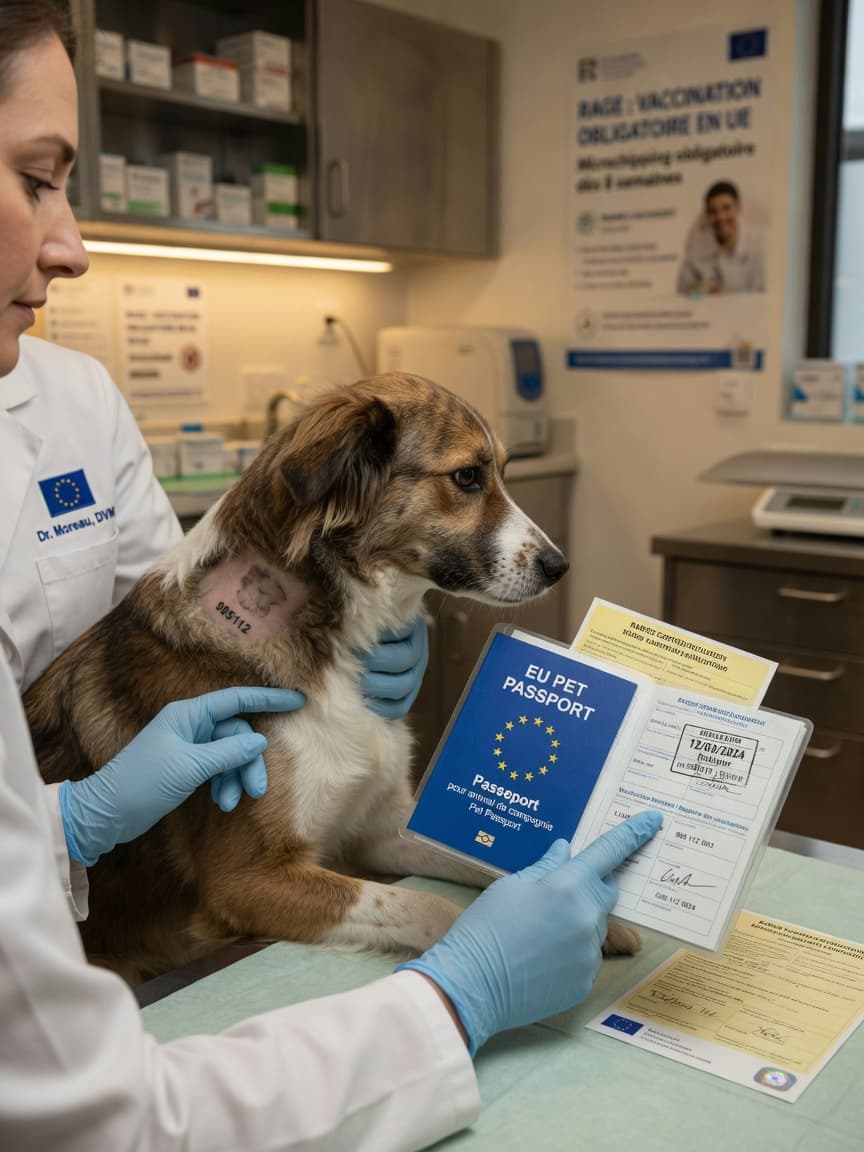
The EU Pet Passport (officially the European Union Pet Passport) is a standardised document issued by an authorised veterinarian in any EU member state, as well as in Northern Ireland. It serves as a single, unified travel document for dogs, cats, and ferrets travelling between EU countries and to certain listed third countries. The passport records your pet's identification details, vaccination history, health treatments, and owner information in a format that border authorities across the EU can readily verify.
The EU Pet Passport system was established under EU Regulation 998/2003 and has been progressively updated; the current framework operates under EU Regulation 576/2013. It applies across all 27 EU member states plus Norway, Iceland, Liechtenstein (EEA), Switzerland, and Northern Ireland.
Which Countries Accept the EU Pet Passport?
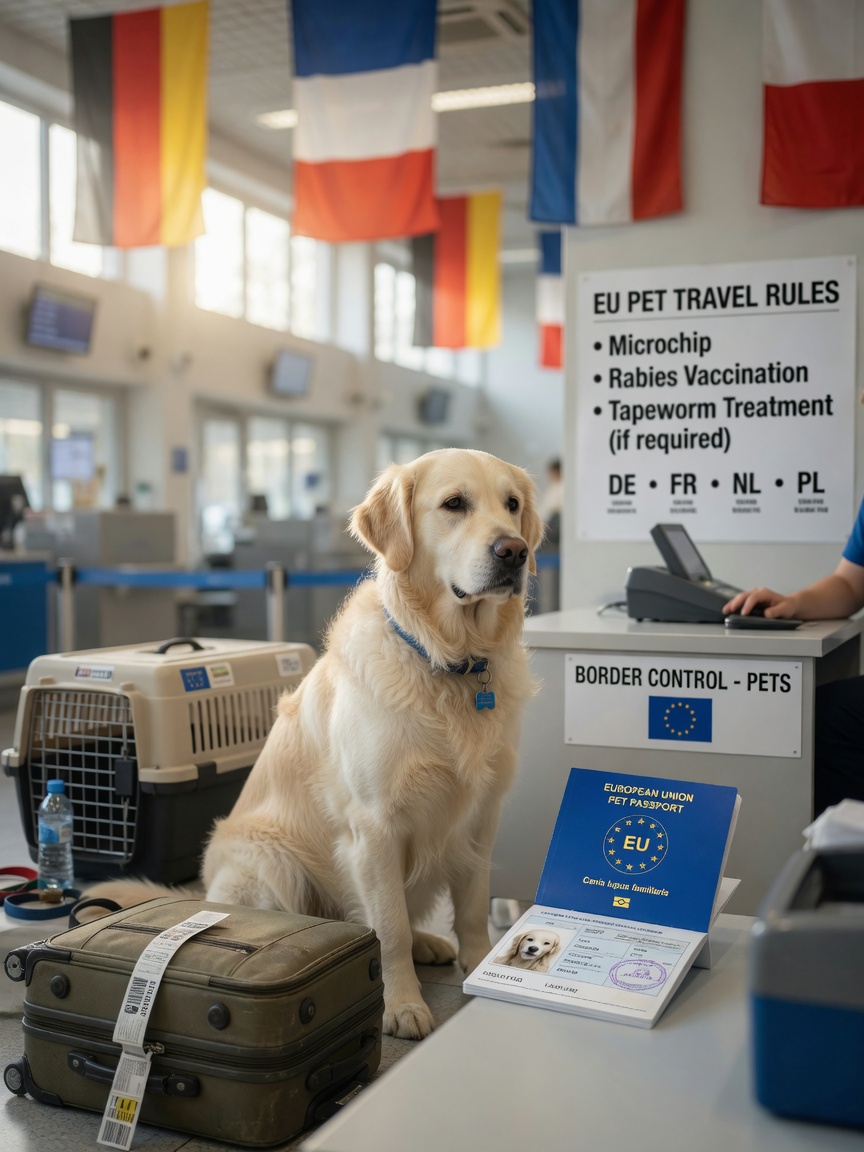
The EU Pet Passport is accepted for travel between:
- All 27 EU member states
- Norway, Iceland, Liechtenstein, and Switzerland
- Northern Ireland (for travel to and from EU countries)
It is also accepted for entry into a number of "listed" third countries that the EU has assessed as having equivalent rabies control standards. These currently include Australia, New Zealand, Japan, Canada, and several others. A full and current list is maintained on the European Commission's official pet travel portal.
Notably, the United Kingdom is no longer part of the EU Pet Passport system following Brexit. UK-resident pet owners travelling to the EU need an Animal Health Certificate (AHC) issued no more than 10 days before travel, rather than an EU Pet Passport.
Core Requirements: What Your Pet Needs
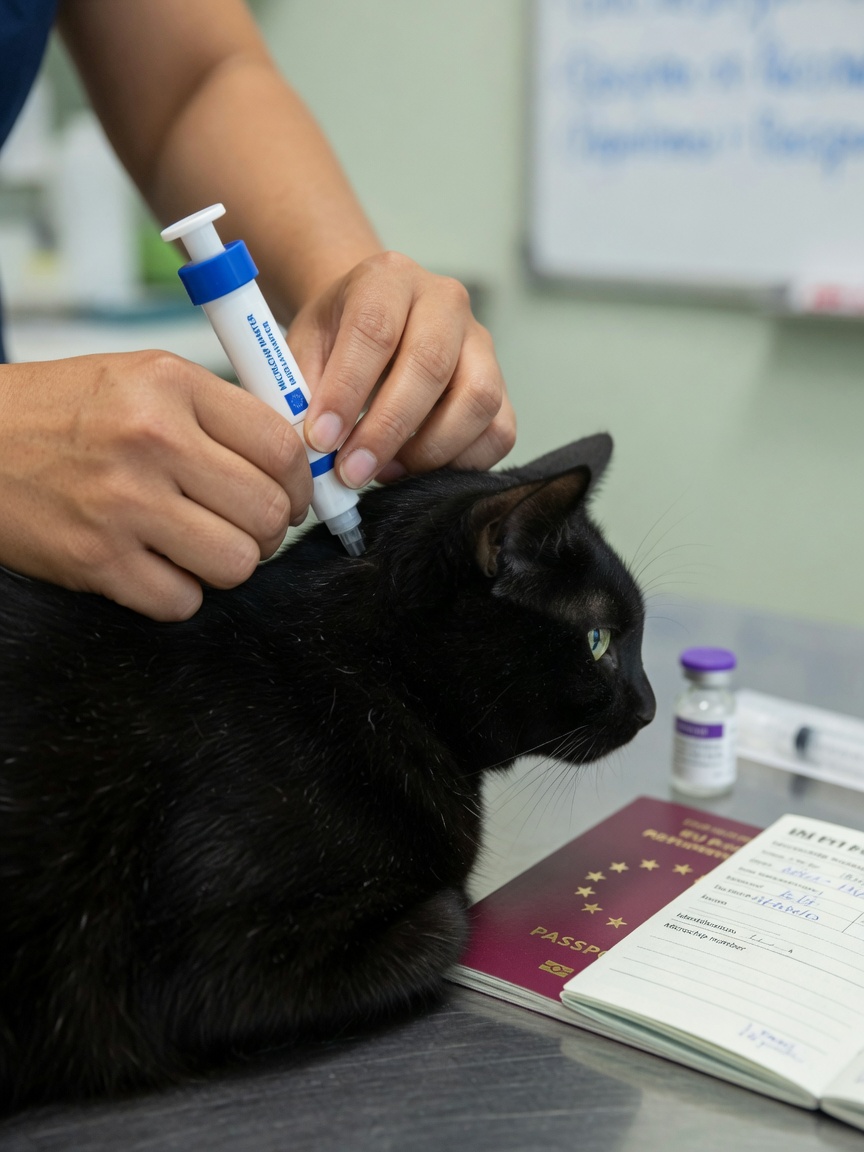
1. Microchip
Your pet must be microchipped with an ISO 11784/11785-compliant 15-digit chip before any other travel requirements are fulfilled. The microchip must be implanted before the rabies vaccination is given — if the vaccination was given first, it will need to be repeated after chipping for the documentation to be valid. The microchip number is recorded in the passport and links all subsequent vaccinations and treatments to your specific animal.
2. Rabies Vaccination
A valid rabies vaccination is the cornerstone of the EU pet travel system. Requirements include:
- The pet must be at least 12 weeks old at the time of the primary vaccination
- A waiting period of 21 days must elapse after the primary rabies vaccination before travel
- Booster vaccinations must be kept current — an expired rabies vaccination means your pet cannot travel until the booster has been given and, in some cases, a further waiting period has been observed
- The vaccination must be recorded in the EU Pet Passport by the administering vet
3. Tapeworm Treatment (for UK Entry)
Dogs (not cats or ferrets) entering the UK from an EU country must be treated for tapeworm (specifically Echinococcus multilocularis) by a vet between one and five days before arrival in Great Britain. This treatment must be recorded in the pet passport or Animal Health Certificate with the product name, dose, and date. This rule does not apply when travelling within the EU — only for entry into Great Britain.
How to Get an EU Pet Passport
- Ensure your pet is microchipped. Any vet can implant a microchip; confirm it is ISO-compliant.
- Visit an authorised vet. Only vets officially authorised by the relevant national authority can issue EU Pet Passports. In most EU countries, most registered veterinary practices have this authorisation — call ahead to confirm.
- Get the rabies vaccination recorded. If your pet has not been vaccinated, or if the current vaccination has expired, the vet will administer the vaccine and record it in the passport. Remember the 21-day wait for first-time vaccinations.
- Plan timing carefully. If your pet needs a primary rabies vaccination, you need to book the vet appointment at least 21 days before your planned departure date.
- Keep the passport safe. The EU Pet Passport is a physical document — there is no digital backup system. Keep it with your own travel documents and make a photographic copy of the key pages.
Travel-ready accessories for your pet. Whether you are driving across Europe or flying to a listed third country, Zooplus has the carriers, travel bowls, and comfort accessories to keep your pet settled throughout the journey. See the full travel range online.
Shop pet travel accessories at Zooplus →Non-EU Travel: Third-Country Rules
If you are travelling with your pet from an EU country to a non-EU country that is not on the EU's "listed" countries roster (most of the Middle East, Africa, and parts of Asia), the requirements are set by the destination country, not the EU. These vary enormously — some countries require quarantine periods of days to weeks; others require rabies titre tests proving adequate antibody levels, which must be carried out at least 30 days after the most recent rabies vaccination and often well in advance of travel.
Always research the destination country's import requirements for pets through that country's official veterinary or agriculture authority, not through third-party travel sites. Requirements change, and the cost of getting it wrong can include pet quarantine, compulsory export back to your country of origin, and significant expense.
The AVMA's international pet travel guide provides a useful framework for researching destination-country requirements worldwide.
Common Mistakes to Avoid
- Microchip after rabies vaccination: If the chip was implanted after the vaccine was given, that vaccination is considered invalid for travel purposes — the vaccine must be repeated.
- Allowing the rabies booster to lapse: An expired vaccination means the pet cannot travel. Check expiry dates well before your planned trip.
- Assuming the EU passport works for UK re-entry: UK-resident pet owners need an AHC for each trip to the EU — the EU Pet Passport issued in France or Spain, for example, does not give a UK-resident pet ongoing travel rights.
- Missing the tapeworm treatment window for UK entry: The treatment must be given between one and five days before UK arrival — not earlier, not on the day of travel.
Key Takeaways
- The EU Pet Passport covers dogs, cats, and ferrets travelling between EU countries and certain listed third countries.
- Three core requirements: ISO-compliant microchip (implanted first), valid rabies vaccination (21-day wait after primary), and current booster schedule.
- UK-resident pet owners need an Animal Health Certificate for each EU trip — not an EU Pet Passport.
- Dogs entering the UK from the EU must receive a tapeworm treatment 1–5 days before arrival, recorded in the passport.
- Only authorised vets can issue EU Pet Passports — call your practice ahead to confirm authorisation.
- Non-EU destinations have their own import rules, which may include quarantine or rabies titre testing.
- The passport is a physical document — keep it safe and photograph every page as backup.
References
- Belsare AV, Vanak AT, Gompper ME. "Epidemiology of viral diseases in free-ranging Indian dogs (Canis lupus familiaris)." Preventive Veterinary Medicine. 2014;116(4):357–369. PubMed 24935292
- Takeuchi M, Yanai T, Sukperm P, Okamura M. "Current status of Echinococcus multilocularis control in the EU and the impact of the EU pet travel scheme." Parasitology International. 2021;82:102295. PubMed 33529746