
What a Microchip Actually Is
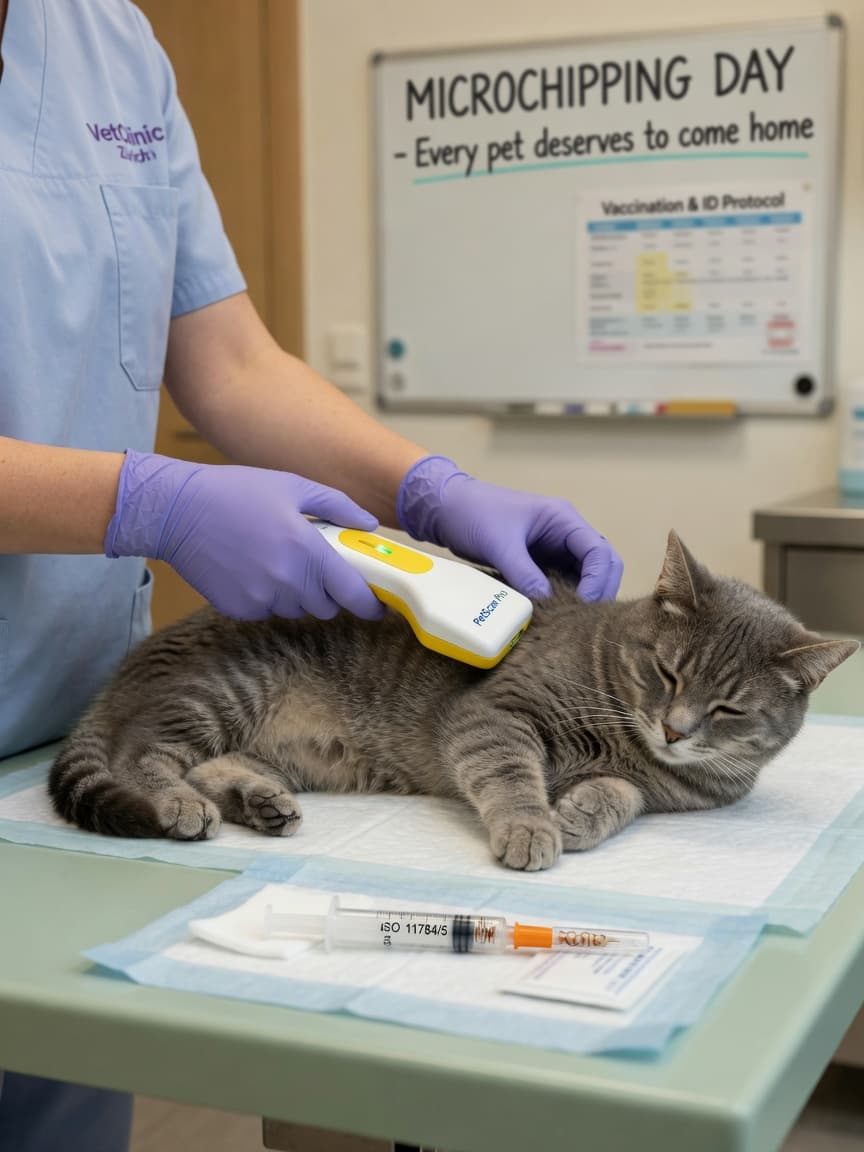
A microchip is a tiny passive transponder, roughly the size of a grain of rice, encased in biocompatible glass. It carries a unique identification number — typically 15 digits in ISO-standard chips — that can be read by a scanner held close to the skin. The chip itself contains no battery and no GPS tracking capability. It does not broadcast a signal. It simply stores a number that links to contact details held in a pet registry database.
Understanding what a microchip is — and what it is not — is important. It will not tell you where your pet is if they go missing. What it does is provide an unforgeable, permanent form of identification that cannot fall off, fade, or be removed.
How the Implantation Works
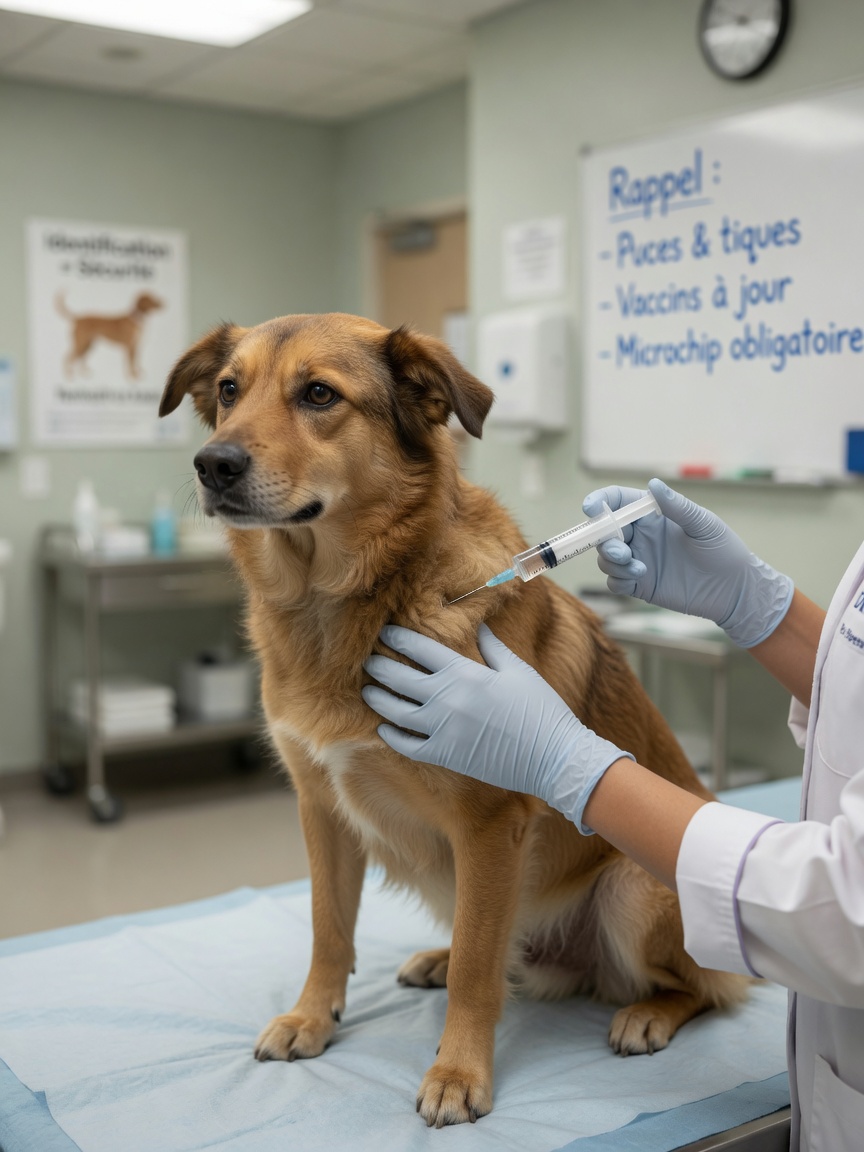
The chip is loaded into a sterile syringe and injected subcutaneously — beneath the skin — using a needle slightly larger than a standard vaccination needle. In dogs and cats, the standard site is the loose skin between the shoulder blades. The procedure takes only seconds and does not require anaesthesia, though some vets offer to implant during a spay or neuter procedure as a matter of convenience.
Most pets show little to no reaction. There may be a brief flinch at the needle, comparable to a vaccination. A small number of animals show minor swelling at the injection site in the days following, but this typically resolves quickly without intervention.
Legal Requirements in the UK
In England, Scotland, and Wales, microchipping dogs has been compulsory since April 2016. Puppies must be chipped by eight weeks of age, before changing ownership. From 10th June 2024, the law was extended to require all cats in England to be microchipped by the age of 20 weeks. Owners who fail to comply can be issued with a notice requiring chipping within 21 days, and a fixed penalty if they do not comply.
Northern Ireland has its own legislative timeline, and regulations for cats are still evolving across the devolved nations. Regardless of where you are, microchipping is strongly recommended for all pets — including rabbits, for whom it is not yet compulsory but is widely available.
Registering the Chip: The Step Most People Miss

A microchip is only as useful as the database record attached to it. Implanting the chip without registering it — or registering it with outdated contact information — renders the chip effectively useless in a lost pet scenario.
In the UK, several approved databases hold microchip records, including Petlog, Microchip Central, and Animal Tracker. Your vet will typically register the chip at the time of implantation, but it is worth confirming which database was used and creating your own login so you can update details yourself if you move house or change phone numbers.
When rehoming a pet, the microchip record must be transferred to the new owner. This is a legal requirement in the UK and one that is frequently overlooked in informal rehoming situations.
What Happens When a Lost Pet Is Found
When a stray or lost animal is brought to a rescue centre, vet practice, or local authority facility, the first thing staff will do is scan for a chip. Standard ISO-compatible scanners can read chips from multiple manufacturers, though older chips using non-standard frequencies may require a specific reader.
If a valid chip is found, the database is contacted and the registered owner's details retrieved. This is why current contact information is so critical — a chip linked to an old phone number or a previous address is a significant barrier to reunion.
Statistics from the UK illustrate the difference microchipping makes. Unchipped cats are reunited with their owners at a fraction of the rate of chipped cats. In some rescue organisations, the reunification rate for chipped dogs is more than double that for unchipped dogs.
Microchip Migration
In rare cases, a chip can migrate from its original implantation site. This is more common with older chip designs. If a chip is not found at the shoulder blades, a thorough scan of the entire body — down to the groin, along the sides, and across the belly — should be performed before concluding a chip is absent. This is standard practice in most shelters and vet practices.
Tumours at microchip sites have been reported very rarely in the medical literature, most notably in rats and mice used in laboratory studies. Extensive reviews of companion animal data have not established a causal link between microchipping and cancer in dogs or cats. The veterinary consensus is that the benefit of permanent identification vastly outweighs any theoretical risk from the procedure.
Checking Your Pet's Chip
It is good practice to ask your vet to scan your pet's chip at their annual check-up. This confirms the chip is readable, has not migrated significantly, and is still returning the correct identification number. You can also use a free checking tool on some registry websites to verify your pet's details are correctly listed.
If you have recently moved, changed your phone number, or rehomed a pet, update the registry immediately. Do not assume your vet holds this information on your behalf — the database record is your responsibility to maintain.
Microchipping and Travel
For pets travelling internationally, a microchip is a prerequisite for most health documentation. Under current UK pet travel regulations, your pet must be chipped before their rabies vaccination is administered for the vaccination to be valid for travel purposes. If the vaccination was given before the chip was implanted, the full vaccination course must be repeated after chipping.
Different destination countries have their own requirements regarding chip standards, vaccination timelines, and waiting periods, so checking requirements specific to your destination well in advance — ideally months ahead — is essential.