
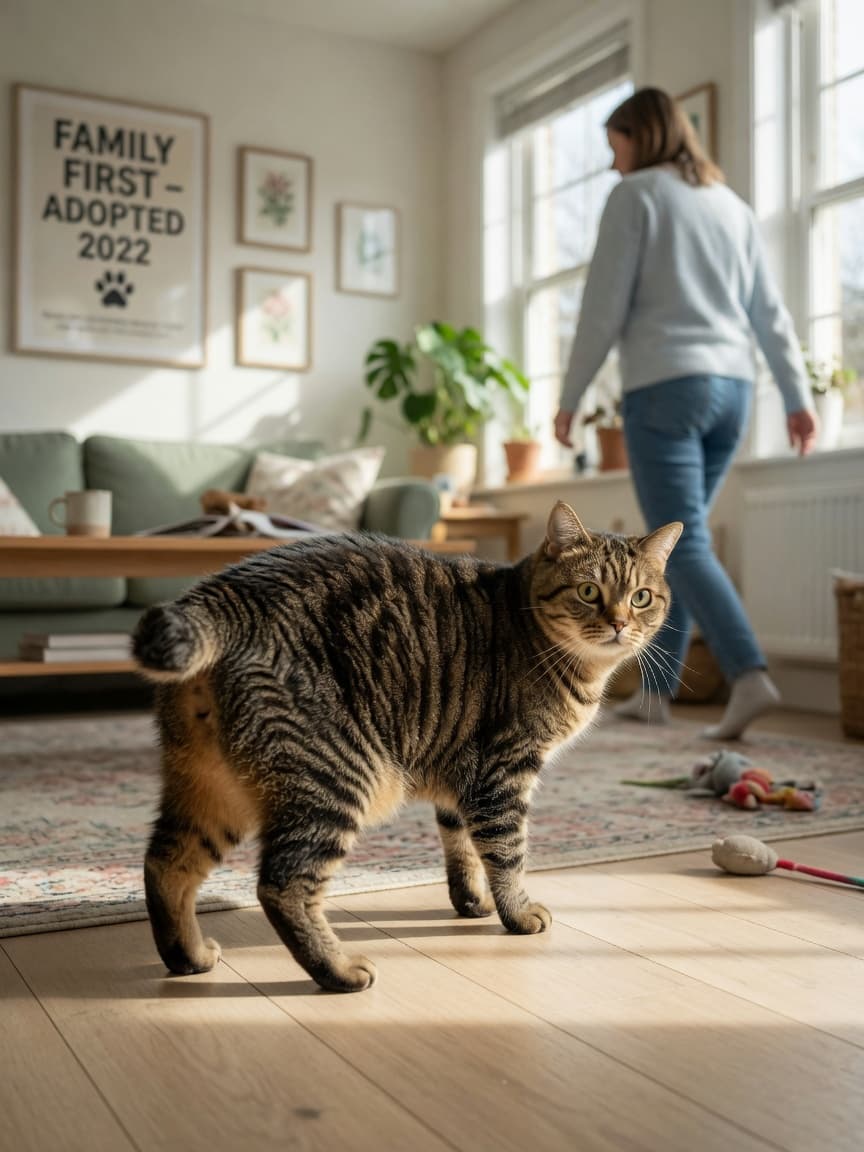
The Manx is a distinctive, tailless (or short-tailed) cat breed known for its rounded, compact body and playful, dog-like devotion to its family. Affectionate, adaptable, and often happiest with company throughout the day, Manx cats suit households looking for an interactive, loyal companion rather than an aloof lap cat. The breed's defining genetic trait — taillessness — is linked to a spinal condition called Manx Syndrome, which is the single most important health consideration for anyone considering this breed.
Breed Overview
- Size: Medium, solidly built and muscular, typically 3.5–5.5kg
- Lifespan: Generally 12–14 years, with many living longer when healthy
- Coat: Short-haired or long-haired (Cymric) double coat, dense and weather-resistant
- Origin: Isle of Man, arising from a natural genetic mutation in the local cat population
Temperament & Family Fit
Manx cats are typically described as intelligent, sociable, and strongly bonded to their human families. Many owners note a distinctly "dog-like" quality — they may follow people from room to room, enjoy interactive play such as fetch, and greet family members at the door. This makes them a good fit for households wanting an engaged, people-oriented cat rather than an independent one.
They tend to get on well with children who understand gentle handling, and often adapt reasonably well to other pets, including dogs, provided introductions are gradual. Because they form close attachments, Manx cats can be prone to feeling anxious if left alone for very long periods, so households with variable or long working hours may wish to consider companionship options, such as a second cat, to prevent boredom or stress-related behaviours.
Their strong hindquarters and rabbit-like hopping gait make them agile jumpers and enthusiastic players well into adulthood, and many retain a kitten-like curiosity throughout their lives.
Health Issues in Manx Cats
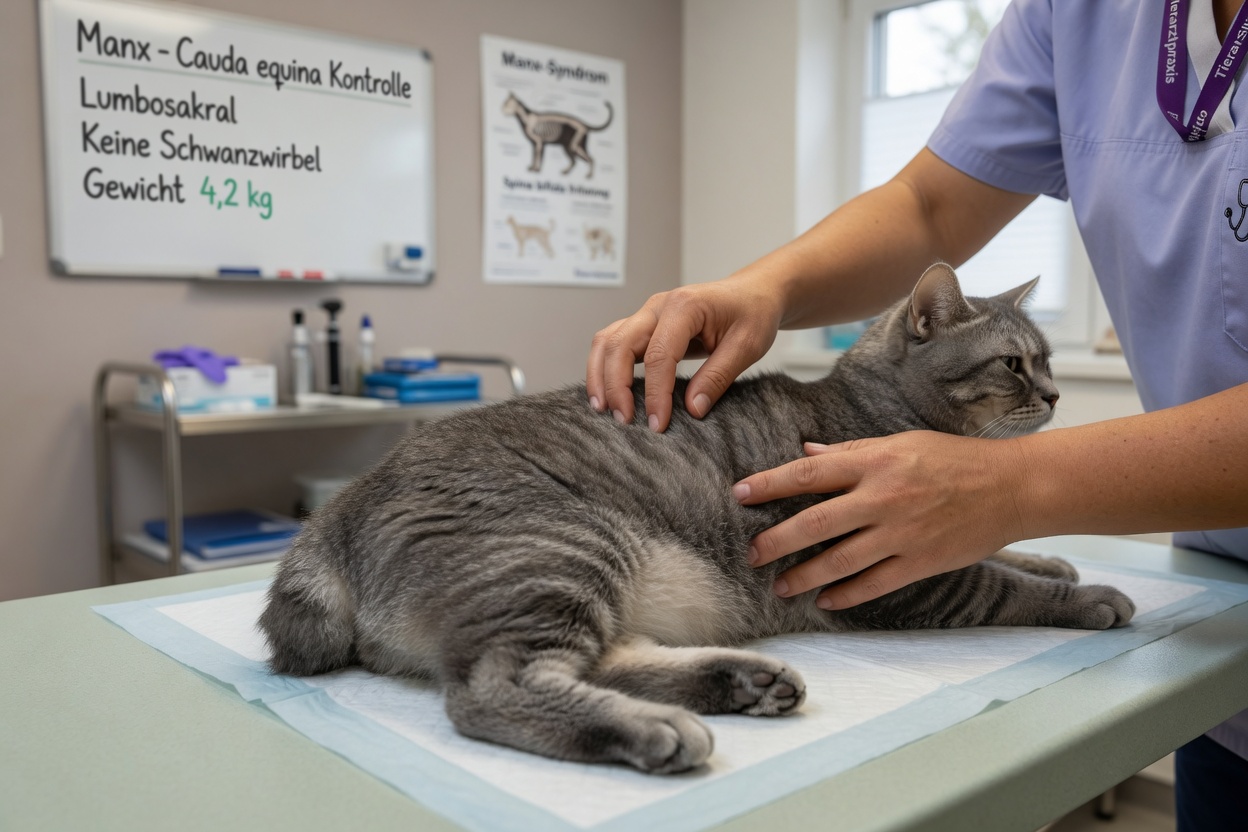
Manx cats are, on the whole, a robust and long-lived breed, but the same gene responsible for their tailless appearance is associated with a cluster of spinal and pelvic issues collectively known as Manx Syndrome. Reputable breeders screen carefully for these problems, and prospective owners should ask about the health history of kittens' parents and littermates.
Manx Syndrome (Spinal and Sacral Abnormalities)
The gene that shortens or removes the tail can also affect the development of the spinal cord and sacral vertebrae further along the spine. This can result in a shortened, malformed spinal canal, affecting nerve function to the hindquarters, bladder, and bowel. Kittens most severely affected are often identified early by breeders, but milder cases may not become apparent until a cat is more active.
Early signs can include an unusual or "bunny-hopping" gait beyond what is typical for the breed, weakness or wobbliness in the back legs, reluctance to jump, or changes in litter box habits such as straining, constipation, or urinary accidents. Owners noticing any of these signs should seek veterinary assessment promptly, as early supportive management — including dietary fibre adjustments, bladder expression training, or medication for constipation — can significantly improve a cat's comfort and quality of life.
Spina Bifida and Related Neural Tube Defects
Some Manx cats, particularly those with very short or absent tails, can have an increased likelihood of spina bifida, a congenital defect where the spinal column doesn't close fully during development. This is generally identified in kittenhood through neurological examination, but subtle cases may only become evident as a kitten grows and starts to move around more.
Signs to watch for include an abnormal gait, dragging of the hind legs, incontinence, or a visible dimple or depression over the lower spine. Kittens showing these features should be examined by a vet experienced with the breed, as management depends heavily on severity — ranging from monitoring to more involved bladder and bowel care routines.
Arthritis and Joint Changes
The Manx's compact, muscular build and unique hopping gait place particular biomechanical demands on the spine and hind limb joints, and some individuals develop degenerative joint changes as they age, particularly around the hips and lower back. This is not unique to Manx cats but is worth monitoring given their existing spinal considerations.
Early indicators include stiffness after rest, reluctance to jump onto favourite perches, or a change in activity level. While this guide focuses on cats, many of the general principles behind supporting joint health and mobility — such as weight management, joint-supportive supplements, and gentle exercise — are well established in companion animals broadly; our overview on managing arthritis and supporting joint health outlines evidence-based approaches that share common ground with feline care, and is a useful starting point to discuss with your vet.
Constipation and Megacolon
Because nerve supply to the bowel can be affected in cats with Manx Syndrome, some individuals are prone to chronic constipation, which if unmanaged can progress to megacolon — a condition where the colon becomes overly stretched and loses effective motility. This tends to be a gradual process rather than a sudden one.
Signs include infrequent or difficult defecation, visible straining, small hard stools, reduced appetite, or lethargy. Owners should discuss any changes in toileting habits with their vet early, as dietary management, stool softeners, and monitoring are far more effective when started before the colon becomes significantly distended.
Corneal Dystrophy and Other Minor Reported Conditions
Some Manx cats have been reported with corneal dystrophy, a condition affecting the clarity of the cornea, though this is less commonly discussed than the spinal-related issues above. Regular veterinary eye checks as part of annual wellness visits are a sensible precaution, particularly as cats age.
Nutrition & Feeding
Manx cats do not have unusual dietary requirements as a breed, but their muscular build and potential predisposition to bowel and joint issues make thoughtful feeding particularly worthwhile. A complete, balanced commercial diet appropriate to life stage remains the foundation of good feline nutrition.
For cats prone to constipation, vets may recommend diets with specific fibre profiles, or additional water intake strategies such as wet food or water fountains, to support healthy bowel movements. Maintaining a lean body condition is especially important in this breed, since excess weight places additional strain on joints and the spine — a concern already discussed in the context of arthritis above.
As Manx cats age, their nutritional needs shift, much like those of other breeds; while written with dogs in mind, the general principles behind feeding strategies for senior pets — including easily digestible proteins, joint-supportive nutrients, and calorie adjustments — offer a useful framework to discuss with your vet when tailoring a senior Manx's diet.
Some owners also ask about gut-supportive supplements such as probiotics, particularly for cats with sensitive digestion or a history of constipation. While most published evidence in this area comes from canine studies, the underlying rationale for supporting gut flora is broadly similar across species; our summary of the evidence behind probiotics is a helpful reference point, though any supplement should be introduced only with veterinary guidance for your individual cat.
Grooming & Care
Short-haired Manx cats have a dense double coat that benefits from weekly brushing to remove loose hair and reduce hairballs, with more frequent grooming during seasonal moults. Long-haired Cymric variants require more regular brushing, ideally several times a week, to prevent matting, particularly around the britches and belly.
Because of the potential for reduced sensation or nerve involvement around the tail area and hindquarters in some affected cats, owners should routinely check the area around the rear end for cleanliness, as reduced sensation can occasionally mean soiling goes unnoticed by the cat itself. Regular nail trims, dental care, and ear checks form part of a sensible general grooming routine, as with any breed.
Litter box habits are worth monitoring closely in this breed given the digestive and neurological considerations discussed above; a sudden change in frequency, consistency, or straining is worth mentioning to your vet rather than waiting to see if it resolves on its own.
Exercise & Training Needs
Manx cats are active, playful, and enjoy interactive games, climbing, and problem-solving toys. Their strong hind legs make them excellent jumpers, and they generally benefit from a stimulating environment with scratching posts, cat trees, and regular play sessions to prevent boredom.
Many Manx cats are food-motivated and respond well to positive reinforcement training, including leash walking, recall, or simple tricks — an area where their intelligence and sociability genuinely shine. However, for cats showing any signs of hindquarter weakness, jumping ability should be monitored and high, awkward jumps discouraged in favour of gentler stepped access to favourite resting spots, to reduce strain on a spine that may already be structurally different from that of other breeds.
FAQs
Do all Manx cats have health problems?
No. Many Manx cats live full, healthy lives with no significant issues. However, because the tailless trait is linked to spinal development, responsible breeders screen carefully, and owners should remain alert to the early signs described above, particularly around gait, bladder, and bowel habits.
Is it true that Manx cats have no tail at all?
Tail length varies considerably within the breed, ranging from fully tailless ("rumpy") to short stumps ("stumpy") or near-normal tails ("longy" or "tailed"). Generally, cats with little to no tail carry a stronger version of the gene and may have a higher likelihood of associated spinal considerations, though this isn't an absolute rule.
Are Manx cats prone to obesity?
Their muscular, sturdy frame can sometimes mask early weight gain, and given the added strain excess weight places on joints and the spine, maintaining a lean body condition through appropriate portion control and regular activity is particularly worthwhile for this breed.
How do I know if a Manx kitten has been health-screened?
Ask the breeder directly about the health history of the litter, including whether kittens have been checked for normal gait, bladder and bowel function, and spinal development. A reputable breeder should be happy to discuss this openly and may involve veterinary assessment before kittens go to new homes.
This guide is intended for general information purposes and does not replace individualised veterinary advice. If you have concerns about your Manx cat's health, gait, or toileting habits, please consult your veterinary surgeon promptly.