
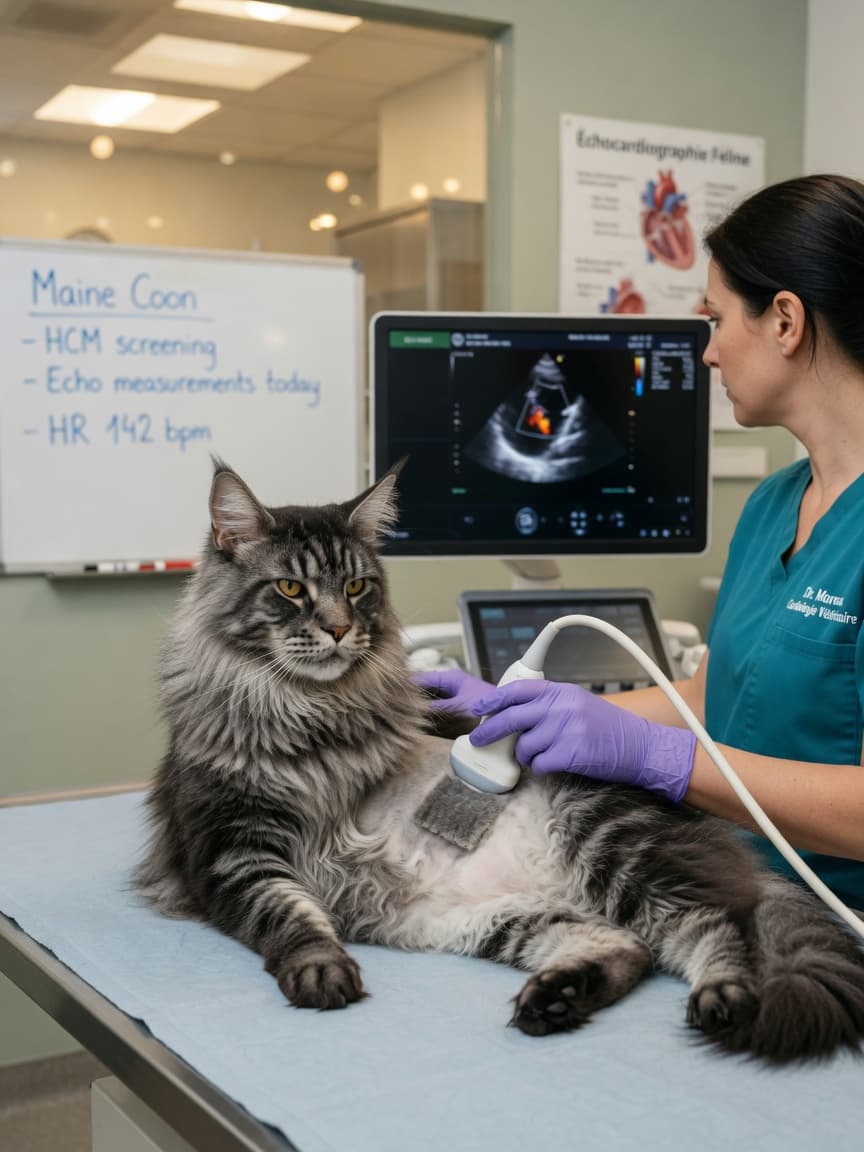
Why Maine Coon Owners Need to Know About HCM
Hypertrophic cardiomyopathy — the abnormal thickening of the heart's muscular walls — is the most common heart disease in cats. In Maine Coons, the risk is far from random. Studies suggest that between 30 and 40 per cent of the breed carry a genetic mutation linked directly to this condition. If you share your home with one of these gentle giants, understanding HCM is not optional; it is essential.
What Is Hypertrophic Cardiomyopathy?
HCM causes the left ventricular wall to thicken progressively, reducing the heart's ability to fill and pump blood efficiently. In severe cases, this leads to congestive heart failure, blood clots, or sudden death. What makes it particularly dangerous is how quietly it develops — many cats show no outward symptoms until the disease is advanced.
How Maine Coons Are Affected
In this breed, a specific mutation in the MYBPC3 gene — a protein involved in heart muscle structure — has been identified as a primary contributor. Cats can carry one copy of the mutation (heterozygous) or two (homozygous). Homozygous cats tend to develop disease earlier and more severely, though even heterozygous individuals carry meaningful risk.
Signs to Watch For
- Laboured or rapid breathing, especially at rest
- Open-mouth breathing or sudden episodes of panting
- Lethargy or reduced tolerance for activity
- Loss of appetite or unexplained weight loss
- Sudden hind limb paralysis (a sign of aortic thromboembolism)
Any of these signs warrant an urgent veterinary visit, not a wait-and-see approach.
Genetic Testing: What It Can and Cannot Tell You
A DNA test for the MYBPC3 Maine Coon mutation is widely available through veterinary laboratories. A cheek swab or blood sample is all that is required. The test identifies whether a cat carries zero, one, or two copies of the known mutation.
This is genuinely useful information — but it comes with a critical caveat. Testing negative does not mean a cat will never develop HCM. The known MYBPC3 variant explains only a proportion of Maine Coon HCM cases. Other, as yet unidentified, genetic factors are almost certainly involved. A negative genetic test is reassuring, not definitive.
For breeders, genetic testing is nonetheless invaluable. Responsible breeding programmes avoid pairing two mutation-positive cats and work systematically to reduce prevalence across generations. If you are acquiring a Maine Coon kitten, asking for the genetic status of both parents is entirely reasonable and speaks well of the breeder if records are readily available.
Echocardiography: The Gold Standard for Diagnosis
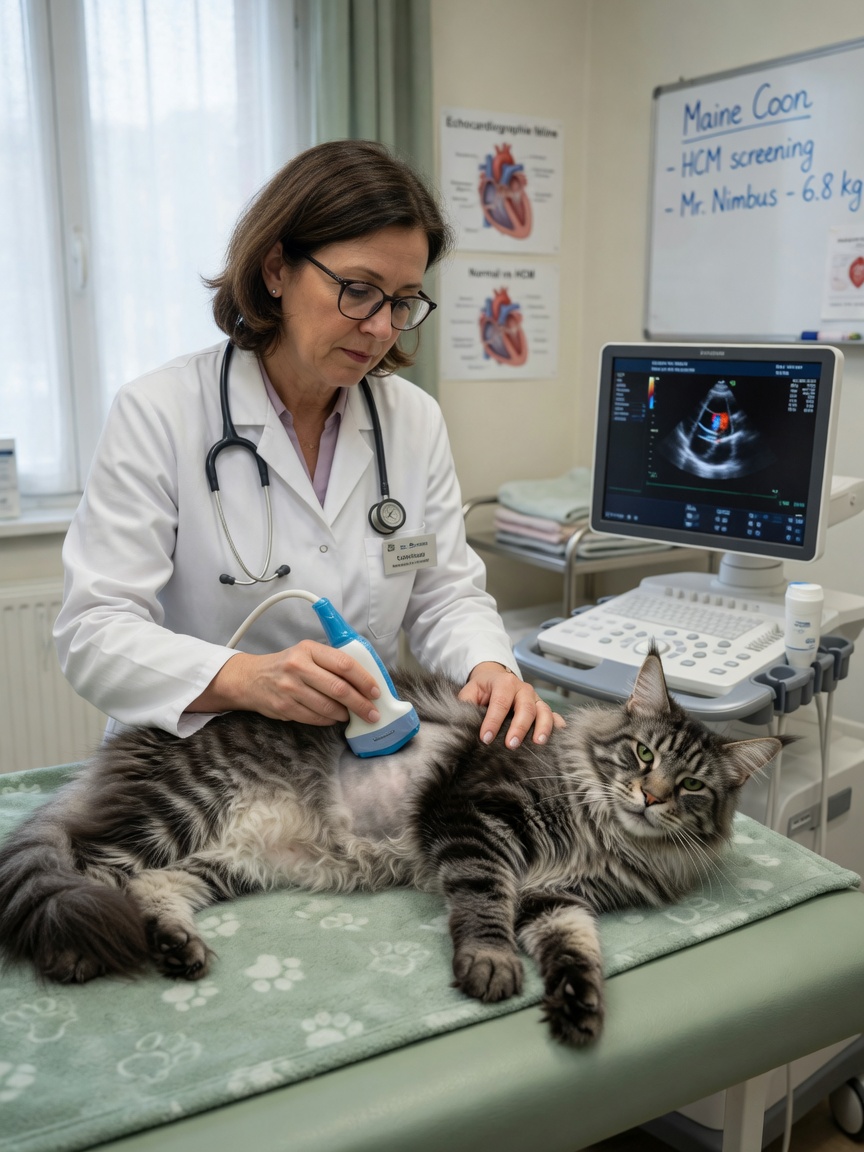
Genetic testing tells you about predisposition. Echocardiography — an ultrasound of the heart — tells you what is actually happening inside the organ right now. A cardiac echo performed by a veterinary cardiologist measures wall thickness, chamber dimensions, and blood flow patterns, allowing HCM to be detected before symptoms appear.
For Maine Coons, annual or biennial echocardiographic screening is widely recommended by feline cardiologists, particularly for cats from lines with known HCM prevalence. The age at which screening should begin is typically around two years, though some specialists recommend starting earlier if the cat is mutation-positive.
Management and Treatment
There is currently no cure for HCM, and no medication has been proven to prevent disease progression in preclinical cases. However, once a cat is diagnosed with symptomatic HCM, several therapeutic options exist:
- Beta-blockers or calcium channel blockers to reduce heart rate and improve filling
- Diuretics to manage fluid accumulation in congestive heart failure
- Anti-platelet medications to reduce the risk of blood clot formation
- Dietary sodium restriction to support fluid balance
Treatment plans are highly individual. Always follow the guidance of a veterinary cardiologist rather than adjusting medications independently.
Practical Steps for Maine Coon Owners
Proactive management genuinely improves outcomes. Here is a straightforward action plan:
- Request genetic test results from your breeder before or at the time of purchase
- Register with a vet who has experience with large breeds and cardiac conditions
- Schedule cardiac screening echos every one to two years from age two onwards
- Learn to count your cat's resting respiratory rate — above 30 breaths per minute at rest is a red flag
- Keep your Maine Coon at a healthy weight; obesity places additional strain on a compromised heart
- Discuss your cat's specific risk profile with your vet, particularly if the cat is mutation-positive
Maine Coons are robust, affectionate, and remarkably long-lived when well cared for. HCM does not change that fundamentally — but it does mean that vigilance, regular screening, and a trusted veterinary relationship are non-negotiable parts of responsible ownership.