
The Ragdoll's Gentle Nature Comes With Specific Health Needs
Ragdolls are famously placid. They go limp when lifted — hence the name — and tend to follow their owners from room to room with a dog-like loyalty that makes them uniquely endearing. They are also a breed with clearly documented health vulnerabilities, particularly relating to the heart, musculoskeletal system, and the particular risks that come with their temperamentally passive approach to life. Understanding these issues helps owners protect animals that, frankly, are not always inclined to protect themselves.
Hypertrophic Cardiomyopathy in Ragdolls
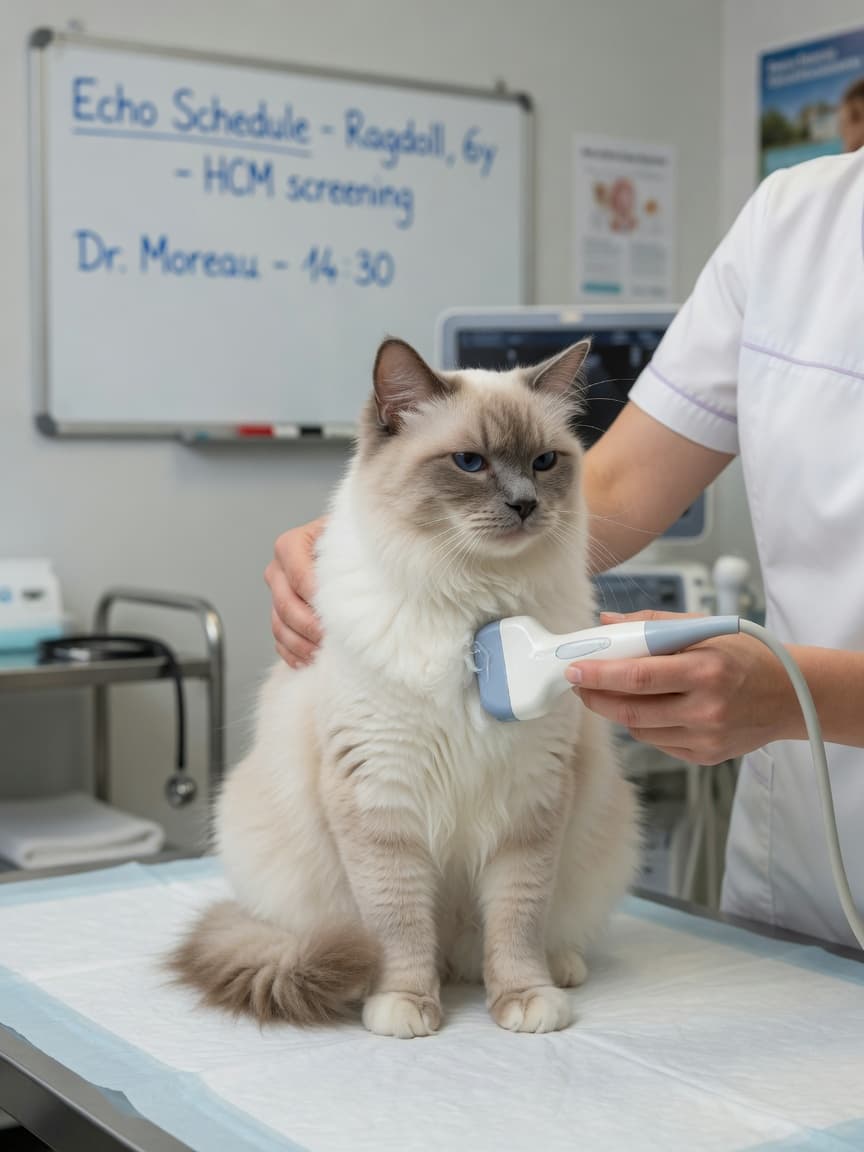
HCM is the most significant hereditary health concern in Ragdolls. As with Maine Coons, a mutation in the MYBPC3 gene has been identified in the Ragdoll breed — though it is a different variant from the Maine Coon mutation, emphasising that genetic tests must be breed-specific to be meaningful.
Genetic Testing in Ragdolls
A validated DNA test for the Ragdoll-specific MYBPC3 mutation exists and is used by conscientious breeders. Cats can be clear (no copies), heterozygous (one copy), or homozygous (two copies). Homozygous cats are at considerably higher risk of early and severe disease. Responsible breeding practice avoids mating two mutation-positive cats, gradually working to reduce prevalence in the population.
As with all breed-specific HCM testing, a negative result is reassuring rather than definitive. Other genetic factors outside the known mutation may still predispose a cat to disease. Regular echocardiographic screening remains the gold standard for ongoing monitoring.
Screening Recommendations
- Begin echocardiographic screening at around two to three years of age
- Repeat every one to two years throughout the cat's life
- Learn to count resting respiratory rate at home — above 30 breaths per minute at rest warrants veterinary contact
- Report any sudden change in activity level, appetite, or breathing pattern promptly
Joint Looseness and Musculoskeletal Considerations
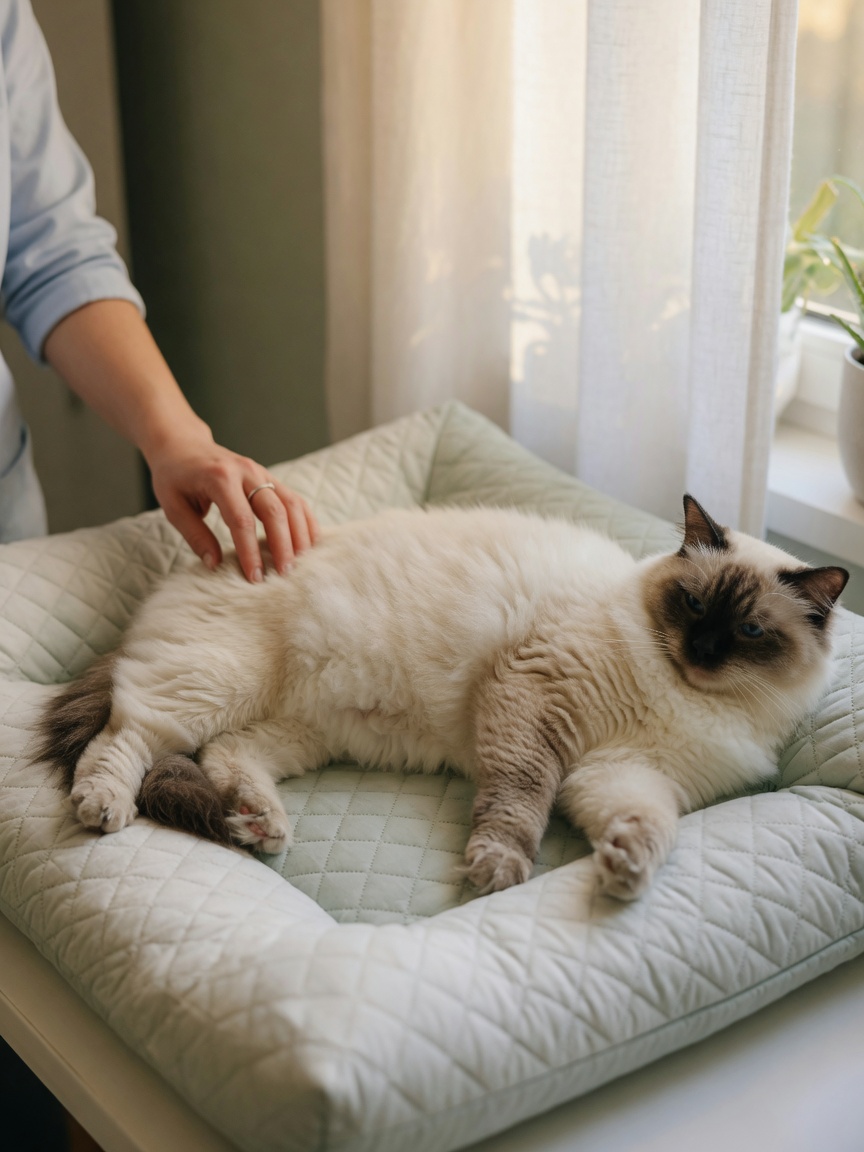
The limp, relaxed quality that gives Ragdolls their name is not merely behavioural — it reflects a genuine muscular and ligamentous looseness that is characteristic of the breed. While this contributes to their tractable temperament, it also has implications for joint health.
Hypermobility and Joint Stress
Ragdolls' relatively loose connective tissue means that their joints may be subject to greater stress during movement, particularly with repeated jumping from height. This can contribute to early degenerative joint changes, particularly in the hips and elbows. The breed's large body size — Ragdolls are among the heaviest domestic cats, with males commonly exceeding eight kilograms — amplifies the load on these joints.
Weight Management as Joint Protection
Maintaining a lean body weight is one of the most impactful things a Ragdoll owner can do for long-term joint health. Excess weight in a large-framed cat with inherent joint looseness is a combination that accelerates degenerative change. Measured feeding rather than free feeding, combined with regular weight checks, is strongly advisable. Ragdolls tend to be quiet, unhurried eaters who can nonetheless gain weight steadily if portions are unrestricted.
Watch for early signs of joint discomfort: reluctance to jump to previously favoured spots, stiffness after rest, or a subtle change in gait. A veterinary assessment and, if needed, joint supplementation or pain management can substantially improve quality of life.
The Indoor Lifestyle: Managing the Risks
Ragdolls are almost universally kept as indoor cats, and for good reason. Their trusting, non-defensive temperament makes them dangerously ill-equipped for outdoor life — they are unlikely to flee appropriately from threats, and their gentle disposition can make them targets for aggression from other animals.
Environmental Enrichment for a Calm Breed
Indoor life protects Ragdolls from external hazards but introduces its own risks if the environment is insufficiently stimulating. These cats are not as demanding as Bengals or Siamese, but they still need engagement. A sedentary, over-fed indoor Ragdoll is a candidate for obesity, boredom-related over-eating, and the compounding joint problems that follow.
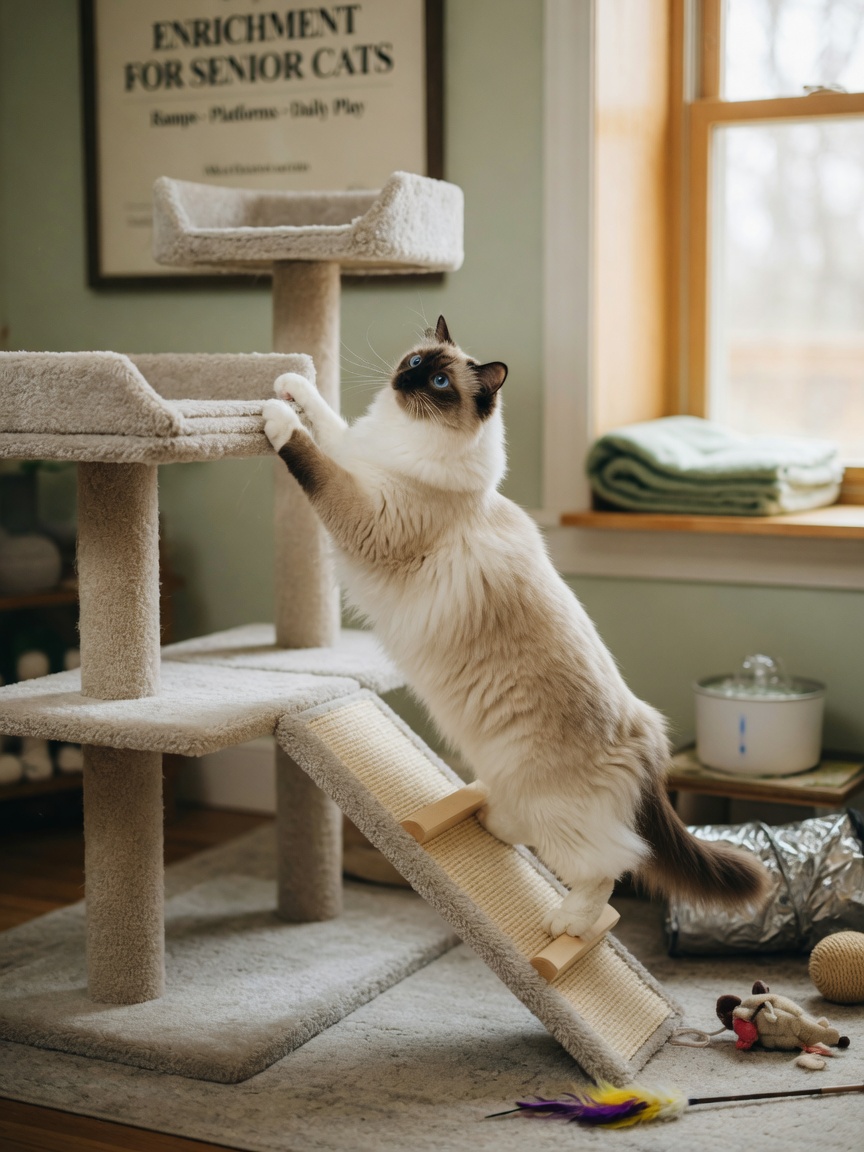
- Provide climbing structures with wide, stable platforms suited to a large-bodied cat
- Use interactive play sessions to encourage movement without high-impact jumping
- Consider ramps or steps to elevated resting areas to reduce joint strain
- Rotate toys periodically to maintain novelty and engagement
- Window perches with outdoor views provide low-effort stimulation throughout the day
Dental and Urinary Health
Ragdolls show some predisposition to dental disease and, anecdotally, to lower urinary tract issues — though evidence for the latter is less firmly established than for their cardiac risks. Ensuring adequate water intake through wet food or a cat water fountain is straightforward practical advice that benefits urinary health in any breed. Dental hygiene, ideally through regular brushing or veterinary dental cleaning, should not be overlooked during annual health assessments.
Summary: A Practical Health Plan for Ragdoll Owners
- Request genetic test results for the Ragdoll MYBPC3 mutation from your breeder
- Schedule regular echocardiographic screening from age two or three, regardless of genetic status
- Manage weight carefully — weigh your cat monthly and adjust portions accordingly
- Provide ramps or steps to reduce repetitive high-impact jumping on large joints
- Monitor for subtle signs of joint discomfort as the cat ages and discuss management options with your vet early
- Enrich the indoor environment actively — a comfortable cat is not necessarily a healthy one if stimulation is absent
- Attend annual veterinary health checks and do not delay seeking advice for breathing changes or reduced activity
Ragdolls thrive when their calm nature is matched with genuinely attentive care. They are not high-maintenance in temperament, but their health needs are specific and, in the case of cardiac disease, time-sensitive. A proactive approach to screening and lifestyle management gives these beautiful cats the long, comfortable lives they are entirely capable of living.