
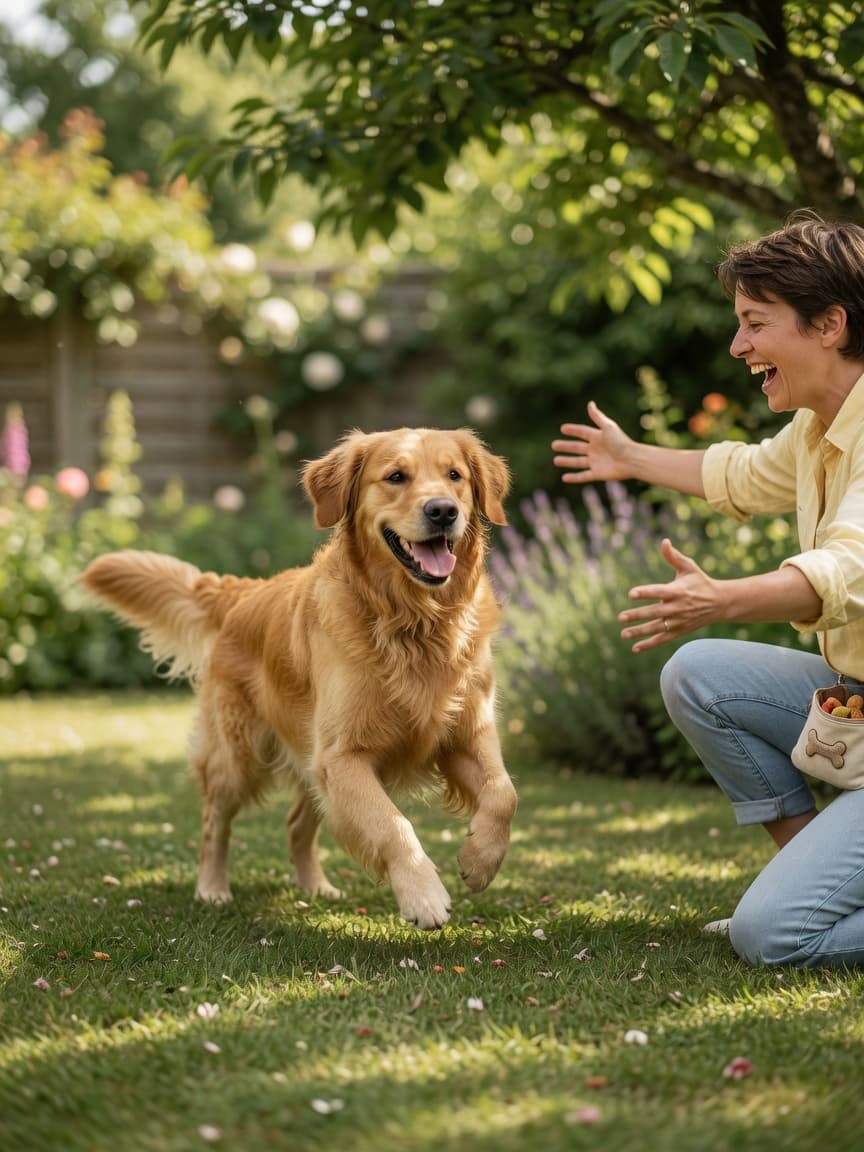
Why Recall Is the Most Important Cue You Will Ever Teach
Of all the behaviours a dog can learn, recall — coming back reliably when called — is arguably the most important. A solid recall can prevent a dog from running into traffic, approaching an aggressive dog, or chasing wildlife into danger. Yet recall is also one of the most commonly undertrained cues, often because owners underestimate how much work a truly reliable recall requires.
The Association of Pet Behaviour Counsellors (APBC) and the International Association of Animal Behaviour Consultants (IAABC) consistently highlight recall as a foundational life skill for all dogs. Both organisations advocate for positive reinforcement-based training, noting that punishment has no place in recall work — for good reason, as we will explain below.
The Golden Rule: Never Punish a Returning Dog
This point cannot be overstated. If your dog takes ten minutes to come back and you scold them when they finally return, you have just punished the act of returning — not the act of running off. From your dog's perspective, coming to you led to something unpleasant. Next time, they will think twice about coming back at all.
No matter how long your dog took, no matter how frustrated you feel, when your dog reaches you they must always receive praise, warmth, and a reward. Even if your recall has "failed" in that moment, celebrating the return protects the behaviour for the future.
Building the Foundation: Recall in Low-Distraction Environments
Before you can expect your dog to recall in a busy park, you need to build a history of success in calm, controlled settings. Begin indoors or in a quiet garden.
- Use a unique recall word — "come," "here," or a whistle are all popular choices. Keep the word consistent; do not use it casually in conversation.
- Say the cue once in a bright, happy tone and take a step back to encourage your dog to move towards you.
- When your dog reaches you, reward generously — not just a small treat but a real celebration. Use their highest-value treats for recall practice.
- Practise five to ten repetitions per session, always ending on success.
- Avoid repeating the cue multiple times — saying "come, come, come, COME" teaches your dog that the first few repetitions are optional.
The Rocket Recall Method
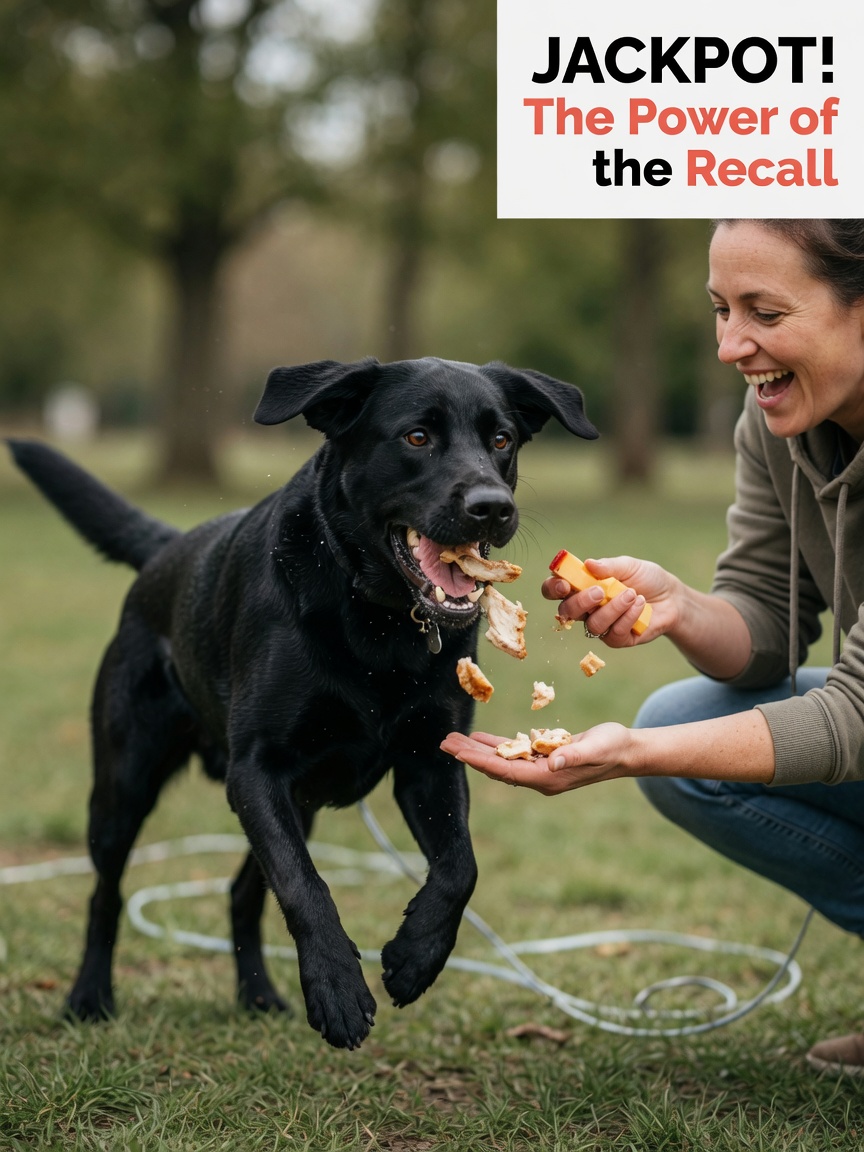
The rocket recall is a technique designed to build an almost automatic, lightning-fast response to the recall cue. It relies on a high rate of reinforcement and a specific type of reward — the "jackpot" — to create a conditioned emotional response. When your dog hears the recall word, they feel an immediate pull of excitement and optimism because the history of rewards associated with that word is so strong.
- Choose a handful of your dog's absolute favourite treats — cooked chicken, cheese, or liver are popular options.
- Call your dog in your happiest voice and run backwards as they approach. Running away triggers a dog's chase instinct and speeds up the recall.
- When your dog reaches you, immediately deliver multiple treats one after another, saying "good dog, yes, brilliant" in an enthusiastic tone — this is the jackpot.
- Crouch down so you are less intimidating and make contact with your dog before clipping their lead, not the other way around.
- Practise the rocket recall daily in controlled environments before using it in the real world.
Long-Line Training: The Bridge Between Garden and Real World
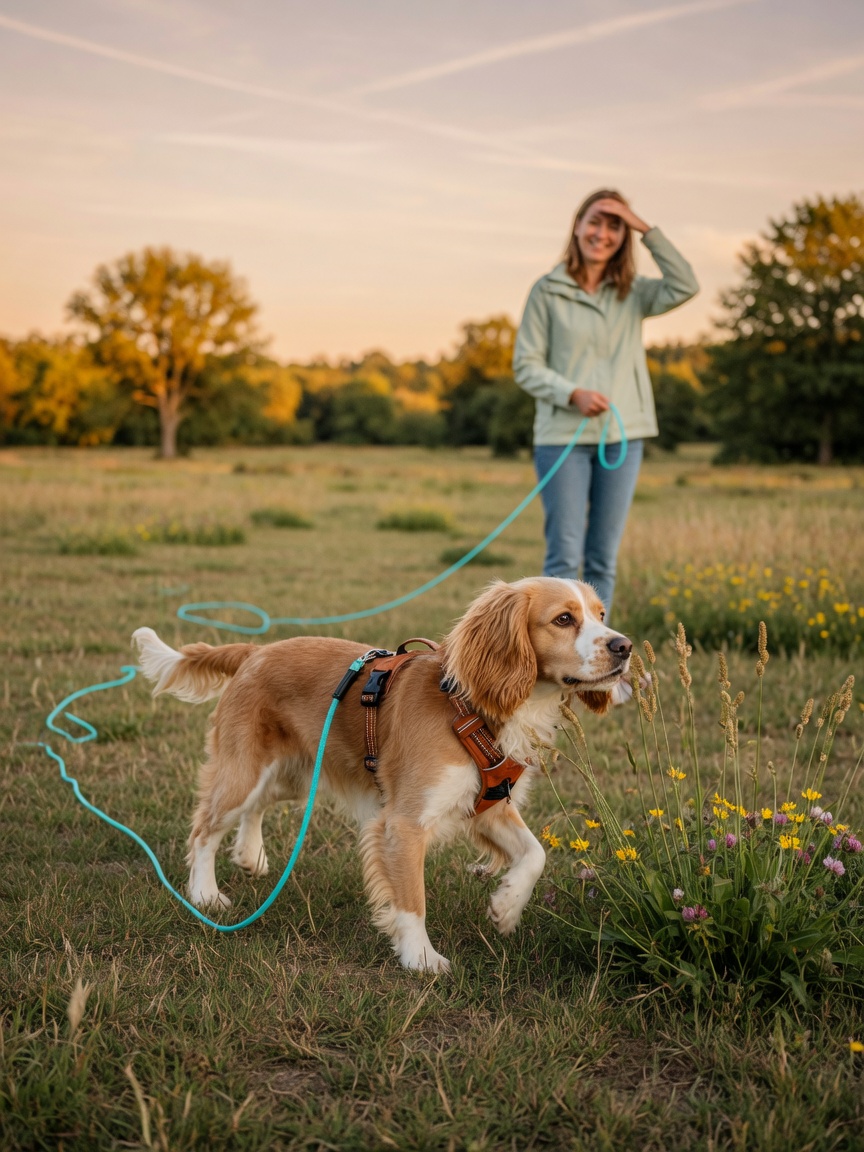
A long line is a lightweight training lead, typically between five and fifteen metres in length, that allows your dog to explore freely while giving you a safety net during recall training. It is an essential piece of equipment for teaching recall in open spaces before your dog has a reliable off-lead response.
Long lines are not a substitute for active training — they are a management tool that prevents your dog from rehearsing the wrong behaviour (running away and ignoring you) while you build up their recall skills. Zooplus stocks a variety of long lines and training leads in different lengths and materials, as well as treat pouches that make rewarding a returning dog quick and easy in the field.
- Attach the long line to a harness rather than a collar to avoid neck strain if your dog hits the end of the line.
- Allow your dog to move freely and practise calling them back at unpredictable intervals, always rewarding generously.
- Gradually increase the distance before calling your dog back as their reliability improves.
- Never use the long line to drag your dog towards you — this creates negative associations with the recall cue.
Proofing Recall Around Distractions
A recall that works in the garden but fails at the park is not a reliable recall. Proofing means systematically exposing your dog to increasing levels of distraction while maintaining a high rate of success. The IAABC recommends thinking of distractions on a scale from one to ten and working up gradually.
- Start with mild distractions: another person walking nearby, a toy on the ground, or a sniff-worthy area.
- Increase the distance between your dog and the distraction as their reliability grows.
- Never call your dog away from something extremely exciting — squirrels, other dogs at play — until their recall is highly reliable. Set up controlled situations instead.
- Practise recall before your dog becomes too engrossed in something, not after — this is called "catching" your dog before arousal levels rise.
- Reward variably once the behaviour is established — unpredictable rewards actually strengthen behaviour over time.
Whistle Recall
A whistle recall works on exactly the same principles as a verbal recall but has some practical advantages: the sound carries further, it is always consistent (unlike your tone of voice, which may sound anxious or irritated), and it is less likely to be accidentally "poisoned" by casual everyday use.
To condition a whistle recall, simply pair the whistle sound with high-value rewards in exactly the same way you would charge a verbal cue. Begin indoors, build up to the garden, then to low-distraction outdoor spaces, and so on. A gundog-style whistle with a consistent pip pattern — one long blast, for example — is widely used by trainers and hunting dog handlers alike.
What to Do If Your Recall Is Breaking Down
If your dog is ignoring your recall cue, the most common reasons are: insufficient reinforcement history, the distractions are too high for the dog's current training level, or the cue has been accidentally poisoned (associated with something unpleasant, such as being scolded or immediately leashed). In these cases, go back to basics — retrain the recall from scratch in a low-distraction environment, and if needed, use a completely new cue word so you are starting with a clean slate.
If recall difficulties are related to anxiety, high arousal, or reactivity, working with a qualified behaviourist accredited by the APBC or IAABC is strongly recommended. These professionals can assess the underlying cause and build a tailored training plan for your individual dog.
Equipment Checklist for Recall Training
- High-value treats: small, soft, and smelly work best
- A treat pouch for quick, easy rewards in the field
- A long training line (five to fifteen metres) fitted to a harness
- A consistent recall cue — verbal or whistle
- Patience and a positive attitude
Zooplus is a reliable source for all of the above, offering a wide range of treat pouches, training leads, and dog treats suitable for recall work. Investing in the right equipment from the start makes training sessions smoother and more enjoyable for both you and your dog.