
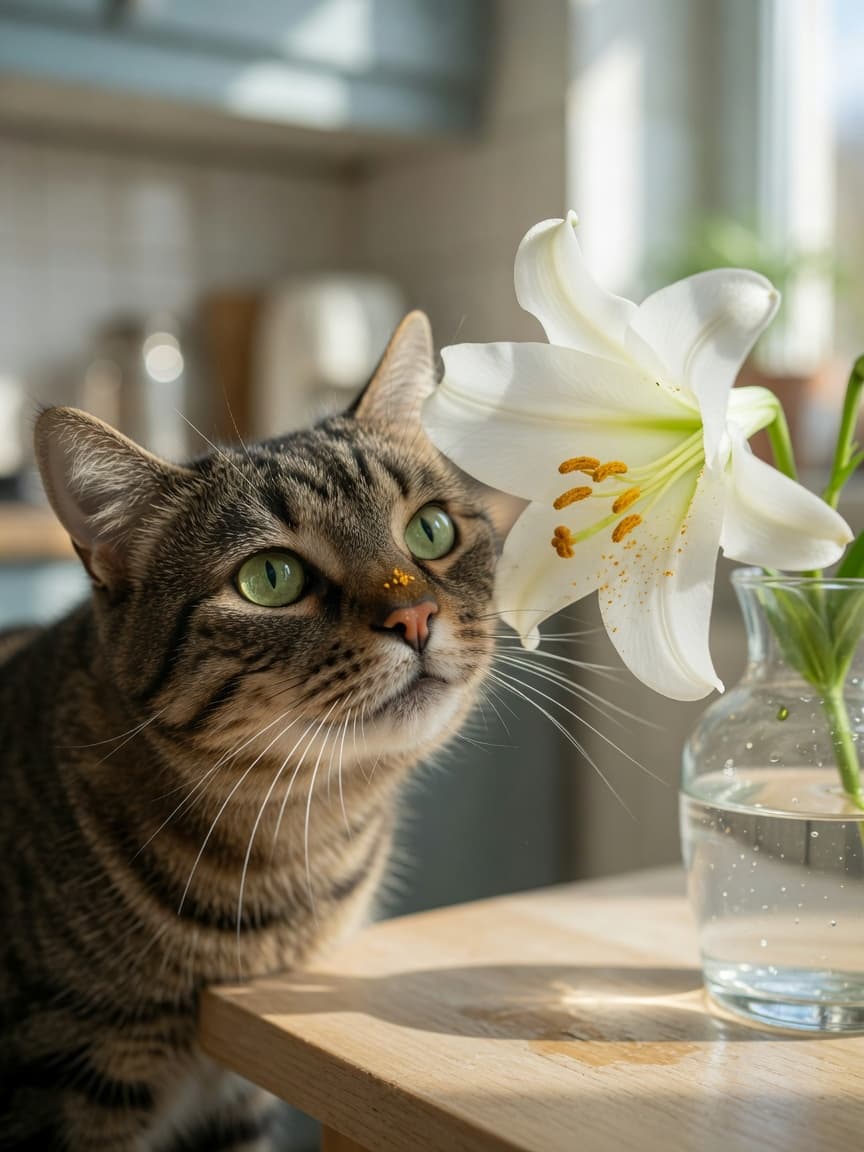
A Single Flower in a Vase Has Killed Cats With No Prior Warning
Lilies are among the most common causes of acute kidney failure in cats, and the situation is uniquely unforgiving: a cat that grooms pollen from its fur, drinks water from a vase holding cut lilies, or chews a single leaf may develop fatal kidney failure within 72 hours. What makes this toxicity particularly devastating is that early symptoms are mild and easy to dismiss — by the time obvious illness sets in, irreversible kidney damage may already have occurred.
Not All Lilies Carry the Same Risk
The term "lily" is applied to a wide range of plants, and the level of risk varies considerably by species. It is essential to distinguish between the genuinely nephrotoxic lilies — those that cause kidney failure — and other species that cause different, though still serious, toxic effects.
Highly Nephrotoxic Species (True Kidney Killers)
- Easter lily (Lilium longiflorum)
- Tiger lily (Lilium lancifolium)
- Asiatic lily (Lilium asiatic hybrids)
- Oriental lily (Lilium oriental hybrids)
- Day lily (Hemerocallis species) — technically not a true lily but equally nephrotoxic
- Rubrum lily (Lilium speciosum)
These species contain a water-soluble nephrotoxin that has not yet been fully characterised chemically, but its mechanism is understood: it causes direct, irreversible damage to the tubular cells of the kidneys, leading to acute kidney injury (AKI).
Other Toxic Plants Called Lilies
Peace lilies (Spathiphyllum) and calla lilies (Zantedeschia) contain insoluble calcium oxalate crystals that cause immediate burning, drooling, and oral pain, but are not typically associated with kidney failure. Lily of the valley (Convallaria majalis) contains cardiac glycosides and can cause dangerous heart rhythm disturbances. These plants are not safe either, but require different treatment approaches.
Why Every Part of the True Lily Is Dangerous

The nephrotoxin present in Lilium and Hemerocallis species is distributed throughout the entire plant. This includes the petals, leaves, stems, stamens, pollen, and roots. Even the water in a vase containing cut lilies has been reported to cause fatal poisoning. There is no safe part of the plant for a cat to ingest.
Pollen deserves particular mention. Cats with lily pollen on their coat will inevitably ingest it during grooming. A cat that simply walked past a lily bouquet and brushed against the stamens could absorb a lethal dose without ever directly contacting the plant with its mouth.
The Progression of Lily Toxicity
Phase One: 0–2 Hours After Ingestion
Drooling, vomiting, lethargy, and loss of appetite. These symptoms are non-specific and commonly lead owners to assume their cat has a mild stomach upset. This is the window during which emergency decontamination is most effective — but also the window most often missed.
Phase Two: 6–24 Hours
A deceptive period during which gastrointestinal symptoms may appear to resolve. The cat may seem to improve. This apparent recovery is misleading — kidney damage is progressing silently during this phase.
Phase Three: 24–72 Hours
Acute kidney failure becomes clinically apparent. Signs include increased or decreased urination, profound lethargy, loss of appetite, vomiting returning, dehydration, and incoordination. Without aggressive treatment, many cats will become anuric (produce no urine at all) and die within this window.
Emergency Treatment and Outcomes
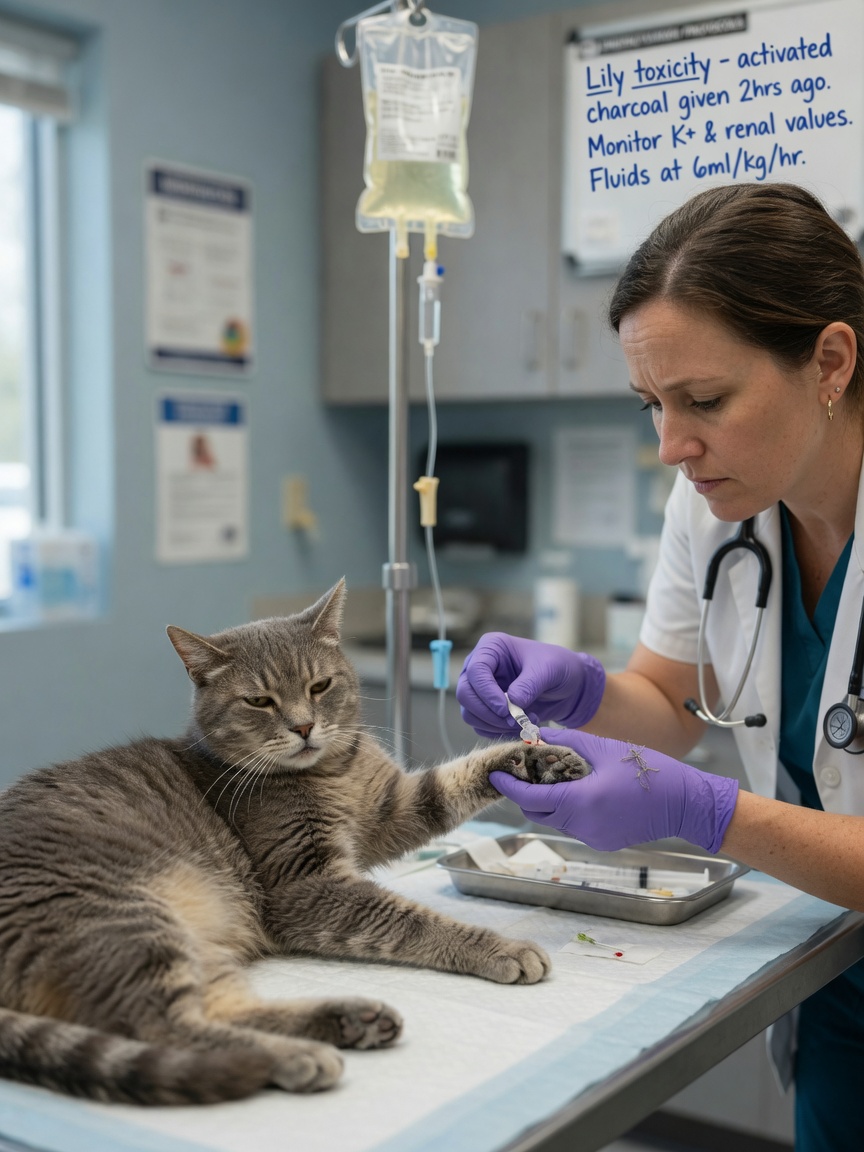
If lily ingestion is witnessed or suspected, contact a vet immediately — do not wait for symptoms. Within the first few hours, the priority is decontamination: inducing vomiting and administering activated charcoal to bind remaining toxin in the digestive tract. Following this, aggressive intravenous fluid therapy over a minimum of 48 hours is used to maintain kidney perfusion and attempt to flush the toxin through before permanent tubular damage occurs.
Blood and urine tests are repeated to monitor kidney function throughout treatment. Cats treated within two to three hours of ingestion and given sustained fluid therapy have significantly better outcomes. Cats not treated until kidney failure is established face a much grimmer prognosis, and some degree of permanent kidney impairment is likely even in survivors.
There is currently no antidote for lily nephrotoxicity. Time and the quality of supportive care are the primary determinants of outcome. Always consult a vet urgently — this is not a situation for a "wait and see" approach.
Preventing Lily Exposure in the Home
- Do not bring true lilies (Lilium and Hemerocallis species) into any home with cats — there is no safe placement or arrangement
- When receiving or ordering flowers, specifically request lily-free bouquets and inform florists of the reason
- Inform houseguests and gift-givers about the danger; many are unaware that lilies and cut flowers pose this risk
- If you are unsure whether a plant is a true lily, treat it as dangerous until confirmed otherwise by a vet or certified botanist
- Keep the Animal Poison Line number (01202 509000) saved and call immediately if you suspect any exposure