

The Only Venomous Snake in the UK Can Still Send Your Dog to Hospital
Every year, several hundred dogs in the UK are bitten by adders (Vipera berus), the country's sole native venomous snake. While fatalities are relatively uncommon, around 14% of untreated bites can prove fatal, and even non-fatal cases frequently require intensive veterinary care. If you walk your dog in heathland, woodland, or coastal dunes — particularly between March and October — this is a risk you need to take seriously.
Where and When Adder Bites Happen
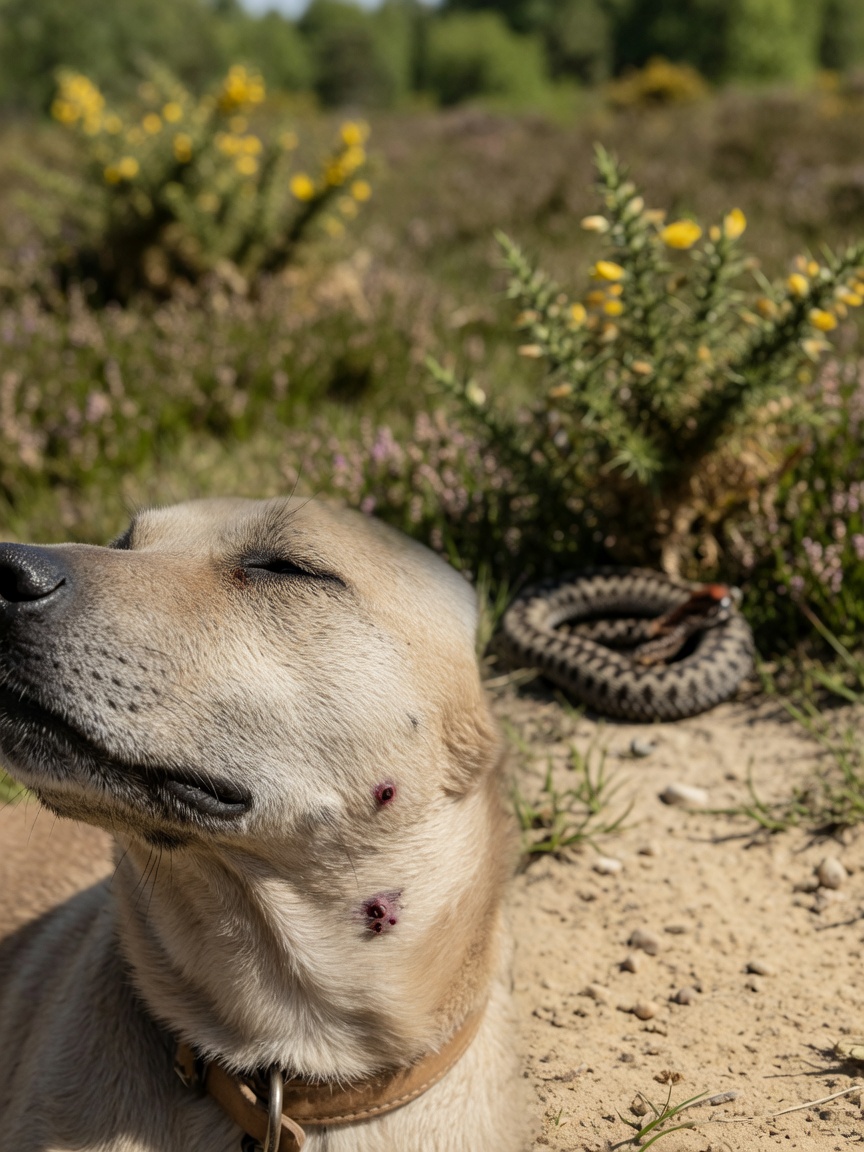
Adders are most active in spring and summer, emerging from hibernation as temperatures rise. They are shy animals and will bite only when threatened or cornered — which is exactly what happens when an inquisitive dog blunders into the undergrowth and gets too close. Bites occur most often on the face, neck, or forelimbs, as dogs are typically nosing around when the encounter happens.
High-risk areas include the New Forest, Dartmoor, the Scottish Highlands, Wales, and Norfolk heathlands. Urban parks near these habitats are not entirely safe either.
What Adder Venom Actually Does
Adder venom is a complex mixture of enzymes and cytotoxic proteins that primarily causes local tissue destruction and systemic inflammation. Unlike purely neurotoxic snake venoms found elsewhere in the world, adder venom triggers a pronounced inflammatory cascade, disrupts red blood cell membranes, and can interfere with blood clotting.
Localised Effects
Within minutes to a few hours, the bite site — often marked by two small puncture wounds — becomes swollen, red, and painful. The swelling can spread dramatically; a bite to the muzzle may cause the entire face to puff to an alarming degree. This is not merely cosmetic: swelling around the throat can compromise the airway.
Systemic Effects
As venom is absorbed into the bloodstream, dogs may develop lethargy, vomiting, diarrhoea, pale or white gums, rapid heart rate, low blood pressure, and in severe cases, collapse. Coagulopathy (failure of the blood to clot normally) is a serious complication seen in some cases.
Recognising Symptoms: A Timeline
- 0–30 minutes: sudden yelping, the dog pulls away from a patch of ground, visible puncture wounds or localised swelling begins
- 30 minutes–2 hours: rapid swelling at the bite site, restlessness, excessive salivation, vomiting
- 2–6 hours: progressive lethargy, pale gums, signs of shock, swelling spreads
- 6–24 hours: without treatment, risk of cardiovascular collapse, severe tissue necrosis, bleeding disorders
Symptom severity varies considerably. A small dog bitten on the trunk will generally fare worse than a large dog bitten on a paw. The volume of venom injected — which is not always the maximum possible — also determines outcome.
Emergency Response: What to Do Right Now

Stay calm and act fast. The single most important thing you can do is get your dog to a veterinary practice immediately — call ahead so they can prepare.
Do These Things
- Carry your dog rather than letting it walk — exercise speeds venom absorption
- Keep the dog as still and calm as possible during transport
- Note the time of the bite and describe the snake if you saw it (though identification is not essential for treatment)
- Remove any collars or harnesses near the bite site if swelling threatens to make them constrictive
Do Not Do These Things
- Do not attempt to suck out the venom — this does not work and wastes time
- Do not apply a tourniquet
- Do not cut the wound open
- Do not administer antihistamines or human pain relief without veterinary guidance
Veterinary Treatment Options
At the clinic, treatment is based on severity. Mild cases may receive intravenous fluids, pain relief, and monitoring. More serious presentations are treated with Zagreb antivenom, the only licensed antivenom for adder bites in the UK. It must be given intravenously in a clinical setting and is most effective when administered early. Antihistamines are sometimes given alongside antivenom to reduce the risk of allergic reaction to it.
Hospitalisation for 24–48 hours is common. Severely affected dogs may require blood pressure support, oxygen therapy, or treatment for coagulopathy. Wound care for tissue necrosis may continue for weeks after the acute phase.
Recovery and Prevention
Most dogs who receive prompt veterinary treatment recover fully, though this may take one to three weeks. Permanent tissue damage at the bite site can occasionally occur.
Prevention is straightforward in principle: keep your dog on a lead in known adder habitats during warmer months, especially in the morning when snakes bask. Training a solid recall also helps, as a dog that returns promptly is less likely to have an unsupervised encounter with wildlife.
Key Actions to Remember
- Know your local adder habitats and walk carefully from March to October
- If you suspect a bite, carry your dog to the car and phone the vet immediately
- Do not attempt home treatment — this is a veterinary emergency
- Ask your vet about antivenom availability at their practice, particularly if you walk in high-risk areas regularly
- Always consult a vet for any wildlife-related injury — even minor-looking bites can escalate quickly