
Lymphoma: The Most Common Feline Cancer
Lymphoma — cancer of the lymphocytes, a type of white blood cell — is the single most commonly diagnosed malignancy in cats. It can arise almost anywhere in the body where lymphoid tissue is present, including the gastrointestinal tract, mediastinum, kidneys, nasal passages, and nervous system. Of these, gastrointestinal lymphoma is the most frequently encountered form in clinical practice, and it is the focus of much of the discussion here.
What makes feline lymphoma particularly important to understand is that it is not one disease — it encompasses a spectrum of conditions with vastly different biological behaviours, treatment approaches, and prognoses. Treating all feline lymphoma as a single entity is a clinical error with serious consequences for the patient. The most critical distinction is between low-grade small cell lymphoma and high-grade large cell lymphoma.
Low-Grade Small Cell Lymphoma
Low-grade small cell lymphoma (also called lymphocytic or indolent lymphoma) is the most common form of GI lymphoma in cats and predominantly affects older cats, typically those over ten years of age. It most commonly involves the small intestine, particularly the jejunum and ileum, and less frequently the stomach or large bowel.
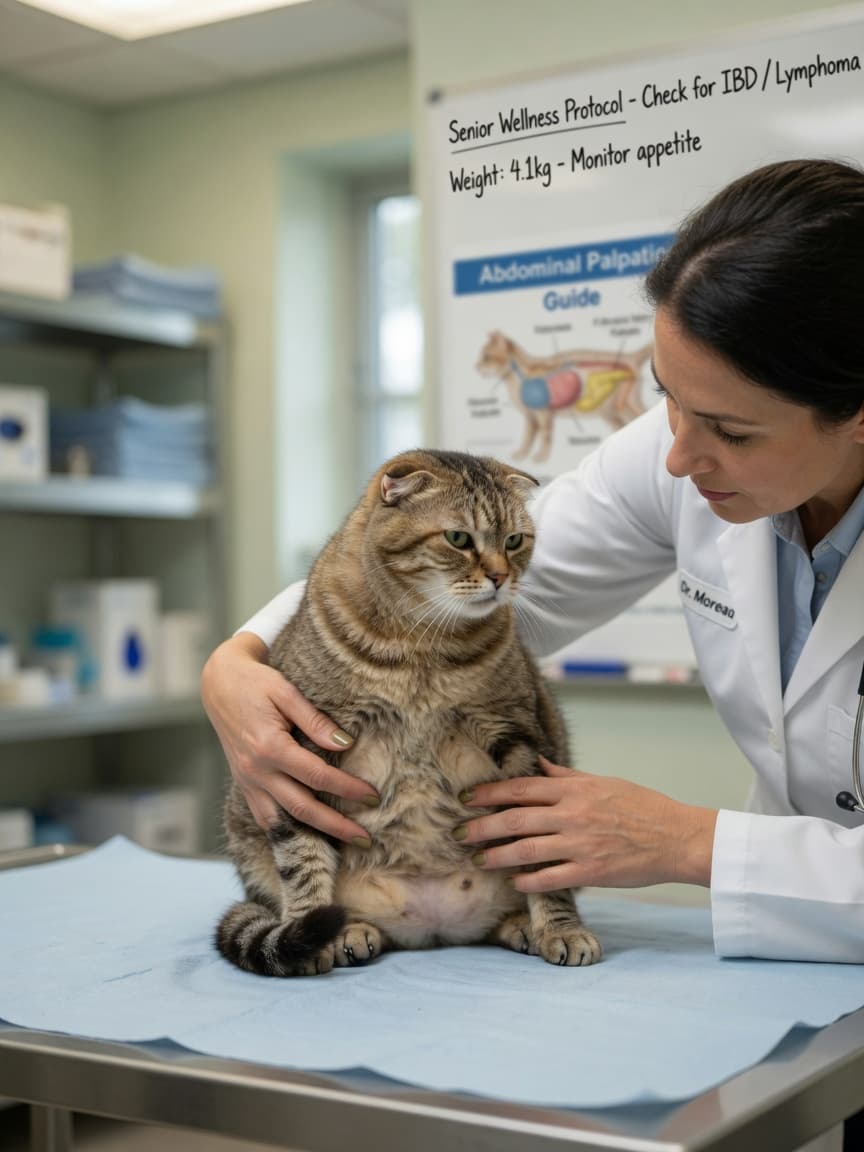
This form of the disease is characterised by a slow, indolent course. Affected cats typically present with a history of gradual weight loss, intermittent vomiting, changes in appetite, and sometimes diarrhoea — often over months or even years. On physical examination, the intestines may feel thickened or rope-like, and the vet may be able to feel enlarged mesenteric lymph nodes in the abdomen.
The prognosis for low-grade small cell lymphoma is genuinely encouraging. With appropriate treatment, median survival times of one to two years are commonly reported, and some cats live considerably longer — there are documented cases of cats surviving three or more years with excellent quality of life. This is one of the more rewarding conditions to manage in feline oncology.
High-Grade Large Cell Lymphoma
High-grade large cell lymphoma (also called lymphoblastic lymphoma) is an aggressive, rapidly proliferating form of the disease. Unlike the indolent variant, it progresses quickly, and cats typically present with a shorter history of more severe illness — pronounced weight loss, anorexia, vomiting, and lethargy that has developed over weeks rather than months.
The prognosis for high-grade GI lymphoma is unfortunately poor. Even with aggressive chemotherapy, median survival times are measured in weeks to a few months. Complete remission is achieved in a smaller proportion of patients, and even those who do respond well tend to relapse relatively quickly. This stark contrast with the low-grade form underscores why accurate diagnosis and classification are so important.
Diagnosis: Ultrasound, Cytology, and Biopsy
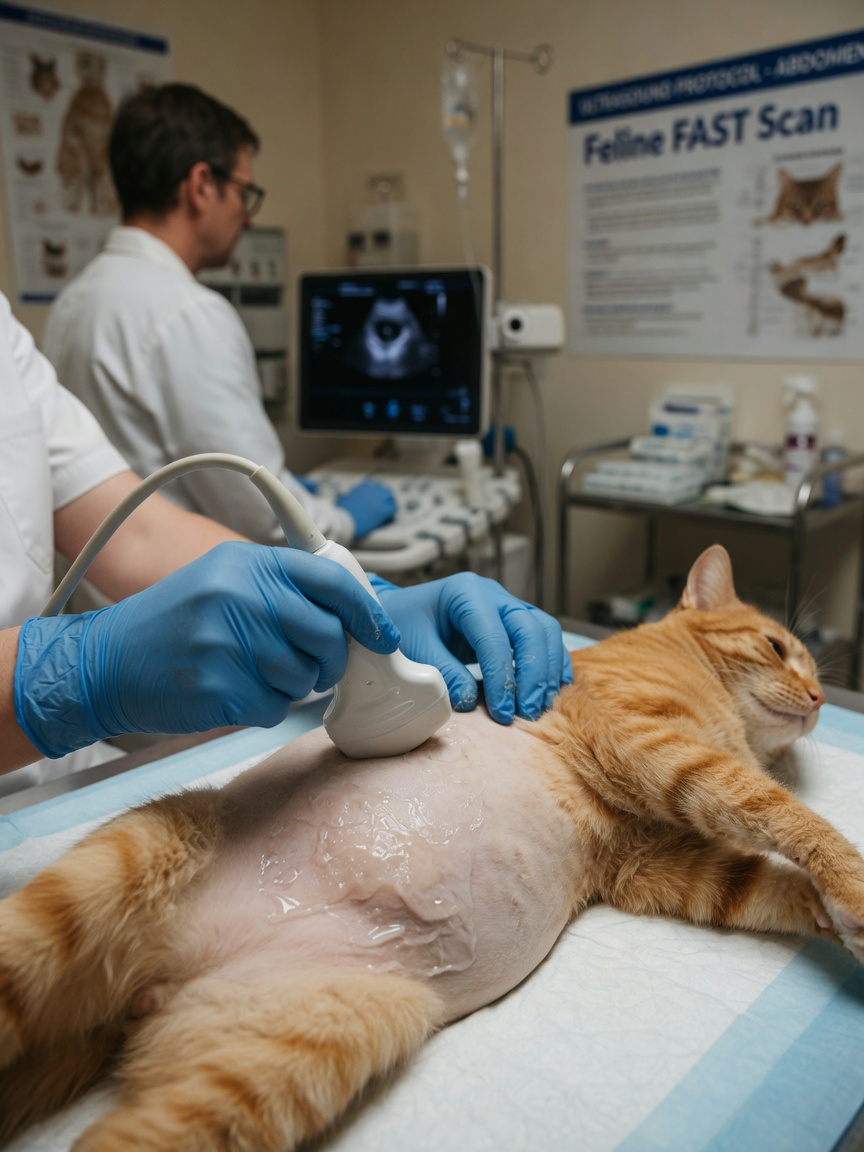
Abdominal ultrasound is the primary imaging tool for investigating suspected GI lymphoma. It allows the vet or specialist to assess intestinal wall thickness and layering, identify which layers are most affected, and evaluate the mesenteric lymph nodes, liver, and spleen for involvement. Diffuse, symmetrical thickening of the intestinal wall with loss of normal layering is a common finding.
However, ultrasound appearances alone cannot definitively distinguish between lymphoma and other causes of intestinal thickening, including inflammatory bowel disease (IBD) and alimentary mast cell tumour. Tissue sampling is essential for a definitive diagnosis.
Fine needle aspiration cytology of thickened intestinal segments or enlarged lymph nodes, guided by ultrasound, can provide rapid results and is minimally invasive. It is particularly useful when a discrete, accessible mass is present. However, cytology has limitations — it cannot always reliably distinguish between low-grade lymphoma and IBD, as both conditions may yield a predominance of small lymphocytes.
Full-thickness intestinal biopsy, obtained either via endoscopy or exploratory laparotomy, provides the gold standard diagnosis. Histopathology allows assessment of tissue architecture and cell size, and immunohistochemistry (IHC) — staining tissue sections with markers for B and T cell types — helps classify the tumour further. PARR (PCR for antigen receptor rearrangements) testing can provide additional information in diagnostically challenging cases.
Differentiating Low-Grade Lymphoma from IBD
One of the most challenging aspects of feline GI lymphoma is distinguishing low-grade small cell lymphoma from severe IBD, particularly lymphocytic-plasmacytic enteritis. The two conditions can look remarkably similar on ultrasound and even on cytology. Histopathology with IHC is the most reliable way to make this distinction, though even biopsy results can occasionally be equivocal.
Some cats are treated empirically for IBD with prednisolone and dietary modification before lymphoma is confirmed. A partial or good response to steroids does not necessarily rule out lymphoma, as low-grade lymphoma can also respond to steroid therapy. When in doubt, pursuing tissue biopsy is strongly advisable, as the long-term treatment plans differ.
Treatment: Low-Grade Lymphoma
The standard of care for low-grade small cell GI lymphoma is the chlorambucil and prednisolone protocol. Chlorambucil is an oral alkylating chemotherapy agent given at home, typically every two weeks in a standard protocol, though daily dosing schedules are also used. Prednisolone is given daily. Both drugs are administered orally, meaning hospitalisation is not required and quality of life is well maintained.
Response rates are high — the majority of cats show clinical improvement within the first few weeks of treatment. Monitoring involves regular recheck examinations and periodic blood tests to assess bone marrow function. Side effects are generally mild, though chlorambucil can occasionally cause bone marrow suppression, making monitoring important.
Treatment: High-Grade Lymphoma
High-grade large cell lymphoma requires more aggressive multi-agent chemotherapy protocols. The most commonly used are COP (cyclophosphamide, vincristine, and prednisolone) and CHOP (which adds doxorubicin to the COP backbone). These protocols involve intravenous drug administration at a specialist oncology centre on a weekly or bi-weekly schedule, at least initially.
Response rates vary, and complete remission is achieved in some patients, but the duration of remission is often limited. Some owners elect palliative management with prednisolone alone to maintain quality of life without pursuing aggressive treatment, and this is a completely valid choice that can provide several weeks of reasonable comfort.
- Low-grade lymphoma: oral chlorambucil and prednisolone, managed at home, with good survival expectations.
- High-grade lymphoma: COP or CHOP protocols at specialist centres, with guarded prognosis.
- All cats with GI lymphoma should be monitored for concurrent conditions such as hyperthyroidism and CKD, which are common in the same age group.
- Regular weight monitoring at home is one of the most useful tools for tracking disease activity.
A diagnosis of feline lymphoma is understandably distressing, but for many cats — particularly those with the low-grade form — it marks the beginning of a treatment journey that can provide years of comfortable, good-quality life.