
Indoor Cat Enrichment: Evidence-Based Ways to Prevent Boredom and Frustration
The domestic cat is descended from a solitary hunter that would cover significant territory daily, engage in multiple prey sequences, and navigate a complex physical and sensory landscape. The average indoor home — however comfortable and safe — represents a dramatic reduction in environmental complexity. Without deliberate enrichment, many indoor cats develop frustration, anxiety, and stress-related physical illness. The good news is that the research on what actually helps is both clear and accessible.
Understanding What Cats Actually Need
Enrichment is often framed as entertainment, but that undersells its importance. For cats, environmental stimulation is a genuine biological need tied to neurological and emotional health. Studies examining cats in shelter environments — controlled settings that allow for direct measurement of stress hormones and behaviour — consistently show that environmental enrichment reduces cortisol levels, reduces repetitive stereotypic behaviours, and improves social behaviour and health outcomes.
The key categories of need for indoor cats are: predatory expression, physical exercise, sensory engagement, cognitive challenge, and social interaction at the cat's chosen pace and intensity. A robust enrichment programme addresses all five rather than focusing on only one or two.
Predatory Play: The Foundation
Play in cats is not merely recreational — it is the expression of a hardwired predatory sequence that includes stalking, chasing, pouncing, catching, and biting. Suppressing this drive entirely, as happens when a cat is provided only with passive toys it quickly loses interest in, creates genuine frustration that manifests as aggression, overgrooming, and redirected behaviour.
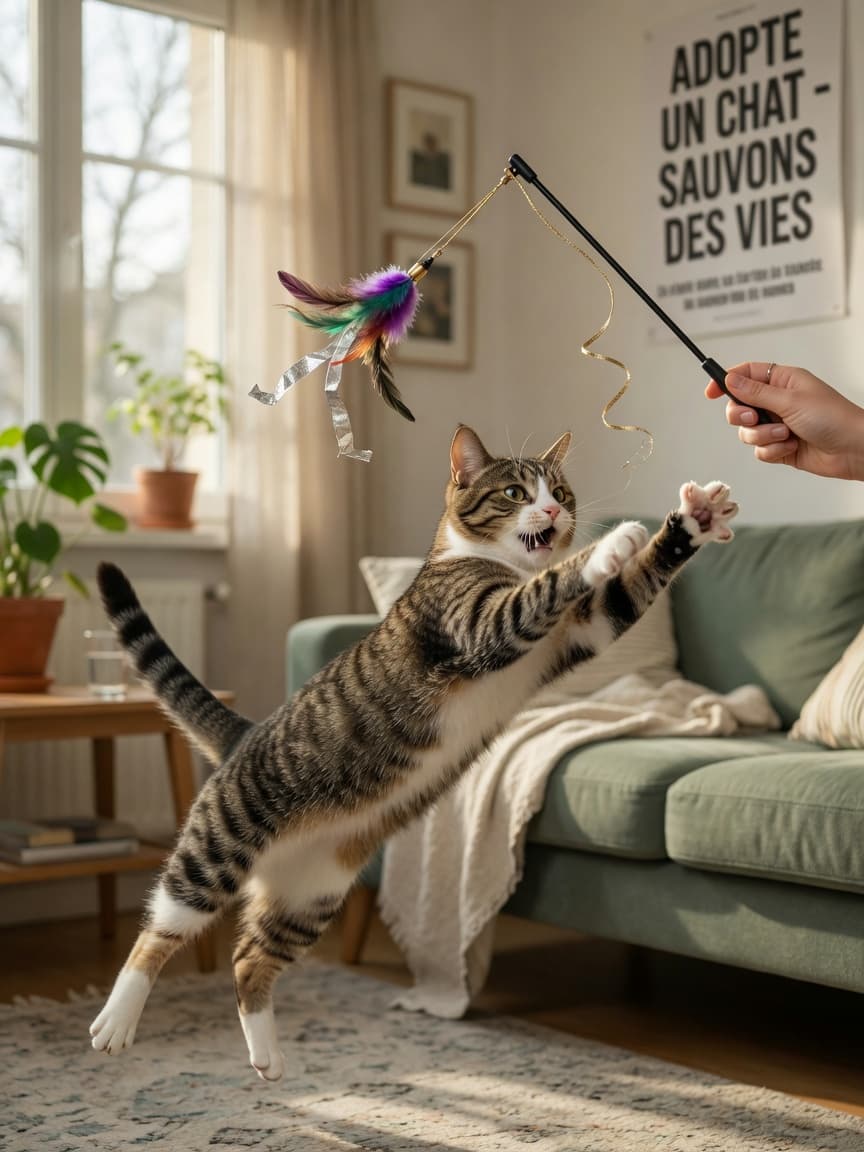
Interactive play with a wand or fishing-rod toy — one that the owner controls to mimic real prey movement — is the single most evidence-supported enrichment intervention for indoor cats. Research published in Applied Animal Behaviour Science has demonstrated that structured interactive play sessions reduce aggressive behaviour and redirect predatory impulses effectively. The key is to mimic realistic prey: erratic movement, hiding behind objects, periods of stillness followed by sudden motion. Sessions should end with a "kill" — allowing the cat to catch and bite the toy — followed by a small food reward to complete the sequence and prevent frustration.
Two sessions daily of ten to fifteen minutes each are a reasonable target for most cats, though individual energy levels vary considerably. Kittens and young adults generally require more; senior cats may prefer shorter, less intense sessions.
Puzzle Feeders and Food-Based Enrichment
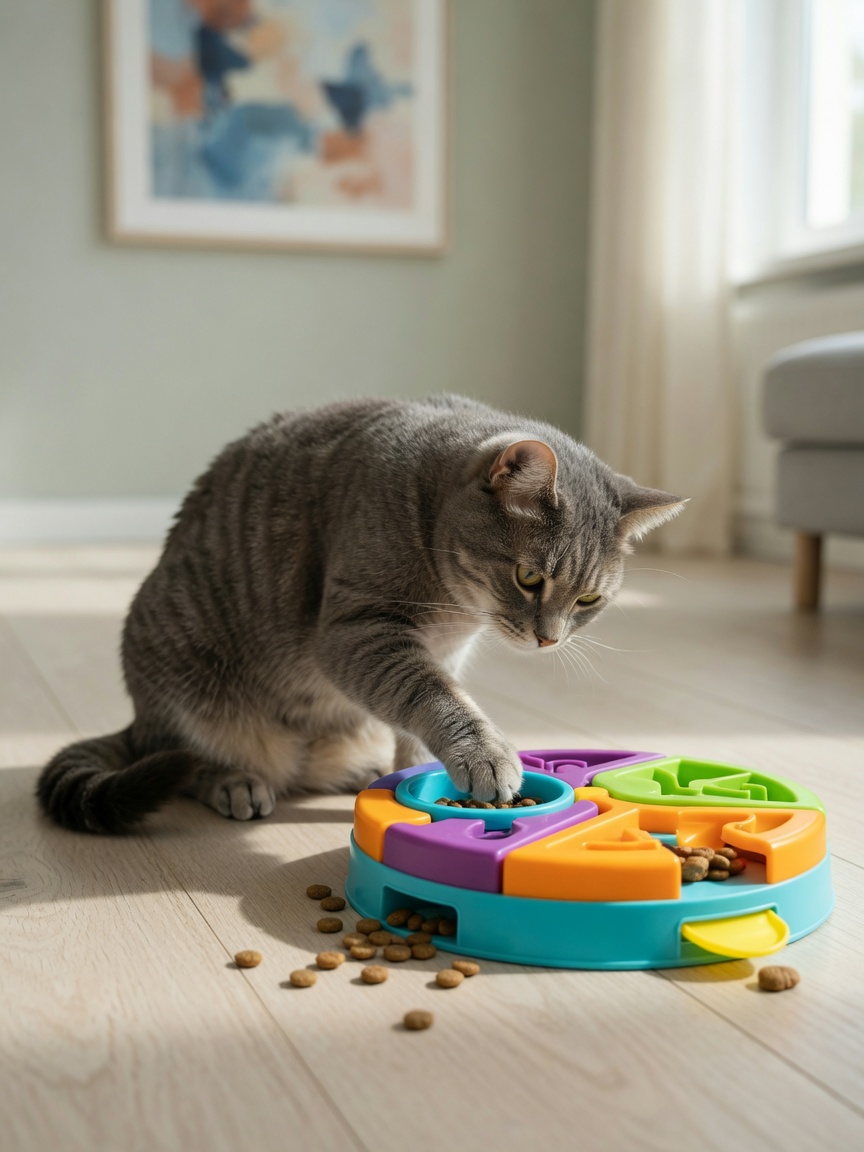
Wild felids spend a substantial portion of their active time in food-seeking behaviour. Providing the entire daily caloric intake in two stationary bowls eliminates this occupational need entirely. Puzzle feeders — devices that require the cat to work physically or cognitively to extract food — restore an element of foraging behaviour and are one of the most extensively studied forms of enrichment across captive feline populations.
The research on puzzle feeders in domestic cats shows benefits including reduced anxiety, reduced obesity risk, and improvements in problematic behaviours such as house soiling and aggression. A 2016 study by Dr Mikel Delgado and colleagues at UC Davis found that introducing food puzzles improved behaviour and weight in a sample of owner-reported problem cats.
Puzzle feeders range from simple rubber balls with holes that dispense kibble as the cat rolls them, to multi-stage devices requiring a sequence of actions. Start simple, particularly with cats that have no prior experience, and gradually increase complexity as confidence builds. Scatter feeding — distributing dry food across a mat, in the garden if the cat has safe outdoor access, or hidden around the home — is a low-cost alternative that provides similar benefits.
Vertical Space and Environmental Complexity
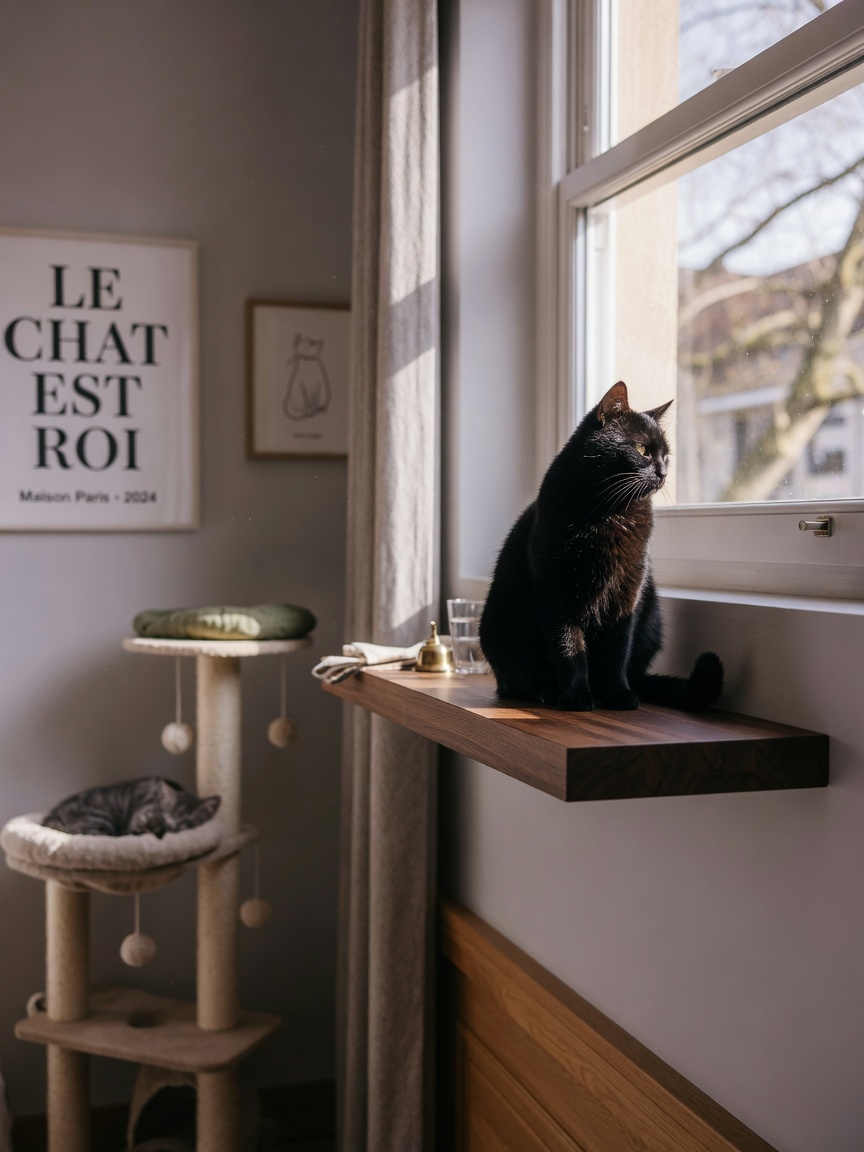
Cats use vertical space to survey territory, escape perceived threats, and rest at a temperature and vantage point of their choosing. A home that offers only floor-level space is impoverished regardless of its square footage. Tall cat trees, wall-mounted shelving arranged as climbing routes, and access to stable high surfaces such as wardrobes and bookcases all contribute meaningfully to environmental complexity.
Window access with a stable perch provides a significant source of sensory enrichment — visual and auditory stimulation from the outside world. Bird feeders placed within sightline of a preferred window perch occupy many cats for extended periods. Research on shelter cats has found that visual access to outdoor movement is one of the variables most strongly associated with positive welfare indicators.
Hiding places are the equally important counterpart to elevated spaces. Cats need locations where they feel genuinely concealed — not merely tucked away. Covered beds, cardboard boxes with entrance holes, and tunnel toys all serve this function and are particularly important for anxious cats or those in multi-cat households.
Sensory and Cognitive Enrichment
Olfactory enrichment is underused in most domestic settings. Cats have an extraordinarily sensitive sense of smell, and novel scents provide genuine neurological stimulation. Dried catnip and silvervine are the most studied: approximately 50 to 70 per cent of cats respond to catnip with clear pleasure responses, and silvervine elicits a response in a broader proportion including some cats that do not respond to catnip. Rotating these periodically maintains novelty. Herbs such as valerian and chamomile are also reported to elicit interest in some individuals.
Novel objects — paper bags, cardboard boxes, crinkle balls — provide exploratory stimulation when rotated regularly. The critical factor is novelty: an object that has been available continuously loses its enrichment value within days. Introducing items on a rotation schedule maximises engagement.
Social Enrichment and Human Interaction
Despite their reputation for independence, most domestic cats are genuinely social animals that benefit from daily positive interaction with their owners. The quality of that interaction matters as much as its quantity: allowing the cat to initiate and control the nature and duration of contact — rather than being picked up or restrained against its preference — builds trust and reduces anxiety.
Training is an underappreciated enrichment tool. Cats are fully capable of learning behaviours on cue using positive reinforcement, and several studies have demonstrated that training sessions reduce stress behaviour in shelter cats. Teaching simple behaviours — touching a target, sitting on cue, entering a carrier voluntarily — provides cognitive challenge and strengthens the human-animal bond simultaneously.
An enriched indoor environment does not require significant expense or space. It requires consistency, variety, and an understanding of what cats are actually built to do.