
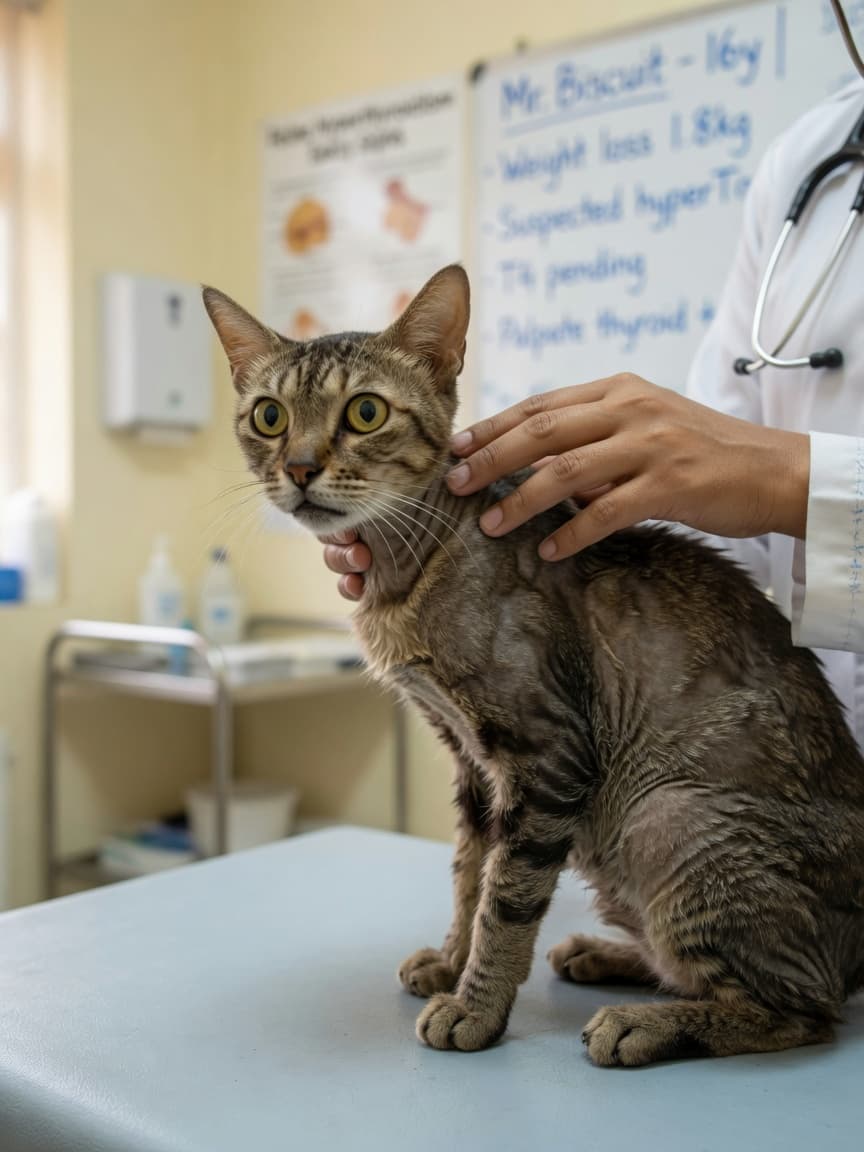
The Cat That Eats Everything and Still Loses Weight
It sounds paradoxical: a cat with a ravenous appetite who is nevertheless getting thinner. If you have noticed this combination in your middle-aged or older cat, hyperthyroidism is the most likely explanation. It is the single most common endocrine disease in cats, affecting an estimated one in ten cats over the age of ten — and yet it remains widely misunderstood by owners who attribute the signs to normal ageing.
What Is Hyperthyroidism?
The thyroid gland, located in the neck, produces hormones that regulate metabolism across virtually every organ system. In hyperthyroidism, one or both thyroid lobes become abnormally enlarged (a condition called adenomatous hyperplasia in most cases, or rarely a malignant tumour) and produce excessive thyroid hormone. The result is a body running permanently in overdrive.
Heart rate increases. Metabolic rate surges. The cat burns through calories at a rate their food intake cannot match. Over time, the cardiovascular, renal, and gastrointestinal systems all feel the strain.
Recognising the Signs
Hyperthyroidism produces a distinctive cluster of signs, though not every cat will display all of them. The condition tends to develop gradually, which is part of why owners often adapt to the changes without realising something is wrong.
Classic Presenting Signs
Weight loss despite increased appetite is the hallmark. Affected cats may beg persistently, steal food, or wake their owners at night demanding to be fed — and still lose condition steadily. Increased thirst and urination are common. Many cats become hyperactive or display increased vocalisation, particularly at night.
Less Obvious Signs
Vomiting, diarrhoea, and a poor coat condition (often greasy or unkempt despite the cat appearing active) are frequently present. Some cats develop an intolerance to heat. A small number present in a form sometimes called apathetic hyperthyroidism, where the cat is lethargic and depressed rather than hyperactive — this form is particularly easy to mistake for other conditions.
Cardiac Effects
Chronically elevated thyroid hormone thickens the heart muscle (hypertrophic cardiomyopathy) and can cause dangerously elevated heart rate. Heart murmurs, respiratory distress, and in severe cases congestive heart failure can develop if the condition goes untreated. This is one of the most compelling reasons to diagnose and treat hyperthyroidism promptly.
Diagnosis
Diagnosis is typically straightforward. A vet will palpate the neck for thyroid enlargement, conduct a physical examination, and take a blood sample. An elevated total thyroxine (T4) level confirms the diagnosis in the majority of cases. In cats with mild or early disease, T4 may be within the upper normal range on initial testing — your vet may request a repeat test or a more sensitive assay if clinical signs are strong but the first result is equivocal.
Because hyperthyroidism can mask concurrent kidney disease (elevated blood pressure improves kidney filtration temporarily), a full biochemistry panel and blood pressure measurement are essential at diagnosis. This matters significantly for treatment planning. Always have your cat assessed by a vet — do not attempt to interpret results or manage this condition without professional guidance.
Treatment Options
Medication
Anti-thyroid medication — most commonly methimazole — is the most widely used treatment. It blocks the production of thyroid hormone and is highly effective when given consistently. It does not cure the underlying gland abnormality but controls the condition long-term. Side effects occur in a minority of cats and may include facial itching, vomiting, and, less commonly, blood cell abnormalities. Regular monitoring blood tests are required.
A transdermal gel formulation is available for cats who are difficult to medicate orally — it is applied to the inner ear flap and absorbed through the skin. Efficacy is slightly lower than oral medication but it significantly improves compliance in some households.
Radioactive Iodine Therapy
This is widely considered the gold-standard treatment. A single injection of radioactive iodine destroys the abnormal thyroid tissue while sparing healthy tissue. Cure rates exceed 95%. The procedure requires a short period of isolation (typically one to two weeks) at a specialist centre while the cat's radioactivity decreases to safe levels. It is a one-time treatment with no ongoing medication required.
Surgical Thyroidectomy
Surgical removal of the affected thyroid tissue is effective and curative but is performed less frequently given the availability of radioactive iodine and the anaesthetic risks in older cats. It remains an option where other treatments are not accessible or appropriate.
Dietary Management
A prescription iodine-restricted diet can control hyperthyroidism by limiting the raw material the thyroid needs to produce hormone. It can be an excellent option for cats who cannot tolerate medication or where owners prefer a drug-free approach. The critical limitation is that the cat must eat only this diet — no treats, no other food, no access to other animals' bowls. Strict compliance is essential and can be challenging in multi-cat households.
Life After Treatment: What to Expect
Once thyroid levels are controlled, most cats show dramatic improvement. Appetite normalises, weight stabilises, and behaviour becomes calmer. However, treatment of hyperthyroidism commonly unmasks underlying kidney disease — as the previously elevated blood pressure subsides, the kidneys' apparent function decreases, revealing chronic kidney disease that had been hidden. Your vet will monitor kidney function closely in the weeks following treatment initiation and adjust the management plan accordingly.
Long-term monitoring — typically every three to six months — is important for medicated cats to ensure thyroid levels remain well controlled and to check for other age-related conditions.
Key Points for Owners
- Weight loss with increased appetite in a cat over eight years old should prompt an immediate vet visit.
- Hyperthyroidism is highly treatable — early intervention leads to significantly better outcomes.
- Several effective treatment options exist; the right choice depends on your cat's overall health, your household situation, and financial considerations.
- Treatment can unmask kidney disease — this is expected and manageable, not a treatment failure.
- Never use human thyroid medications in cats, and never adjust doses without veterinary instruction.
- Regular monitoring is non-negotiable for long-term management success.