ForPetsHealthcare
Dogs

Hydration for Cats: Why It Matters and How to Increase Water Intake

By Julia WrenfieldUpdated August 4, 20263 min read
Evidence-based · Sources checked
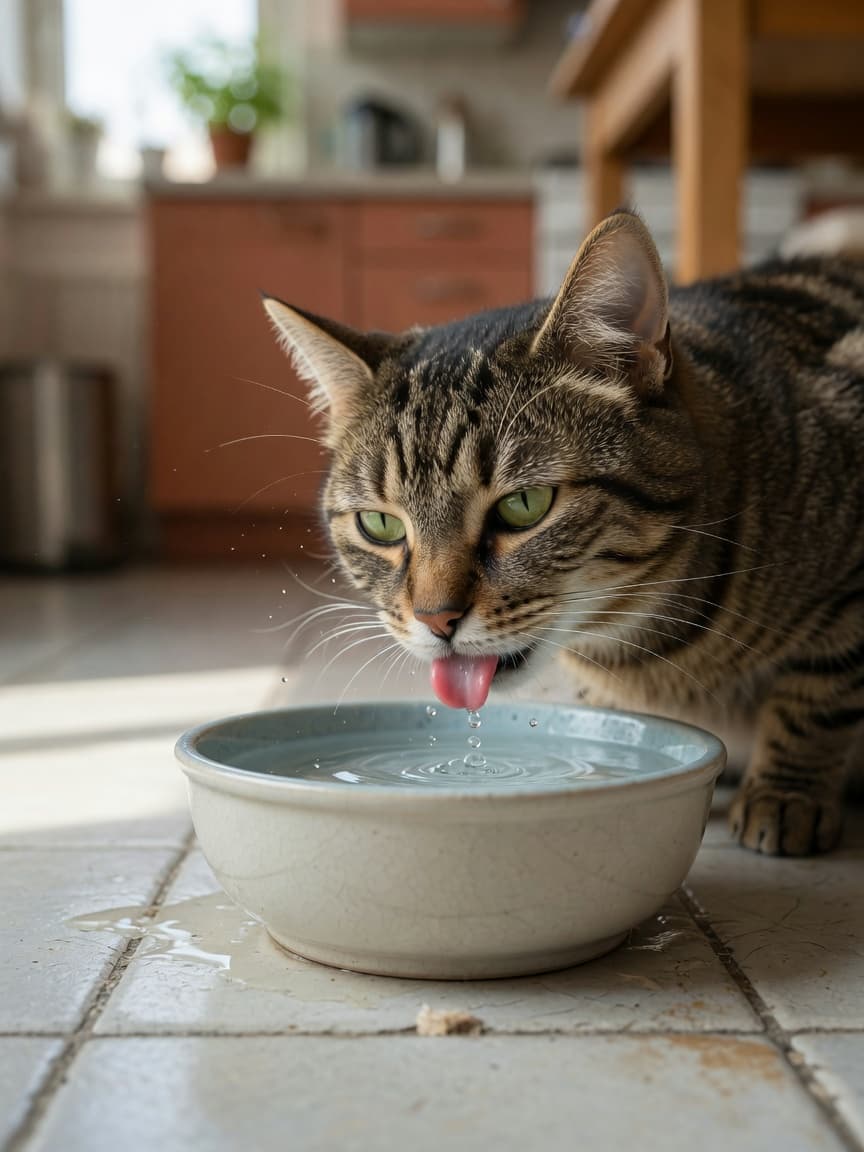
{"en": "Cat drinking fresh water from a bowl, highlighting the importance of proper hydration for feline health", "es": "Gato bebiendo agua fresca de un recipiente, destacando la importancia de la hidrataci\u00f3n adecuada felina", "fr": "Chat buvant de l'eau fra\u00eeche dans un bol, soulignant l'importance d'une hydratation f\u00e9line appropri\u00e9e", "de": "Katze trinkt frisches Wasser aus einer Sch\u00fcssel und unterstreicht die Bedeutung angemessener Fl\u00fcssigkeitszufuhr", "nl": "Kat drinkt vers water uit een kom, wat het belang van voldoende vochtinname voor katten benadrukt", "pt": "Gato bebendo \u00e1gua fresca de uma tigela, destacando a import\u00e2ncia da hidrata\u00e7\u00e3o adequada felina", "it": "Gatto che beve acqua fresca da una ciotola, evidenziando l'importanza della corretta idratazione felina"}
Quick answer: Cats naturally have a low thirst drive evolved from desert ancestry, making dehydration a serious health risk; the most effective solution is switching to wet food, which provides 70% of moisture cats would obtain from prey in the wild.

Hydration for Cats: Why It Matters and How to Increase Water Intake

Cats evolved as desert animals with a low thirst drive — making adequate hydration a challenge and a health priority.

Why Cats Don't Drink Enough

Wild cats obtained most moisture from prey (mice are approximately 70% water). Domestic cats fed dry food receive minimal moisture from food and have limited thirst drive to compensate.

Consequences of Chronic Dehydration

  • Urinary tract disease and crystals
  • Kidney disease progression
  • Constipation
  • Reduced organ function

How to Increase Water Intake

  • Switch to wet food or add water to dry food
  • Provide multiple water bowls in different locations
  • Use ceramic or glass bowls — some cats dislike plastic
  • Try a cat water fountain — many cats prefer moving water
  • Keep water bowls away from food and litter boxes
  • Offer ice cubes in summer

Wet Food Is the Easiest Solution

Cats fed wet food exclusively typically consume adequate moisture without drinking much water. This single change dramatically reduces urinary and kidney disease risk.

Key takeaways

  • Domestic cats fed dry kibble receive minimal moisture and don't drink enough water to compensate for their naturally low thirst drive
  • Chronic dehydration in cats leads to urinary tract disease, kidney problems, constipation, and reduced organ function
  • Wet food is the single most impactful dietary change to ensure adequate hydration without relying on cats to drink more
  • Water fountains, multiple bowl placement away from food/litter, and ceramic bowls can encourage additional water consumption
  • Cats evolved eating prey that was approximately 70% water, so their bodies expect moisture from food rather than drinking alone

Frequently asked questions

How much water should my cat drink per day?

Cats should consume adequate moisture daily, which traditionally came from prey in the wild. Rather than focusing on a specific water amount, ensure your cat receives sufficient hydration through wet food combined with fresh drinking water available throughout the day.

Why does my cat refuse to drink from their water bowl?

Cats may avoid water bowls for several reasons: they dislike plastic materials, prefer moving water to still water, or find the bowl placement unappealing (especially near food or litter). Try switching to ceramic or glass bowls, using a water fountain, and placing bowls in different locations away from feeding areas.

Is wet food better than dry food for cats?

For hydration purposes, wet food is significantly better than dry kibble. Cats fed wet food consume adequate moisture without needing to drink substantial amounts of water separately, which dramatically reduces the risk of urinary tract disease and kidney problems.

Can I add water to my cat's dry food?

Yes, adding water to dry food increases moisture content and can help with hydration. However, some cats may find moistened kibble less appealing, so observe your cat's response and consider gradually transitioning to wet food if they reject the dampened kibble.

#hydration for cats importance#cat health#feline nutrition#forpetshealthcare

Sources & further reading

This article is based on peer-reviewed veterinary research and reputable animal-health sources. Explore the underlying science in our Research Library.

Related articles

The 19 Best Animal Shelters in the Netherlands (2026)

the Netherlands's animal shelters, rescue associations and refuges save thousands of dogs, cats and other animals every year, almost always on tiny budgets and volunteer power. To build the most objective ranking possible, we analysed public Google reviews across more than 56 registered animal-prote…

Read more →

The 25 Best Animal Shelters in Italy (2026)

Italy's animal shelters, rescue associations and refuges save thousands of dogs, cats and other animals every year, almost always on tiny budgets and volunteer power. To build the most objective ranking possible, we analysed public Google reviews across more than 121 registered animal-protection org…

Read more →

The 48 Best Animal Shelters in Germany (2026)

Germany's animal shelters, rescue associations and refuges save thousands of dogs, cats and other animals every year, almost always on tiny budgets and volunteer power. To build the most objective ranking possible, we analysed public Google reviews across more than 152 registered animal-protection o…

Read more →

The 32 Best Animal Shelters in France (2026)

France's animal shelters, rescue associations and refuges save thousands of dogs, cats and other animals every year, almost always on tiny budgets and volunteer power. To build the most objective ranking possible, we analysed public Google reviews across more than 89 registered animal-protection org…

Read more →

The 8 Best Animal Shelters in Portugal (2026)

Portugal's animal shelters, rescue associations and municipal centros de recolha save thousands of dogs, cats and other animals every year, almost always on tiny budgets and volunteer power. To build the most objective ranking possible, we analysed public Google reviews across more than 86 registere…

Read more →

Sphynx Cat Skin care and hygiene: Causes, Signs & Care

Sphynx cats have little to no coat, which means the skin itself takes on jobs that fur normally does — insulation, oil dispersal, and barrier protection — leaving it prone to greasiness, blocked pores, fungal infections, and sunburn. The single most important thing to know is that a Sphynx's skin ne…

Read more →
Disclaimer:This article is for informational purposes only and does not constitute veterinary advice. Always consult a qualified veterinarian for your pet's health concerns.

Free newsletter

Pet health tips, straight to your inbox

Weekly science-backed advice for dog & cat owners. No spam, unsubscribe anytime.