
How to Stop a Dog Jumping Up on People
By Julia Wrenfield, Pet Wellness Researcher
Why Dogs Jump Up
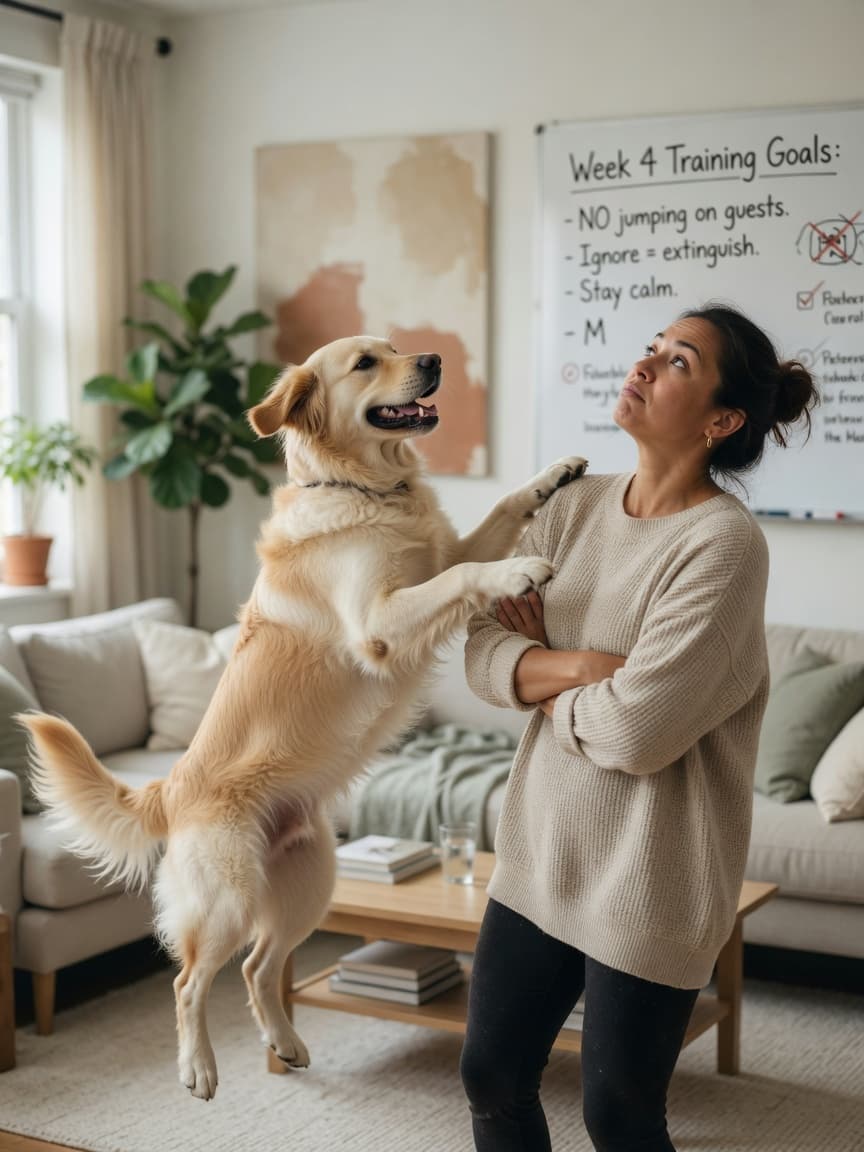
Jumping is a natural social behaviour inherited from wolf pups who lick the mouths of returning adults to stimulate regurgitation of food. In domestic dogs, the behaviour has been repurposed as a greeting — and it is powerfully self-reinforcing. When a dog jumps and a human laughs, pushes them away, makes eye contact, or even says "no," the dog receives exactly what they wanted: attention and engagement.
The American Kennel Club notes that jumping is one of the most common complaints from dog owners and one of the most straightforward to address — provided the extinction protocol is applied by every single person who interacts with the dog.
The Core Protocol — Removing the Reward
The moment your dog begins to jump, turn your back completely. Cross your arms, look at the ceiling, and give zero acknowledgment — no words, no eye contact, no touch. The instant all four paws are on the floor, turn back, say "Yes!" in a warm tone, and deliver a treat or give enthusiastic but calm attention. If the dog jumps again immediately, turn away again. Repeat as many times as needed within a single greeting.
Most dogs understand within 3–5 training greetings that four feet on the floor produces the attention they want, while jumping makes you disappear. The behaviour typically reduces by 70–80% within one to two weeks — provided it is applied consistently by all household members and visitors.
Training "Four Paws on the Floor" as a Default
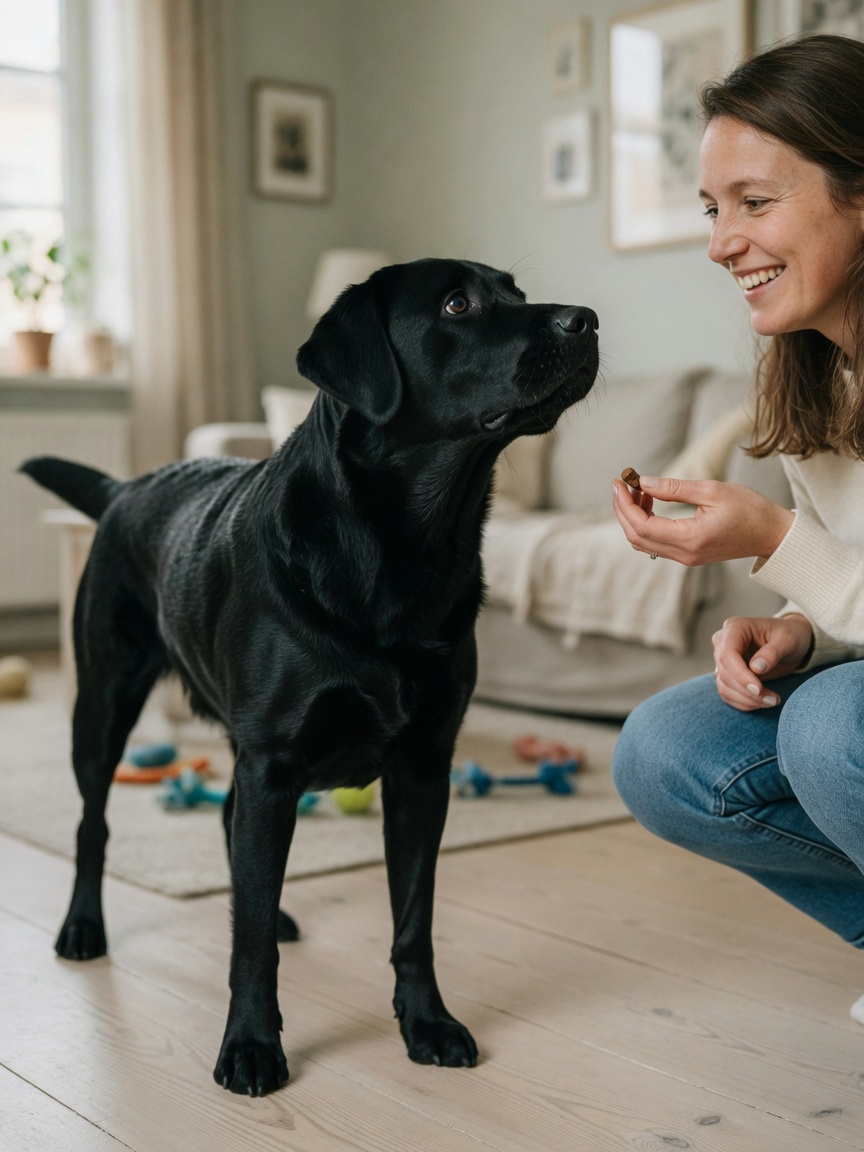
Rather than simply removing the reward for jumping, actively train the alternative: sitting or standing calmly as the greeting behaviour. When you arrive home, wait outside for 30 seconds until the dog's initial excitement peak passes. Enter calmly, ignore any jumping, and the moment all four paws hit the ground, say "Yes!" and reward. Do not ask for a sit initially — four paws on the floor is enough. Once the dog is reliably keeping paws down, begin asking for a sit before delivering the reward.
Practise this multiple times per day by staging fake arrivals: walk out the front door, wait 20 seconds, re-enter. This dramatically increases the number of learning opportunities compared with relying on natural arrivals. A study in Journal of Veterinary Behavior (PubMed) confirmed that high repetition rates accelerate the acquisition of replacement behaviours in common nuisance behaviours including jumping.
Managing Visitors
Visitors are the biggest obstacle to solving jumping because they often undo training in seconds. Before a guest enters, put the dog on a leash if needed. Brief visitors before they come in: "Please ignore the dog until all four paws are on the floor — no eye contact, no talking, no pushing away." Give them a treat to deliver the moment the dog is calm. Most guests comply willingly once they understand the reason.
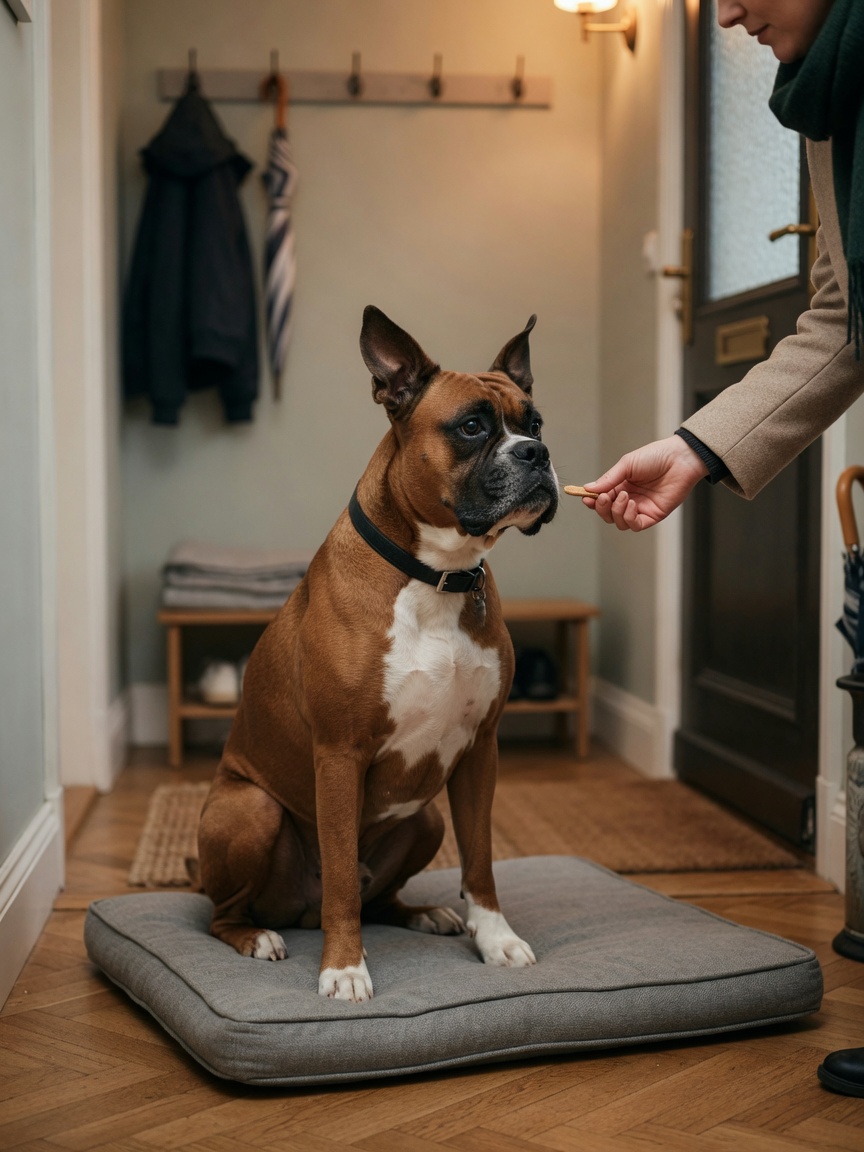
For very excitable dogs, have the dog go to their mat when the doorbell rings (train this separately) and have visitors greet them at the mat rather than at the door. This removes the peak-excitement context of a doorbell and front door, which is where jumping is most intense.
Teaching a Formal Sit Greeting
Once the dog reliably keeps four paws on the floor, introduce the formal sit greeting. As a person approaches, ask for "sit" before the greeting begins. Ask the approaching person to stop if the dog rises or jumps, and to deliver the greeting (pats, words, attention) only while the dog remains sitting. Within two to three weeks of consistent practice, many dogs will begin to offer a sit spontaneously when someone approaches — they have learned that sitting is the fastest path to the greeting they want.
Use the cue "sit" calmly and only once. Repeating "sit, sit, sit" teaches the dog that they do not need to respond to the first cue. Say it once, wait three seconds, and if no response, guide gently with a treat lured down toward the nose.
Children and Vulnerable Adults
Jumping that is merely annoying from a small dog becomes dangerous when the dog is large or when the person jumped on is a child, elderly, or physically vulnerable. For households with children, management tools like baby gates and leashes during greetings are essential safety measures while training is in progress — do not rely on training alone to prevent accidents.
The ASPCA recommends that children be coached to turn away from jumping dogs rather than pushing them — a push is physically rewarding and can escalate excitement. Children under 5 should never be the ones to greet a jumping dog without adult supervision.
Working With Highly Excitable Dogs
Some dogs — particularly adolescents, working breeds, and under-exercised dogs — jump with such enthusiasm that the extinction protocol alone is slow. For these dogs, combine management with increased daily exercise and mental stimulation, and add impulse control training (practising "wait" before meals, toys, and doors) to build overall self-regulation. A dog who has practised impulse control in low-stakes situations generalises those skills more readily to high-arousal contexts like greetings.
The APDT trainer directory can help you find a qualified positive reinforcement trainer if jumping is severe, the dog is large, or safety is a concern.
According to The Guardian's dog behaviour feature, the most common reason jumping training fails is inconsistency — specifically, owners who apply the protocol themselves but allow visitors, children, or other family members to greet the dog while they are jumping.
Realistic Timeline
With consistent application by all people: 1–2 weeks to reduce jumping by 70–80%. A reliable sit greeting takes most dogs 3–5 weeks of daily practice. Highly excitable breeds or dogs with long histories of being rewarded for jumping may take 8–10 weeks. Progress is fastest when staged greeting practice sessions (the fake arrivals) are incorporated rather than relying only on real-world opportunities.
Key Takeaways
- Jumping is attention-seeking behaviour — remove all attention (turn away, no words, no eye contact) when four paws leave the floor.
- Reward four paws on the floor immediately with "Yes!" and a treat or calm attention.
- Practise staged arrivals multiple times daily to accelerate the learning process.
- Brief every visitor before entry — consistency from all people is non-negotiable.
- Progress to a formal sit greeting once paws-on-floor is reliable.
- Most dogs show 70–80% reduction in jumping within 1–2 weeks of consistent training.