
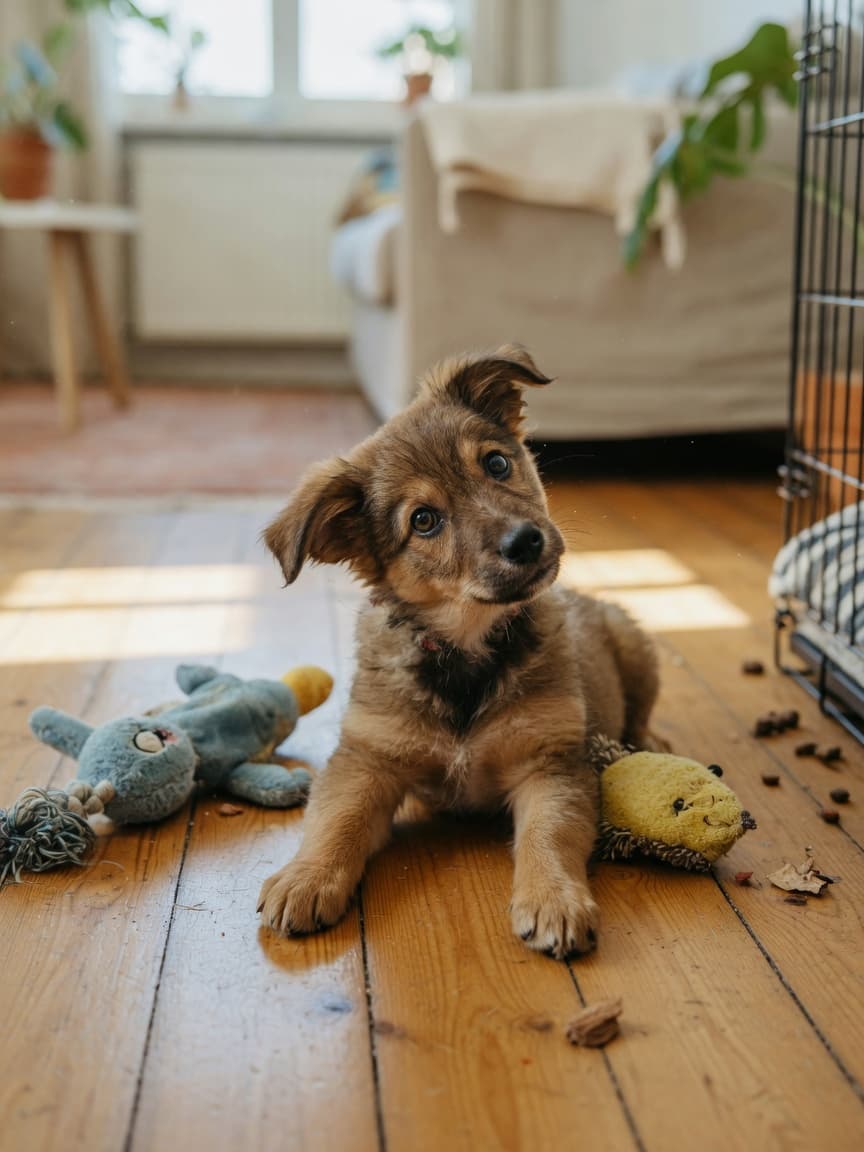
Crate training is one of the most valuable skills you can teach your puppy, yet many new owners approach it with apprehension. The truth is, when done correctly, introducing a crate transforms it from a feared cage into your puppy's safe haven—a space where they naturally retreat to rest, relax, and feel secure. This comprehensive guide will walk you through the process step-by-step, ensuring your puppy develops a positive relationship with their crate from day one.
Why Crate Training Matters
Puppies instinctively seek out small, enclosed spaces where they feel protected. In the wild, animals use dens for safety and security. A properly introduced crate mimics this natural instinct, providing your puppy with their own personal sanctuary. Beyond comfort, crate training supports house-training, prevents destructive behaviour when you're unable to supervise, and provides a secure travel space. It's an investment in your puppy's emotional wellbeing and your household's harmony.
Choosing the Right Crate
Size matters significantly. Your puppy's crate should be large enough for them to stand up, turn around, and lie down comfortably, but not so spacious that they can eliminate in one corner and sleep in another. A crate that's too large defeats house-training purposes, whilst one that's too small causes stress and discomfort.
- Select a crate appropriate for your puppy's current size
- Consider dividers or divider panels if purchasing an adult-sized crate
- Choose between wire, plastic, or fabric crates based on your home and lifestyle
- Ensure proper ventilation and visibility
The Gradual Introduction Process
Never force your puppy into a crate or close the door immediately. Patience during this phase sets the foundation for success.
- Leave the door open: Place the crate in a common living area. Leave the door wide open and allow your puppy to explore naturally. Don't pressure them; simply let curiosity guide them.
- Create positive associations: Toss treats inside the crate throughout the day. Let your puppy discover these rewards independently. This builds anticipation and positive feelings about the space.
- Feed meals inside: Once your puppy enters voluntarily, start placing their regular meals inside the crate with the door open. This teaches them that good things happen inside.
- Introduce a command: Use a consistent phrase like "crate" or "kennel" each time your puppy enters. Reward them immediately with praise or treats.
- Close the door briefly: After several days, gently close the door whilst your puppy eats. Keep it closed for just a few minutes. Open it before they become anxious.
- Extend duration gradually: Slowly increase the time the door remains closed. Start with minutes and progress to longer periods over several weeks.
Managing the Transition
Whining and crying are normal behaviours during crate training. The key is responding appropriately. Never let your puppy out whilst they're crying, as this teaches them that noise opens the door. Instead, wait for a moment of silence before opening the crate. Make sure your puppy has adequate toilet breaks, particularly before crating. A typical guideline is one hour per month of age, plus one (so a three-month-old puppy can hold it for approximately four hours).
Common Mistakes to Avoid
- Using the crate as punishment—this creates negative associations
- Forcing your puppy inside or closing the door too quickly
- Leaving your puppy crated for excessive periods without toilet breaks
- Giving insufficient attention after letting them out
- Making departures and arrivals overly emotional or dramatic
Key Takeaways
Successful crate training requires patience, consistency, and positive reinforcement. Move at your individual puppy's pace, celebrate small victories, and remember that building a positive association takes time. When approached correctly, your puppy's crate becomes their cherished retreat—a place where they willingly rest, not a confinement space they fear. This foundation supports house-training, safety, and emotional security throughout your puppy's life.