
The Best of Both Worlds
A catio — a cat patio or outdoor enclosure — gives cats access to fresh air, natural light, and outdoor stimulation while keeping them safe from the hazards of free roaming. For owners who want to provide outdoor enrichment without accepting the risks that come with unrestricted access, a catio is one of the most practical and effective solutions available. They range from small window-box designs to large walk-in structures, and they can be built to suit almost any garden, balcony, or property type.
Why Catios Work So Well
The limitations of keeping cats entirely indoors are real. Cats evolved as hunters, and the absence of outdoor stimulation can contribute to boredom, obesity, and stress-related behaviours. But the risks of free outdoor access — traffic, disease, fights, poisoning — are also well documented. A catio sidesteps this dilemma by creating a controlled outdoor space where a cat can experience the sensory richness of the outdoors: birdsong, scent, breeze, and sunlight without the ability to roam, hunt wildlife, or encounter hazards.
Research and clinical observation both support the idea that cats who have access to outdoor enrichment show lower rates of stress-related illness and behavioural problems than those confined entirely indoors with insufficient stimulation.
Types of Catio
Window Box Catios
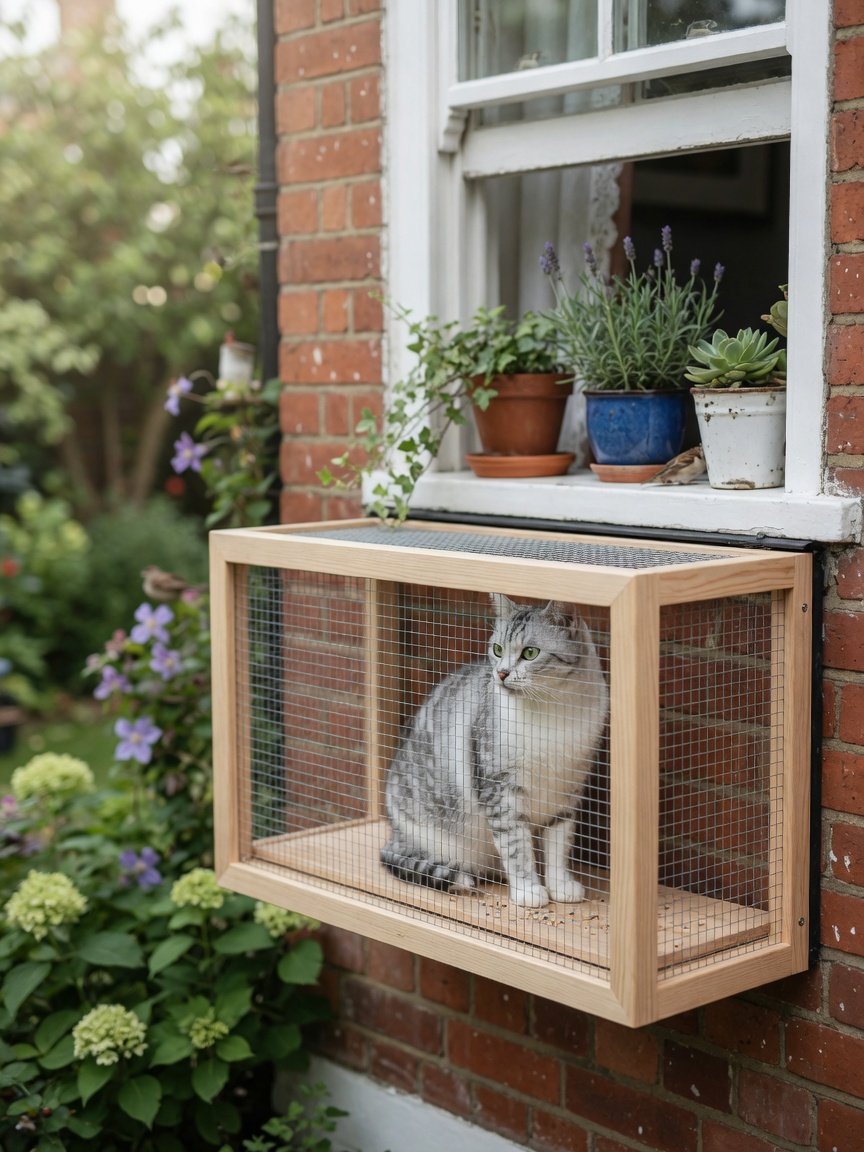
The most compact option, a window box catio attaches directly to an existing window and gives the cat a small platform to sit in while remaining enclosed. These are ideal for flat or apartment dwellers with limited outdoor space. They provide light, air, and visual stimulation without requiring garden access. Construction materials are typically timber framing with welded wire mesh panels.
Tunnel Systems
Tunnel systems connect the interior of a home to an outdoor enclosure via a series of enclosed tubes or tunnels. Cats can move freely between inside and outside at their own pace, which many find particularly satisfying. Tunnel systems can be freestanding or attached to the house and extended to connect multiple areas of a garden.
Lean-To Enclosures
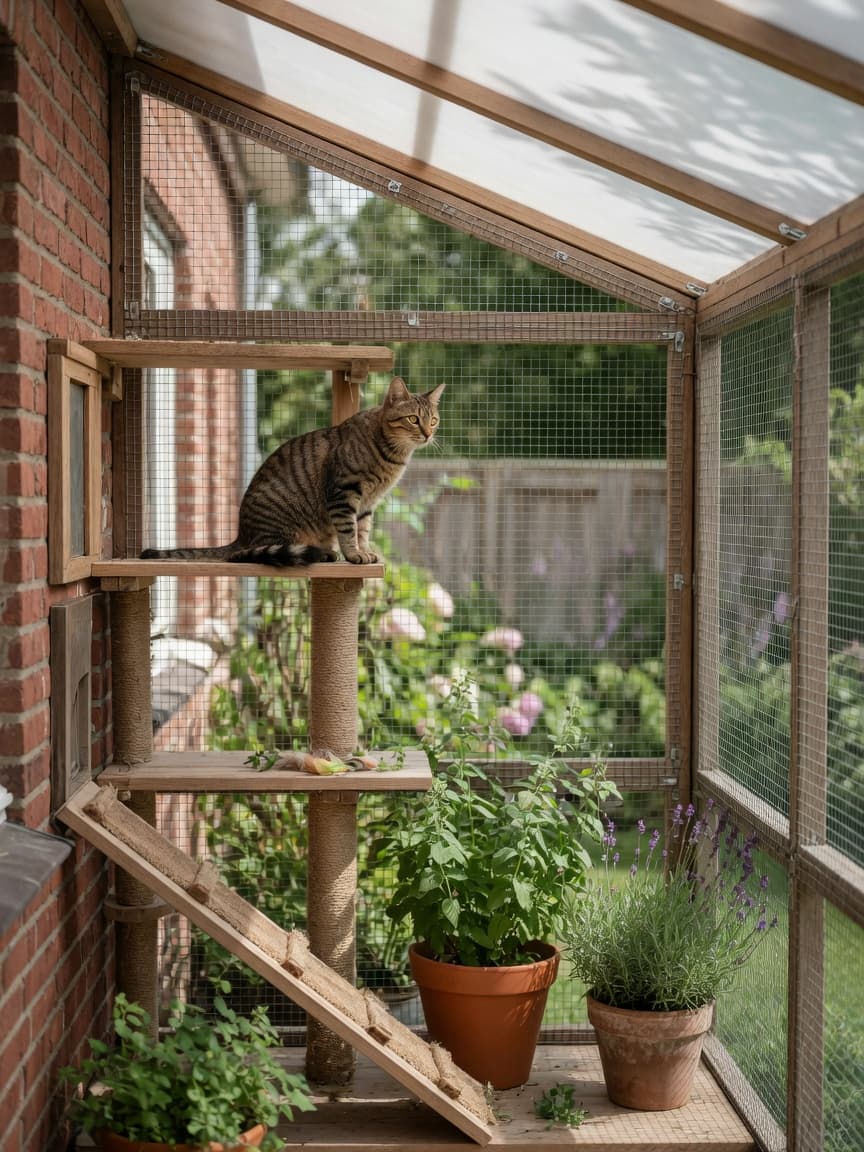
A lean-to catio attaches to an exterior wall of the house and can be accessed via a cat flap installed in a door or window. These range from small structures a metre or two wide to large enclosures spanning the full length of a wall. They typically include multiple levels, shelving, and climbing structures to make use of vertical space.
Freestanding Walk-In Enclosures
Freestanding structures placed in the garden offer the most space and flexibility. Walk-in enclosures allow owners to spend time in the catio with their cats, which many find enjoyable. These can be connected to the house via a tunnel or accessed via a separate entrance. They are the most expensive and space-intensive option but provide the richest environment.
Key Design Considerations
Mesh and Structural Integrity
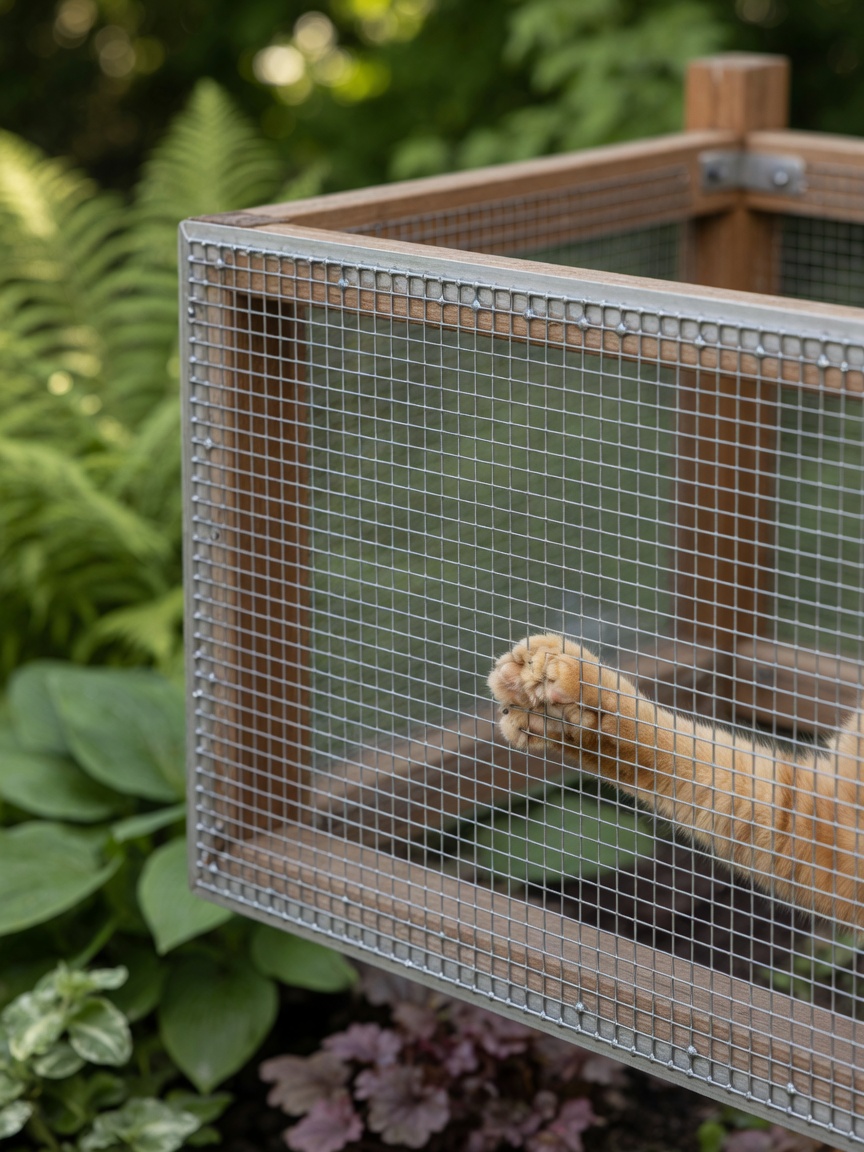
The mesh used in a catio must be strong enough to resist both cat pressure from within and potential pressure from predators such as foxes or dogs from without. Welded wire mesh with a minimum gauge of 16 is recommended over chicken wire, which degrades quickly and can be pushed open or torn. Mesh openings should be no larger than 2.5cm to prevent escape and to keep wildlife out.
All edges should be finished or folded inward to prevent sharp points that could injure a cat. Frames should be structurally sound and, if freestanding, anchored securely to the ground to prevent collapse in high winds.
Roof Coverage
A fully enclosed roof is essential. Cats are exceptional climbers and jumpers, and an open-topped enclosure is unlikely to contain them for long. The roof should be fully meshed or covered with a solid waterproof panel to provide shelter from rain. A combination of mesh and solid roofing material — with the solid section positioned to provide shade and shelter — works well in the UK climate.
Enrichment Within the Enclosure
A bare catio is a missed opportunity. The enclosure should include multiple levels accessible via ramps, shelving, or cat trees, which allow cats to express their natural preference for height and surveying their territory from above. Scratching posts, hiding spots, and platforms at different heights all contribute to a richer environment.
Planting is a popular addition. Cat-safe plants such as catnip, cat grass, valerian, and lavender can be grown within or adjacent to the enclosure, providing sensory stimulation and an element of the natural environment. Ensure that any plants accessible to the cat are confirmed non-toxic — lilies in particular must be kept entirely out of reach.
Sun and Shade
Access to both direct sunlight and shade is important. Cats love to bask, but they are also susceptible to overheating, particularly pale-coated or white cats who are at higher risk of sun-related skin damage and squamous cell carcinoma on the ears and nose. Solid roofing panels, shade cloth, or strategically placed plants can provide adequate shade without blocking airflow.
Planning Permission and Regulations
In most cases, a domestic catio in the UK will fall under permitted development rights and will not require planning permission, provided it does not exceed certain size thresholds and is not attached to a listed building or located in a conservation area. If you are in a rented property or are part of a leasehold arrangement, check the terms of your agreement before beginning construction. For larger structures, or if you are uncertain, a brief consultation with your local planning authority will clarify what is permitted.
Cost and DIY Options
Pre-built catio kits are available from several UK suppliers and range from around £150 for small modular units to £1,000 or more for larger walk-in structures. Custom-built enclosures can cost significantly more depending on size and materials. For handy owners, building a catio from timber framing and welded wire mesh is a well-documented DIY project with numerous detailed guides and plans available online. The materials alone for a decent-sized lean-to enclosure typically come to between £200 and £500.
However you approach it, a catio is one of the most genuinely enriching investments you can make for a cat's quality of life. The combination of safety and stimulation it provides is difficult to replicate through any other single intervention.