
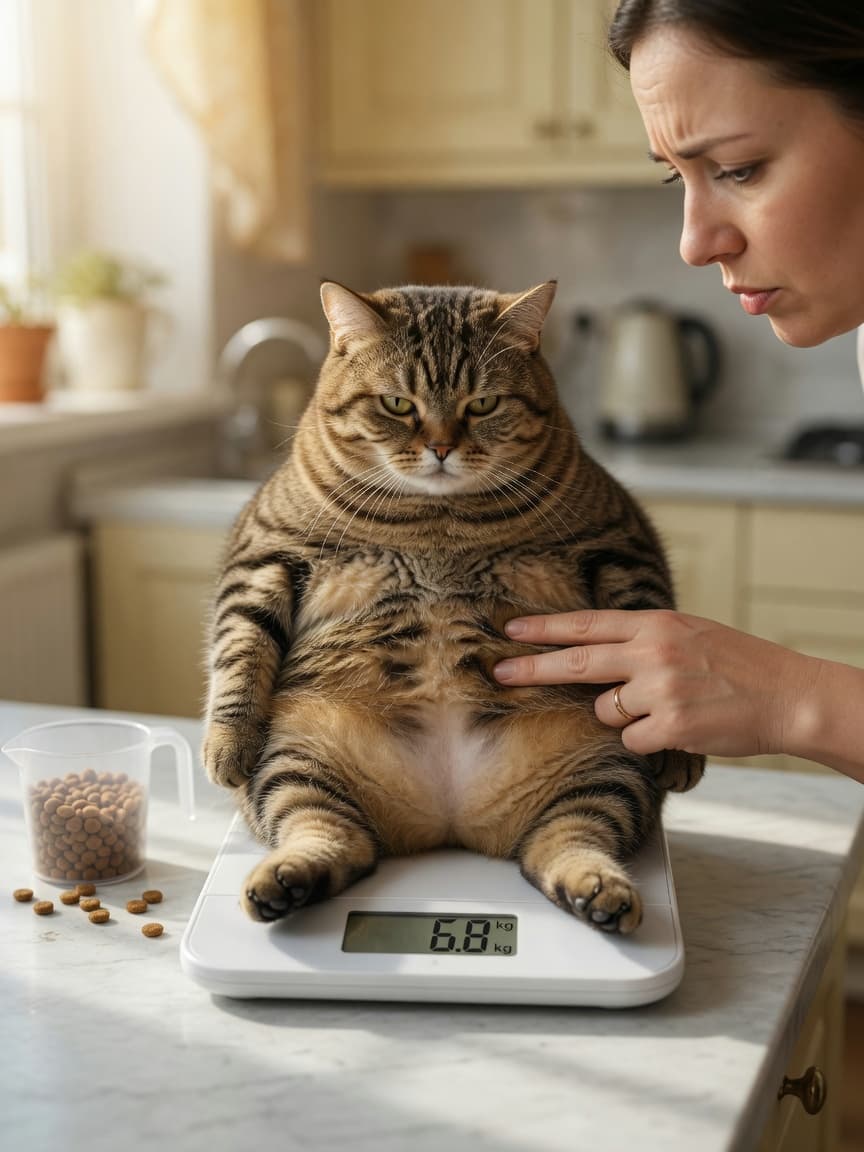
Why Cat Obesity Is a Serious Health Problem
It can be easy to dismiss a slightly chubby cat as endearing, but excess weight in cats is associated with a genuinely concerning list of health conditions. Overweight cats are significantly more likely to develop type 2 diabetes, hepatic lipidosis (a potentially life-threatening liver condition), urinary tract disease, osteoarthritis, and respiratory problems. They also tend to have shorter lifespans and poorer quality of life than cats maintained at a healthy weight.
Estimates suggest that somewhere between 40 and 60 per cent of cats in the UK and other Western countries are overweight or obese, making this one of the most common preventable health issues in companion animals today. If your vet has raised the subject of your cat's weight, taking it seriously is genuinely worthwhile.
Assessing Whether Your Cat Is Overweight
Before starting any weight management programme, a vet check is essential. Your vet will assess your cat using a body condition score — a standardised scale that evaluates body fat by feel as well as appearance. This is important because scales alone do not tell the whole story: a large-framed cat may be heavier than a small-framed cat while actually being in better condition.
As a rough home guide, you should be able to feel your cat's ribs without pressing hard, but they should not be visible. Viewed from above, your cat should have a slight waist. Viewed from the side, the abdomen should not hang down. If your cat feels uniformly padded and has no discernible waist, weight loss is likely warranted.
The Right Approach to Reducing Calories
Weight loss in cats must be gradual. Rapid weight loss — even in a significantly obese cat — triggers a dangerous condition called hepatic lipidosis, where the liver becomes overwhelmed by mobilised fat. The target rate for safe feline weight loss is typically around 0.5 to 2 per cent of body weight per week, and your vet can help you calculate an appropriate calorie target.
The most effective dietary changes tend to involve:
- Switching from free-feeding (leaving food out all day) to measured meals at set times
- Switching from dry food to wet food — wet food is higher in moisture and protein and lower in carbohydrates, which tends to support better satiety and weight management in cats
- Using a specific weight management diet formulated for cats, which provides adequate protein and nutrients at a reduced calorie density
- Measuring food by weight rather than volume for accuracy
Reducing treats to no more than 10 per cent of daily calorie intake — and factoring them into the total — is also essential. Many owners do not realise how significantly treats contribute to total intake.
Feeding Schedule and Structure
Moving to two to three measured meals per day rather than continuous access to food is one of the most impactful changes you can make. It allows you to know exactly how much your cat is consuming, creates natural hunger cycles that make meals more satisfying, and removes the opportunity for mindless grazing.
In multi-cat households, weight management becomes more complex. Microchip-activated feeders, which open only for the cat whose chip is registered, can allow you to feed cats different amounts or different foods without conflict or sneaking. They are an investment, but they solve a genuinely difficult logistical problem.
If you have been feeding treats outside of meal times, consider replacing some of these with a small portion of your cat's daily food allowance offered by hand or in a puzzle feeder. Your cat still gets the interaction and the reward, but the total intake stays within target.
Increasing Exercise and Mental Stimulation

Diet does the majority of the work in weight management, but increased activity supports the process and improves overall wellbeing. Cats are naturally built for short bursts of high-intensity activity rather than sustained exercise, so the goal is to encourage frequent short play sessions throughout the day.
Ideas that work well for indoor cats include:
- Wand toys or feather teasers used for five to ten minutes, two to three times daily — these mimic hunting behaviour and most cats find them highly engaging
- Puzzle feeders or food-dispensing toys that require your cat to work for their meal — these slow eating down and increase mental and physical effort around food
- Cardboard boxes, paper bags, and tunnels placed around the home to encourage exploration and play
- Scattering a portion of dry kibble across the floor so your cat has to search for it, rather than eating from a bowl
- Cat trees and vertical spaces — climbing is excellent low-impact exercise for cats
The key is variety and consistency. Cats become bored with the same toys quickly, so rotating what you offer keeps engagement higher over time.
Monitoring Progress and Adjusting the Plan

Weigh your cat monthly — most veterinary practices will let you pop in for a weigh-in without a full appointment. Tracking progress over time is important because it tells you whether the current plan is working, or whether calories need to be adjusted further.
If weight loss stalls entirely for more than four weeks despite strict adherence to the plan, discuss this with your vet. Some cats have underlying conditions — hypothyroidism, though rare in cats, being one example — that can make weight loss difficult, and these need to be ruled out or addressed.
Maintaining a Healthy Weight Long-Term
Once your cat reaches their target weight, the temptation is to relax the structure that got them there. Resist this. Gradual, supervised increases in food intake to a maintenance level — rather than a return to free-feeding — is the approach that prevents the weight from creeping back.
Annual vet checks that include a weight and body condition assessment are the best safeguard for long-term weight management. Catching a small upward trend early is far easier to address than waiting until significant excess weight has returned.